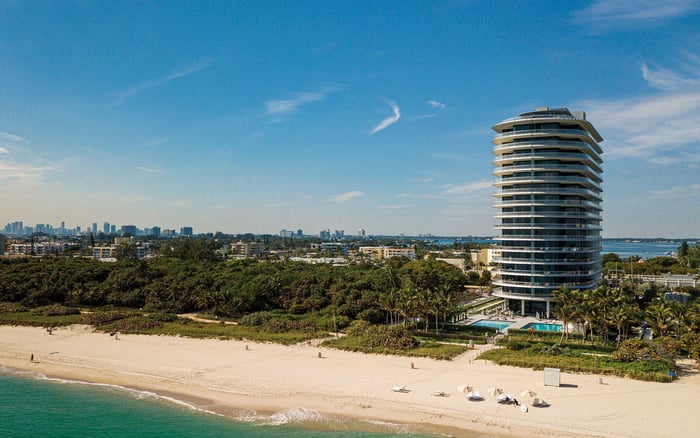
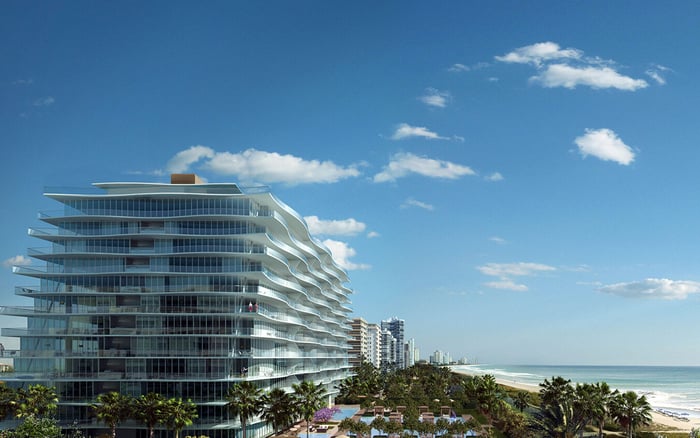
A discreet buyer’s guide to evaluating beachfront insurance exposure, carrying-cost discipline and resale resilience when comparing Acqualina Residences with 900 Ocean Surfside.
For South Florida’s ultra-prime buyer, beachfront insurance has shifted from a closing-folder detail to a central part of the acquisition thesis. The conversation around Acqualina Residences and 900 Ocean Surfside is not simply about a premium line item. It is about how a building manages risk, how predictable the ownership experience may be, and how a future buyer will interpret the same numbers at resale.
The most sophisticated purchasers now view insurance as part of the architecture of value. A residence may offer rare frontage, privacy, service and design, but the carrying-cost profile still requires the same scrutiny as view corridor, floor height or finish quality. Oceanfront ownership carries a distinct risk profile, and luxury buyers are increasingly attentive to how that risk is transferred, retained or reflected in monthly assessments.
This is especially relevant when comparing a branded, amenity-rich environment associated with the Acqualina nameplate with a Surfside address such as 900 Ocean Surfside. The two may appeal to different instincts: one emphasizing resort-caliber service and scale, the other suggesting a more discreet coastal setting. In both cases, insurance discipline can influence total cost of ownership more than many buyers expect.
A meaningful cost analysis begins with the distinction between the building’s master insurance and the owner’s individual coverage. The association’s policy typically addresses common elements and broader building exposure, while the owner’s policy may address interiors, personal property, liability and loss assessment exposure. A buyer who asks only for the current monthly maintenance number is seeing only part of the picture.
At Acqualina Residences, buyers should focus on how the association communicates insurance allocations, deductibles and reserve planning within a larger luxury-service environment. In a high-touch building, the premium experience may include substantial staffing, amenities and operational complexity. Insurance should be read alongside the broader budget, not isolated from it.
At 900 Ocean Surfside, the analysis should be equally granular. Surfside buyers often prize intimacy, walkability and a quieter beachfront character. Yet the underwriting questions remain rigorous: what is covered, what is excluded, how large are the deductibles, and how might a material claim affect future assessments? Beach-access convenience is a lifestyle advantage, but proximity to the shoreline also requires clear-eyed ownership planning.
Buyers may also weigh nearby ultra-luxury references associated with Sunny Isles Beach and Surfside when assessing how brand, service and building governance shape expectations. The comparison is not about declaring one model superior. It is about understanding which cost structure best suits the buyer’s intended use, holding period and tolerance for variable expenses.
The headline premium is rarely the whole story. A beachfront condominium cost stack may include master policy premiums, windstorm exposure, flood considerations, deductible structures, reserve contributions, inspection-related work and owner-specific policies. Each component can affect the buyer differently depending on whether the residence is a primary home, seasonal retreat or long-term family hold.
Deductibles deserve particular attention. A building may carry coverage, but the deductible can be large enough that a post-event assessment becomes meaningful. For a luxury buyer, the key question is not only whether insurance exists, but how a loss would flow through the association and to individual owners. A well-capitalized buyer may be comfortable with volatility, but volatility still needs to be priced.
Financing can also intersect with the insurance conversation. Lenders may scrutinize building coverage, flood exposure, reserves and association health. Even a cash buyer should care, because future purchasers may rely on financing. If insurance terms make financing more difficult for the next buyer, the resale pool can narrow.
Investment discipline in this segment is less about chasing a discount and more about avoiding surprises. The strongest buyers ask for the budget, reserve information, insurance summaries, deductible details and recent association communications before treating the carrying cost as stable. A beautiful residence with unclear exposure deserves more negotiation leverage than one supported by transparent governance.
Insurance and reserves are increasingly inseparable in the buyer’s mind. A building that plans ahead can present a more composed ownership experience, even if monthly costs appear higher. A building that underfunds future needs may look efficient until a special assessment or premium adjustment resets the economics.
For Acqualina Residences and 900 Ocean Surfside, the buyer’s review should extend beyond aesthetics. Lobby condition, amenity polish and service culture matter, but so do roof systems, windows, façade maintenance, mechanical infrastructure and long-term capital planning. The luxury standard is not only visible. It is operational.
This is where ultra-prime buyers often benefit from a disciplined advisory team. Legal review, insurance review and building-document review should occur before emotion hardens into commitment. The most attractive purchase is the one where the buyer understands not only what is being acquired, but also what obligations travel with ownership.
Resale resilience depends on this confidence. Resale buyers tend to reward buildings that can explain their costs with clarity. A higher monthly figure may be accepted if it reflects responsible planning, strong service and credible coverage. A lower figure may be less compelling if it masks deferred decisions.
A practical buyer should model three versions of cost: the current carrying cost, a moderate increase scenario and a stress scenario. The goal is not pessimism. It is composure. If the residence remains desirable under all three cases, the buyer can negotiate from strength.
The review should also separate lifestyle value from financial exposure. A direct-beach lifestyle, valet service, spa amenities, privacy and views can justify a premium, but they do not eliminate the need to understand insurance mechanics. In fact, the more rare the residence, the more carefully its cost structure should be read.
For a seasonal owner, the question may be predictability. For a full-time resident, it may be comfort and building quality. For a family office or legacy buyer, the priority may be long-term governance. In each case, the right insurance analysis transforms a purchase from an emotional decision into a durable ownership strategy.
Why does insurance matter so much in a beachfront condo purchase? It affects monthly carrying cost, financing comfort and future resale confidence. On the ocean, insurance should be reviewed as a core ownership variable.
Is the master policy enough for a luxury buyer? Usually not by itself. Buyers should also review owner coverage, interior responsibility, liability protection and potential loss assessment exposure.
How should I compare Acqualina Residences with 900 Ocean Surfside? Compare the total cost structure, not only the purchase price. Review association budgets, deductibles, reserves, coverage summaries and recent communications.
Can a higher monthly cost be a positive signal? Yes, if it reflects responsible reserves, strong operations and clear insurance planning. The issue is whether the cost is justified and transparent.
What is the most overlooked insurance detail? Deductibles are often overlooked. A policy may exist, but a large deductible can still create meaningful owner exposure after an event.
Should cash buyers care about lender insurance standards? Yes. Even if you do not need financing, future buyers might, and lender concerns can affect liquidity at resale.
How does Surfside factor into the analysis? Surfside offers a distinct beachfront lifestyle, but buyers still need disciplined review of building coverage, reserves and long-term maintenance obligations.
What should be requested before an offer becomes firm? Request association budgets, insurance summaries, reserve information, deductible details and relevant building communications before the contingency period ends.
Does insurance affect investment potential? Yes. Carrying-cost volatility can influence net return, buyer demand and exit timing, especially in luxury beachfront condominium ownership.
What is the best way to shortlist comparable options for touring? Start with location fit, delivery status, and daily lifestyle priorities, then compare stacks and elevations to validate views and privacy.
For a discreet conversation and a curated building-by-building shortlist, connect with MILLION.
If branded residences are on your mind — as a home or as an allocation — we would be glad to share what we are seeing, privately.
Begin a quiet conversation