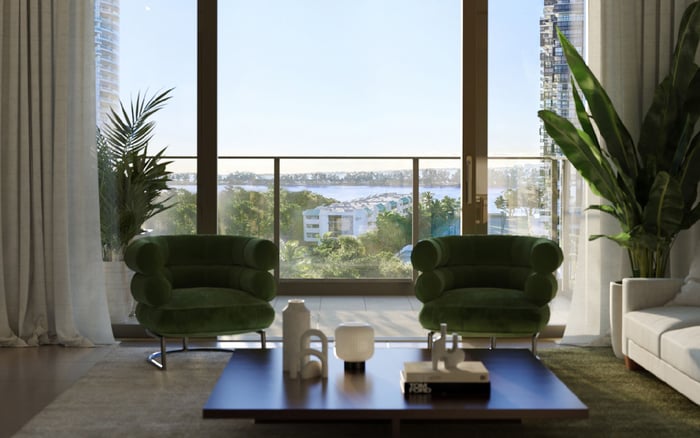
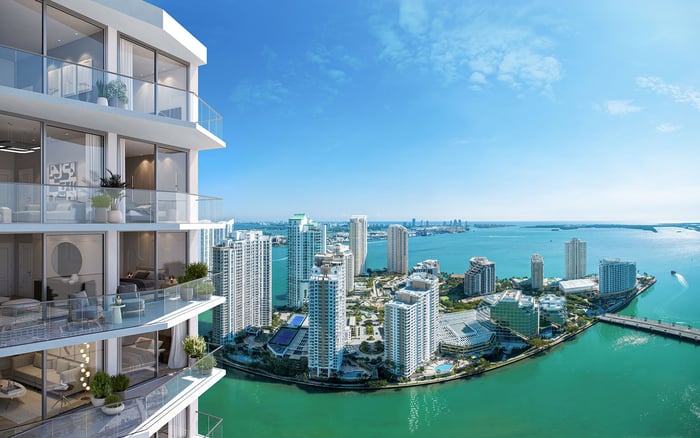
A buyer-oriented comparison of bay and ocean waterfront perspectives, framed around Mandarin Oriental Residences Brickell and Sixty Palm Beach for South Florida luxury purchasers.
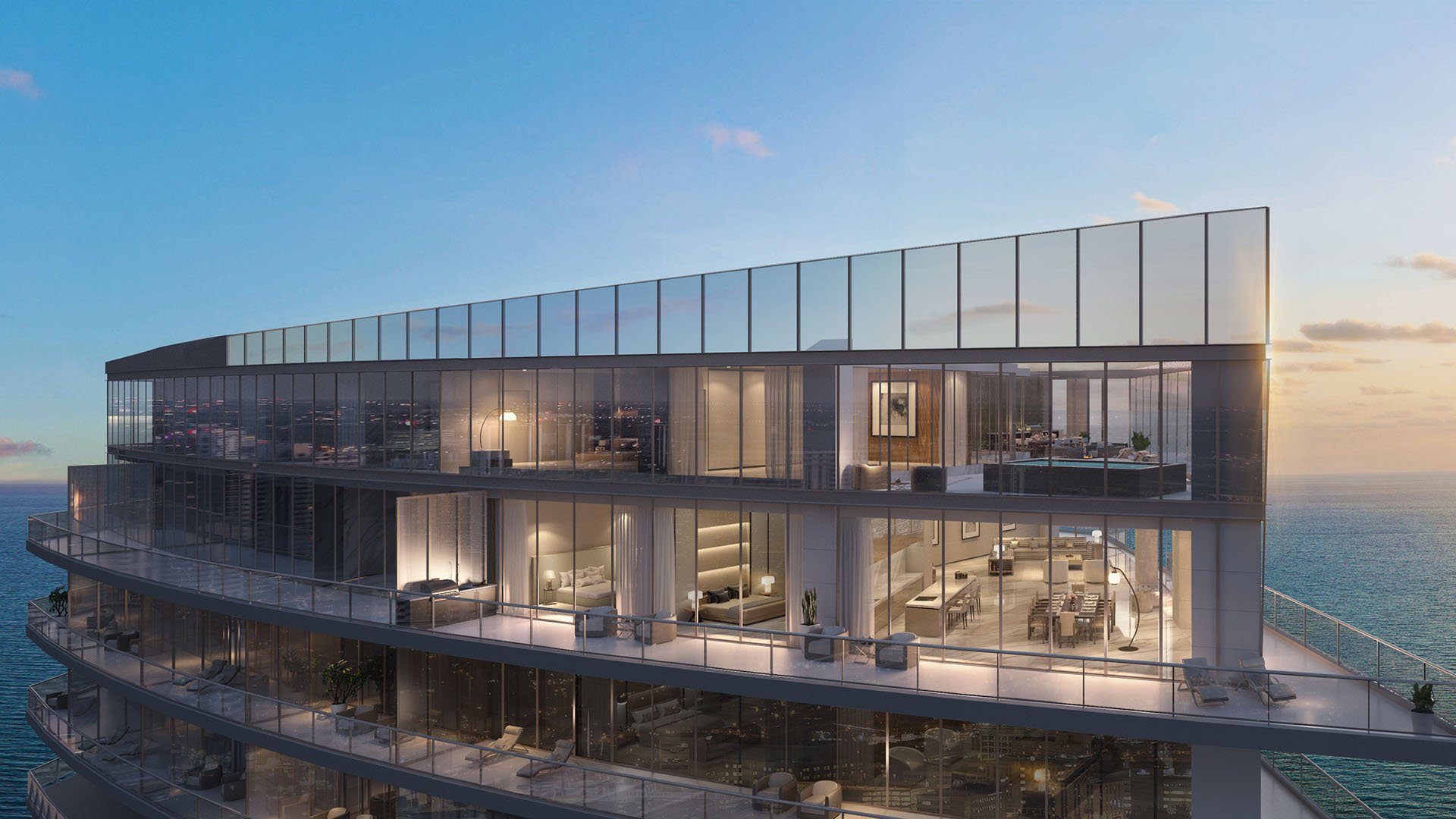
For South Florida’s luxury buyer, waterfront is not a single category. It is a daily experience shaped by light, distance, sound, reflection, privacy, and the rhythm of the surrounding neighborhood. That is why the comparison between Mandarin Oriental Residences Brickell and Sixty Palm Beach is less about choosing one address over another than defining the kind of waterfront life a buyer wants to inhabit.
Bay views and ocean views behave differently. A bay perspective is layered, active, and architectural. It can include passing boats, city lights, bridges, islands, and sunset reflection across protected water. An ocean perspective is more elemental: horizon, scale, breeze, and the visual calm of open water. Both can be extraordinary, but they speak to different temperaments.
The most sophisticated buyers do not simply ask whether a residence has a view. They ask how the view changes from morning to evening, whether it feels private from the primary suite, whether it supports entertaining, and whether it remains compelling on an ordinary weekday. In that sense, the view becomes a form of interior design, shaping the mood of every room before a single piece of furniture is selected.
A Brickell bay orientation tends to reward buyers who like movement. The water is not a distant backdrop. It is part of a larger metropolitan composition, where the skyline, marine traffic, and evening lights create a constantly shifting foreground. For a residence connected to the Mandarin Oriental name in Brickell, that perspective is naturally understood through an urban luxury lens: polished, social, and highly connected.
The appeal is especially strong for buyers who want waterfront living without retreating from the city. A bay-facing living room can feel cinematic at dusk, when towers begin to illuminate and the water catches the last warmth of the day. For entertaining, this kind of view has energy. It gives guests something to watch, discuss, and remember.
Bay views also tend to create a stronger relationship between architecture and setting. The eye may move from the water to neighboring towers, from a marina edge to a distant causeway, from a balcony line to the skyline beyond. This layering can make a residence feel embedded in the city rather than removed from it. For some buyers, that complexity is precisely the luxury.
The tradeoff is that an urban bay perspective may feel less silent and less visually minimal than the ocean. Buyers should think carefully about exposure, glass line, terrace usability, and the difference between a dramatic nighttime panorama and the quieter requirements of daily living.
Sixty Palm Beach enters the conversation from a different emotional register. A Palm Beach waterfront perspective is often associated with poise, proportion, and a slower residential rhythm. Where Brickell bay views can feel animated, an ocean-led Palm Beach view is more about continuity: water, sky, horizon, and the sense of removal that comes from visual openness.
Ocean views are powerful because they simplify the field of vision. There is less visual interruption and more atmosphere. Morning light can feel especially important, as can the relationship between the primary spaces and the balcony. A well-positioned ocean view does not need theatricality. Its luxury comes from repetition, calm, and the ability to reset the mood of a home every day.
For buyers who value discretion, the ocean perspective can be deeply persuasive. It offers a more private psychological experience, even in a condominium setting. The view is outward, not across. The gaze is directed to nature rather than neighboring architecture. That distinction matters to buyers who want their residence to feel like a sanctuary rather than a stage.
The Palm Beach buyer may also weigh a different kind of prestige. Instead of emphasizing urban access and skyline drama, the ocean view favors timelessness, resort sensibility, and a residential cadence suited to longer stays, family use, and seasonal living.
Light is one of the most underestimated variables in a waterfront purchase. A bay residence may deliver spectacular late-day color, especially when reflections move across the water and glass towers. An ocean residence may be defined by morning brightness, shifting blues, and the softer tones of evening after the sun has moved away from the waterline.
Neither condition is automatically superior. The question is personal. Buyers who entertain in the evening may prefer the drama of a bay outlook. Buyers who begin the day slowly, read in the morning, or prioritize wellness rituals may gravitate toward the ocean. A residence used primarily as a pied-à-terre may have different light requirements from one intended as a full-time home.
The best evaluation happens room by room. The living room may want drama, while the primary bedroom may want quiet. A dining area may benefit from city lights, while a study may require less glare. Waterfront value is not just what appears from the balcony. It is how the entire floor plan choreographs exposure.
In both Brickell and Palm Beach, elevation matters, but it does not solve everything. High floors can create greater separation, wider sightlines, and a stronger sense of arrival. Yet the most livable residence is not always the highest. A slightly lower home with a better angle, more protected terrace, or stronger connection to the water may outperform a higher residence with less usable outdoor space.
Balcony design deserves equal attention. A balcony that is too shallow may function as a viewing ledge rather than an outdoor room. A more usable terrace can transform the waterfront experience, especially for morning coffee, evening cocktails, or quiet weekend meals. The buyer should stand in the outdoor space and ask whether it feels like part of the home or merely an architectural gesture.
Privacy is also different by setting. In Brickell, privacy may come from height, glass orientation, and careful sightline management. In Palm Beach, privacy may be felt through distance, openness, and the absence of constant visual movement. A disciplined brief might read: Brickell for urban bay drama, Palm Beach for a resort-paced waterfront lens, waterview as the nonnegotiable, high floors for separation, balcony for daily use, and oceanfront for horizon-led calm.
Views also carry a resale narrative. A bay view in Brickell speaks to buyers who want a cosmopolitan waterfront address, immediate visual energy, and a home that feels connected to Miami’s vertical growth. An ocean view in Palm Beach speaks to buyers who want serenity, scarcity of feeling, and a more classical coastal identity.
The strongest choice is the one that aligns with use. If the residence will be a primary base for business, dining, social life, and international travel patterns, the bay view may feel more alive. If the residence is a seasonal retreat or a long-horizon family holding, the ocean view may offer a more enduring emotional pull.
Buyers should avoid making the decision from a single photograph. Waterfront imagery can flatten what is actually a sensory experience. Visit at different hours when possible. Listen as much as you look. Notice whether the view energizes or settles the room. The right residence should feel compelling not only on arrival, but after the initial drama has faded into routine.
Mandarin Oriental Residences Brickell and Sixty Palm Beach frame two distinct waterfront philosophies. Bay living is layered, social, reflective, and metropolitan. Ocean living is expansive, quiet, elemental, and retreat-oriented. One is not more luxurious than the other. They simply define luxury through different forms of presence.
For the ultra-premium buyer, the decision should begin with lifestyle rather than vocabulary. Do you want the view to perform, or do you want it to calm? Do you prefer the glitter of a city after dark, or the uninterrupted horizon of the sea? Do you want your residence to feel connected to the pace of Miami, or insulated within the composure of Palm Beach?
When those answers are clear, the waterfront choice becomes more intuitive. The bay belongs to buyers who enjoy energy with their water. The ocean belongs to buyers who want the water to remove everything unnecessary.
What is the main difference between bay and ocean views? Bay views are typically more layered and urban, while ocean views are more open, horizontal, and calming.
Is a Brickell bay view better for entertaining? It can be, especially for buyers who value skyline lights, movement on the water, and a more social visual setting.
Is an ocean view in Palm Beach more private? It may feel more private because the gaze is directed outward to open water rather than across an urban setting.
Should buyers prioritize floor height? Floor height matters, but angle, terrace usability, exposure, and room layout can be just as important.
Why does balcony design matter so much? A usable balcony turns a view into daily living space rather than a feature seen only through glass.
Which view is better for a second home? Ocean views often suit retreat-oriented second homes, while bay views may suit buyers who want urban energy.
How should buyers compare morning and evening light? They should consider when they use the home most and how each exposure supports daily rituals.
Can a bay view feel as luxurious as an ocean view? Yes. Luxury depends on composition, privacy, floor plan, and how the view supports the owner’s lifestyle.
What makes a waterfront view hold long-term appeal? Clarity of sightline, emotional consistency, privacy, and daily usability all contribute to lasting value.
How should a buyer make the final decision? The best choice is the view that matches the buyer’s rhythm, not just the one that photographs best.
To compare the best-fit options with clarity, connect with MILLION.
If branded residences are on your mind — as a home or as an allocation — we would be glad to share what we are seeing, privately.
Begin a quiet conversation