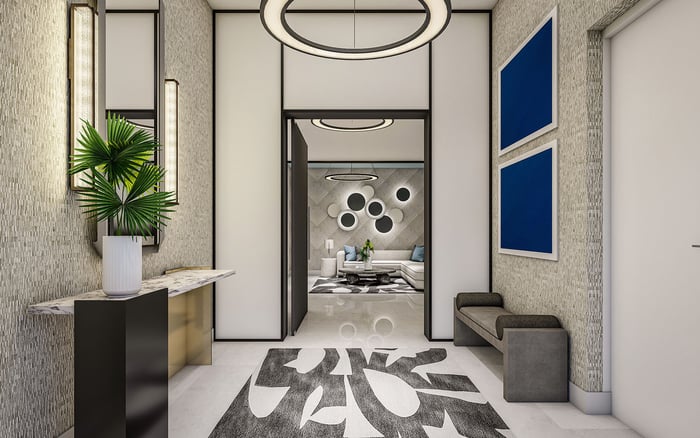
A disciplined framework for comparing three West Palm Beach luxury condominiums through the lenses of site quality, residence selection, governance, market risk, capital preservation, and future exit flexibility.
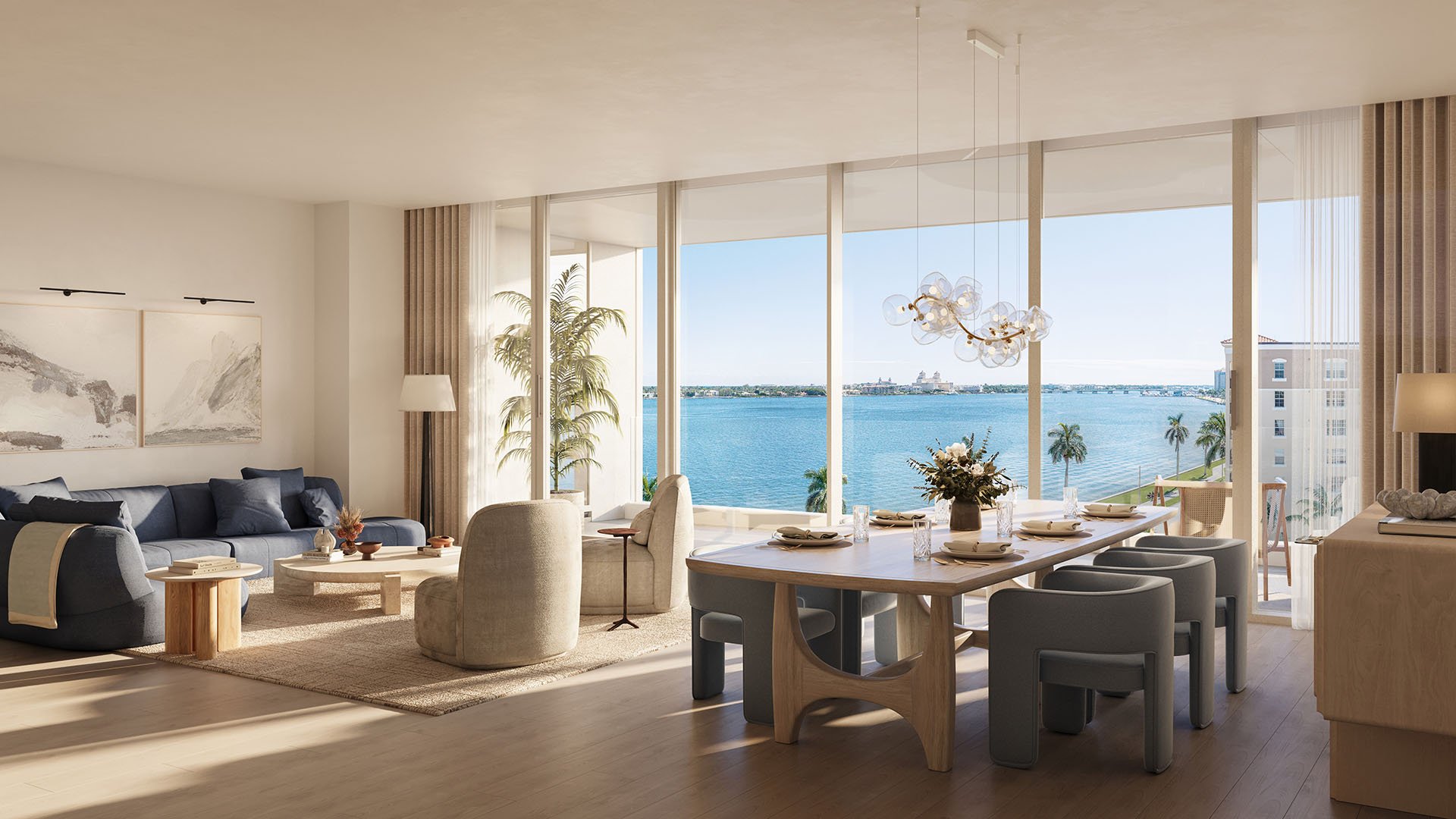
For luxury buyers entering West Palm Beach in 2026, resale resilience is less about forecasting a future price than identifying the qualities that can preserve desirability as market conditions change. The central questions are practical: Will the residence remain compelling alongside newer inventory? Is the ownership structure equipped to preserve the building? How broad might the future buyer pool be, and how much flexibility will an owner have when it is time to sell?
Those questions frame the comparison among Alba West Palm Beach, Maison D'Or South Flagler, and Shorecrest Flagler Drive West Palm Beach. Each warrants assessment on two levels. The building establishes the broader value proposition; the individual residence determines view quality, usability, privacy, and direct competition at resale.
Location deserves more precise analysis than a neighborhood label. Buyers should study the site’s relationship to surrounding properties, access, arrival experience, outlook, and potential competitive inventory. Site quality is difficult to replicate, making it a potentially durable component of long-term appeal.
Building scale and unit mix matter as well. They influence privacy, the number of potentially competing listings, demand on amenities, and the range of buyers a future seller may encounter. Amenities merit scrutiny for their utility and operating implications, not simply their visual impact. The objective is to distinguish lasting usefulness from features that may be costly to maintain or easy for subsequent projects to imitate.
Alba West Palm Beach belongs in any comparison of newer condominium inventory and established Palm Beach-area housing. Its resale case should be tested through location, site quality, building scale, unit mix, amenities, governance, and exposure to broader market risks. Design may create an immediate emotional response, but capital preservation depends on whether the complete ownership proposition remains credible to a later buyer.
For Alba, future exit optionality should guide residence selection from the outset. Buyers should ask whether a particular layout is intuitive, whether its distinguishing qualities are readily understood, and whether another unit in the building could become a close substitute. The strongest purchase is not automatically the most dramatic. Often, it is the residence whose advantages remain clear across different market cycles.
At Maison D'Or South Flagler, the durable-value analysis similarly begins with both the building fundamentals and the specific unit line. Residences within a single development need not perform identically. Orientation, plan efficiency, privacy, condition, and relative scarcity can shape how buyers compare available homes when several reach the market.
Maison D'Or should therefore be evaluated without forcing an exact resale forecast. A disciplined buyer can instead identify which characteristics are difficult to reproduce, which are shared by multiple residences, and what future investment may be needed to keep the property competitive. That distinction is central to an investment decision grounded in preservation rather than speculation.
Shorecrest Flagler Drive West Palm Beach warrants the same dual focus. Buyers prioritizing price stability and secondary-market liquidity should evaluate the site, project scale, residences, amenities, governance, and macro-risk exposure together. No single feature can substitute for a coherent overall proposition.
At Shorecrest, the selected residence will also shape liquidity after 2026. Buyers should consider how clearly the home differentiates itself, how many plausible substitutes may exist, and whether its plan suits more than one narrow ownership profile. A broad but qualified audience can support optionality when a seller’s timing is less than ideal.
Resale buyers inherit more than architecture. They also inherit budgets, rules, reserves, maintenance standards, insurance obligations, and the consequences of prior decisions. Governance review should encompass current offering documents or association materials, contracts, budgets, restrictions, deposit terms where applicable, and delivery estimates where relevant.
The objective is to determine whether service expectations and financial stewardship appear aligned. Buyers should model ownership costs conservatively and allow for change. Pre-construction specifications and schedules can evolve, while completed properties may face changing operating needs. Legal, financial, insurance, and inspection professionals should review the applicable documents before commitment.
A practical resale exercise begins with a hypothetical listing date. Imagine competing units are available, financing is less accommodating, or a newer building is attracting attention. What would make this residence the clear choice? The answer should be specific and grounded in attributes a future buyer can recognize.
Next, test pricing flexibility and timing. An owner who must achieve one precise number within a short window has less optionality than one who can wait or adjust. Review pricing and trends carefully, but do not treat a recent asking price as proof of durable value. Relevant closed transactions, unit-level differences, carrying costs, and the condition of competing residences all require context.
Finally, determine whether the purchase still works if appreciation is modest. Personal utility, quality of ownership, manageable costs, and a credible secondary-market audience provide a more resilient foundation than an aggressive projection.
The three properties should not be reduced to a universal winner. The more useful conclusion is residence-specific. Score each opportunity across site quality, building scale, unit mix, amenity utility, governance, carrying-cost visibility, competitive supply, and exit flexibility. Then repeat the exercise for the exact unit under consideration.
That process brings the trade-offs into focus. One residence may offer stronger differentiation but appeal to a narrower buyer pool. Another may be less singular yet easier for the market to understand. The right choice is the one whose risks align with the buyer’s holding period, liquidity needs, and standard of living.
What does resale resilience mean for a luxury condominium? It is the ability to retain buyer appeal and exit flexibility through changing market conditions, without implying a guaranteed price outcome.
Can one project be declared the safest resale choice? Not responsibly based on building identity alone. The exact residence, purchase basis, governance, costs, and future competition all matter.
Why does the individual unit line matter? Units in the same building can differ in orientation, privacy, layout utility, condition, and scarcity, leading to different resale outcomes.
How should buyers assess amenities? Focus on recurring usefulness, maintenance implications, and whether future buyers are likely to value an amenity enough to support its cost.
Why is governance relevant to value? Budgets, reserves, rules, maintenance, and insurance decisions affect ownership quality, carrying costs, and a future purchaser’s confidence.
Should design lead the purchase decision? Design can support desirability, but it should be weighed alongside site quality, functional planning, governance, and exit optionality.
How can a buyer evaluate future competition? Compare the residence with similar unit lines in its building and with plausible alternatives a future buyer may consider.
What documents deserve professional review? Review applicable offering or association documents, contracts, budgets, restrictions, insurance information, deposits, and current delivery estimates.
Is secondary-market liquidity the same as appreciation? No. Liquidity concerns the ability to attract a qualified buyer and complete a sale; appreciation concerns a change in value.
What is the most useful pre-purchase stress test? Ask whether the residence still works with modest appreciation, higher ownership costs, greater competition, or a longer selling period.
For a confidential assessment and a building-by-building shortlist, connect with MILLION.
If branded residences are on your mind — as a home or as an allocation — we would be glad to share what we are seeing, privately.
Begin a quiet conversation