A practical comparison of Bay Harbor Towers and The Estates at Acqualina Sunny Isles for affluent families weighing school-day ease, service expectations, staff movement, and privacy.
For many South Florida buyers, the comparison between Bay Harbor Towers and The Estates at Acqualina Sunny Isles begins with a familiar luxury question: quieter island living or a more resort-style Sunny Isles Beach setting. For families with school-age children, household staff, tutors, drivers, visiting relatives, and tightly managed daily schedules, the more revealing question is practical. Which residence makes an ordinary Tuesday feel easier, more private, and more controlled?
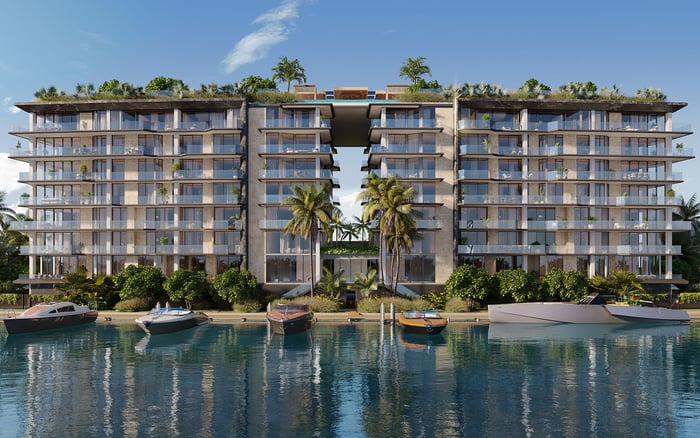
Bay Harbor Towers is the Bay Harbor Islands option in this comparison, shaped around a quieter residential rhythm. The Estates at Acqualina is the Sunny Isles Beach option, often considered by buyers who want a highly serviced residential environment around the home. Both speak to serious luxury buyers. They simply solve different problems.
In buyer shorthand, Bay Harbor and Sunny Isles describe more than locations; they describe two distinct expectations for family life. One leans toward school-day convenience, discretion, and calmer circulation. The other leans toward a more experience-driven residential setting, visible service, and a larger lifestyle atmosphere.
Bay Harbor Towers is most persuasive for buyers who judge a residence by the rhythm it creates before 9 a.m. and after 3 p.m. The appeal is not only architecture or address, but the daily choreography of children leaving for school, returning home, settling into homework, meeting tutors, and moving through the building without unnecessary friction.
Its Bay Harbor Islands setting is part of the appeal for families evaluating school-day convenience. The value here is not a promised minute count, a specific school claim, or an eligibility analysis. It is the broader lifestyle proposition: a calmer residential base that may make school-day movement feel simpler and less performative.
That matters for parents who do not want their primary residence to feel like an event every time a child comes home with a backpack, a sports bag, or a friend for a study session. Bay Harbor Towers reads as a quieter choice for families who equate luxury with time saved, discretion protected, and household routines left undisturbed.
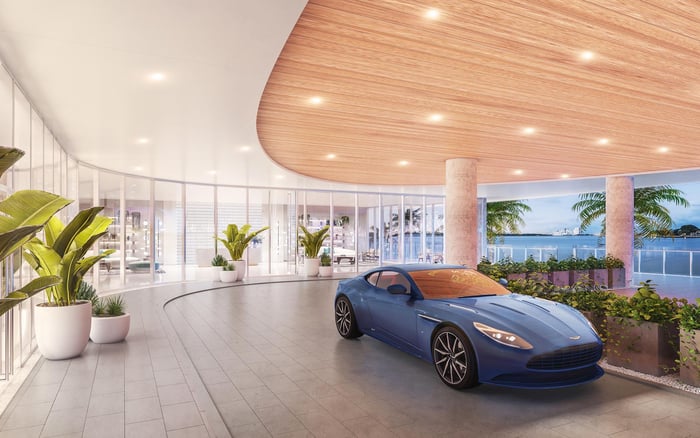
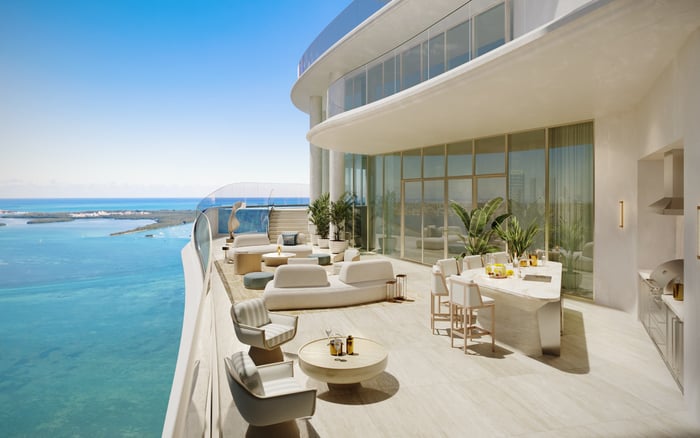
The Estates at Acqualina Sunny Isles occupies a different psychological lane. It is considered by buyers who want the residence to carry the texture of a resort-style environment, where service expectations and shared lifestyle spaces are part of the daily appeal.
This model can be highly compelling. A family that entertains frequently, spends extended time on property, or wants more of the residential experience to happen on-site may find that kind of atmosphere attractive. The building is not only a place to live; it becomes part of the family’s lifestyle language.
The tradeoff is that a more service-forward environment can feel more visible. Shared spaces may feel busier, and the daily presence of residents, guests, household staff, and service teams can become part of the atmosphere. For buyers who want an immersive residential experience, this may feel appropriate. For buyers seeking a lower-profile family cadence, it may feel like more building than they need.
In ultra-prime family residences, staff circulation is often discussed too narrowly. It is not only about whether a building has service protocols. It is about how visible daily help feels, how easily scheduled visitors come and go, and whether the family’s private life remains protected from the incidental theater of a luxury building.
Bay Harbor Towers is framed as offering a calmer residential profile than a larger, resort-style property. That can matter to families with nannies, housekeepers, drivers, assistants, tutors, and private chefs moving around the home at different hours. The fewer the layers of spectacle, the easier it can be for the residence to remain a private family environment rather than a stage.
At The Estates at Acqualina, the service-oriented model is part of the attraction for the right buyer. Some households want that larger lifestyle setting and are comfortable with a more visible operating environment. Others prize anonymity and will want to study how everyday movement feels in practice.
Privacy is often imagined as something that begins at the residence door. In reality, it begins much earlier: at arrival, in the lobby, in elevators, in amenity corridors, in parking transitions, and in the spaces children pass through every day.
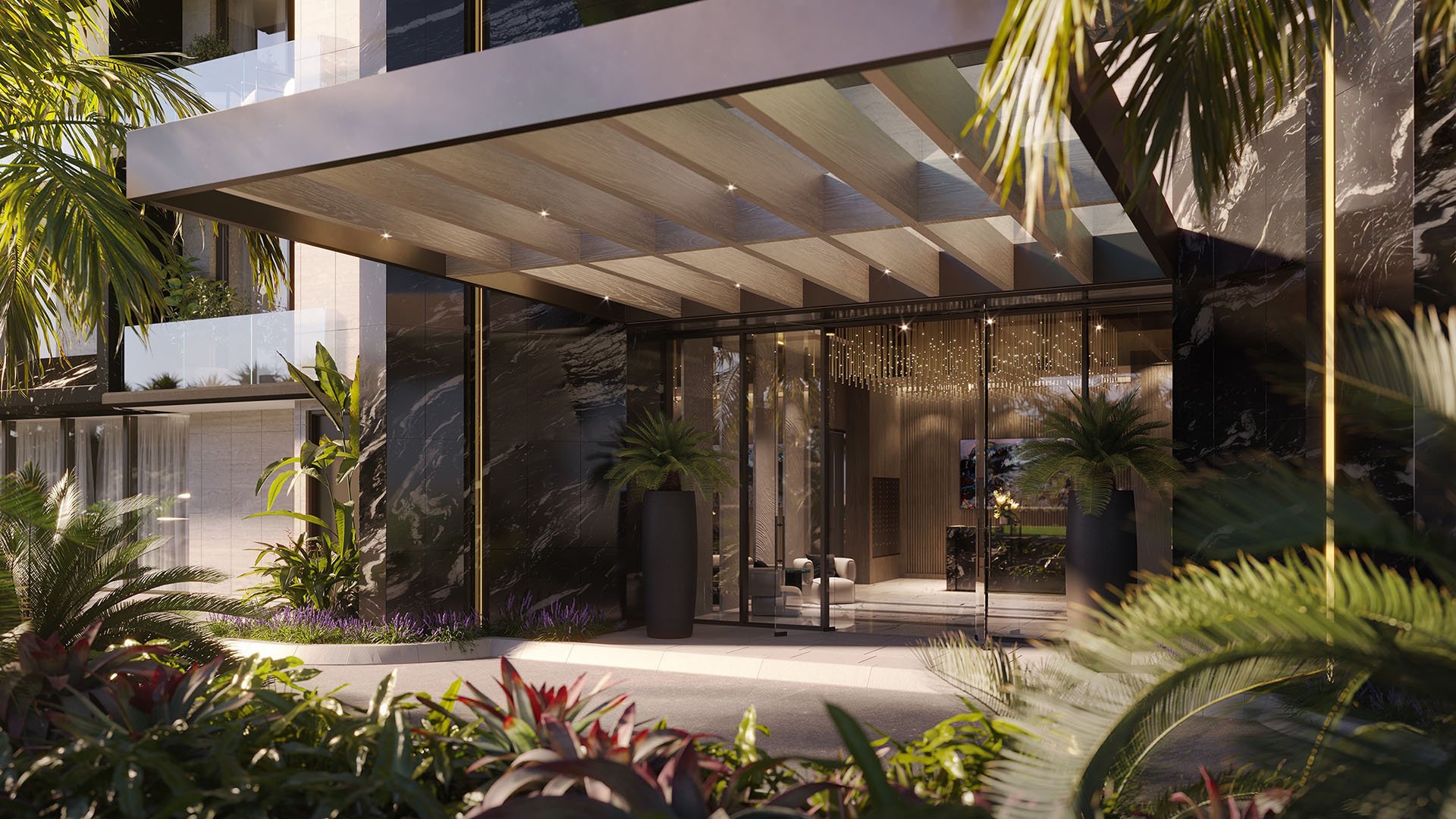
This is where the comparison becomes less glamorous and more useful. Bay Harbor Towers is presented as the more understated option for buyers who value discretion over spectacle. That does not mean it lacks luxury. It means the luxury is quieter, with less emphasis on the property as a destination in itself.
The Estates at Acqualina, by contrast, is the stronger conceptual fit for those who enjoy the energy of a more programmed, resort-style setting. For many Sunny Isles buyers, that atmosphere is part of the appeal. The key is whether the family experiences it as ease or exposure.
A private-school household may care less about the most dramatic shared space and more about whether a child can return home, disappear into a study routine, and remain insulated from building activity. An exclusive-area buyer may define privacy not by acreage or altitude, but by how few unnecessary encounters occur between the car, the elevator, and the family room.
The cleanest way to think about this comparison is not better versus worse. It is daily logistics versus residential theater.
Bay Harbor Towers may better suit the family that wants a refined, quieter base near the school-day orbit. The buyer is likely to value understatement, manageable movement, and a building culture that supports ordinary routines with less ceremony. The luxury is practical: fewer frictions, calmer transitions, and a sense that family life remains the priority.
The Estates at Acqualina may better suit the buyer who wants the home to deliver a fuller resort-style residential experience. This family may value high-touch service expectations, a broader sense of occasion, and the feeling that the property itself is part of daily life.
For families deciding between them, the most revealing exercise is to map a weekday. Who leaves first? Who returns first? Where does the tutor arrive? How often does staff come and go? Are children moving through shared spaces daily, or only occasionally? Is the family seeking a quiet operating base or an environment that feels complete without leaving the property?
The answer will usually identify the right fit faster than a finishes comparison. Both residences live in the world of luxury. Only one may live in the exact rhythm of the family.
Is Bay Harbor Towers better for families focused on school-day convenience? It may be the stronger fit for buyers prioritizing quieter routines and practical daily movement around the school day.
Is The Estates at Acqualina more resort-oriented? It is positioned in this comparison as the more resort-style Sunny Isles option for buyers who want a service-forward residential atmosphere.
Which option is more discreet? Bay Harbor Towers is framed as the more understated choice for buyers who value privacy and calmer daily circulation.
Which option feels more like a private resort? The Estates at Acqualina is the clearer fit for buyers seeking a fuller resort-style residential experience.
Does this comparison include exact school distances or commute times? No. The strongest distinction here is lifestyle fit rather than a precise commute, school boundary, or eligibility analysis.
Why does staff circulation matter for luxury families? Staff movement affects privacy, household flow, and how exposed daily family routines feel within the building.
Are busier shared spaces always a negative? Not necessarily. Some buyers enjoy the energy and convenience of a more programmed, service-rich environment.
Who should lean toward Bay Harbor Towers? Buyers who prefer discretion, school-day practicality, and a quieter residential culture may find it more aligned.
Who should lean toward The Estates at Acqualina? Buyers who want a more experiential setting and a stronger sense of resort-style residential service may prefer it.
What is the best way to decide between the two? Map a real weekday, including school runs, staff arrivals, homework, guests, and privacy expectations.
For a tailored shortlist and next-step guidance, connect with MILLION.
If branded residences are on your mind — as a home or as an allocation — we would be glad to share what we are seeing, privately.
Begin a quiet conversation