A discreet, buyer-oriented comparison of Banyan Tree Residences West Palm Beach and Turnberry Ocean Club Sunny Isles through the practical lenses that matter most to ultra-premium residents: privacy expectations, security technology, guest screening, and the risk of letting brand language override operational due diligence.

For a buyer comparing Banyan Tree Residences West Palm Beach and Turnberry Ocean Club Sunny Isles, the central question is not which name sounds more prestigious. It is which residence can support the way you actually live. Privacy, security technology, and guest screening are not brochure categories. They are daily systems that shape every arrival, every dinner guest, every staff visit, every delivery, and every quiet weekend when discretion matters more than spectacle.
South Florida’s ultra-premium market is fluent in branding. Buyers understand hospitality names, developer reputations, coastal cachet, and the emotional language of resort living. Yet the more sophisticated the buyer, the more practical the inquiry becomes. A residence may photograph beautifully, but the owner experience is defined by who controls access, how guests are identified, how service providers are handled, how elevators are managed, and how naturally the building protects residents from unnecessary exposure.
In buyer shorthand, this conversation may include West Palm Beach, Palm Beach, Sunny Isles, oceanfront living, gated-community expectations, and Turnberry Ocean Club Sunny Isles. Those terms help frame expectations. They do not, on their own, answer the privacy question.
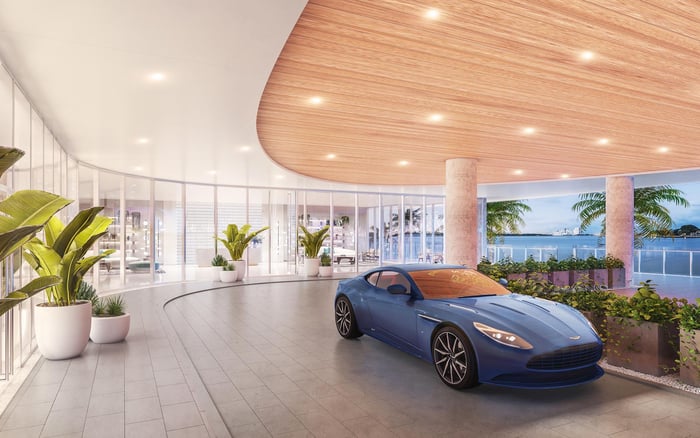
Privacy begins before a resident reaches the front door. It starts with the approach sequence: the drive, the entry point, the reception experience, the separation between residents and visitors, and the building’s ability to make high-net-worth life feel calm rather than observed. A private residence should reduce friction without making security feel theatrical.
For a West Palm Beach buyer, the privacy expectation may lean toward a composed urban lifestyle, with attention to personal rhythm, cultural access, and a sense of retreat inside the residence. For a Sunny Isles buyer, the expectation may be shaped by vertical coastal living, views, and a more visible luxury condominium environment. Neither is inherently more private. The distinction lies in how each setting manages exposure.
A buyer should ask how the building handles peak arrival periods, visiting drivers, family offices, domestic staff, trainers, chefs, nurses, stylists, and recurring service professionals. The issue is not simply whether a building has staff at the desk. It is whether that staff is trained to recognize resident preferences and preserve discretion when multiple parties arrive at once.
The strongest privacy environments feel uneventful. A resident should not have to explain the same guest list repeatedly. A visitor should not wander beyond intended areas. A service provider should not share an elevator experience that feels inappropriate for the owner’s standard of living. These are not glamorous details, but they define the difference between a branded address and a truly private home.
Security technology is often described through visible features: cameras, access control, smart locks, private elevators, package systems, and digital guest authorization. These tools are useful only when supported by clear procedures and accountable personnel.
The essential question is not whether technology exists. The question is what happens when technology flags an issue. Who responds? How quickly? Is there a written escalation path? Are residents notified? Are guests delayed discreetly or publicly? Is the system integrated with building staff, valet, management, and residence-level controls, or is it a collection of separate devices that creates the illusion of protection?
Buyers comparing Banyan Tree Residences West Palm Beach and Turnberry Ocean Club Sunny Isles should request a practical walk-through of the resident journey. Enter as an owner would. Enter as a guest would. Enter as a vendor would. If a residence claims a private arrival experience, observe how that claim performs when multiple vehicles arrive, when a guest is not pre-cleared, or when a vendor appears outside the expected window.
Luxury security should be quiet, layered, and proportionate. Too little security creates vulnerability. Too much visible enforcement creates tension. The goal is a residence where residents feel protected without feeling processed.
Guest screening is where many luxury buyers discover the true personality of a building. A residence can offer polished design and impressive amenities, yet feel compromised if guest access is informal, inconsistent, or overly dependent on individual staff judgment.
For owners who entertain, the guest policy must be elegant. Guests should be verified without embarrassment. Names should be managed accurately. Private events should not expose residents to lobby confusion. Repeat guests should be recognized within the limits of security protocol. Family members, assistants, drivers, and household staff should be handled with consistency.
For owners who value a quieter lifestyle, the same policy matters differently. Screening helps preserve residential calm. It prevents casual access from becoming a social liability. It also protects the building from the gradual erosion of exclusivity that can occur when guest rules are applied loosely.
A serious buyer should ask how guest permissions are created, modified, and revoked. Can permissions be time-limited? Can different household members authorize access? How are minors handled? What is the procedure for an unexpected guest? How are vendors differentiated from social guests? These answers reveal more than marketing language ever can.
Branding can be valuable. It may signal design intent, service ambition, lifestyle tone, and the kind of buyer a project hopes to attract. But branding is not a substitute for operational proof. The best-known name in the conversation may not be the best fit for a particular owner’s privacy profile.
A family with young children may prioritize controlled circulation, staff familiarity, and a guest process that prevents awkward encounters. A public figure may care about arrivals, elevator privacy, and how the building handles photographers, fans, or unknown visitors. A seasonal owner may need reliable remote authorization and careful management of service providers while away. A host who entertains often may prefer a building that can receive guests graciously without turning every dinner into a checkpoint.
The right choice between Banyan Tree Residences West Palm Beach and Turnberry Ocean Club Sunny Isles depends on which environment best protects your normal life. A residence should not require constant owner management to feel secure. It should quietly anticipate the realities of the household.
Before making the decision, examine four layers. First, study arrival privacy. The question is whether residents, guests, vendors, and staff have a clear, dignified path that avoids unnecessary overlap. Second, study access control. The issue is not merely entry, but permissions, revocation, identity verification, and accountability.
Third, study staffing culture. Technology may open doors, but people enforce standards. Ask how staff are trained, how turnover is handled, and how resident preferences are documented. Fourth, study governance. A luxury building can begin with excellent standards and weaken over time if rules are not consistently maintained.
The most discerning buyers often care less about a dramatic promise than about repeatable competence. If a building can explain its privacy and security culture in plain language, that is a positive sign. If answers remain vague, brand polish should not be allowed to fill the gap.
Choose Banyan Tree Residences West Palm Beach if your priority is a residential rhythm that feels discreet, composed, and oriented around retreat from the public-facing parts of South Florida life. Choose Turnberry Ocean Club Sunny Isles if your lifestyle is more aligned with the Sunny Isles vertical luxury environment and you are comfortable evaluating privacy through the lens of a high-profile coastal condominium setting.
In both cases, the correct decision is not made by comparing logos. It is made by testing the lived experience: arrival, recognition, authorization, circulation, and response. Ultra-premium real estate is ultimately not about being impressed. It is about being protected, understood, and left in peace.
Is branding enough to determine which residence is more private? No. Branding can suggest lifestyle tone, but privacy depends on access control, staffing, circulation, and resident protocols.
What should I ask first about security technology? Ask what happens after a system detects an issue, including who responds, how quickly, and how residents are notified.
Why does guest screening matter in a luxury building? Guest screening protects the residential atmosphere by managing visitors, vendors, household staff, and private events consistently.
Can a highly visible condominium still feel private? Yes, if arrivals, elevators, staff protocols, and guest authorization are designed to minimize unnecessary exposure.
What is the biggest mistake buyers make in this comparison? The biggest mistake is assuming a stronger brand automatically means stronger day-to-day privacy.
Should I tour the building like a guest as well as an owner? Yes. Experiencing both paths reveals how gracefully the property handles verification, waiting, and access.
How important is staff training? Staff training is critical because technology only works well when people apply procedures consistently and discreetly.
What should seasonal owners focus on? Seasonal owners should focus on remote permissions, vendor access, residence checks, and clear communication when away.
Is a strict guest policy always better? Not always. The best policy is secure, consistent, and elegant enough to protect residents without embarrassing invited guests.
How should I make the final decision? Choose the residence whose operating culture best supports your household, not simply the one with the more familiar name.
If you'd like a private walkthrough and a curated shortlist, connect with MILLION.
If branded residences are on your mind — as a home or as an allocation — we would be glad to share what we are seeing, privately.
Begin a quiet conversation