A buyer-oriented comparison of Banyan Tree Residences West Palm Beach and The Ritz-Carlton Residences® West Palm Beach, focused on lifestyle positioning, service culture, and what each brand identity suggests for luxury ownership in West Palm Beach.
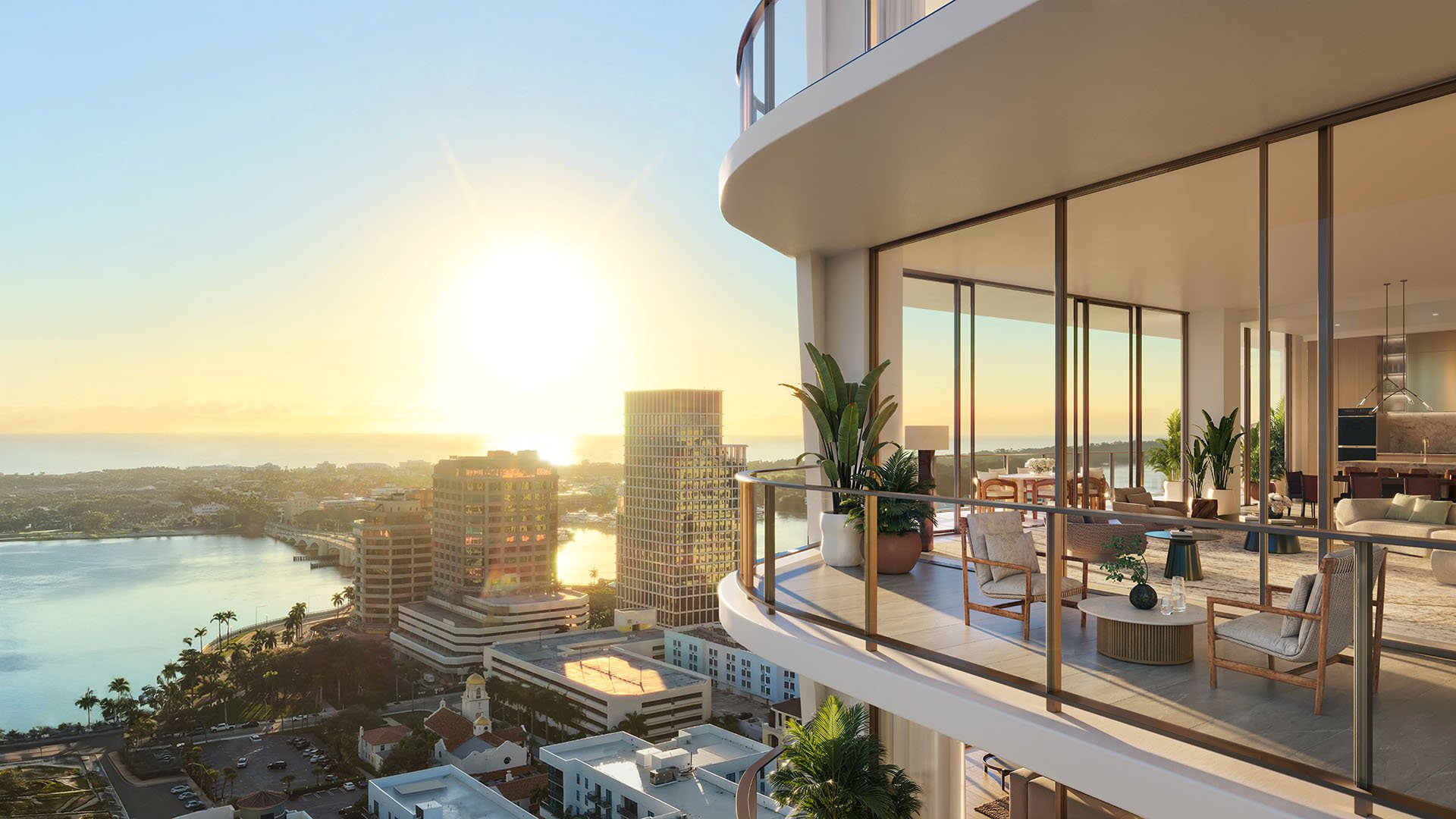
In West Palm Beach, branded residences are increasingly defined by the feeling they promise before a buyer ever studies a floor plan. That is what makes the conversation around Banyan Tree Residences West Palm Beach and The Ritz-Carlton Residences® West Palm Beach so compelling. One speaks to restoration, ritual, and a more retreat-oriented mode of luxury. The other suggests institutional polish, hospitality fluency, and a more seamless relationship to urban life.
For a Palm Beach buyer, that distinction matters. These are not simply two names in the same category. They reflect different ideas of what a home should do for its owner. One side of the equation suggests a private exhale. The other implies a highly serviced base in the city.
Because public detail is strongest at the brand level, this comparison is best understood as one of positioning rather than a scorecard of exact amenities, pricing, or timelines. For the right buyer, that is often the more useful lens.
Banyan Tree has long carried an identity centered on wellbeing, immersive hospitality, and a certain ritualized calm. In residential form, that translates into an expectation of service-rich living shaped by wellness sensibility rather than pure status signaling. The appeal is less about spectacle than atmosphere.
That is why Banyan Tree feels naturally aligned with the idea of a retreat in West Palm Beach. The brand’s broader language tends to favor spa culture, restorative experiences, and a more experiential form of luxury. Even when buyers use the residence as a primary home rather than a second home, the message is similar: your residence should soften the pace of the day.
In practical terms, a wellness-forward residence often attracts owners who want privacy, rhythm, and a curated lifestyle that feels deliberate rather than overly social. It is the difference between arriving home to decompress and arriving home to plug into a service machine. Neither is universally better. They simply answer different priorities.
This softer, more intentional luxury is also part of a wider regional pattern. Buyers drawn to wellness-driven branded product often find themselves comparing concepts such as The Well Coconut Grove, where atmosphere and daily ritual are central to the sales story.
The Ritz-Carlton Residences® West Palm Beach speaks a different language. Its clearest signal is service consistency. The brand carries global recognition, established hospitality standards, and an operating identity built around personalized support. For many luxury buyers, that has enormous value.
In West Palm Beach, this translates into a more city-forward proposition. The appeal is not necessarily introspection. It is confidence. Owners tend to understand what the brand stands for before they walk through the door: polished arrival, concierge-led convenience, and a lifestyle supported by a major hospitality ecosystem.
That matters especially for purchasers who split time between residences, entertain frequently, or prefer a home base that feels efficient as well as elevated. In that sense, Ritz-Carlton often resonates with internationally minded buyers, business principals, and families who want a branded environment with a familiar operating culture.
The comparison point is easy to see across South Florida. Buyers exploring hospitality-backed residences often move between projects like The Ritz-Carlton Residences® Palm Beach Gardens and The Ritz-Carlton Residences® Miami Beach because brand continuity itself is part of the luxury proposition.
If Banyan Tree is about the private experience of living well, Ritz-Carlton is about the public and private benefits of being impeccably supported. This is the clearest contrast.
Choose Banyan Tree if your definition of luxury begins with tone. You may value a residence that feels cocooning, design-conscious, and grounded in wellbeing. You may be less interested in the social reassurance of a globally recognized badge and more interested in how the home moderates stress, supports routine, and frames daily life.
Choose Ritz-Carlton if your definition of luxury begins with execution. You may want the confidence of a hospitality name with deep recognition, especially if you are balancing travel, hosting, family logistics, and city access. Here, convenience is not a compromise. It is the luxury itself.
For many new-construction buyers, the decision comes down to whether they want their residence to feel like a sanctuary or a command center. West Palm Beach is now sophisticated enough to support both appetites.
West Palm Beach has matured into a market where branding does more than decorate a brochure. It helps buyers sort through increasingly nuanced lifestyle offerings. Some projects emphasize waterfront privacy. Others foreground walkability, dining access, and urban energy. The branded residence category sits at the center of that evolution.
Within that context, Banyan Tree and Ritz-Carlton represent two refined but distinct buyer psychologies. The first is about escape without leaving the city. The second is about accessing the city with greater grace and less friction.
That distinction also helps explain why neighboring luxury projects can appeal to entirely different households. A buyer considering a retreat-like rhythm may also look at Alba West Palm Beach for its quieter residential posture, while another purchaser may lean toward a more service-led, urban-facing address. In Palm Beach, the premium is no longer only on location. It is on identity.
It is tempting to reduce this kind of match-up to amenity checklists, pricing assumptions, or speculative completion talk. That would miss the more relevant point.
At present, the most persuasive distinction between these two West Palm Beach names is philosophical. Hard comparisons on exact unit mix, precise wellness features, final service offerings, or delivery timing are less meaningful without direct project-level confirmation. Sophisticated buyers usually understand this. In pre-construction and branded residential categories, what often holds value longest is not a single feature. It is the coherence between brand promise and owner expectations.
That is why this comparison works best as a values test. Are you seeking a residence that performs like an elegant refuge, or one that functions like a five-star urban extension of your schedule?
Banyan Tree will likely resonate with purchasers who want discretion, softness, and a home environment shaped by wellbeing. Think owners who prioritize morning ritual over scene-making, who want luxury to lower the temperature of daily life, and who view service as supportive rather than theatrical. It is especially compelling for a second-home buyer who wants a city setting without sacrificing serenity.
The Ritz-Carlton buyer is often someone who values precision, familiarity, and prestige delivered with operational ease. This owner may travel often, host often, or simply prefer a residence where hospitality systems are central to the ownership experience. For that profile, branded reassurance can be every bit as important as design mood.
Neither instinct is more sophisticated than the other. They are simply different expressions of luxury in West Palm Beach.
Is this mainly a lifestyle comparison or a hard-spec comparison? It is primarily a lifestyle comparison focused on brand positioning, service culture, and buyer fit.
Does Banyan Tree clearly lean wellness-first? Yes. Its brand identity is closely associated with wellbeing, spa sensibility, and immersive luxury.
Does Ritz-Carlton feel more city-oriented? Yes. The brand is more closely tied to service consistency, hospitality structure, and urban convenience.
Can buyers rely on exact amenity comparisons yet? Not fully. The most useful distinction currently is the broader ownership experience each brand implies.
Is one better for a second-home purchase? Either can be, but Banyan Tree may appeal more to buyers prioritizing a restorative atmosphere in a second home.
Is one brand more globally recognized? Ritz-Carlton generally carries broader immediate recognition within global hospitality-led luxury.
Does this article compare pricing? No. Reliable project-specific pricing support is not central to this comparison.
What matters most for a Palm Beach buyer here? Whether home should feel like a wellness retreat or a highly serviced city base.
Why does branding matter so much in new construction? Because brand identity often signals the daily service style, ownership tone, and buyer community.
What is the simplest way to frame the decision? Banyan Tree suggests retreat energy. Ritz-Carlton suggests branded city convenience.
For a tailored shortlist and next-step guidance, connect with MILLION.
If branded residences are on your mind — as a home or as an allocation — we would be glad to share what we are seeing, privately.
Begin a quiet conversation