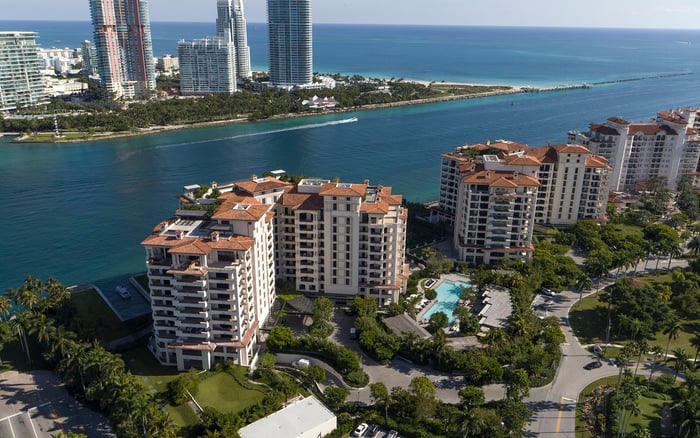
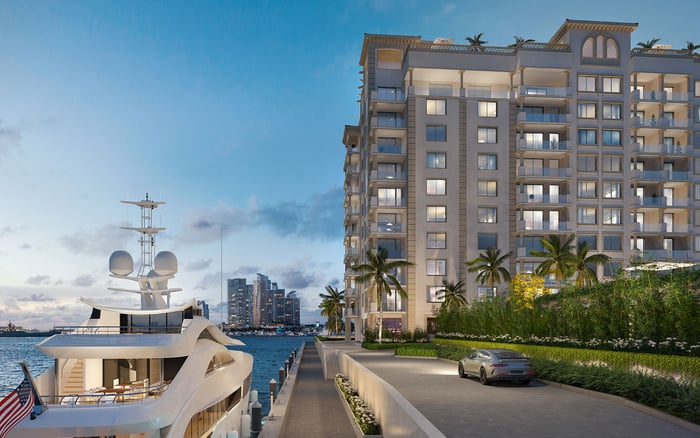
Bal Harbour and Fisher Island require different tax assumptions, but the decisive comparison begins with each residence’s actual folio, taxable value, homestead eligibility, and complete annual carrying-cost profile.
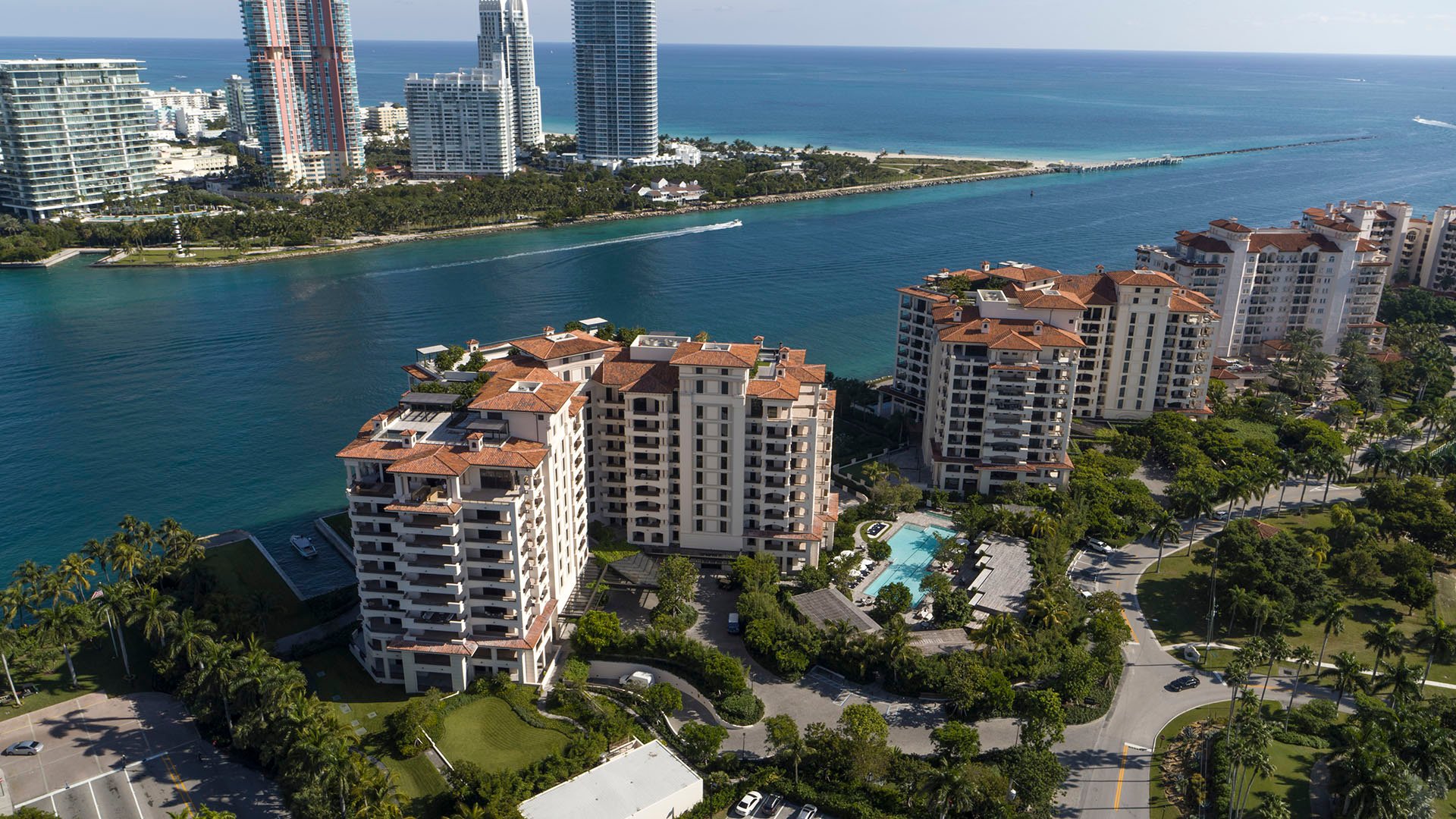
Bal Harbour and Fisher Island represent two distinct expressions of South Florida waterfront ownership. Yet for buyers comparing their annual economics, architectural preference and access are only the opening considerations. A disciplined analysis begins with each property’s assessed value, applicable exemptions, taxable value, and complete millage stack.
Florida ad valorem tax is estimated by multiplying taxable value by the combined millage rate. One mill equals $1 for every $1,000 of taxable value. The operative phrase is taxable value, which may differ materially from the contract price, market value, or seller’s current assessment. Buyers should therefore review the actual folio, current assessed and taxable values, exemption status, and likely post-sale assessment treatment.
The best comparison begins with the residence, not a neighborhood-wide percentage.
This distinction is particularly relevant when comparing a Bal Harbour condominium such as Oceana Bal Harbour with an island residence. Similar asking prices do not ensure similar first-year tax bills, and a seller’s favorable assessment history should not be assumed to transfer to the buyer.
Bal Harbour is an incorporated village, so its tax bill includes a municipal component layered onto school, countywide, and regional levies. The village’s adopted municipal millage rose from 1.9654 mills in 2023 to 2.1439 mills in 2024. Its 2024 adopted combined millage was 16.9024 mills, or approximately 1.69024% of taxable value before exemptions and non-ad valorem charges.
Applied mechanically, that combined rate yields approximately $84,512 in ad valorem tax on $5 million of taxable value and $169,024 on $10 million. These figures are useful reference points, not property-specific quotations. Exemptions, assessed and taxable values, subsequent millage changes, and charges outside ad valorem taxation can alter the final bill.
For buyers evaluating Rivage Bal Harbour, the practical lesson is straightforward: do not multiply the village’s municipal rate alone by the purchase price. Request a folio-level analysis that identifies every taxing component and distinguishes the current owner’s position from the purchaser’s expected basis.
Fisher Island is an unincorporated Miami-Dade community, so it does not carry a separate incorporated city or village millage like Bal Harbour. That distinction does not eliminate local tax obligations, nor does it make a broad neighborhood estimate an adequate substitute for the property’s actual tax record.
An illustrative Fisher Island analysis uses an effective property-tax estimate of approximately 1.9% to 1.94% of assessed fair-market value. At 1.9%, the arithmetic is approximately $95,000 on $5 million, $190,000 on $10 million, $380,000 on $20 million, and $760,000 on $40 million. These figures should serve as scenario inputs rather than forecasts because taxable value and applicable tax components remain property-specific.
At The Residences at Six Fisher Island, or when considering The Links Estates at Fisher Island, tax is only one component of annual carry. Condominium-association charges, club costs, ferry-related expenses, insurance, and special assessments should be modeled separately. On Fisher Island, these non-tax obligations can materially reshape the ownership budget even when the ad valorem comparison appears straightforward.
Florida’s homestead exemption can remove up to roughly $50,000 from the taxable value of a qualifying permanent residence. The first $25,000 applies across taxing authorities. The second portion applies to qualifying value above $50,000 and generally does not reduce school-board taxes.
For a multimillion-dollar homeowner, the immediate exemption is rarely the principal economic advantage. The more consequential benefit may be the annual limit on assessment growth. For 2025 comparisons in Miami-Dade, assessed-value growth is limited to 2.90% for homestead property versus 10.00% for non-homestead property. Over a long holding period, that difference can compound into substantially greater savings than the exemption alone.
Eligibility is substantive. The claimant must hold legal or equitable title and occupy the property as a permanent residence as of January 1. Supporting records can include a Florida driver’s license, vehicle registration, voter registration, utility documentation, or a recorded declaration of domicile connected to the residence. The standard filing deadline is March 1, and online applications are available for homestead, portability, and other qualifying exemptions.
A second home or investment property does not qualify merely because it is valuable, frequently used, or located in Florida. If a buyer can genuinely establish either residence as a permanent home, the strategic question is where the lower assessment-growth cap is likely to deliver the greatest long-term value.
A rigorous comparison separates recurring ownership costs from acquisition costs. Recurring expenses should include projected ad valorem tax, non-ad valorem charges, association obligations, insurance, club and ferry expenses where relevant, and a prudent allowance for assessments. The analysis should also present homestead and non-homestead scenarios over several years, rather than focusing solely on the first bill.
The acquisition ledger is distinct. Miami-Dade documentary stamp tax on a deed is $0.60 per $100 of consideration, with an additional $0.45 per $100 surtax generally applicable to condominiums but not single-family homes. At $10 million, those rates imply approximately $105,000 for a condominium versus $60,000 for a single-family residence. These amounts belong in the closing analysis, not annual carry.
This buyer’s guide framework is most effective when every assumption is visible. Request the actual folio, current tax bill, assessed and taxable values, exemption history, association budget, club obligations, insurance indications, known assessments, and a closing-cost schedule. Then stress-test millage and assessment growth rather than relying on a single static percentage.
Bal Harbour has a clearly identifiable municipal layer within its combined millage. Fisher Island has no incorporated municipal rate, but its broader ownership ecosystem can introduce substantial private charges. Neither location is categorically less expensive without an examination of the specific residence and its intended use.
For a primary residence, give particular weight to January 1 occupancy, filing readiness, and the long-term assessment cap. For a non-homesteaded residence, model the higher assessment-growth ceiling. In every case, compare tax treatment and lifestyle infrastructure on separate lines before combining them into a single annual ownership figure.
For a confidential review of Bal Harbour and Fisher Island opportunities, connect with MILLION.
If branded residences are on your mind — as a home or as an allocation — we would be glad to share what we are seeing, privately.
Begin a quiet conversationMultiply taxable value, after applicable exemptions, by the combined millage rate. One mill equals $1 per $1,000 of taxable value.
The adopted combined rate was 16.9024 mills, or about 1.69024% of taxable value before exemptions and non-ad valorem charges.
At the 2024 combined rate, it implies approximately $169,024 in ad valorem tax before exemptions and non-ad valorem charges.
No. Fisher Island is unincorporated and does not have a separate incorporated city or village millage like Bal Harbour.
An illustrative effective estimate is approximately 1.9% to 1.94% of assessed fair-market value, but buyers should verify the actual folio.
It can remove up to roughly $50,000 from the taxable value of a qualifying permanent residence.
The exemption itself offers limited savings at luxury price points, while the lower annual assessment-growth cap can compound over time.
The claimant must hold legal or equitable title and occupy the property as a permanent residence as of January 1.
The normal deadline is March 1 of the tax year for which the exemption is sought.
Model condominium-association charges, club costs, ferry expenses, insurance, and assessments separately from ad valorem tax.