For collectors considering a South Beach residence, impact-resistant glass is only the beginning. The essential diligence is unit-specific: document glazing performance, measure light at display surfaces, test climate stability, and confirm that permitted shades, films, framing, and lighting can work as one conservation system.
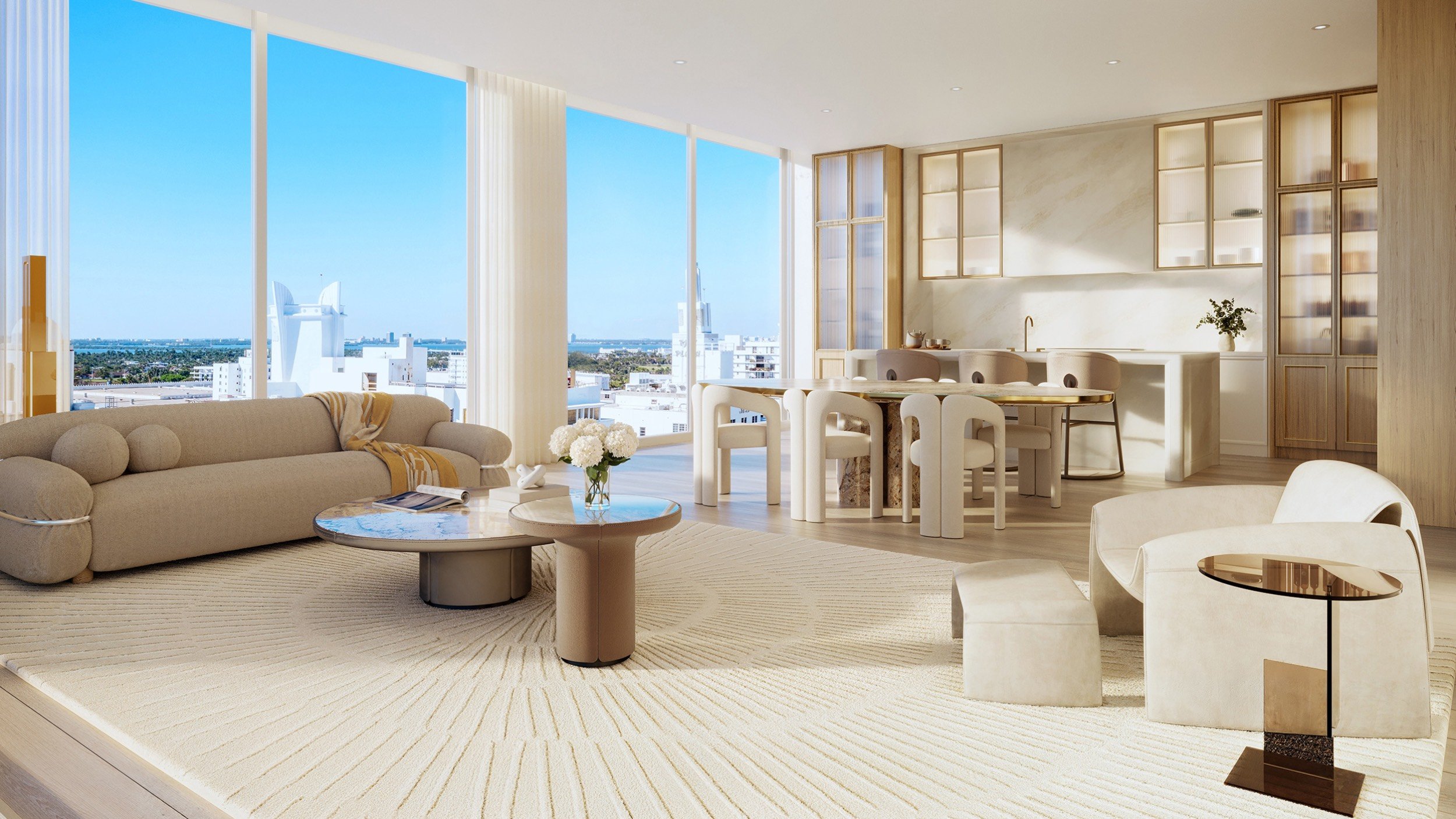
At The Ritz-Carlton Residences® South Beach, collectors should assess natural light as carefully as the residence’s layout and views. A luminous room may be compelling for daily living but require additional controls before it becomes a suitable setting for photographs, textiles, watercolors, works on paper, or other sensitive pieces.
The relevant question is not simply whether a residence has impact-resistant windows. It is whether the exact glazing, orientation, shading strategy, lighting plan, and mechanical performance of the selected home align with the collection’s needs. Those conditions cannot be established through a brief daytime tour alone.
Display planning should begin before millwork, picture lighting, or furniture layouts are finalized. A practical plan can distinguish view-first rooms from conservation-first rooms instead of expecting every wall to serve both purposes.
A hurricane rating answers a safety question, not a conservation question.
Buyers should request documentation for the glass installed in the specific residence. The review should identify the glass composition, laminated interlayer, coatings, and available performance information for the complete installed assembly.
UV transmission, visible-light transmission, solar heat gain, and coating specifications address different aspects of exposure. No single metric resolves every concern, and a stated value for one glass component may not describe the complete window assembly.
If additional UV control is being considered, determine whether condominium rules, warranties, and glazing requirements permit an aftermarket film. Compatibility and written approval should be confirmed before a product is selected or installed.
Collectors comparing Miami Beach residences, including Shore Club Private Collections Miami Beach, can apply the same document-first approach. Branding, views, and impact resistance do not replace unit-specific optical and thermal information.
Compass direction is only a starting point. Floor height, residence position, overhangs, terrace depth, nearby glazing, and reflected light can affect what reaches a proposed display wall. The review should consider how exposure changes by time of day and season rather than relying on conditions during one showing.
A qualified professional can take UV and visible-light readings at proposed artwork locations. General room brightness is not a substitute for measurements where each work will hang or stand. Appropriate limits vary by medium, condition, framing, and the collection’s conservation plan, so a conservator should define the suitable criteria.
Light-sensitive works should be assigned to locations that can be controlled through placement, protective frame glazing, shades, and a disciplined exposure schedule. When evaluating highly glazed options such as The Perigon Miami Beach, buyers can use the same unit-specific sun-path review before selecting display walls.
A comfortable thermostat setting does not demonstrate stable conditions throughout a residence. Buyers should request information about HVAC zoning, sensor locations, humidity management, and the ability to monitor rooms intended for sensitive works.
The appropriate temperature, relative humidity, and acceptable rate of fluctuation depend on the collection’s materials and condition. Paintings, photographs, paper, textiles, and mixed-media works may require different approaches. A conservator can establish the collection brief, while a mechanical specialist can assess whether the residence can support it.
A commissioning period using discreet data loggers can help document overnight changes, room-to-room differences, and performance under varying outdoor conditions. The objective is to understand consistency over time rather than relying on a single thermostat reading.
Mechanical verification is therefore both a comfort review and an asset-care review. If one room behaves differently from another, placement and mechanical adjustments may need to be coordinated before installation.
Window treatments should be selected in response to measured exposure and the needs of the works assigned to each room. Fabric, color, placement, edge gaps, dual-shade configurations, and room-darkening capability can all affect the result.
Automated shades can support a repeatable exposure plan by closing at selected times, including while the residence is unoccupied. Programming should be tailored by façade and room rather than applying one schedule throughout the home. Manual controls remain useful for changing conditions and daily use.
A layered strategy may combine approved window treatment, solar shades, room-darkening shades, protective frame glazing, careful placement, and controlled display periods. The same planning is relevant at Setai Residences Miami Beach and other South Florida residences where expansive glazing is central to the design.
Built-in and decorative lighting near display walls should be assessed fixture by fixture. Source type is only one consideration; beam angle, intensity, dimming range, heat, distance from the artwork, and operating time also belong in the review.
Frame glazing and mounting should respond to each work’s medium, scale, surface, condition, and installation method. A collection-wide framing rule may overlook important differences between paintings, photographs, works on paper, textiles, and mixed-media pieces.
Interior rooms, corridors, and deeply shaded walls may offer useful locations for sensitive pieces. Brighter ocean-facing spaces can then be reserved for works that fit the measured conditions or can be supported by more intensive controls.
Before committing to a residence, assemble a technical file containing available glazing documents, written permissions for proposed films or treatments, HVAC and zoning information, shade specifications, lighting schedules, and baseline environmental readings. A conservator, mechanical specialist, lighting adviser, and qualified installer can then review the same residence plan.
The purpose is not to suppress South Beach light. It is to decide where that light can be celebrated and where it should be controlled. Resolving that distinction before installation can align the architectural experience with the collection-care plan.
For private guidance on selecting and evaluating South Florida residences, connect with MILLION.
If branded residences are on your mind — as a home or as an allocation — we would be glad to share what we are seeing, privately.
Begin a quiet conversationNo. Buyers should review the installed glazing documents and have the complete assembly assessed against the collection’s conservation needs.
Glass composition, coatings, orientation, and surrounding conditions can affect exposure. The review should address the actual installed assembly.
General room brightness does not establish the exposure at a particular wall or display area. Measurements should reflect each intended placement.
Photographs, textiles, watercolors, and works on paper may need carefully controlled placement. A conservator should evaluate each work’s medium and condition.
No. Monitoring over time can reveal room-to-room and daily changes that a single reading may not show.
A conservator should establish collection-specific criteria. A mechanical specialist can then evaluate whether the residence can maintain them.
Yes. They can follow a repeatable room-specific schedule, but their design and programming should reflect measured exposure.
It may be possible, but compatibility, warranties, and condominium requirements should be confirmed in writing before installation.
Review the source, beam angle, intensity, dimming range, heat, distance, and operating time. The assessment should be specific to each display location.
Not necessarily. Framing and mounting should respond to each work’s medium, scale, surface, condition, and installation method.