For Fort Lauderdale buyers choosing between a residential-first beachfront address and a fully integrated branded resort, the decisive question is not prestige but daily rhythm. Auberge Beach Residences & Spa Fort Lauderdale favors quieter circulation, lower guest overlap, and a more settled ownership culture. Four Seasons Hotel & Private Residences Fort Lauderdale delivers a more active hospitality environment, with service depth and resort energy at the center of the proposition.
In Fort Lauderdale, two of the market’s most recognizable oceanfront names appeal to a similar buyer profile while delivering distinctly different daily experiences. Auberge Beach Residences & Spa Fort Lauderdale and Four Seasons Hotel & Private Residences Fort Lauderdale both suggest beachfront luxury, polished service, and a refined wellness backdrop. Yet for a primary user, a second-home owner, or a buyer weighing long-term livability, the sharper distinction is operational: how much resort energy do you want around you, and how protected do you want your private residential life to feel?
That is the real divide between Auberge Beach Residences & Spa Fort Lauderdale and Four Seasons Hotel & Private Residences Fort Lauderdale. One is positioned as a residential-first beachfront property with hospitality layered in carefully. The other is a fully integrated hotel-and-residences address where branded service and resort convenience sit at the core of the identity.
For the luxury buyer, this is not a minor nuance. It shapes arrival sequences, elevator use, amenity traffic, beach atmosphere, spa cadence, and even the social tone of the building.
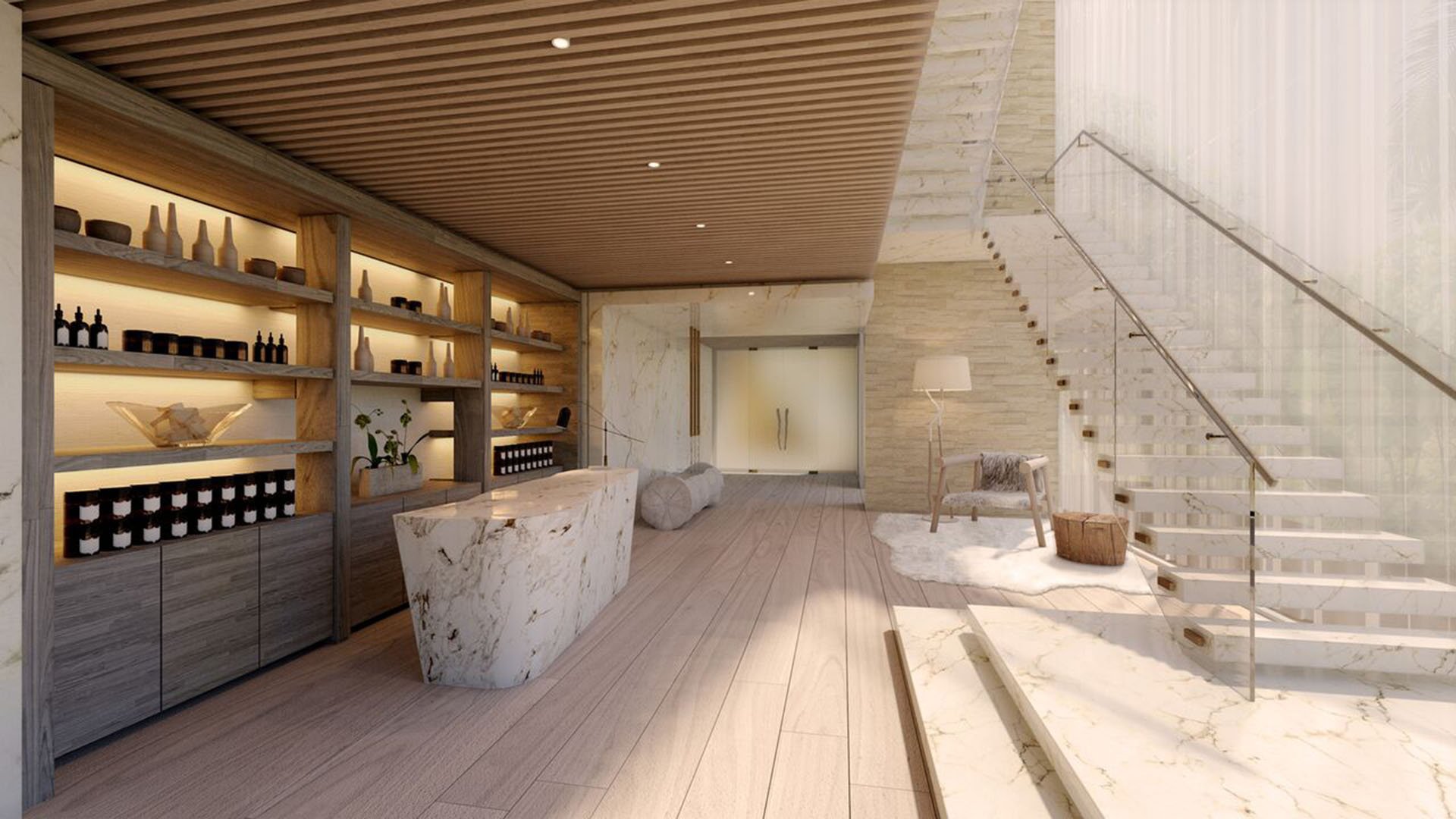
Auberge’s appeal begins with separation. The property places emphasis on resident privacy, including distinct residential circulation and dedicated owner access points such as separate arrival pathways and elevators. That design logic matters because privacy in an oceanfront condominium is rarely just about security. It is also about minimizing friction between private life and hospitality operations.
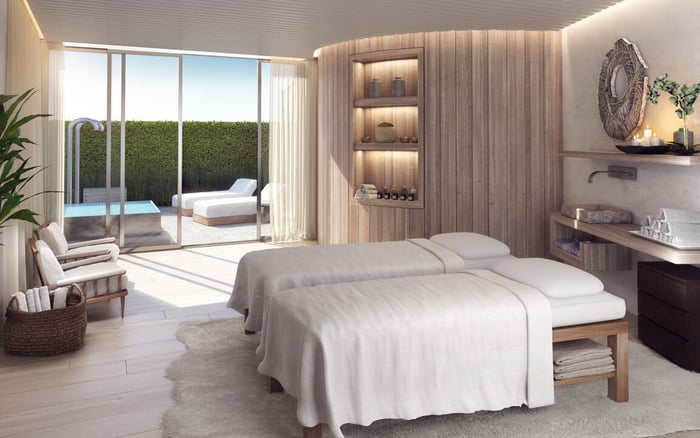
At Auberge, the amenity package is oriented toward resident exclusivity. Concierge support, beach access, and private lifestyle spaces are framed as part of a quieter sanctuary rather than a high-volume resort machine. The spa and wellness atmosphere also reads as more resident-oriented and lower-intensity than what buyers typically expect in a large hotel environment.
That lower-intensity posture is reinforced by the broader operating footprint described throughout this comparison. In practical terms, the property reads as calmer, with fewer moments when owners may feel the building is working first for transient guest flow.
For buyers who favor privacy-led living, this operating logic places Auberge closer in spirit to residential-first coastal addresses such as Ocean House Surfside or St. Regis® Residences Bahia Mar Fort Lauderdale, where wellness, beachfront access, and exclusivity are integral, but the property still reads first as home.
Four Seasons offers something equally compelling, but materially different. Here, the value proposition is not retreat from hospitality intensity. It is mastery of it. The property operates under a unified model that combines hotel services with private residences, creating a seamless branded experience that places convenience and consistency at the center.
Residents benefit from concierge services, housekeeping options, dining access, spa-related privileges, and the kind of round-the-clock hospitality attention many affluent buyers actively seek. For some owners, especially those who use Fort Lauderdale as a second-home destination, this integrated service model can feel less like a compromise and more like liberation. There is less operational burden, less self-management, and more immediate access to the rituals of hotel living.
The trade-off is structural. A building designed around smooth guest flow and service integration will generally create more shared infrastructure and more overlap between hotel and residential functions. That does not diminish quality. It simply means the experience is more active, more visible, and more resort-forward.
This is the same broad buyer psychology that supports interest in other hospitality-led concepts such as Riva Residenze Fort Lauderdale, St. Regis® Residences Bahia Mar Fort Lauderdale, and Ocean House Surfside, where the proposition includes not only real estate, but also a service ecosystem that remains central to the identity.
Buyers often assume resort intensity is an abstract branding issue. In practice, it is highly tactile.
First, it appears in circulation. Auberge is framed here as reducing resident-guest overlap, which helps preserve a sense of ownership territory. Four Seasons favors seamless movement across a broader hospitality environment, which can feel dynamic and well-orchestrated, but less insulated.
Second, it appears at the beach. Auberge’s beach-oriented amenities align more closely with buyers seeking a quieter residential sanctuary. Four Seasons offers hotel-quality beach service, but the atmosphere is more shared and active because hotel guests are part of the equation.
Third, it appears in wellness and dining. Auberge’s spa environment leans intimate and resident-oriented. Four Seasons operates with the tempo of a full-service resort, where restaurants, spa programming, and hospitality operations create visible all-day activity.
For some buyers, especially those who entertain frequently or expect immediate service across every touchpoint, Four Seasons will feel richer. For others, especially those sensitive to ambient traffic and overlap, Auberge will feel more composed.
Another important distinction is how each property may feel once the glamour of arrival wears off and ownership becomes a daily pattern.
Auberge is presented as a more settled living environment over time, with a stronger residential emphasis. The building’s identity remains luxurious, but it may feel more anchored in resident priorities.
Four Seasons remains more closely tied to brand standards, with stronger ongoing oversight of service delivery and hospitality positioning. That can be highly attractive for buyers who want operational consistency and an internationally legible standard of luxury. It can also reinforce the resort-style atmosphere, because the brand promise depends on maintaining a certain level of service intensity.
That distinction matters in Broward because the area’s branded landscape is becoming more nuanced. A buyer considering Auberge or Four Seasons may also look at Riva Residenze Fort Lauderdale and St. Regis® Residences Bahia Mar Fort Lauderdale and realize that the strongest differentiator is no longer merely finishes or views. It is the governance and lifestyle architecture behind the address.
Auberge is the stronger fit for the buyer who wants privacy to be operational, not symbolic. This is the owner who values distinct residential circulation, lower guest overlap, a quieter beach rhythm, and a property that reads as a home first and a hospitality environment second. It is especially compelling for full-time residents and second-home owners who want discretion without giving up service entirely.
Four Seasons is the stronger fit for the buyer who wants hospitality to be ever-present and expertly delivered. This owner prizes branded convenience, integrated service, dining access, and the confidence that comes from a globally disciplined operating model. For some, the activity level is not a drawback but a feature.
In other words, both can be excellent choices in Fort Lauderdale. But they are excellent for different reasons. Auberge offers lower resort intensity and stronger resident privacy. Four Seasons offers deeper service integration and a more active branded lifestyle.
For a luxury audience, the most sophisticated question is not which name sounds more prestigious. It is which building protects the way you actually want to live.
If your ideal oceanfront residence feels like a sanctuary with hospitality carefully contained, Auberge has the edge. If your ideal residence behaves like a private extension of a five-star hotel, Four Seasons is the more natural fit. In this comparison, privacy and service are not opposites, but each property places one ahead of the other.
Is Auberge Beach Residences & Spa Fort Lauderdale more private than Four Seasons Hotel & Private Residences Fort Lauderdale? Auberge is presented here as the more residential-first option, with greater emphasis on owner privacy and reduced guest overlap.
Does Four Seasons Fort Lauderdale offer more service integration than Auberge? Yes. The article positions Four Seasons as the more hospitality-led experience, with service and convenience at the center.
Which property feels less like a hotel in daily life? Auberge generally fits that description more closely because the comparison frames it as quieter and more resident-oriented.
Which building has the stronger resort atmosphere? Four Seasons does. Its integrated hotel-and-residences model creates more visible activity across shared spaces and amenities.
Is Auberge still service-oriented even though it is more private? Yes. The distinction is not the absence of service, but the way service is layered into a more residential setting.
Is Four Seasons better for buyers who want turnkey convenience? It may be. Buyers who prioritize branded consistency, hospitality access, and a highly serviced lifestyle may lean toward Four Seasons.
Does resident-guest overlap differ between the two? Yes. That difference is one of the core themes of the comparison, with Auberge leaning more insulated and Four Seasons more integrated.
Which property may appeal more to full-time residents seeking calm? Auberge may be the stronger fit for that profile because it is described as more composed and privacy-led.
Why does operating model matter in a Fort Lauderdale comparison? Because daily experience often comes down to circulation, amenity use, beach atmosphere, and how much hotel activity surrounds residents.
What is the best way to shortlist comparable options for touring? Start with location fit, delivery status, and daily lifestyle priorities, then compare stacks and elevations to validate views and privacy.
If you'd like a private walkthrough and a curated shortlist, connect with MILLION Luxury.
If branded residences are on your mind — as a home or as an allocation — we would be glad to share what we are seeing, privately.
Begin a quiet conversation