A buyer-focused MILLION Luxury editorial on what truly matters to art collectors in South Florida residences: uninterrupted wall planes, controllable daylight, and the discipline to avoid unsupported building claims.
For seasoned collectors, a residence is not simply a backdrop for art. It is an instrument that either supports a collection or quietly compromises it. In South Florida, that question becomes especially acute because many of the region’s most desirable buildings celebrate sweeping glass, dramatic water views, and open-plan living. Those qualities are seductive, but they can work against the practical demands of displaying paintings, photography, works on paper, and other light-sensitive objects.
The most sophisticated buyers tend to look past generic luxury cues and focus on a narrower set of priorities: long, uninterrupted wall runs, thoughtful transitions between public and private rooms, ceiling heights that allow larger-scale works to breathe, and the ability to modulate daylight rather than simply admire it. Light is one of South Florida’s great blessings, but for collectors it must be controlled, filtered, and choreographed.
That is also why broad claims about the “best” building for collectors deserve caution. A beautiful tower may still offer too much glazing, too few solid partitions, or layouts that prioritize panorama over placement. For an art-led buyer, the better question is not which building is most famous, but which home can function as a livable gallery without sacrificing privacy, comfort, and conservation discipline.
1. No verified building could be ranked - source-backed hierarchy unavailable
A definitive number-one choice cannot be responsibly assigned from the material available because the underlying research does not establish any individual building with verifiable floor-plan, glazing, or current listing detail. For an art collector, those omissions are decisive, not minor.
Without confirmed information on wall continuity, orientation, window exposure, and shading strategy, a top slot would amount to decorative editorializing rather than a meaningful recommendation.
2. No verified building could be ranked - no address-level property evidence supplied
The second position remains unassigned in practical terms because the available material does not identify a specific South Florida building with enough detail to assess gallery potential. There are no documented residences, no reliable plan comparisons, and no disclosed light-control features to weigh.
For serious buyers, this matters because art placement is intensely plan-dependent. A building can only earn consideration once its layouts and facade conditions are examined residence by residence.
3. No verified building could be ranked - categories are broader than buildings
The third position highlights another important distinction: area categories are not the same as named buildings. Museum-adjacent enclaves, design-centered districts, and beachside luxury corridors may all be promising territory, but they are starting points for curation, not ranked answers.
Collectors shopping at the top of the market typically begin with neighborhood logic, then narrow to buildings, and finally to the exact line or residence that offers the right wall geometry and light discipline.
4. No verified building could be ranked - no support for glazing or layout comparisons
A credible fourth-place selection would require direct comparisons of glazing percentages, room proportions, exposure, and shading options. None of that is established here. And for art-focused ownership, glazing is not a style note. It is a core performance variable.
Too much uninterrupted glass can limit hanging opportunities, increase glare, and complicate conservation. The best homes for collectors often strike a more intelligent balance between view and vertical surface.
5. No verified building could be ranked - current-market verification remains essential
The final position underscores the reality that luxury inventory and building positioning can change quickly. Current offerings, recently completed residences, and newly disclosed plan packages all matter when evaluating collector suitability.
In other words, a proper top five in this niche should be assembled from live availability, current plans, and disclosed architectural details, not reputation alone.
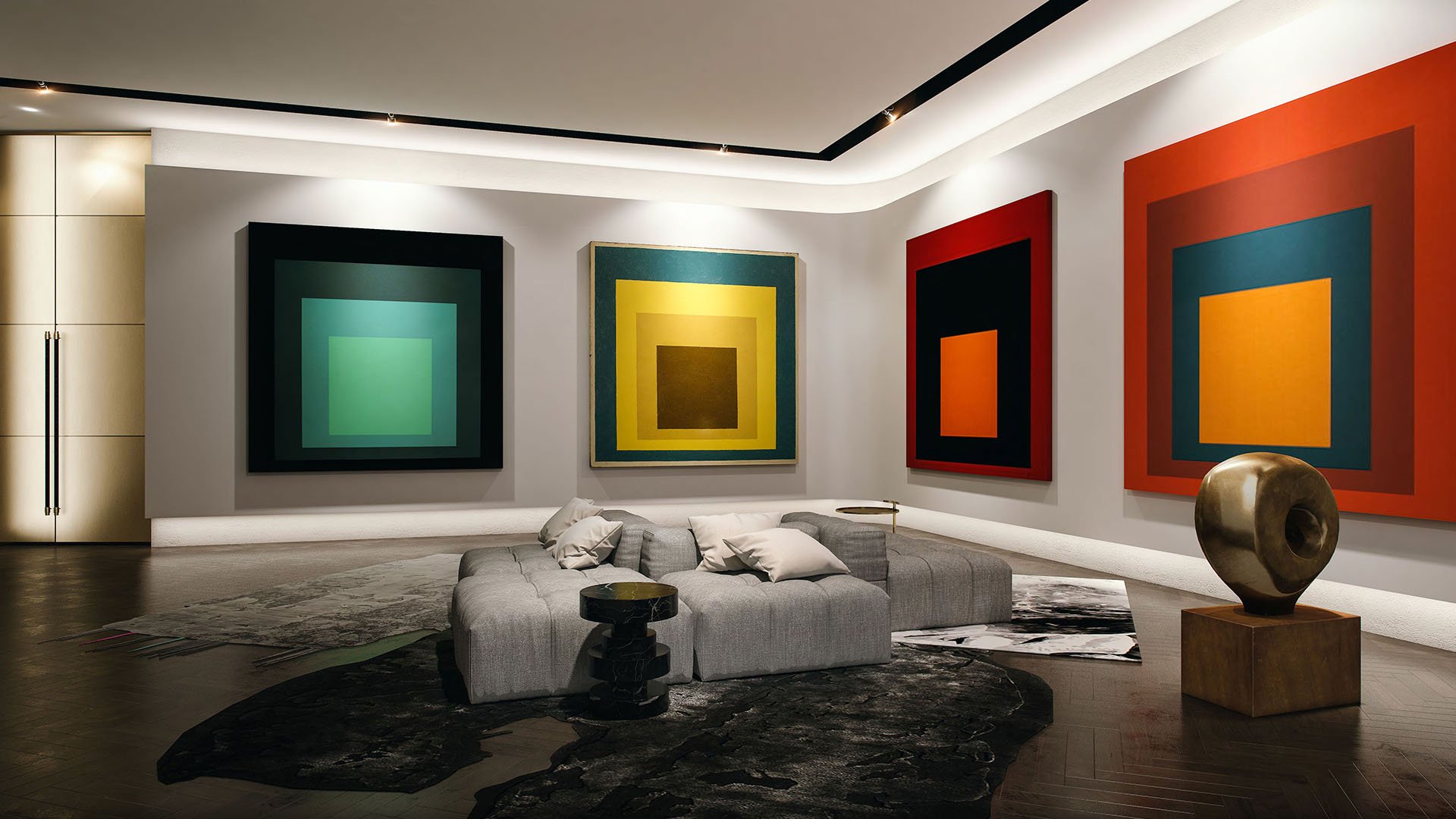
For collectors, the most valuable apartment feature may be the least glamorous one: a clean wall. In plan review, look first for formal galleries, entry sequences with art moments, long corridors that can hold series work, and living areas with at least one major uninterrupted vertical surface. Residences that are over-articulated with corners, excessive built-ins, or continuous glass may photograph beautifully while functioning poorly.
Ceiling height is the next filter. Grand volume gives larger works authority, but only if the wall beneath it remains usable. Orientation also matters. East light, west light, and all-day southern exposure behave differently across seasons and times of day. Motorized shading, layered window treatments, and lighting plans with museum-grade flexibility should be part of the conversation early, not treated as an afterthought.
A buyer considering The Residences at 1428 Brickell or St. Regis® Residences Brickell should read every plan through that lens: not only where the views open, but where the walls begin. In the same spirit, a beachfront option such as The Perigon Miami Beach may appeal to buyers drawn to sculptural architecture, but the true test is whether the interior composition gives art enough calm, shaded surface to hold its own.
Certain South Florida geographies remain inherently attractive to collectors because they connect lifestyle with cultural fluency. Residences near museum institutions and design-oriented neighborhoods can make sense for buyers who want their home and art life to operate in the same orbit. That is not a substitute for plan quality, but it is a meaningful layer of the decision.
Edgewater and Downtown attract interest because of their proximity to major cultural destinations and evolving luxury stock. Design District-adjacent areas also appeal to buyers who think in terms of furniture, materials, and visual culture rather than simple square footage. Brickell, meanwhile, offers a polished urban setting where newer developments may provide the technical systems collectors want, provided the layouts do not over-prioritize glass.
In quieter enclaves, a project like Villa Miami can enter the conversation for buyers drawn to boutique-style exclusivity, while Arte Surfside may appeal to those who prefer a more restrained coastal setting with a collector’s sensibility. These are not rankings. They are examples of the kinds of projects a discerning buyer may want to inspect in person with art placement in mind.
South Florida’s market often sells sunlight as an unqualified positive. For art, the reality is more nuanced. Daylight gives rooms energy and dimension, yet unmanaged exposure can flatten color, create reflections, and make certain walls unusable for important works. The collector’s objective is not darkness. It is calibrated light.
That means evaluating where direct sun lands, when it arrives, how easily it can be softened, and whether artificial lighting can take over elegantly after sundown. A residence with fewer but better-placed windows may outperform a more dramatic all-glass apartment if it preserves flexibility. The same is true of corner units, which can be visually thrilling yet difficult for significant wall-based collections.
This is where disciplined pre-purchase review becomes indispensable. Buyers should examine developer plans, ask for finish and glazing details, and test every major room against the realities of art installation. If the residence cannot comfortably hold the collection, the view alone is not enough.
The most refined art homes in South Florida rarely announce themselves with obvious labels. They reveal their value through proportion, restraint, and control. The right residence allows a collection to feel inevitable within the space rather than negotiated around it.
For that reason, the best buyer strategy is to treat each prospective residence as a private exhibition environment. Walk the plan. Measure the usable walls. Study the sun. Consider where a major canvas, a photograph sequence, or a sculpture pedestal would live. Then decide whether the architecture serves the collection or merely competes with it.
What is the single most important feature for art collectors in a condo? Uninterrupted wall space is often the first filter because it determines whether important works can be placed with confidence.
Are all-glass residences bad for art collections? Not necessarily, but they can reduce hanging surfaces and complicate glare, heat, and UV management if not carefully controlled.
Why does light control matter so much in South Florida? The region’s strong sun is beautiful for living, yet collectors need it filtered and directed to protect and present art properly.
Should buyers prioritize neighborhood or floor plan first? Floor plan usually comes first for collectors, with neighborhood serving as a secondary lifestyle and cultural consideration.
Can a beachfront residence still work for serious collectors? Yes, if the home offers enough solid walls, layered shading, and balanced room proportions rather than uninterrupted exposure.
Is ceiling height more important than square footage? For some collections, yes. Height can elevate presentation, but only when the accompanying wall surfaces remain usable.
Do corner units help or hurt art display? They can do both. Extra light and views are appealing, but the added glass often reduces clean hanging opportunities.
What should buyers review before choosing a building? They should study floor plans, facade exposure, shading options, and room-by-room wall geometry before focusing on finishes.
Are new-construction projects automatically better for collectors? No. Newer buildings may offer advanced systems, but their layouts can still favor glass over practical display surfaces.
How should a collector approach a final walkthrough? Bring the collection into the conversation directly by mapping key works to specific walls, sightlines, and lighting conditions.
To compare the best-fit options with clarity, connect with MILLION Luxury.
If branded residences are on your mind — as a home or as an allocation — we would be glad to share what we are seeing, privately.
Begin a quiet conversation