For yacht-minded Downtown Miami buyers, waterfront prestige is only the opening question. The decisive issues are the legal form of any marina access, whether related privileges transfer with a residence, and whether a specific vessel can safely navigate to and use the facility under current rules.
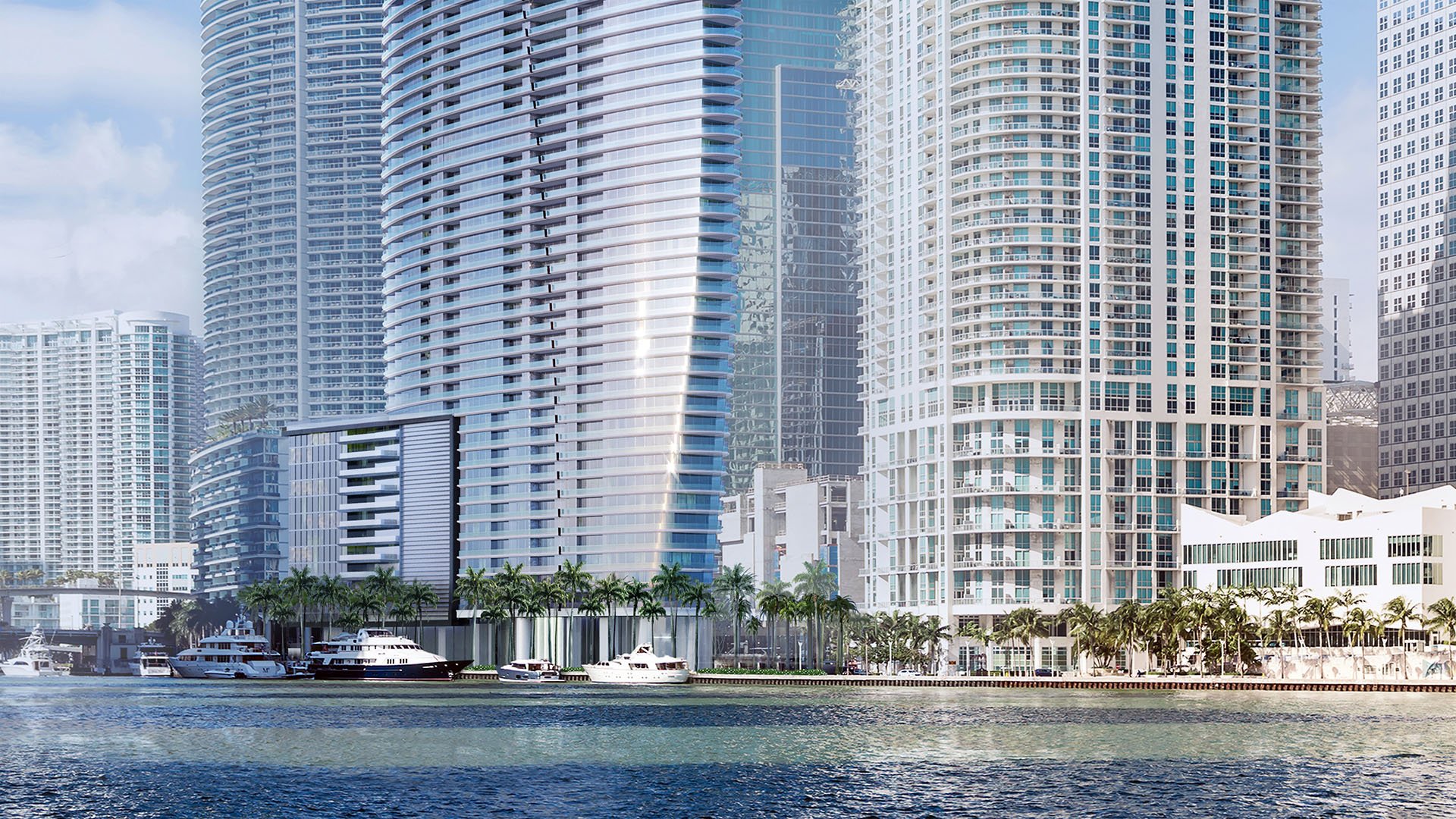
For a yacht-owning buyer, a Downtown Miami residence cannot be evaluated through its interiors and water views alone. The more consequential inquiry begins at the shoreline: what marina-related right accompanies the condominium, how that right may be exercised, whether it can be restricted, and what happens when the residence is sold.
That framework is central to a responsible comparison of Aston Martin Residences Downtown Miami and Faena Residences Miami Downtown Miami. Buyers should create a separate diligence file for each property rather than assume that similar waterfront language represents the same legal or operational arrangement.
A marina view, marina access, and marina ownership are three different propositions.
Water access can be structured in several ways. A boating benefit might be tied to a unit, shared among residents, administered through reservations, governed by a separate license, or controlled by an operator. Each structure can produce a different result for availability, cost, control, liability, and resale.
The first task is to identify the controlling instrument. Buyers should review the condominium declaration and exhibits alongside any marina rules, dock license, assignment agreement, fee schedule, reservation policy, or operator agreement. Marketing language should not replace the documents that define the right.
The distinction matters because a convenient arrival point does not necessarily amount to an exclusive berth. Likewise, access available to an owner today may not automatically pass to a purchaser tomorrow. The transaction should clearly identify whether the boating privilege is attached to the unit, separately assigned, shared, time-limited, subject to approval, or revocable.
The same sequence of questions should be applied to both Downtown Miami projects. Does a residence include a specific marina interest? If so, where is that interest documented? Is it exclusive or shared? Are reservations required? Do fees apply? Can the arrangement be suspended or modified? Does it pass with title, or must a future buyer seek a new approval?
No answer should be carried from one property to the other. Each condominium can have its own declaration, operating rules, insurance requirements, guest policies, and procedures. Marina information associated with a different South Florida project or location should not be used to fill a gap in the Downtown Miami file.
The same discipline is useful when placing these residences beside other Downtown Miami options, including Waldorf Astoria Residences Downtown Miami and One Thousand Museum Downtown Miami. A meaningful comparison should separate legally documented rights from shared amenities, discretionary services, and waterfront positioning.
Even when a current owner can use a dock or marina facility, transferability remains a separate issue. A privilege may pass with the unit, require consent, involve a new agreement, carry an additional charge, or end when title changes. These possibilities have different implications for both use and resale.
Buyers should ask who controls a transfer and what standard applies. The documents should identify whether approval comes from the condominium association, a marina operator, another entity, or a combination of parties. They should also reveal any notice period, application process, insurance condition, waiting list, fee, or restriction that could affect a future transaction.
Any seller representation about boating access should be reconciled with the governing documents. If marina use is material to the purchase, the agreement and diligence process should address that priority directly rather than leave it to an informal understanding.
Bridge clearance is important for a vessel with substantial air draft, but it is not the only navigation question. A route and facility must also be evaluated for permitted length, beam, draft, turning space, approach conditions, tides, currents, fendering, shore services, and operational limits.
A broad statement about water access should therefore be tested against the buyer's actual vessel. The marina or responsible operator should review the specifications in writing, while the buyer's captain and appropriate maritime advisers can assess the route and practical constraints. Conditions can vary, so the review should be current when the buyer is making a contractual decision.
For Faena, the analysis must focus specifically on the Downtown Miami property. Bridge conditions, slip arrangements, or navigation claims associated with another Faena-branded location should not be imported into the file. For Aston Martin, the buyer should likewise rely on the current governing and operating documents applicable to that residence.
Begin by determining the legal character of the waterfront facility. The declaration and related exhibits should indicate whether it is a common element, limited common element, separate interest, licensed area, concession, or operator-controlled amenity. Counsel can then assess how that structure affects ownership, access, enforcement, and transfer.
Next, review how the facility operates. Ask for current rules covering reservations, priority, duration of use, guests, crew, provisioning, insurance, cancellations, service availability, maintenance, and fees. Confirm whether access is guaranteed, subject to capacity, or available only under specified conditions.
Then investigate transferability. Determine whether the boating privilege follows the unit automatically, needs separate consent, or must be replaced with a new agreement. Identify every party with approval authority and request written clarification of any ambiguous provision.
Finally, submit the vessel profile. The review should address overall length, beam, draft, air draft, turning requirements, route constraints, and the facility's current operating limits. Written confirmation is more useful than a general assurance because it connects the buyer's specific vessel to the actual route and access arrangement.
A documented and transferable marina interest may warrant different treatment from a shared, conditional, or revocable privilege. Buyers should therefore separate the emotional appeal of arriving by water from the durability and practical availability of the underlying right.
This approach also improves comparisons between residences. Instead of asking which property uses the strongest waterfront language, the buyer can ask which documents and operating conditions best support the intended pattern of use. That analysis should account for frequency, vessel size, reservation needs, crew logistics, recurring costs, and the possibility of resale.
For Aston Martin Residences and Faena Residences Miami, the prudent conclusion is not to assume equivalence or choose a winner before reviewing the files. The better choice is the residence whose documented rights, transfer provisions, route conditions, and operating rules align with the buyer's vessel and ownership plan.
For confidential guidance on comparing Downtown Miami waterfront residences and their governing documents, connect with MILLION.
If branded residences are on your mind — as a home or as an allocation — we would be glad to share what we are seeing, privately.
Begin a quiet conversationA buyer should not assume that it does. The condominium declaration and any marina agreement should identify whether a specific property interest accompanies the unit.
That question requires confirmation in the Downtown Miami project's governing documents. Marina terms from another property should not be applied to this residence.
No. Access may be shared, reserved, licensed, operator-controlled, or otherwise limited without conveying ownership of a specific slip.
Transferability depends on the controlling documents. A privilege may pass with title, require approval, involve a separate fee, or end upon resale.
Request the condominium declaration and exhibits, marina rules, fee schedule, booking policy, and any dock license, assignment, or operator agreement.
Each property can have different legal rights, operating rules, fees, and approval procedures. Terms from one development should not be assumed to apply to another.
The review should cover overall length, beam, draft, air draft, and turning requirements. The operator should also address applicable route and facility limits.
No. Draft, beam, turning space, tides, currents, approach conditions, and operating rules can also affect compatibility.
The responsible marina or operator should provide written confirmation. A captain and appropriate maritime advisers can separately evaluate the route and operating conditions.
A documented, transferable right may be treated differently from a shared or revocable privilege. Clear terms help future buyers understand what accompanies the residence.