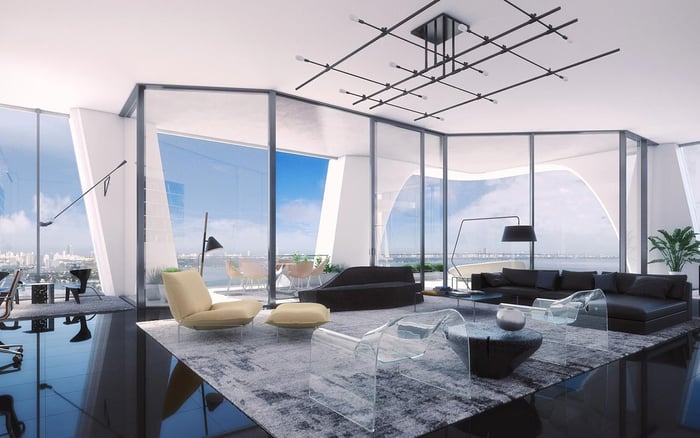
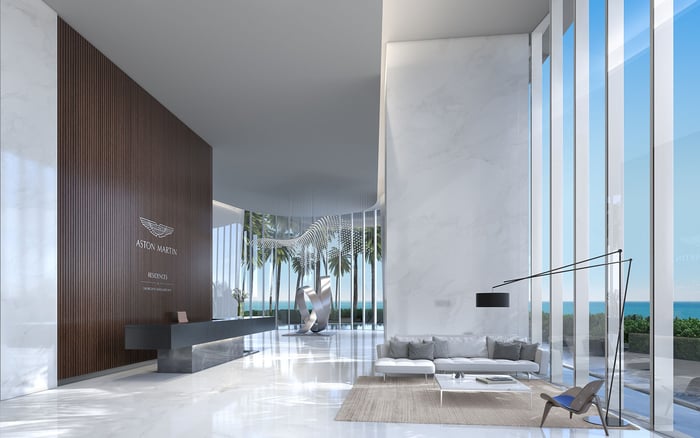
A buyer-focused framework for evaluating privacy at Aston Martin Residences Downtown Miami through arrival design, elevator controls, security procedures, service circulation, and day-to-day management.
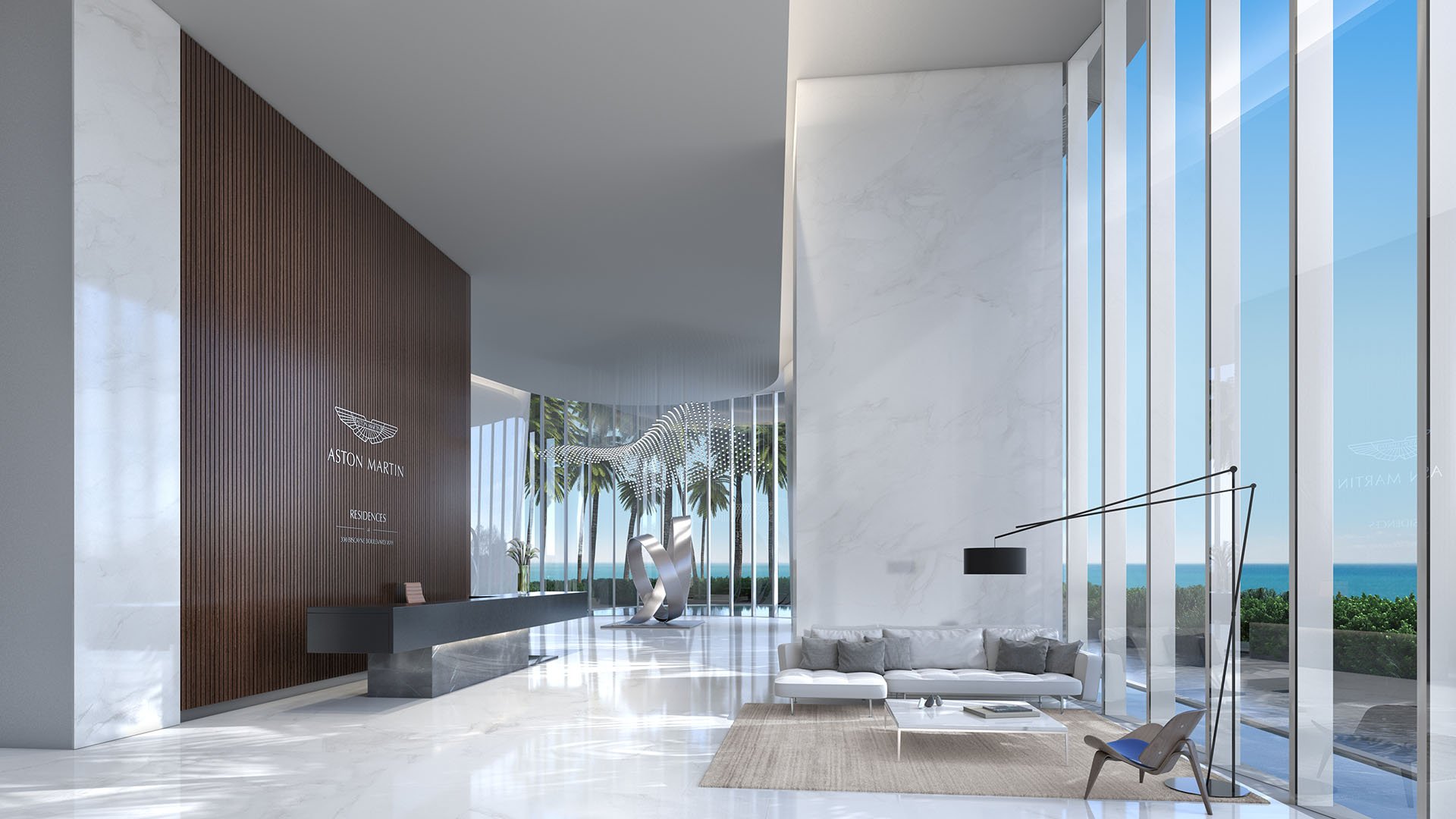
At Aston Martin Residences Downtown Miami, a privacy review should extend beyond any single design feature. Buyers can assess the complete path from arrival through reception, access control, elevator circulation, residential corridors, and the residence entrance.
The same review should account for guests, deliveries, vendors, domestic staff, and amenity visits. Architecture establishes the physical framework, while management procedures determine how that framework operates throughout the day.
A lobby review should begin with how clearly public, resident, guest, and service movements are organized. Buyers can observe whether arrival points feel controlled, whether reception has clear sightlines, and whether waiting visitors remain separate from private residential circulation.
The most useful inspection takes place under realistic conditions. Visiting at different times can reveal how valet activity, guest arrivals, deliveries, and resident traffic interact when demand increases.
Buyers should ask who may enter each arrival area, how visitors are verified, where guests wait, and how exceptions are handled. These questions help distinguish a visually private setting from an operationally disciplined one.
Elevator privacy requires residence-specific diligence. A buyer should request a walkthrough of the exact route from the arrival area or parking level to the residence, noting every controlled door, shared waiting area, transfer point, and corridor.
Questions should cover guest authorization, destination permissions, credential replacement, after-hours access, and procedures during maintenance or an override. Buyers should also confirm which elevator arrangements apply to the residence under consideration rather than relying on broad descriptions.
For context, buyers may compare the circulation approach with other Downtown Miami residential projects, including Waldorf Astoria Residences Downtown Miami. The comparison should focus on the actual route and operating protocol relevant to each residence.
A security review should consider both access technology and human oversight without seeking sensitive operational details. Buyers can ask management to explain how credentials are issued, updated, and revoked; how visitors are authenticated; and how unauthorized entry attempts are addressed.
It is also useful to understand who monitors primary access points, how residents contact security, and what procedures apply when a guest, vendor, or employee arrives unexpectedly. The goal is to evaluate clarity, consistency, and convenience while respecting the integrity of the security system.
Service circulation can materially affect residential privacy. Buyers should request an explanation of how domestic staff, contractors, caterers, deliveries, and move-in teams enter the property and reach their destinations.
Important questions include whether service activity uses separate routes, where deliveries are transferred, how personnel receive access, and whether larger moves or installations require scheduling. A buyer should also ask whether service circulation intersects with residential corridors or amenity arrival areas.
Timing matters as much as physical separation. Management procedures for busy periods can determine whether service activity remains discreet when resident and guest traffic is highest.
Amenity circulation should be part of the same evaluation. Buyers can ask how residents and guests gain access, where visitors wait, and how private events, catering teams, or maintenance personnel reach reserved spaces.
A useful walkthrough follows the route from the residence to the principal amenity areas and back again. It should identify shared elevator banks, access-controlled thresholds, reception points, and potential intersections with service traffic.
Privacy procedures can vary among branded residences, even when their marketing emphasizes discretion and service. In addition to the Downtown Miami comparison, buyers may review the arrival and circulation experience at The Residences at Mandarin Oriental, Miami.
The relevant comparison is not which project uses the strongest language. It is which residence offers the clearest, most comfortable, and most consistently managed journey for the buyer’s household and expected pattern of use.
Before making a decision, buyers should walk each relevant route and request written clarification where an arrangement is residence-specific. The review should cover normal access, guest arrivals, staff entry, deliveries, amenity visits, maintenance periods, and unusual situations.
A composed experience depends on the interaction of design, technology, staffing, and policy. Testing that interaction directly gives a buyer a more useful view than evaluating isolated features.
What should a privacy review cover? It should examine arrival, reception, controlled thresholds, elevators, corridors, service routes, and access to the residence.
Why should buyers inspect the property at different times? Conditions can change as resident, guest, valet, delivery, and service activity rises or falls.
What should buyers ask about lobby access? Ask who may enter, how visitors are verified, where guests wait, and how reception handles exceptions.
How should elevator privacy be evaluated? Walk the residence-specific route and identify every shared area, controlled door, transfer point, and authorization step.
Should elevator access be confirmed for a specific residence? Yes. Buyers should verify the arrangement that applies to the residence they are considering.
What security questions are appropriate? Buyers can ask about credential management, visitor verification, resident support, and general response procedures without requesting sensitive details.
Why does staff circulation matter? The routes used by employees, vendors, and contractors can affect how often service activity intersects with residents and guests.
What should buyers verify about deliveries and move-ins? Ask where deliveries are transferred, how access is authorized, which routes are used, and whether larger activities require scheduling.
How do amenities affect privacy? Amenity visits can introduce guest, event, catering, and maintenance traffic that should be included in the circulation review.
What is the best way to compare privacy between projects? Compare residence-specific routes and management procedures rather than relying on broad marketing descriptions.
For a confidential assessment and a building-by-building shortlist, connect with MILLION.
If branded residences are on your mind — as a home or as an allocation — we would be glad to share what we are seeing, privately.
Begin a quiet conversation