In South Florida’s luxury landscape, the private athletic club is no longer an amenity. It is a positioning statement. High-impact training zones and recovery rooms, in particular, have become the two-pole engine of modern performance living: one space designed to elevate output, the other to protect longevity. This editorial assesses how these rooms tend to intersect at a member-forward club like Monarch Athletic Club, and what discerning buyers and residents should look for when evaluating whether a fitness program is truly “high performance” or simply well photographed. The lens is intentionally practical: noise, materials, circulation, privacy, and day-to-day usability matter as much as brand-name equipment. Rather than treating training and recovery as separate experiences, the most compelling clubs choreograph them as a single sequence. That intersection, where intensity meets restoration, is where value is either compounded or lost.
High-impact training and recovery used to live in separate worlds: the serious gym on one side of town, the spa on the other, and a commute between them that quietly killed consistency. In today’s luxury residential ecosystem, that kind of friction doesn’t hold up. A club-level program succeeds when it reduces steps, decisions, and exposure while increasing repeatability. The “intersection” is not a design flourish. It is an operational advantage.
For residents who treat performance as a lifestyle, the real question is not whether a club offers both training and recovery. It is whether the transition between the two is intelligently planned. When those rooms operate as a single continuum, members move from impact to downshift without losing momentum-or privacy. When they’re treated as check-the-box spaces, recovery becomes an afterthought, and high-impact becomes a noise complaint waiting to happen.
This is also where luxury becomes measurable. Premium stone, flattering lighting, and branded machines can’t compensate for poor adjacency, weak sound isolation, or a confusing route that forces a sweat-soaked walk past social areas.
A high-impact room earns credibility through engineering, not slogans. Start with the fundamentals.
Flooring and subfloor assembly.
Impact training creates vibration, not just noise. A room that genuinely supports plyometrics, sled work, and dynamic lifting needs a resilient, multi-layer floor system designed to dampen shock. When clubs shortcut this, the evidence appears elsewhere: rattling fixtures, unhappy neighbors, or the quiet reprogramming of the room into a “light functional” studio.
Acoustics and containment.
High-impact spaces should function as acoustic capsules. That means insulated walls, tight door seals, and ceiling treatments that limit reverberation. Music can be energizing, but if it travels, it compromises every adjacent experience-especially recovery.
Air, heat, and humidity control.
Intensity generates heat and moisture quickly, particularly in South Florida. A credible room feels fresh at peak load, not only at 10 a.m. on a weekday. Buyers evaluating a building’s amenity deck often overlook ventilation until the first summer.
Clear zones and safe circulation.
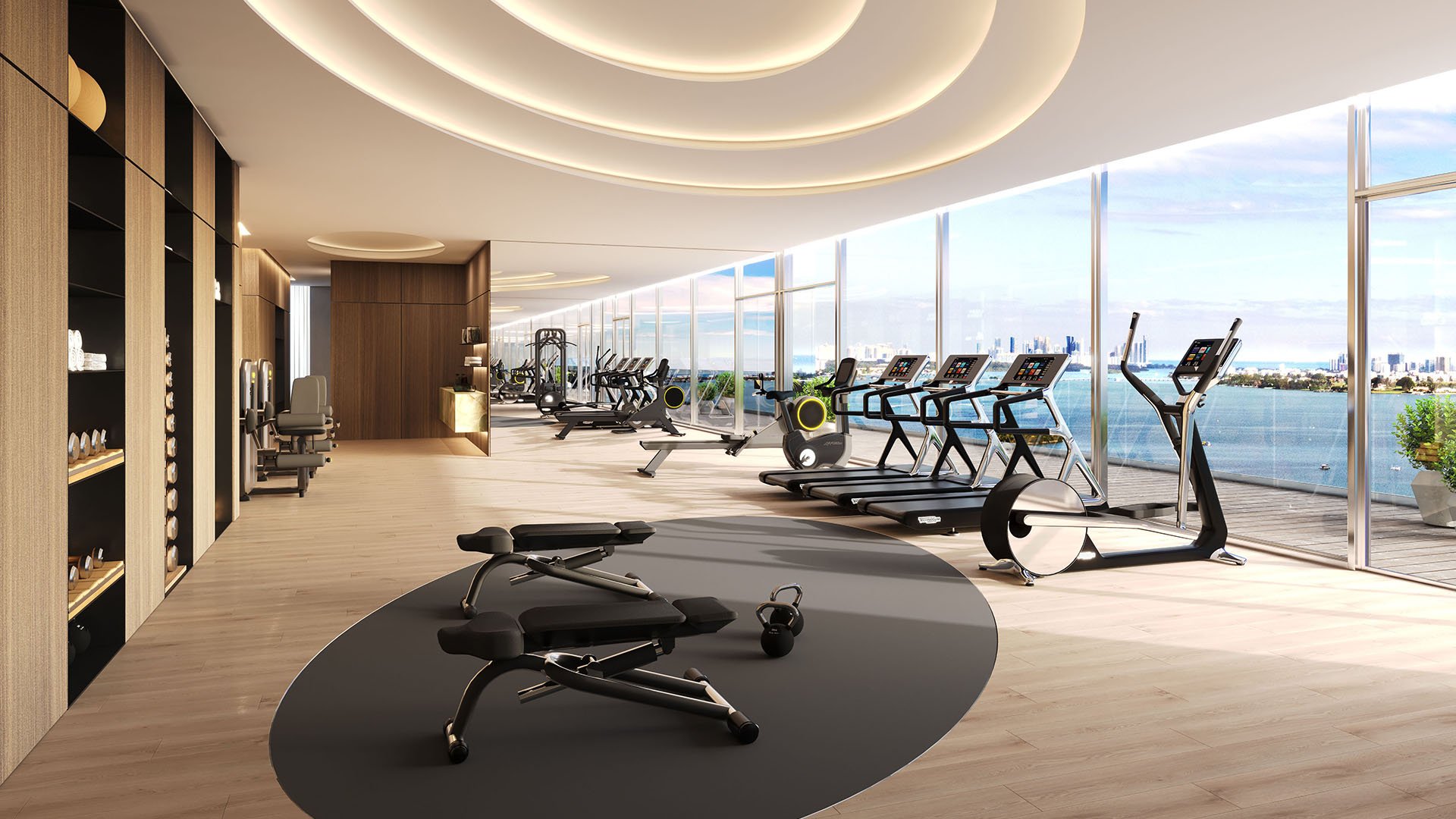
High-impact training should read like a well-edited floor plan: racks and platforms positioned away from walk paths, turf or functional lanes that don’t intersect with free weights, and enough perimeter clearance to reduce “near miss” traffic.
In Brickell, where vertical living and amenity density can be intense, residents tend to prioritize clubs that are performance-forward and discreet. That same design discipline appears in buildings that treat wellness as a daily standard, not an occasional perk, such as 2200 Brickell and Una Residences Brickell.
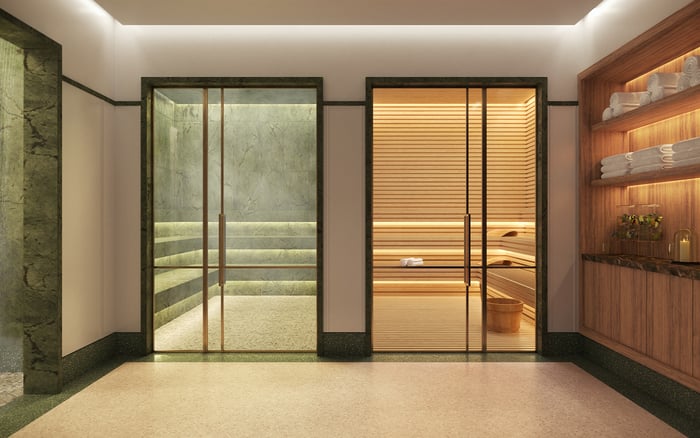
Recovery in a club setting shouldn’t be reduced to a single “relaxation” room with a pretty scent. At its best, it functions as a toolkit-supporting quick, repeatable routines as well as longer, restorative sessions.
Privacy is performance.
The strongest recovery suites protect modesty and reduce the social friction that keeps people from using them. A room can be beautiful, but if it feels exposed or awkwardly placed, it will be underused.
Calibration, not just comfort.
Recovery is about specific inputs and predictable outcomes. Spaces that encourage contrast, quiet, and consistency tend to deliver. Members should be able to step in for a targeted 10 to 20 minutes and leave feeling measurably reset.
Material choices that signal hygiene.
Recovery rooms must read as clean without feeling clinical. Non-porous surfaces where appropriate, thoughtful drainage in wet zones, and finishes that tolerate heat, moisture, and constant turnover aren’t glamorous-but they’re decisive.
In Miami Beach, where residents often balance social calendars with training schedules, the most compelling wellness environments pair restoration with restraint, aligning with the refined sensibility found around projects like The Perigon Miami Beach.
At Monarch Athletic Club intersections, the most buyer-relevant question is simple: does the club guide your behavior in the right direction? The best ones do-quietly.
The sequence should be intuitive.
High-impact to cooldown to recovery shouldn’t require backtracking. Ideally, there’s an intentional gradient: intensity rooms first, then a transitional zone for stretching and breathwork, then quieter recovery areas.
Time-to-recovery should be short.
If reaching recovery takes multiple turns, elevators, or public corridors, many members will skip it. The intersection should feel like a private “back of house” for members, even within a larger amenity deck.
Noise control is the make-or-break.
Recovery cannot succeed if bass, dropped weights, or instructor cues remain audible. When the intersection is done well, you sense the club’s energy without inheriting its noise.
Staffing and protocol matter.
Even the best-designed rooms fail without operational rigor. Towel logistics, cleaning cadence, and clear etiquette standards keep recovery spaces calm. Without that, recovery becomes a crowded lounge.
Luxury buyers often recognize quality by what they don’t experience: no smell, no echo, no bottleneck, no awkward encounter. A few signals are especially revealing.
Vibration isolation at boundaries.
If the club sits near residential stacks, pay attention to what’s above, below, and adjacent. The most thoughtful buildings isolate impact zones from quiet uses. When that isn’t possible, they over-engineer the assembly.
Lighting that supports both performance and calm.
High-impact training benefits from crisp, even illumination. Recovery benefits from softer, layered light. The best intersections allow a psychological shift without making it feel like you changed buildings.
Durability with discretion.
Performance spaces should stay pristine without constant babysitting. Matte, resilient finishes help conceal scuffs; hardware feels solid; corners and thresholds are protected.
Wellness has become central to how residents evaluate value-not because it’s trendy, but because it compresses time and improves daily living. A club that makes training and recovery effortless becomes part of a resident’s identity and schedule.
In Hallandale, where lifestyle often spans beach, golf, and a broader resort context, demand for integrated wellness has become especially pronounced. Projects that frame living as a full-spectrum experience, such as Shell Bay by Auberge Hallandale, reflect how the market increasingly values curated routines.
Farther north, buyers looking for beachfront ease often expect wellness spaces that feel private and hotel-level without the unpredictability of public facilities. That sensibility aligns with the amenity expectations surrounding 2000 Ocean Hallandale Beach.
A quick walk-through can reveal whether the intersection of training and recovery was designed for real use.
Listen before you look.
Stand at the recovery-room threshold and note what you hear. If you can clearly track the training playlist or the cadence of impact, the separation is inadequate.
Check the path.
Walk the route a member would take post-workout. Are there pinch points, social crossings, or areas where you’d feel exposed?
Scan for bottlenecks.
The best clubs anticipate peak periods. If lockers, towel pickup, and recovery entry cluster into one narrow zone, the experience will feel stressful when you’re seeking calm.
Observe the finishes.
In wet or heat zones, look for materials that can withstand constant use. In training zones, look for protected corners, stable equipment placement, and floor transitions that won’t curl or gap.
Ask about etiquette and maintenance.
A discreet, high-functioning club typically runs on clear norms. You’ll feel it in how orderly the space remains.
A sophisticated athletic club is often a microcosm of the entire property. If the club is engineered and operated at a high level, it usually signals that the developer and management understand resident experience in detail. If the club reads like a showroom-fragile finishes, awkward adjacencies-it can foreshadow other compromises.
For buyers who intend to live in their home rather than merely own it, the training-to-recovery continuum is a particularly sharp tell. It reveals whether the building supports routines that compound into well-being, or simply offers photogenic spaces.
What qualifies a training room as “high-impact” in a luxury club? It should support dynamic movement and heavy use with proper flooring, acoustics, and ventilation.
Why do high-impact and recovery rooms need separation? Recovery requires quiet and calm, while high-impact creates vibration and noise that must be contained.
Is proximity between training and recovery always better? Yes, if acoustic isolation is strong; otherwise, closeness can undermine the recovery experience.
What is the most common design mistake in club recovery areas? Placing them along high-traffic social paths, which reduces privacy and consistent use.
How can I tell if the room’s floor is built for impact work? Look for stable, resilient surfaces with no bounce, warping, or loud resonance underfoot.
Do recovery amenities increase resale appeal in South Florida? In many luxury segments, wellness programming is now a meaningful differentiator for buyers.
Should recovery rooms feel like a spa or a performance lab? The best ones balance both: a calming atmosphere with tools that support repeatable routines.
What operational detail most affects recovery-room quality? Cleaning cadence and towel logistics, which keep the environment quiet, fresh, and orderly.
How important is ventilation in high-impact spaces? It is critical, especially in humid climates, because heat and moisture build quickly during intensity.
What should I prioritize on a first tour of an athletic club? Listen for noise leakage and check the member flow from workout zones into recovery.
For a discreet conversation and a curated building-by-building shortlist, connect with MILLION Luxury.
If branded residences are on your mind — as a home or as an allocation — we would be glad to share what we are seeing, privately.
Begin a quiet conversation