A buyer-focused comparison of two Surfside ownership models, examining privacy, hospitality depth, hurricane re-entry and the practical limits of in-unit management.
For the seasonal resident, international owner or frequent traveler, a South Florida home is judged as much by what happens during an absence as by the quality of each arrival. This entry in MILLION’s Buyer's Guides considers Arte Surfside and The Surf Club Four Seasons Surfside through that practical lens: who watches the residence, who may enter it and how access changes after a hurricane.
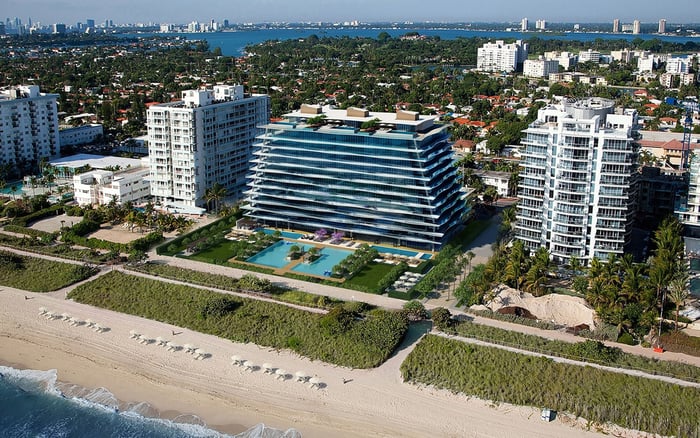
Both are oceanfront properties on Collins Avenue in Surfside, yet their operating identities differ materially. Arte is a deliberately intimate, 16-residence building. The Surf Club places private ownership within a Four Seasons-branded hotel-and-residence environment. Neither model is universally superior. The better fit depends on whether a buyer prioritizes controlled residential privacy or the depth of a larger hospitality platform.
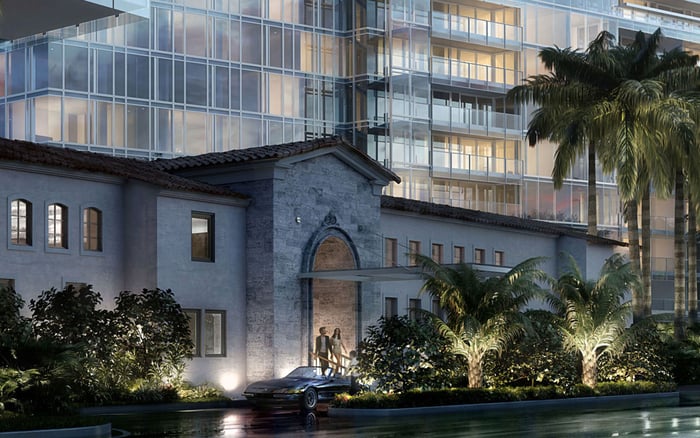
Arte’s compact scale supports discretion. Its published service program includes a residential butler, dedicated lifestyle concierge, on-site general manager, 24-hour security and 24-hour valet. Direct elevator entry with fingerprint recognition further controls circulation. Pool and beach service, direct beach access and dedicated chairs can make even a brief stay notably frictionless.
The amenities also support self-contained ownership: a 75-foot indoor lap pool, sauna, steam room, meditation pond, outdoor pool, fitness center, yoga studio, rooftop tennis court and dedicated pet-relief facilities. For a second-home buyer, the appeal is not simply abundance. It is the ability to arrive, settle in and depart with minimal logistical effort.
The Surf Club’s proposition is institutionally different. Its residences participate in a broader branded-hospitality setting, with 24-hour security, patrols and closed-circuit cameras among the disclosed protections. That larger platform may appeal to owners who prefer hotel-backed staffing and a wider service culture to the intimacy of a very small condominium.
Buyers exploring Surfside’s broader residential spectrum may also compare Eighty Seven Park Surfside or The Delmore Surfside, but the essential exercise remains the same: distinguish the building’s public service language from the rights, duties and response times defined in its governing and owner-service documents.
Branding, staffing and concierge access do not determine when an owner may return after an evacuation. Re-entry remains subject to municipal conditions, building clearance and each property’s emergency procedures. A staffed lobby cannot override unsafe roads, restricted zones, standing water, structural concerns or damaged electrical and gas infrastructure.
The decisive questions are procedural: Who conducts the first property inspection? At what point may residential staff enter private units? How are owners notified? Is access released simultaneously or in stages? Public-facing materials do not establish exact re-entry timelines, owner-only access rules or complete post-storm inspection sequences for either property.
An absent owner should request the current hurricane plan and confirm how management documents occupancy, emergency contacts and authorized keyholders. Accurate records matter both during an evacuation and throughout the controlled return that follows. Buyers should also determine whether a professional inspection is required before staff may address an interior condition.
Arte’s butler, concierge and on-site management structure supports hands-off ownership, but it does not, by itself, define what staff may do inside a vacant residence. The Surf Club’s patrols and camera coverage strengthen common-area oversight, yet its disclosed materials likewise do not establish the full scope of private-unit management.
Before closing, request a written matrix of included, separately billed and unavailable services. It should address water shutoffs, HVAC settings, alarm response, leak detection, deliveries, terrace preparation, vendor supervision and post-storm checks. Buyers should also verify guest procedures, minimum rental terms, smart-lock controls and the method used to record entry authorization.
This distinction is especially important at Arte. Full-service operating costs are distributed across only 16 residences, so association fees, reserves and the allocation of optional services warrant close review. At The Surf Club, buyers should focus on how hotel operations and residential obligations intersect, including which team receives a unit-level request and what response is contractually promised.
Arte is the clearer conceptual fit for a buyer who favors boutique privacy, limited residential circulation and biometric elevator access. Its service structure appears designed to preserve the feeling of a private home while reducing the practical burden of short stays.
The Surf Club is the more natural fit for an owner who wants branded-residence hospitality and the reassurance of a larger institutional environment. Its security platform is relevant during frequent absences, though buyers should not assume that common-area vigilance automatically includes interior inspections or household management.
The final decision should rest on documents rather than atmosphere. Review condominium materials, reserves, insurance responsibilities, emergency plans, guest and rental rules, extended-absence protocols and owner-service terms. The most valuable amenity may be a precise answer to a simple question: What, exactly, happens when the owner is not there?
Which property offers the more intimate residential setting? With only 16 residences, Arte offers the more compact operating scale.
Which model favors broader hospitality infrastructure? The Surf Club places owners within a Four Seasons-branded hotel-and-residence ecosystem.
Does hotel branding guarantee faster hurricane re-entry? No. Re-entry depends on municipal conditions, building clearance and property-specific emergency procedures.
Can Arte staff enter a vacant residence automatically? Published services do not establish that authority. Buyers should obtain written terms governing entry, authorization and scope.
Does The Surf Club disclose private-unit management details? Its disclosed security features include patrols and cameras, but they do not define the complete scope of in-unit care.
What should an extended-absence plan cover? It should address keyholders, alarms, HVAC, water, deliveries, terrace preparation, vendors and inspection reporting.
Why do Arte’s reserves and fees merit close review? Its full-service costs are shared across just 16 residences, making allocation and reserve strength especially consequential.
What security features distinguish Arte’s access model? Direct elevator entry with fingerprint recognition complements 24-hour security and valet service.
What should be checked before post-storm entry? Standing water, structural instability and damaged electrical or gas systems require attention, with professional clearance when necessary.
What is the clearest buyer-fit distinction? Arte favors boutique privacy, while The Surf Club favors a broader, hotel-integrated service environment.
If you'd like a private walkthrough and a curated shortlist, connect with MILLION.
If branded residences are on your mind — as a home or as an allocation — we would be glad to share what we are seeing, privately.
Begin a quiet conversation