A buyer-focused comparison of Armani Casa Sunny Isles Beach and Rivage Bal Harbour, examining brand value, architecture, privacy, neighborhood character, and which luxury ownership profile each tower suits best.
For a certain class of oceanfront purchaser, the decision is not simply tower versus tower. It is identity versus identity. Armani Casa Sunny Isles Beach appeals to the buyer who wants a residence to communicate something immediately recognizable: fashion lineage, design authorship, and a polished international vocabulary of luxury. Rivage Bal Harbour, by contrast, speaks to the buyer who prefers prestige that reads more quietly, where architecture, address, and privacy carry more weight than a logo.
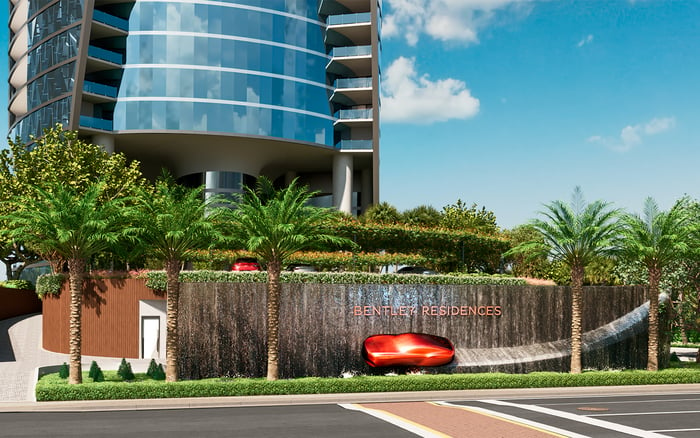
That distinction matters in South Florida, where neighborhood context can matter as much as the floor plan. In Sunny Isles, high-rise glamour is part of the appeal. The coastline has become a corridor of visually assertive luxury towers, a setting where branded real estate feels native rather than imposed. Seen alongside Bentley Residences Sunny Isles, St. Regis® Residences Sunny Isles, and The Estates at Acqualina Sunny Isles, Armani Casa reads as part of a broader market language shaped by visibility, identity, and waterfront theater.
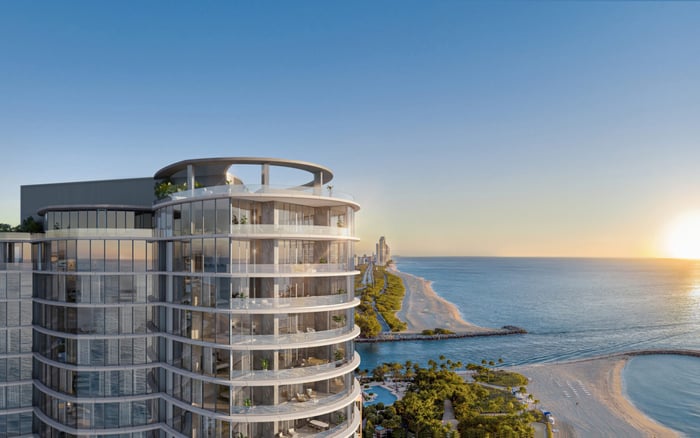
In Bal Harbour, the mood shifts. The village remains smaller in scale, more restrained in profile, and more closely associated with social privacy. Within that setting, Rivage Bal Harbour arrives as an architecture-led proposition that feels aligned with its surroundings. The comparison is not about which project is more luxurious. It is about what kind of luxury the buyer wants other people to notice.
Armani Casa Sunny Isles Beach was conceived as a branded oceanfront condominium in which the name is central to the proposition, not incidental. The project is framed around fashion-linked authorship and a design language intended to feel instantly recognizable to globally oriented purchasers.
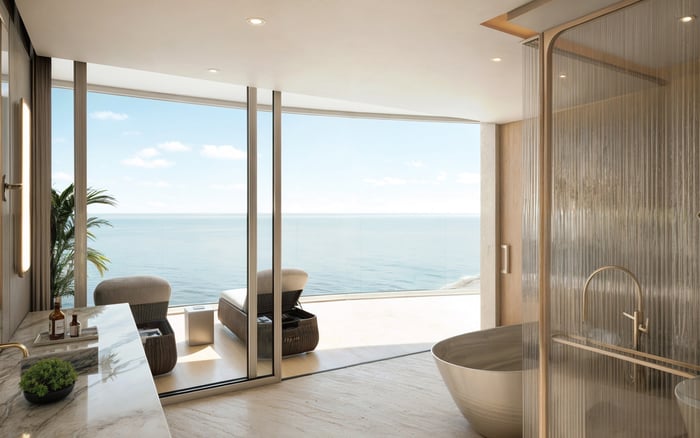
The attraction is not just the residence, but the broader branded experience around it. Interiors, finishes, and amenity spaces are positioned as extensions of a defined lifestyle aesthetic, with service and visual identity playing a meaningful role in the appeal. For some buyers, that matters enormously. A branded home can function as both a personal environment and a social signal, especially in an oceanfront market where trophy appeal remains part of the purchase logic.
This is why Armani Casa often resonates with the same buyer psychology that animates other branded properties across South Florida. The impulse is comparable, though expressed differently, to projects such as 888 Brickell by Dolce & Gabbana or Casa Bella by B&B Italia Downtown Miami, where authorship itself becomes part of the value proposition. In that sense, Armani Casa is not merely an oceanfront condominium. It is a branded residence whose appeal includes the cachet of branding itself.
Rivage Bal Harbour takes a notably different position. The project is defined more by architecture and site than by fashion licensing. Its market identity is built around the building, its placement, and a restrained expression of luxury rather than overt logo value.
That distinction becomes more compelling in Bal Harbour, where scarcity and discretion carry unusual power. Rivage is presented as a low-density oceanfront proposition that reinforces a private, owner-oriented experience. Its amenity positioning follows the same logic. Rather than leaning on a branded hospitality narrative, it emphasizes wellness, leisure, and exclusivity as resident benefits. For buyers who want a home to feel less performative and more protected, that difference is decisive.
Bal Harbour's established aura also does a great deal of work here. The village is associated with polished understatement, with luxury tied to limited scale, entrenched prestige, and the surrounding environment. In that setting, Rivage feels closer in spirit to Oceana Bal Harbour than to more logo-forward towers elsewhere along the coast.
The simplest way to understand this comparison is geographically. Sunny Isles rewards boldness. Bal Harbour rewards composure.
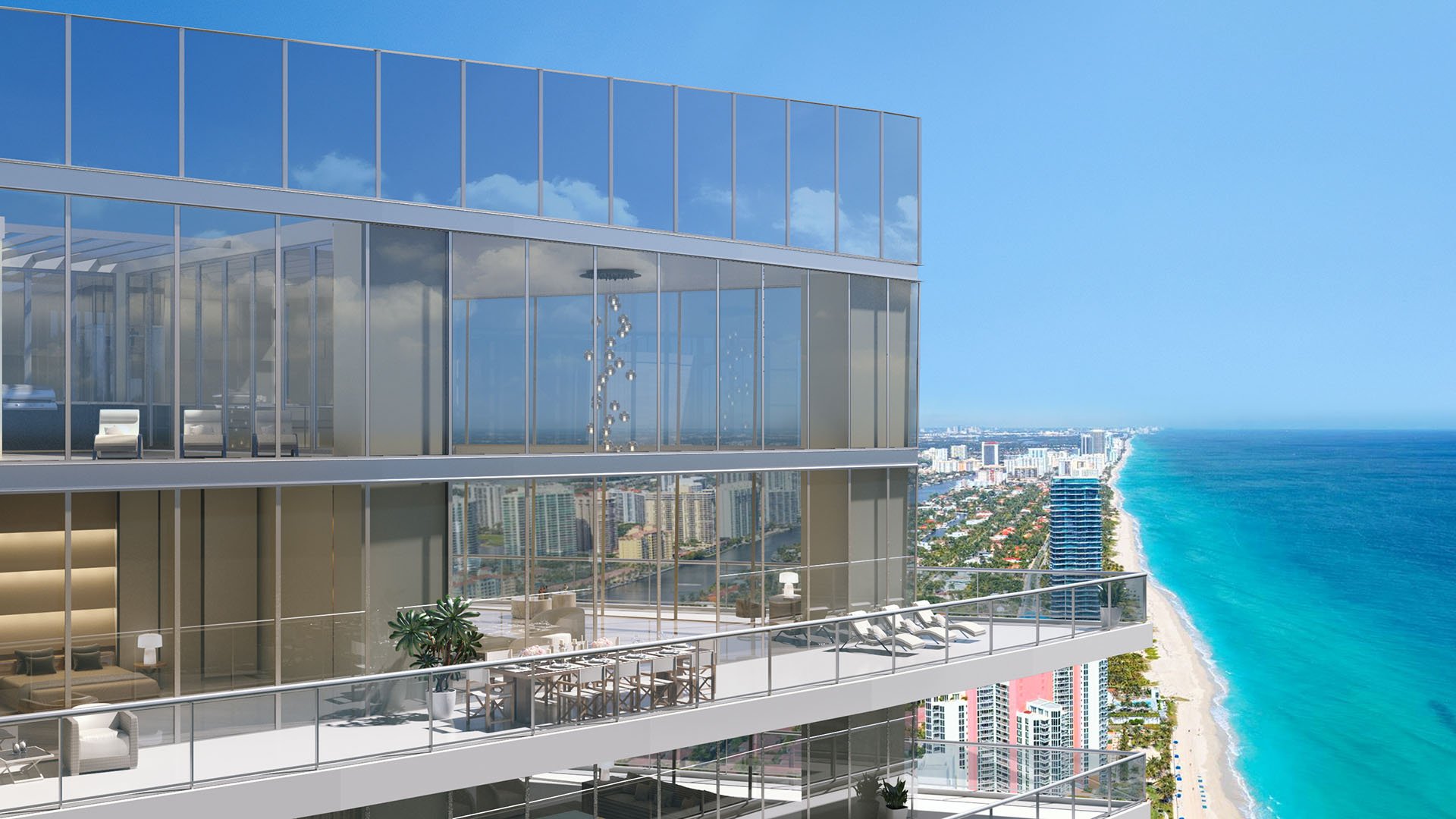
Sunny Isles has developed into a dense lineup of luxury towers where skyline presence is part of market value. A residence here participates in a public visual narrative. The tower matters, the name matters, and the exterior impression matters. Buyers comfortable in that environment often want their purchase to feel contemporary, globally legible, and unabashedly elite. In that context, Armani Casa is highly coherent.
Bal Harbour offers almost the opposite pleasure. It is not anonymous, but it is selective in how it displays wealth. Prestige here is often read through address, scarcity, and social texture rather than overt spectacle. Rivage benefits from that setting because it does not need to shout. Its appeal grows from the notion that the right buyers already understand what Bal Harbour means.
For the buyer deciding between these projects, the location question may be more revealing than any interiors package. If you want your home to be seen as part of South Florida's visible luxury theater, Sunny Isles is persuasive. If you want your residence to recede slightly behind the strength of the address, Bal Harbour is usually the stronger answer.
From a valuation standpoint, the two projects reflect different forms of premium. Armani Casa can carry a brand premium because the purchase includes a globally recognized design identity as part of the asset. The floor plan, oceanfront placement, and service matter, but so does the label itself.
Rivage's pricing logic is different. Its premium is more naturally tied to Bal Harbour scarcity, oceanfront positioning, architectural distinction, and the enduring social value of the enclave. In other words, Armani Casa leans into legibility, while Rivage leans into rarity.
Neither logic is inherently superior. It depends on the purchaser's horizon. Buyers who value resale appeal among globally brand-aware audiences may find Armani Casa especially compelling. Buyers who believe long-term strength comes from lower-density planning, address scarcity, and neighborhood prestige may prefer Rivage's framework.
Armani Casa Sunny Isles Beach is best suited to the purchaser who wants a trophy home with a strong narrative already built in. The project favors buyers who appreciate fashion-linked authorship, tailored interiors, and the status clarity of a globally recognized luxury name. It is especially appealing as a second home for owners who want instant familiarity and social signaling.
Rivage Bal Harbour is better matched to the purchaser who wants prestige to feel more private than public. This buyer is often less interested in logo value and more interested in the authority of architecture, low-density planning, and the social confidence of Bal Harbour. For them, the ideal residence is luxurious without appearing eager to prove it.
The practical conclusion is straightforward. Choose Armani Casa if the allure lies in branded identity, fashion-linked design, and the spectacle of Sunny Isles oceanfront living. Choose Rivage if the deeper appeal is architecture-first prestige, owner privacy, and the discretion of an established enclave.
Is Armani Casa Sunny Isles Beach more brand-driven than Rivage Bal Harbour? Yes. Armani Casa places branded identity at the center of its appeal, while Rivage is positioned more around architecture, setting, and privacy.
Does Rivage Bal Harbour fit buyers who prefer discretion? Yes. Its low-density positioning and Bal Harbour setting align more naturally with buyers seeking lower-profile ownership.
Why does location matter so much in this comparison? Sunny Isles and Bal Harbour project different social signals. One is more visible and image-forward, while the other is more restrained and private.
Is Armani Casa Sunny Isles Beach a better fit for internationally minded buyers? Often, yes. Its appeal is strengthened by a design identity that is easy for global buyers to recognize.
Does Rivage rely less on branding and more on architecture? Yes. Its identity is framed more through the building, the site, and the character of Bal Harbour than through a lifestyle label.
Are the amenities positioned differently at each project? Yes. Armani Casa leans toward a branded lifestyle experience, while Rivage is presented as more private and owner-focused.
Which project is likely to feel more private day to day? Rivage appears more aligned with that expectation because of its lower-density concept and Bal Harbour context.
Can Armani Casa carry a brand premium in buyer perception? Yes. Part of its appeal is the recognizability of the Armani name, which can influence desirability beyond layout and location alone.
Is Bal Harbour generally more restrained than Sunny Isles Beach? Yes. Bal Harbour is associated with quieter prestige, while Sunny Isles is more skyline-forward and visually expressive.
What is the best way to shortlist comparable options for touring? Start with location fit, delivery status, and daily lifestyle priorities, then compare stacks and elevations to validate views and privacy.
For a discreet conversation and a curated building-by-building shortlist, connect with MILLION Luxury.
If branded residences are on your mind — as a home or as an allocation — we would be glad to share what we are seeing, privately.
Begin a quiet conversation