Private elevator language is not a uniform promise. Buyers comparing three prominent Sunny Isles Beach towers should verify the exact elevator, foyer, access-control and service arrangement for the residence under consideration.
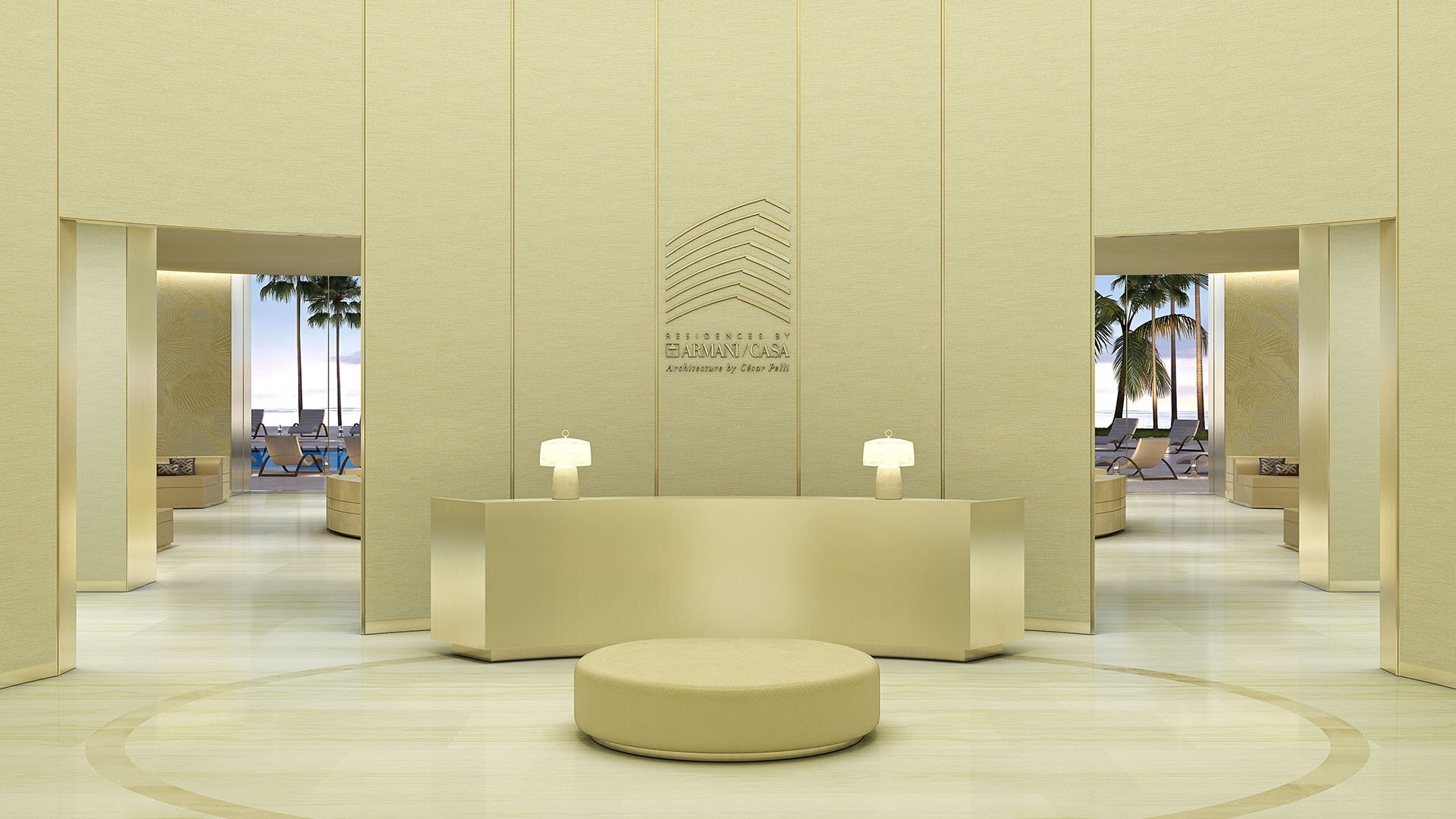
In Sunny Isles Beach, privacy is often experienced before the front door opens. The sequence from valet or lobby to elevator, landing and interior foyer shapes how a home receives owners, guests and staff. Yet the phrase “private elevator” does not describe a universal arrangement.
That distinction matters when comparing Armani Casa Sunny Isles Beach, Jade Signature Sunny Isles Beach and Regalia Sunny Isles Beach. Buyers should not treat the phrase as a building-wide guarantee or a simple checkbox. The essential question is how the arrival functions for the specific residence being acquired.
The terminology may refer to a dedicated elevator, a shared elevator that opens into a private foyer or a private landing reached through a shared elevator bank. These arrangements can feel similarly secluded during a showing, yet differ in circulation, control and exposure to neighbors or service traffic.
An elevator opening directly into a residence is not necessarily dedicated exclusively to that home. Likewise, a private foyer may be exclusive to one unit even when the elevator serves multiple floors or residences. Buyers should establish who can call the car, which credentials authorize the floor and what happens when residents, guests and personnel arrive simultaneously.
For oceanfront condominium buyers, the design issue is both practical and architectural. A well-composed arrival creates a gracious transition into the living areas, while a misunderstood configuration may complicate deliveries, staffing or privacy expectations.
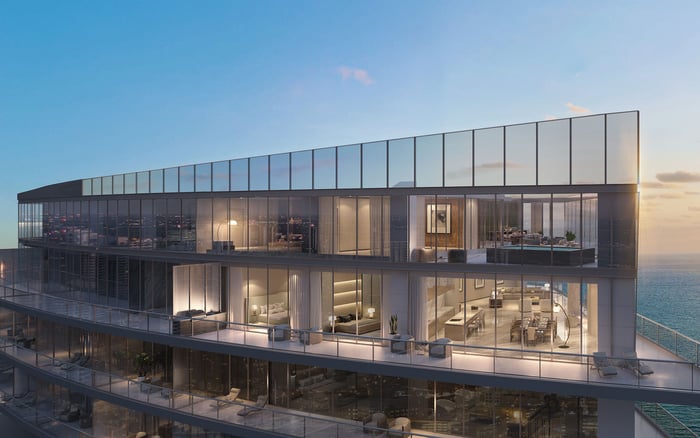
Residences by Armani/Casa is an oceanfront condominium at 18975 Collins Avenue. The 56-story tower comprises 308 residences and was completed in 2020. It was developed by Related Group and Dezer Development, with interiors incorporating the work of Giorgio Armani’s design studio.
Its elevator-access language is not perfectly uniform. In some instances, private high-speed elevators are associated with “privileged residences”; elsewhere, the feature applies to most residences or all residences. That variation is precisely why an acquisition should be evaluated from the unit outward rather than from a broad building description inward.
Direct-arrival layouts offer concrete examples. Unit 3104 has a private elevator entry opening directly into the residence, while a separate four-bedroom offering includes an elevator entry leading into the living and entertaining areas. Select residences also feature an eight-foot-high double-door entry and spacious foyer. Together, these details indicate that the threshold experience can vary by floor plan.
The wider residential context includes floor-to-ceiling windows, ceilings rising to 10 feet and expansive private balconies with glass railings. Standard residences span approximately 1,549 to 3,640 square feet, with premium configurations exceeding that range. None of these broader attributes, however, substitutes for confirming the arrival associated with a particular legal unit.
A buyer touring Jade Signature Sunny Isles Beach and Regalia Sunny Isles Beach alongside Armani/Casa should apply the same unit-specific test to each property. The comparison should not begin and end with whether a listing uses the words “private elevator.” It should document the complete route from the secured building entrance to the residence.
This discipline is useful throughout Sunny Isles because two homes can deliver markedly different daily experiences despite similar marketing language. The relevant distinctions include whether the elevator car is shared, whether the landing is private, whether the doors open into an enclosed foyer and whether a separate service route exists. These questions belong in due diligence, not among the assumptions carried from one tower to another.
Begin where an owner would actually arrive. Walk from valet or parking through security, enter the elevator using the normal credential and continue across the residence threshold. If access procedures allow, repeat the exercise for guest, delivery and service arrivals.
Confirm which elevator bank serves the unit, how access is controlled and how many residences share each stop. Ask whether guests or service personnel enter through the same foyer, whether the owner must remotely authorize access and where someone waits if authorization is delayed. Observe whether the elevator doors open directly into furnished space or into a foyer that can be secured separately.
The physical inspection should also test livability. Consider sightlines when the doors open, acoustic separation, space for art or a console and whether the foyer accommodates luggage without interrupting circulation. For households with staff, frequent entertaining or extended family, the choreography of simultaneous arrivals may matter as much as the finishes.
Finally, examine backup procedures. Buyers should understand the route used during elevator maintenance, the location of stairs and how emergency access intersects with the private foyer. Privacy should remain compatible with safe, practical movement.
Request the residence floor plan, elevator schedule where available, access-control description and relevant condominium documents. Qualified advisers should review the legal description and approved plans to confirm what is appurtenant to the unit and what remains a common element or limited common element.
Also distinguish a building arrival elevator from one located inside a multilevel residence. One 5,336-square-foot Armani/Casa penthouse includes a private glass elevator connecting its internal levels. That feature supports movement within the home and is conceptually separate from the elevator used to reach its entrance.
Five-bedroom offerings in the building have ranged from approximately 3,176 to 5,336 square feet, with asking prices around $5.38 million to $9.47 million at one point in time. Availability and pricing can change, reinforcing the need to pair current commercial terms with precise physical and legal verification.
Does “private elevator” always mean a dedicated elevator car? No. It may describe a shared car opening into a private foyer or landing.
Can an elevator open directly inside a residence? Yes. Certain Armani/Casa offerings include direct elevator entry into the home.
Is every Armani/Casa residence confirmed to have the same arrival? No. Elevator-access language varies, so buyers should verify the specific unit’s plans and documents.
What should I test during a showing? Travel the full route from lobby or valet through security, elevator, foyer and front door.
Should guest access be reviewed separately? Yes. Confirm authorization procedures, waiting areas and where guests enter the residence.
Why does the service route matter? It determines whether deliveries and personnel share the owner’s foyer or use separate circulation.
What access-control questions should buyers ask? Ask which credentials call the elevator, authorize the floor and control the residence threshold.
Does a private internal elevator prove a private building arrival? No. An elevator connecting penthouse levels is distinct from the elevator reaching the residence.
Which documents can clarify the arrangement? Review floor plans, condominium documents, access descriptions and the unit’s legal materials.
Is private elevator access valuable for entertaining? It can create a composed arrival, but sightlines, foyer size and guest procedures determine its utility.
To compare the best-fit options with clarity, connect with MILLION.
If branded residences are on your mind — as a home or as an allocation — we would be glad to share what we are seeing, privately.
Begin a quiet conversation