For art collectors purchasing at Residences by Armani/Casa, the celebrated glass envelope requires unit-specific diligence. Glazing specifications, changing sun angles, HVAC capabilities, shade ownership, and alteration rules should all be documented before closing and considered before works are installed.
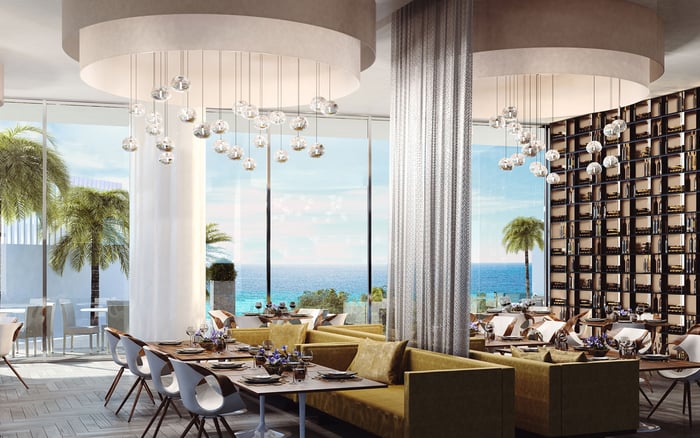
At 18975 Collins Avenue, Armani Casa Sunny Isles Beach pairs an oceanfront setting with floor-to-ceiling glass framing views of the Atlantic Ocean, Intracoastal Waterway, city, and islands. The same transparency that defines the residence makes light management a material consideration in acquiring, placing, and caring for art.
For a collector, conventional closing diligence is only the beginning. The residence should also be evaluated as a display environment. That means documenting where direct and angled sunlight enters, what the glazing actually filters, how the air-conditioning system performs across rooms, and which window treatments will remain after closing. These questions are especially consequential in non-penthouse residences, where approximately 10-foot ceilings and full-height glass create generous sightlines but fewer conventional walls.
This Buyer's Guides perspective does not diminish the architecture. It allows the collection and residence to coexist with the restraint associated with the building’s modern, understated interiors.
A panoramic view should be treated as a changing environmental condition, not a static backdrop.
A single daytime showing cannot reveal the full light pattern. Ocean, Intracoastal, and city exposures can create materially different conditions from one elevation or room to another. Collectors should revisit the residence at different times of day and record which walls receive direct light, where reflections travel across floors and glass, and when bright zones reach likely display positions.
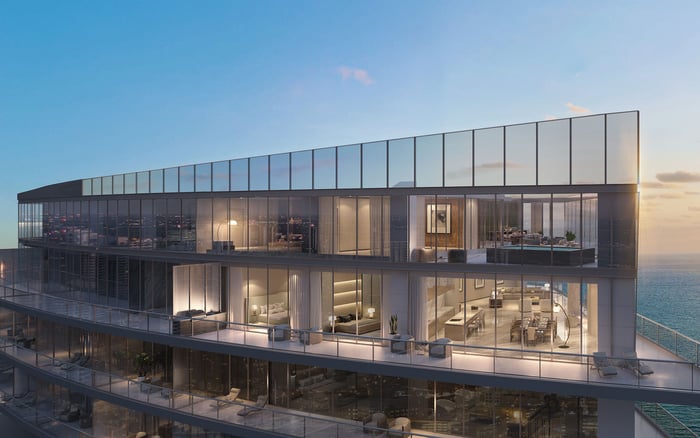
The approximately 10-foot-deep private balconies may provide some shade, but their presence does not prove that interiors remain protected. Glass railings and the tower’s inclined façade make the path of angled sunlight worth observing. A room that appears softly lit in the morning may perform differently later in the day.
This unit-by-unit analysis is useful throughout the local Resale market. Buyers comparing Jade Signature Sunny Isles Beach or Muse Residences Sunny Isles Beach should apply the same principle: assess the precise residence rather than infer conditions from the building name, orientation alone, or listing photography.
The building uses high-impact windows, an important form of hurricane-oriented coastal protection. It does not follow, however, that the glass provides a particular degree of UV filtration. The expansive glazing does not carry a stated UV-blocking percentage, tint specification, or solar heat gain coefficient.
Before closing, request the glazing manufacturer, product series, UV-transmission data, tint, and solar heat gain coefficient in writing. These details allow the owner’s conservator and other advisers to evaluate the installed glass rather than rely on assumptions about the term “high-impact.” If the records are not already in the unit file, include the request in the buyer’s document review.
Oceanfront ownership rewards openness, yet collection planning requires precision. The objective is not necessarily to darken every room. It is to identify which works can occupy brighter areas, which walls require controlled exposure, and where supplemental measures may be appropriate after professional review.
Residences feature intelligent climate controls with digital thermostats, supporting temperature management around collection areas. A thermostat alone does not demonstrate conservation-grade humidity control. During inspection, buyers should confirm HVAC zoning, humidity capabilities, and the locations of supply and return points, particularly near intended gallery walls.
A useful assessment determines whether rooms can be managed independently and whether planned furniture, built-ins, or large works would interfere with airflow. The owner should also identify spaces where glass exposure and climate conditions intersect. Exact temperature and relative-humidity targets should be established with a conservator based on the collection’s media and condition, not adopted as generic settings.
For buyers also considering The Ritz-Carlton Residences® Sunny Isles, the same discipline applies: building-level descriptions cannot replace an inspection of the specific mechanical system, controls, and room configuration that will surround the art.
Motorized shades have been identified as an improvement in at least one resale residence. That is a reason to investigate, not a basis for assuming every residence includes the same system. Listing photographs may show treatments installed by a seller; their inclusion should be confirmed in the contract or a signed inventory.
Document each shade by room, glazing coverage, fabric, controls, power source, and operating condition. Confirm whether remotes, wall controls, hubs, and related hardware convey. With full-height glazing, partial coverage is particularly important to identify: a shade may soften glare without covering every area through which direct or reflected light enters.
The Design & Architecture review should also address what may be added later. Obtain written confirmation of condominium alteration restrictions affecting future shades, electrical work, tracks, ceiling pockets, or gallery walls. This avoids designing a collection layout around a treatment that cannot be installed as anticipated.
A collector-focused closing file should unite four subjects. First, retain the impact-glass specifications and available solar-performance data. Second, record thermostat functions, HVAC zones, humidity capabilities, and air-distribution locations. Third, attach a room-by-room shade inventory to the contractual record. Fourth, preserve the applicable alteration rules for window treatments and display walls.
The final walk-through is the time to verify that the agreed shade equipment remains in place and operates, and that the physical residence aligns with the documented art plan. Photograph likely display walls and glazing conditions for the conservator and installation team. If a work requires a particular environment, avoid committing to its location until the residence’s exposure and climate performance have been reviewed.
In Sunny Isles Beach, panoramic living is central to the appeal. Thoughtful preparation allows the views to remain part of the experience while giving a significant collection a more deliberate setting. The best result is neither a sealed gallery nor an unexamined glass room, but a calibrated interior in which architecture, daylight, and art are composed together.
For discreet advice on aligning a South Florida residence with the needs of a collection, connect with MILLION.
If branded residences are on your mind — as a home or as an allocation — we would be glad to share what we are seeing, privately.
Begin a quiet conversationOcean, Intracoastal, and city exposures can produce different daylight conditions by room and hour. Multiple visits help identify direct light, reflections, and viable display walls.
Not necessarily. The approximately 10-foot-deep balconies may provide shade, but buyers should observe the actual sun path in the specific residence.
No. Buyers should request the manufacturer, product series, UV-transmission data, tint, and solar heat gain coefficient.
Public project descriptions do not state a specific UV-blocking percentage, tint specification, or solar heat gain coefficient.
Not by themselves. HVAC zoning and humidity capabilities should be confirmed during inspection, with collection targets set by a conservator.
Review zoning, humidity capabilities, thermostat functions, and supply and return locations. Planned works and furnishings should not obstruct airflow.
They should be treated as unit-specific. Confirm their coverage, controls, condition, and inclusion in the sale through the contract or inventory.
Verify the installed shades, remotes, wall controls, hubs, related hardware, and operating condition against the agreed inventory.
Restrictions may affect future shades, electrical work, tracks, ceiling pockets, or gallery walls. Written confirmation helps prevent conflicts with the art plan.
Keep glazing specifications, HVAC and humidity details, the shade inventory, and alteration rules affecting window treatments or display walls.