A disciplined approach to buying an Armani/Casa resale: distinguish the building’s enduring appeal from original finishes, seller improvements and furnishings, then price each with evidence.
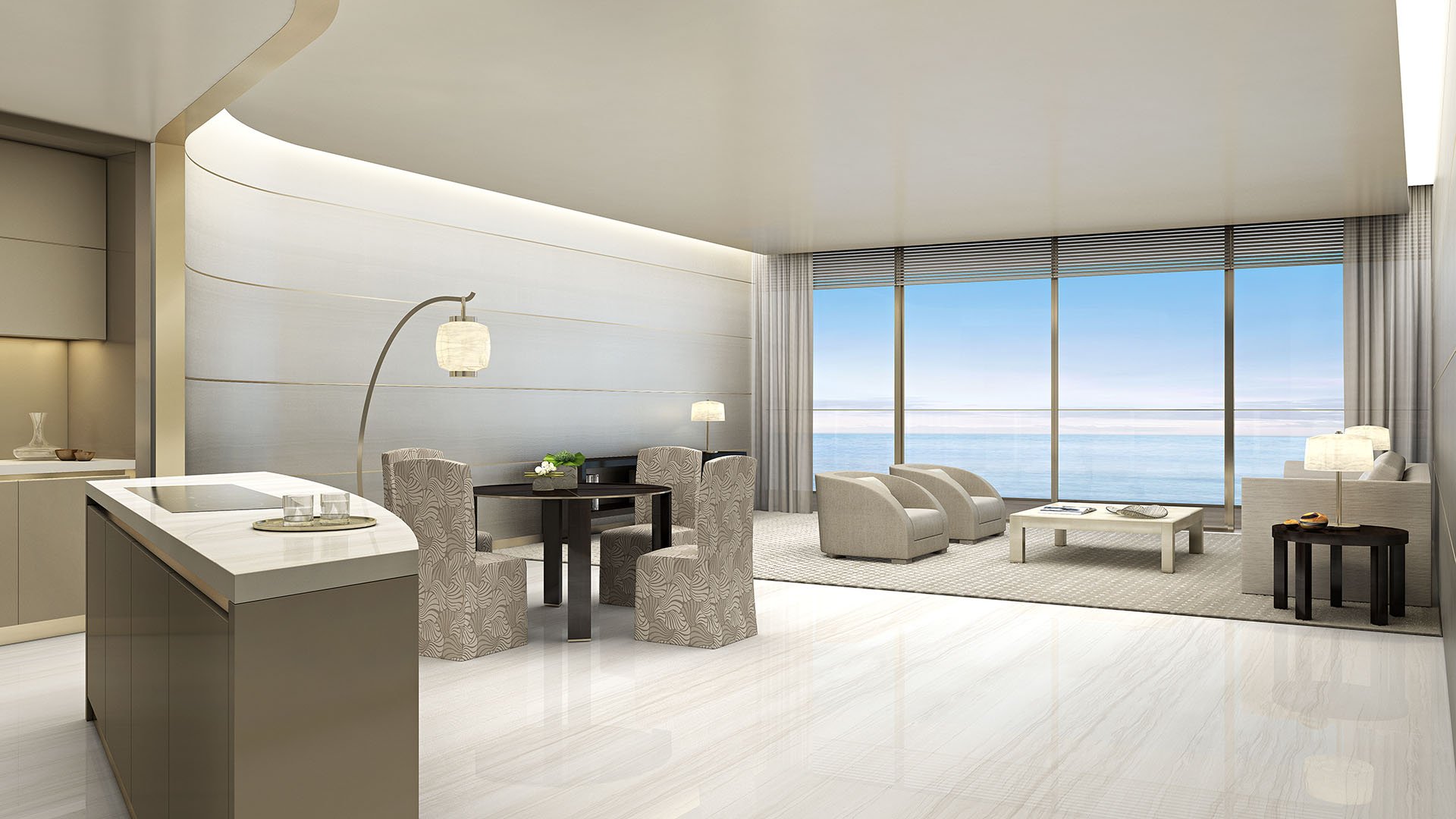
At Armani Casa Sunny Isles Beach, the appeal begins before a buyer enters a private residence. The oceanfront address at 18975 Collins Avenue, César Pelli’s architecture and interiors conceived by the Armani/Casa Interior Design Studio under Giorgio Armani’s artistic direction establish a distinctive setting. They do not, however, establish the resale value of a seller’s sofa, custom wall treatment or lighting installation.
The essential buying discipline is to separate three layers: the condominium itself, its original developer-installed finishes and everything an owner subsequently added. Paying twice happens when an asking price already reflects the building’s design pedigree, then carries another unsupported premium for interiors that were part of the original delivery or have limited value to the next owner.
A beautiful apartment can justify a premium. The question is whether that premium buys something you want, can document and would otherwise need to purchase.
The building’s identity extends through its common spaces. Its amenity program encompasses more than 35,000 square feet across two floors, furnished by Armani/Casa, with spaces including the Armani Privé lounge, a cigar room and a temperature- and humidity-controlled wine cellar. The wellness offering includes a two-story spa and ocean-facing fitness center.
These are reasons to choose the condominium, not evidence that every object inside a resale carries the same provenance. A seller’s statement that an apartment is “Armani furnished” should prompt a precise inventory, not an assumption about authorship, original delivery or value.
Ask which elements came with the residence, which were commissioned later and which are movable personal property. Building-wide branding cannot substitute for invoices identifying the actual pieces being sold. Nor does an authentic designer item necessarily retain its original purchase value for you today.
Before evaluating upgrades, request the original finish schedule, floor plan, appliance specifications and any available original closing documents. Compare those records with the apartment as it stands. The objective is to establish what the seller changed, not merely what looks expensive.
Confirm whether private elevator entries, Italian marble finishes, Armani/Casa cabinetry and European kitchen appliances form part of the target unit’s original specification. Do not treat these features as universal or assume their present condition matches original delivery.
For subsequent improvements, request invoices, installation dates, warranties, permits and association approvals where applicable. Distinguish decorative work from changes affecting plumbing, electrical systems or layout. A bespoke installation may be attractive without being useful to your household, and its cost is not a valuation formula.
Create a simple record with three columns: original specification, current condition and proposed treatment. Something you intend to remove belongs in your acquisition budget as a potential expense, not automatically as a premium.
“Turnkey” should describe a documented transaction, not a photographic impression. Identify furniture, artwork, lighting, rugs, electronics and terrace furnishings individually. Attach photographs and specify inclusions and exclusions in writing, with your advisers resolving any uncertainty over fixtures and personal property.
For pieces you genuinely want, assess a supportable current resale value rather than accepting the seller’s original retail expenditure. Condition, authenticity, age and suitability matter. So does the practical benefit of arriving without undertaking a furnishing project, but that convenience should be a conscious purchase decision.
Ask for furnished and unfurnished terms when appropriate. This can clarify whether the seller is offering convenience or using an expensive decorating history to defend the entire asking price. If you intend to replace the interiors, obtain removal and restoration estimates before negotiating. Luxury is not improved by paying for a room you will immediately dismantle.
Anchor the offer in closed sales with similar layouts, floors, exposures, views and condition. Identify whether each comparable included furnishings and whether meaningful alterations distinguish it from the target. An attractive asking price elsewhere is not equivalent to a completed transaction.
If your search also includes Jade Signature Sunny Isles Beach, keep broader lifestyle comparisons separate from the closest valuation evidence. Another address can help clarify your preferences without becoming an interchangeable comparable for an Armani/Casa residence.
Apply the same discipline when considering Muse Residences Sunny Isles Beach. Compare the actual homes and ownership obligations rather than assigning a generic premium to design language or a furnished presentation.
The useful question is not how much the seller spent. It is what a buyer should pay for this residence in its present condition, with its exact inclusions. Current unit-specific resale values and the value of seller-installed interiors require transaction evidence and property-level review; neither follows from the building’s brand alone.
Request current unit-specific association dues, the association budget, reserve information, insurance details, assessment notices and relevant meeting minutes. A general building estimate is no substitute for the actual obligations attached to the residence you intend to buy.
The same care applies to amenities. A private restaurant, wine-tasting lounge, heated pool deck and approximately 300 feet of beachfront contribute to the setting. Confirm current access, operating arrangements and any separate charges rather than assuming every service is included on identical terms.
Inspect beyond the decorative layer. Have qualified professionals review moisture, windows, balconies, HVAC, plumbing, appliances and alterations. If you plan to redesign, establish the association’s renovation requirements before committing to a schedule. A finish you dislike may be manageable; an unexamined systems issue or undocumented alteration deserves a different level of attention.
Before submitting an offer, reconcile the original specifications, improvement records, inventory, comparable sales and ownership documents. Have your advisers translate that review into clear pricing, inclusion terms and appropriate inspection and document-review protections.
Then separate necessity from preference. A residence whose interiors suit you may save substantial effort, but convenience does not erase the need for evidence. Conversely, a beautifully executed scheme that conflicts with your plans should not command a premium merely because it was costly to create.
The strongest purchase preserves what makes the address compelling without indiscriminately reimbursing a seller for personal taste. Buy the view, plan, condition and design you intend to live with, and make every additional interior dollar earn its place.
For a discreet perspective on your next South Florida residence, connect with MILLION.
If branded residences are on your mind — as a home or as an allocation — we would be glad to share what we are seeing, privately.
Begin a quiet conversationThe oceanfront condominium is at 18975 Collins Avenue in Sunny Isles Beach, Florida.
César Pelli designed the tower. The project’s interiors were designed by the Armani/Casa Interior Design Studio under Giorgio Armani’s artistic direction.
No. Buyers should distinguish the building’s branded design and original specifications from furnishings and improvements added by an individual owner.
Request the original finish schedule, floor plan, appliance specifications and any available original closing documents. Compare them with the residence’s current condition.
Assess a supportable current resale value based on the actual items, their authenticity and condition. The seller’s original retail expenditure should not automatically determine what you pay.
Identify furniture, artwork, lighting, rugs, electronics and terrace furnishings individually, with photographs. Specify inclusions and exclusions in writing with your advisers.
Request invoices, installation dates, warranties, permits and association approvals where applicable. These help distinguish documented improvements from unsupported claims about cost or provenance.
Prioritize similar layouts, floors, exposures, views and condition. Account for furnished status, alterations and any removal or restoration work your purchase would require.
Obtain current unit-specific dues, the association budget, reserve information, insurance details, assessment notices and relevant meeting minutes. Do not rely on a general building estimate.
Have qualified professionals review moisture, windows, balconies, HVAC, plumbing, appliances and alterations. Confirm association renovation requirements if you intend to make changes.