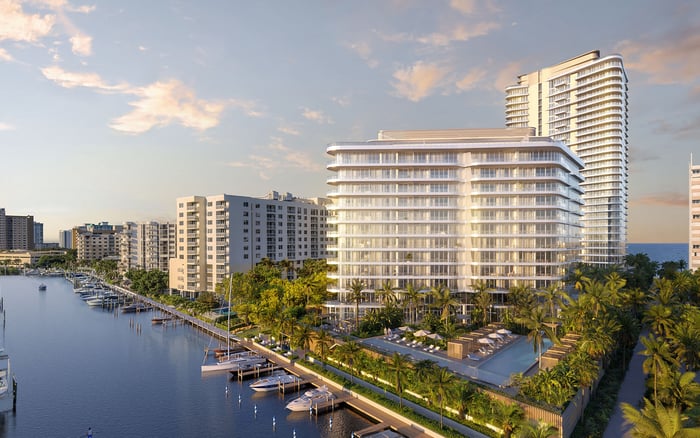
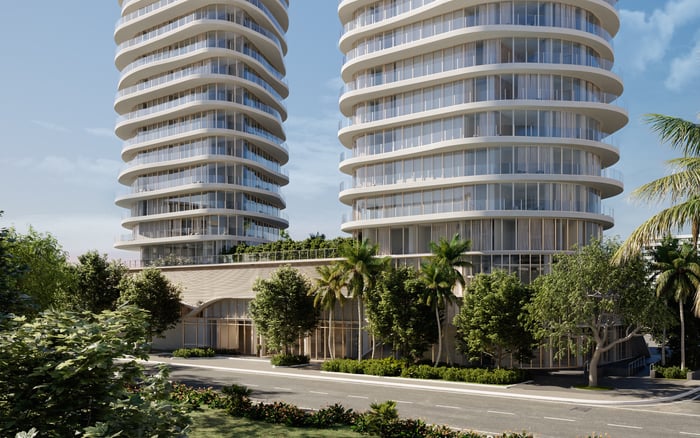
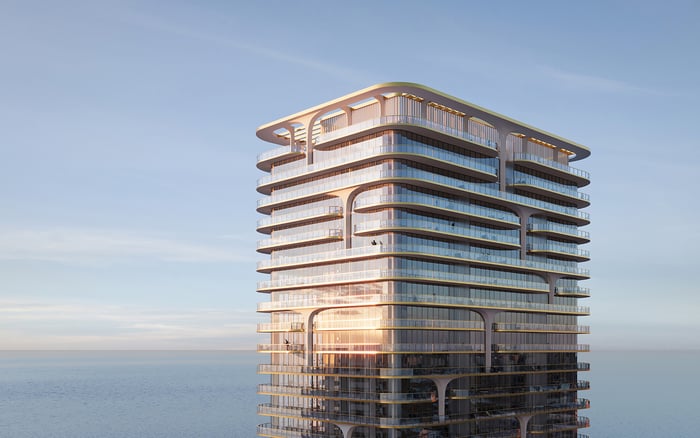
A buyer-focused comparison of Armani Casa Residences Pompano Beach and Waldorf Astoria Residences Pompano Beach, examining how fashion authorship versus hotel heritage shapes finishes, service expectations, and ownership psychology in Pompano Beach.
In Pompano Beach, the conversation around branded residences has matured beyond logo value. Sophisticated buyers are no longer asking only which name carries more prestige. They are asking a more precise question: what, exactly, is the brand promising inside the home and around it every day?
That is why the comparison between Armani Casa Residences Pompano Beach and Waldorf Astoria Residences Pompano Beach is so revealing. On paper, both occupy the rarefied world of branded luxury ownership. In practice, they express two distinct ideas of what affluent residential life should feel like.
Armani Casa arrives with the authority of a fashion house’s interior universe. Its identity is rooted in Italian design authorship, quiet luxury, and a tightly controlled visual language. Waldorf Astoria, by contrast, carries the heritage of grand hospitality. Its proposition is less about a singular designer point of view and more about service culture, continuity, and the reassuring choreography of a five-star hotel.
For the buyer, that difference is not cosmetic. It shapes what feels luxurious, what feels worth paying for, and what kind of ownership experience best suits a second-home lifestyle.
Armani Casa is best understood as a residence shaped by a design signature. The appeal lies in coherence. Buyers drawn to the brand typically want interiors that feel edited rather than exuberant, with neutral palettes, refined materials, and a sense that every decision belongs to the same aesthetic sentence. There is status in that discretion. The home becomes an extension of personal taste, not merely a serviced address.
Waldorf Astoria speaks to a different luxury instinct. Here, the brand promise is heritage hospitality translated into ownership. The emotional comfort comes from standards, ritual, and service infrastructure. It suggests that arrival, departure, entertaining, guest handling, and day-to-day support should all unfold with minimal friction. For many buyers, especially those dividing time among multiple residences, that promise is as valuable as the architecture itself.
South Florida offers several precedents for these two branded paths. A fashion-inflected approach appears in projects such as 888 Brickell by Dolce & Gabbana, where identity is inseparable from designer authorship. Hospitality-led ownership, meanwhile, aligns more closely with developments like The Ritz-Carlton Residences® Pompano Beach, where the service proposition is central to the purchase decision.
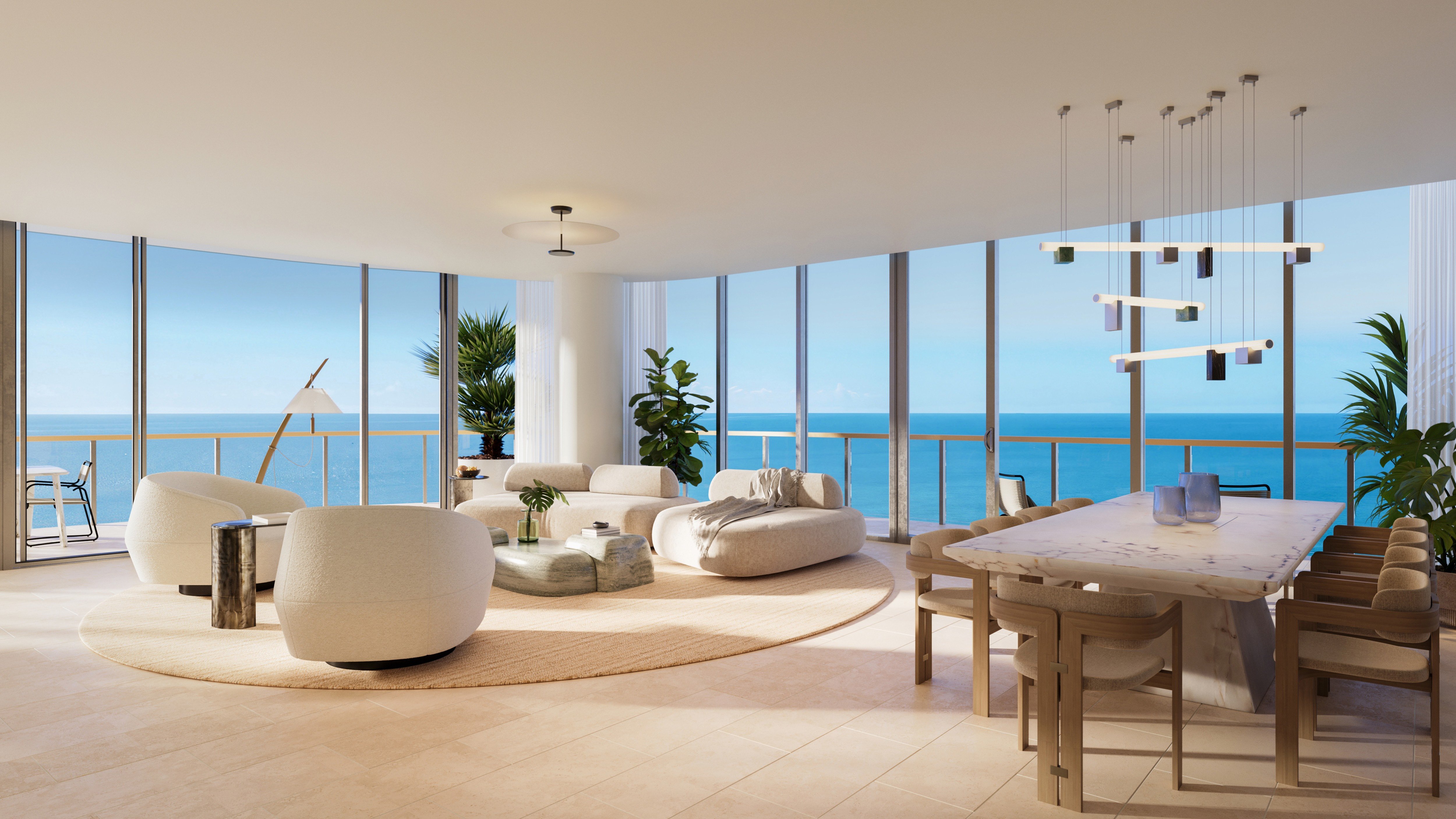
The finish profile at Armani Casa is defined by understatement. The design language points toward marble, oak, clean lines, and soft neutral tones, with kitchens and baths described as curated by the Armani design team. Even where customization is possible, the value lies in remaining within the brand’s disciplined visual framework. This is luxury for buyers who prefer harmony over display.
That matters because branded design can influence not only immediate emotional response, but also how a residence photographs, ages, and competes within the wider pre-construction market. A fully coherent interior tends to feel complete from day one. It reduces the impulse to restyle or over-improve. For a design-sensitive purchaser, that can be deeply persuasive.
Waldorf Astoria signals something different in its finish approach. The emphasis is on timeless elegance, high-end materials, and custom millwork with a more hospitality-inflected sensibility. If Armani Casa feels like entering a designer’s private residential world, Waldorf Astoria feels closer to an impeccably run grand suite translated for long-term ownership. The effect is often more familiar to international luxury buyers who associate premium living with flawless service and polished classicism.
There is no universal winner here. The choice depends on whether the buyer wants to inhabit an authored aesthetic or a polished service environment. One favors personal taste. The other favors certainty.
The service layer may be the single biggest divider between these projects. Armani Casa is best framed as a residential-plus offering. Concierge and luxury amenities are part of the program, alongside wellness and social spaces. Yet the overall model remains residential first.
Waldorf Astoria is positioned as hotel-plus. The distinction is subtle in brochures and enormous in practice. A fuller service stack can include concierge-led support and guest handling that more closely resembles a high-end hotel ecosystem. For a local primary resident, that may be a welcome enhancement. For a second-home owner, it can be decisive.
This is where investment psychology also enters the conversation. Service-rich branded residences often appeal to buyers who want ownership to function smoothly when they are away. A hotel-linked operating model can reduce management friction and become part of the ownership story. Armani Casa, by contrast, tends to read more as a lifestyle asset whose value proposition is anchored in design prestige and brand equity rather than operational convenience.
In private consultations, the most useful distinction is often psychological rather than architectural. The Armani Casa buyer typically wants to feel that the residence says something about them. The purchase is expressive. It affirms aesthetic discipline, cultural fluency, and an appreciation for design that is subtle enough not to require explanation.
The Waldorf Astoria buyer often approaches the decision more operationally. Not coldly, but pragmatically. They may own elsewhere, travel frequently, entertain guests, or simply dislike the hidden labor that comes with maintaining an oceanfront residence. For them, luxury means ease, consistency, and confidence that standards will be upheld whether they are in residence or not.
That split is visible throughout South Florida. Some purchasers gravitate toward authored design environments such as Casa Bella by B&B Italia Downtown Miami, while others prefer hospitality-driven ecosystems where service is the differentiator. Both are valid expressions of ultra-luxury, but they satisfy different emotional needs.
Branded hotel residences often command stronger premiums because the service layer itself is part of the luxury equation. Buyers are not simply paying for finishes, views, or address. They are paying for systems, staffing, and the promise of ease. That can help justify higher carrying costs in the minds of purchasers who will actively use those services.
Armani Casa’s value case is more nuanced and, for the right buyer, equally compelling. Its premium is tied less to operational convenience and more to design authorship. The residence may resonate most with those who believe enduring desirability comes from controlled aesthetics, recognizable taste, and association with a globally legible design language.
Each model carries its own risk. A fashion-led residence can be more exposed to shifts in taste if a once-coveted aesthetic begins to feel tied to a particular moment. A hospitality-led residence is more exposed to execution risk. If service slips, the very element justifying the brand premium can weaken. Buyers in oceanfront South Florida should weigh not only what is being sold today, but what must be maintained to preserve long-term appeal.
Choose Armani Casa if your definition of luxury begins inside the home. It is likely the better fit for buyers who want a serene, designer-led atmosphere, who notice material harmony immediately, and who prefer a residence that feels composed rather than heavily serviced.
Choose Waldorf Astoria if your definition of luxury extends beyond interiors into operations. It is likely the better fit for owners who want the home to perform effortlessly, especially if they are seasonal, internationally mobile, or inclined to value convenience as highly as design.
In short, Armani Casa asks, “How do you want to live aesthetically?” Waldorf Astoria asks, “How easily do you want ownership to function?” For today’s branded-residence buyer, that is the true divide.
What is the core brand difference between Armani Casa and Waldorf Astoria in Pompano Beach? Armani Casa is rooted in fashion-led interior authorship, while Waldorf Astoria is rooted in hotel heritage and service culture.
Which project is more design-driven? Armani Casa is the more design-authored proposition, with a restrained visual language built around curated materials and quiet luxury.
Which project is more service-oriented? Waldorf Astoria is more service-intensive, with a hotel-plus model that emphasizes convenience and day-to-day operational support.
How do the finishes generally differ? Armani Casa leans toward neutral tones, marble, oak, and clean lines, while Waldorf Astoria reads as more classic and hospitality-influenced.
Is Armani Casa better for full-time residents? It may appeal especially to buyers who prioritize atmosphere, design consistency, and a more residential rhythm over extensive hotel services.
Is Waldorf Astoria better for second-home owners? Often yes, particularly for owners who want concierge-led ease, guest handling, and less day-to-day management friction.
Do both projects emphasize amenities? Yes. Both are positioned around luxury amenities, but the emphasis differs between residential design experience and hospitality-style support.
Which project aligns more with investment-minded buyers in concept? Waldorf Astoria may feel more aligned with operational convenience because of its hospitality framework, while Armani Casa is more design-led in its appeal.
Does Armani Casa offer amenities even without a hotel-first model? Yes. It is positioned with concierge support and a strong amenity package, though the overall experience remains more residential.
What should buyers focus on most when comparing them? Focus on whether your priority is design identity or managed ease, because that preference will shape satisfaction more than branding alone.
When you're ready to tour or underwrite the options, connect with MILLION Luxury.
If branded residences are on your mind — as a home or as an allocation — we would be glad to share what we are seeing, privately.
Begin a quiet conversation