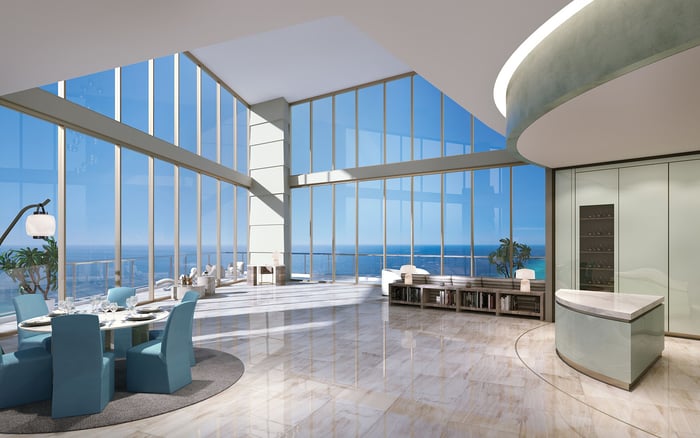
A due-diligence guide to evaluating storage allocation, bicycle facilities, owner closets, package handling, and garage rules for seasonal use at Armani/Casa Residences Pompano Beach.

For a second-home buyer, storage can shape how easily a residence closes for an extended absence and reopens on return. At Armani Casa Residences Pompano Beach, buyers should evaluate storage as an operational issue rather than infer capacity or access from marketing language.
The relevant questions concern more than closets. Seasonal owners may need defined places for luggage, clothing, bicycles, beach equipment, documents, deliveries, and personal items that remain secured while staff, vendors, or guests have access to the home.
Because no authoritative project facts were supplied for this review, buyers should rely on current plans, contract exhibits, condominium documents, and written representations from the appropriate project representatives.
A floor plan should be reviewed closet by closet. Buyers can ask for dimensions, door clearances, shelving layouts, hanging capacity, ventilation details, and any limits on modifying the interiors. Labels such as “walk-in” or “owner closet” do not by themselves establish usable capacity or exclusive access.
Seasonal planning should account for suitcases, linens, personal records, sports equipment, and items that require controlled conditions. If a lockable cabinet or private closet zone is important, the buyer should determine whether it is included, optional, or subject to approval.
Any proposed custom millwork should be assessed against the applicable design guidelines, building systems, installation procedures, and approval requirements. Costs and timing should also be confirmed before relying on a customized storage solution.
If project documents reference wet storage, buyers should determine exactly what the term covers. A space intended for damp or sandy equipment may not permit luggage, household goods, bicycles, or long-term personal storage.
Written clarification should address location, dimensions, assignment, access hours, permitted items, cleaning responsibilities, security, and whether use is exclusive or shared. Buyers should also ask whether reservations, identification tags, waivers, or equipment-size limits apply.
Terraces and parking areas should not be treated as substitute storage without express authorization. Rules may govern furniture, cabinets, racks, loose objects, and items visible from outside the residence.
A buyer who expects to keep bicycles on-site should ask whether the final plans and governing documents identify racks, a bicycle room, valet procedures, or another designated arrangement. The answer should include capacity, assignment, security, access, and rules for moving bicycles through elevators and common areas.
Garage questions should be equally specific. Buyers should confirm whether any storage cabinet, cage, wall rack, ceiling rack, or vehicle-mounted system is permitted and whether installation requires approval. A parking allocation should not be assumed to include storage rights.
For comparison, buyers may review how other Pompano Beach projects document similar provisions, including The Ritz-Carlton Residences® Pompano Beach, W Pompano Beach Hotel & Residences, and Waldorf Astoria Residences Pompano Beach. Each property should be assessed on its own current documents rather than assumed to follow the same policy.
An owner closet can be valuable when a residence is vacant or occupied by guests, but the term requires definition. Buyers should verify whether any such space is inside the residence or elsewhere, whether it is deeded or assigned, and who controls keys or electronic access.
If no separate space is documented, a buyer may wish to explore an in-residence solution. That option still requires confirmation of design permissions, hardware standards, emergency-access provisions, and any rules affecting staff or building management.
An inventory and access plan can complement physical storage. Seasonal owners may benefit from documenting what remains in the home, who may enter, and how keys, codes, deliveries, and maintenance visits are handled during an absence.
A mailroom or package area should not automatically be viewed as a place for extended holding. Seasonal owners should request the applicable procedures for notification, collection deadlines, oversized deliveries, refrigeration needs, forwarding, authorized pickup, and items arriving while the residence is vacant.
The buyer should also clarify whether staff may place deliveries inside a residence, what authorization is required, and how access is recorded. These operational details can be as important as physical closet capacity for lock-and-leave use.
Before relying on any storage feature, buyers should compare sales materials with the latest plans, contract exhibits, proposed governing documents, and written responses to specific questions. Any inconsistency should be resolved before a contractual deadline.
A useful review can cover closet dimensions, bicycle arrangements, wet-storage permissions, external lockers, garage restrictions, package procedures, terrace rules, elevator access for bulky items, and approvals for custom cabinetry. Legal and design professionals can help interpret the relevant documents and plans.
The objective is a clear understanding of what space exists, how it may be used, whether access is exclusive, and which rules can change. That clarity allows a seasonal buyer to judge whether the residence can support the intended routine without depending on assumptions.
Why should seasonal buyers focus on storage documents? Written plans and governing documents define rights and restrictions more reliably than general marketing descriptions.
What closet details should a buyer request? Ask for dimensions, layouts, access details, included fittings, and any restrictions on customization.
Does the term “walk-in closet” confirm capacity? No. Usable capacity depends on dimensions, configuration, doors, shelving, and hanging space.
Can wet storage be assumed to hold general belongings? No. Buyers should verify permitted items, assignment terms, dimensions, and access rules in writing.
Should a buyer assume there is a bicycle room? No. Bicycle facilities and procedures should be confirmed in the current plans and governing documents.
Can assigned parking be used for boxes or equipment? Not without express permission under the applicable garage and condominium rules.
What should be confirmed about an owner closet? Verify its location, dimensions, assignment, security, access rights, and whether it is included or optional.
Can package facilities hold deliveries during a long absence? Buyers should not assume extended holding; collection limits, forwarding, and authorized-pickup procedures require confirmation.
Are terraces suitable for storage? Terrace storage should not be assumed because governing documents may restrict cabinets, equipment, and loose items.
What is the best way to assess seasonal-use suitability? Compare the intended routine with verified storage, access, delivery, garage, and customization provisions before committing.
For a tailored shortlist and next-step guidance, connect with MILLION.
If branded residences are on your mind — as a home or as an allocation — we would be glad to share what we are seeing, privately.
Begin a quiet conversation