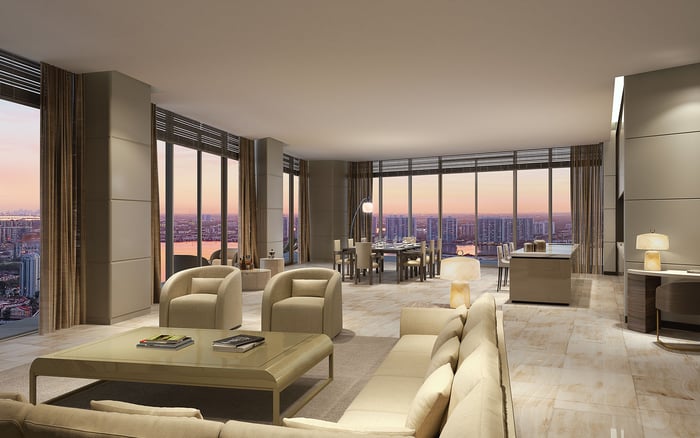
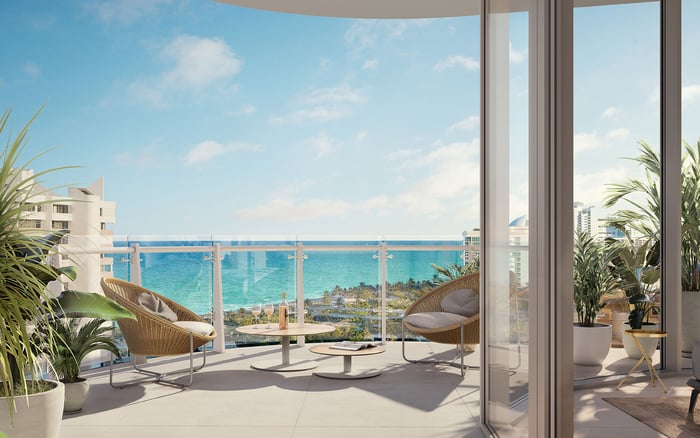
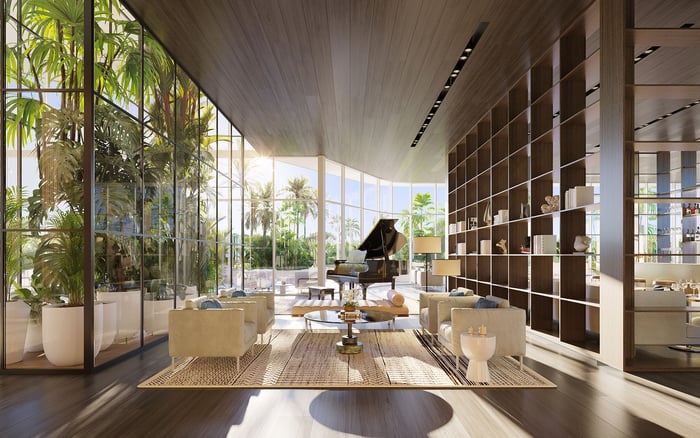
For collectors considering Armani/Casa and W in Pompano Beach, design authorship, art ownership and installation authority are distinct questions. A closer look at the disclosed terms reveals what buyers should establish before planning a collection's next home.
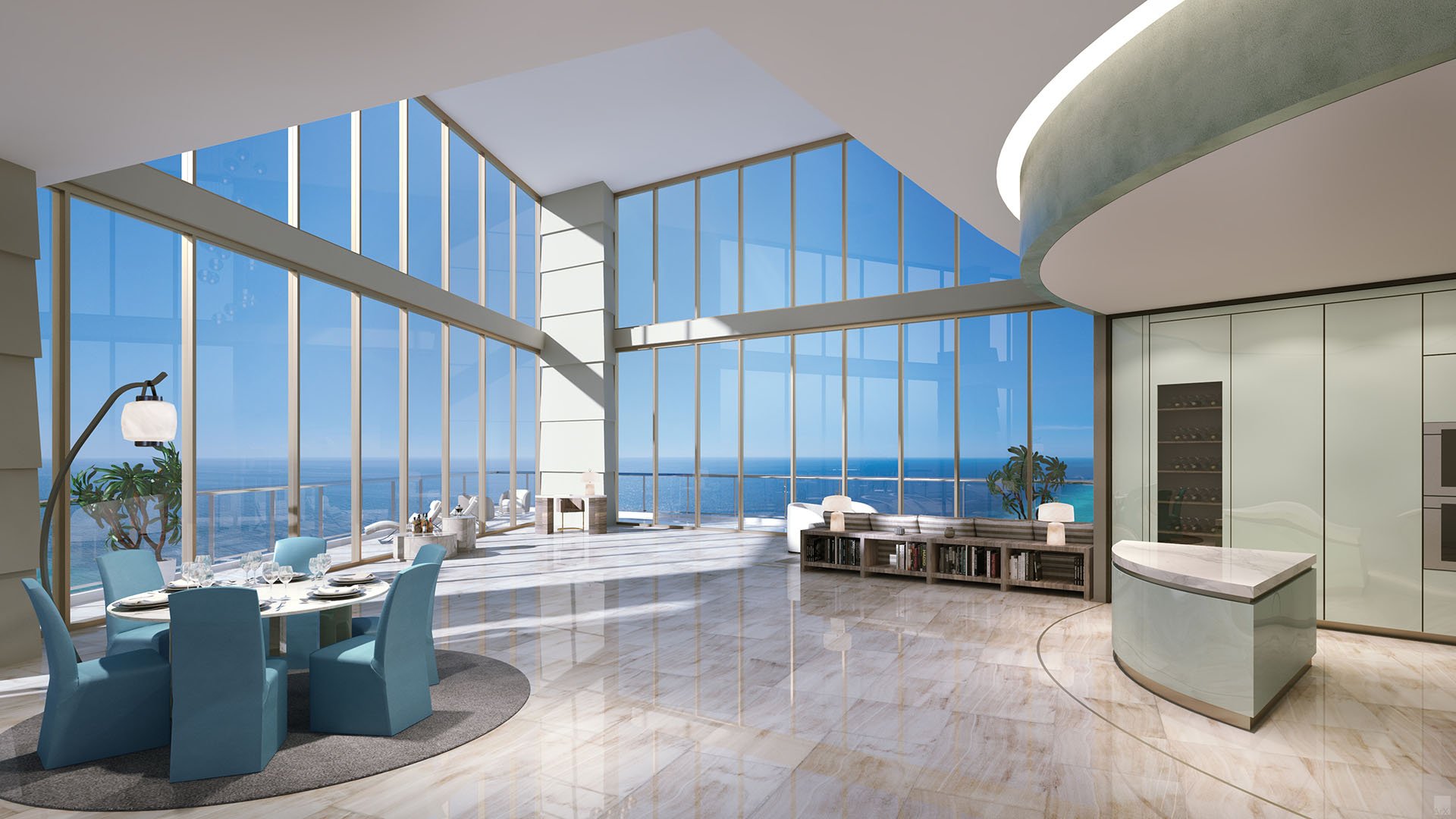
For a collector, an exceptional residence must do more than provide a beautiful backdrop. It must accommodate the collection's physical requirements and make clear who controls installations, who maintains shared artwork and which services are included. At Armani/Casa Residences Pompano Beach and W Pompano Beach Hotel & Residences, those questions require distinct answers.
The central distinction is straightforward: design authorship is not collection management, and displayed art is not necessarily association-owned art. Armani/Casa's documented role concerns interiors and artistic direction. At W, common-area artwork is subject to ownership, substitution and removal provisions. Neither establishes an owner-facing collection-management program, and museum-grade lighting is not an established included feature at either project.
For buyers, this is not a reason to discount either address. It is a reason to separate the aesthetic proposition from the contractual commitments before assigning value to either.
Planned at 1550 N. Ocean Boulevard, Armani Casa Residences Pompano Beach comprises 28 full-floor residences across two planned 19-story towers, with 14 residences in each. The homes are marketed as one residence per floor with oversized wraparound terraces.
The developer group comprises SP Developments, GCF Development, Vertical Developments and WellDuo. G3 Architecture is the designated architect and West 8 the landscape architect. These roles are distinct from Armani/Casa's interior-design and artistic-direction responsibilities.
For an owner bringing an established collection, the full-floor format invites careful consideration of placement and circulation. It does not, by itself, establish wall-load capacity, approved mounting methods or a right to modify finishes. Nor does the design relationship establish that collection cataloguing, conservation oversight, installation coordination or ongoing art care will be provided.
Buyers should ask for any proposed collection-related service to be defined in writing, including its provider, scope, fees and exclusions. An authored interior and a managed collection are different propositions.
W Pompano Beach Hotel & Residences combines hotel and residential offerings, with residences marketed around open interiors, organic textures and materials, and ocean views. The development is intended to be managed by W Hotels.
That operating relationship is separate from development ownership. The project is not owned, developed or sold by Marriott. The developer uses the W name and marks under license, and Marriott has not confirmed the accuracy of the developer's project representations.
For collectors, the artwork provisions are particularly consequential. Depicted or described art may be exchanged for comparable art at the developer's sole discretion. Artwork in condominium common areas may be loaned to the association rather than owned by it. It may also be removed before association turnover, without an assured replacement.
Association ownership requires a bill of sale conveying the installation from the developer to the association. A lobby presentation should not be treated as a permanent association asset simply because it appears in a rendering or occupies a shared space.
At W, the practical distinction is between artwork that is displayed, artwork that is loaned and artwork that has been conveyed. Each requires its own documentation. Request a common-area inventory identifying the works, their ownership status and any applicable loan or transfer records.
For loaned pieces, ask who is responsible for insurance, maintenance, damage and removal, and whether any replacement obligation exists. For conveyed pieces, request the bill of sale and confirm which installation it covers. Review turnover documents alongside those records, not as a substitute for them.
Apply the same questions when assessing another option such as The Ritz-Carlton Residences® Pompano Beach. This is a comparison framework, not a suggestion that its art provisions match W's. The meaningful comparison lies in what each project's documents commit to, not in the visual similarity of its shared interiors.
Museum-grade lighting is not established as an included feature at either Armani/Casa or W. Buyers should not interpret sophisticated interior design as a conservation-lighting commitment.
Instead, request the proposed lighting specifications and have the collection's adviser identify the requirements of the particular works. Address both the existing design and any owner-requested changes, including fixtures, controls, wiring and the approval process for electrical work. Treat this as a specification exercise, not an amenity assumption.
The same discipline applies to collection management. Ask whether a service exists, who contracts with the owner, what activities are covered and how responsibilities are divided. An introduction to an outside specialist, if offered, is not the same as an included management obligation. Neither project should be credited with a private collection service until its scope is established in writing.
Neither development's approval authority for private art installations, permitted media, anchoring requirements, insurance obligations nor review timelines are established in the reviewed terms. The absence of published rules is not permission to proceed, and buyers should not assume that either brand has authority to approve an owner's installation.
Before commissioning work, request the declaration, bylaws, alteration rules and architectural-review procedures. Ask who has authority over the proposed installation and whether separate technical or permitting reviews are necessary. Keep the roles of the brand licensor, hotel operator, developer, association, engineer and permitting authority distinct.
The installation brief should seek written requirements for wall loads, anchoring, lighting and electrical changes, freight access, contractor insurance and restoration. Include the proposed work's dimensions, weight and installation method so the response addresses the actual proposal rather than a generic description of art.
W's project designs and construction also remain subject to required federal, state and local approvals. Those provisions may require design or layout changes; they do not establish a private owner's art-approval procedure.
The strongest purchase review brings the residential documents and the collection brief together. Have counsel examine the relevant brand and management agreements, and ask the appropriate technical advisers to assess installation requirements before commitments are made.
For Armani/Casa, the priority is to define any services or permissions beyond the documented design role. For W, it is also to understand which common-area works will remain, under whose ownership and with what obligations. In both cases, written clarity lets the owner appreciate the design without mistaking atmosphere for an enforceable commitment.
Explore Pompano Beach residences with a collector's perspective through MILLION.
If branded residences are on your mind — as a home or as an allocation — we would be glad to share what we are seeing, privately.
Begin a quiet conversationThe project is planned at 1550 N. Ocean Boulevard in Pompano Beach, with 28 full-floor residences across two towers.
Its documented role concerns interior design and artistic direction. An owner-facing collection-management service is not established by the disclosed project information.
Project-specific conservation-lighting specifications are not established for either development. Buyers should request written specifications before treating such lighting as an included feature.
No. The project is not owned, developed or sold by Marriott; the developer uses the W name and marks under license.
The development is intended to be managed by W Hotels. That role does not itself establish a private collection-management service or authority over owner art installations.
Yes. W's disclosures allow depicted or described artwork to be exchanged for comparable art at the developer's sole discretion.
No. Artwork may be loaned, and association ownership requires a bill of sale conveying the installation from the developer to the association.
Yes. The disclosures allow removal before condominium-association turnover, with replacement not assured.
The disclosed information does not establish either project's private-installation approval authority or review timeline. Buyers should obtain the governing documents and written procedures rather than assume brand approval or unrestricted permission.
Request the declaration, bylaws, alteration and architectural-review rules, relevant brand and management agreements, and turnover documents. Also seek art inventories, transfer records and written technical requirements for the proposed installation.