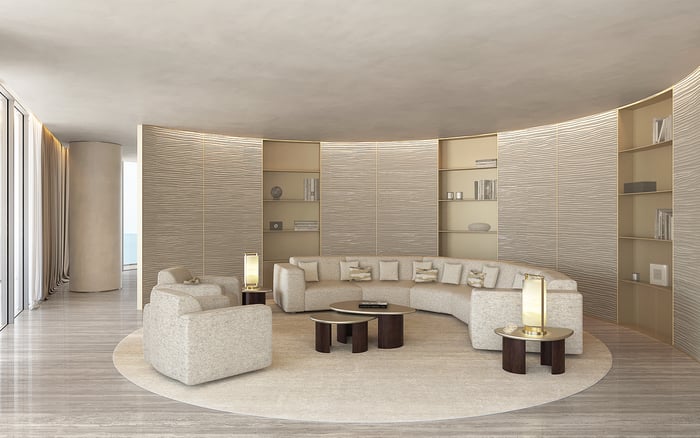
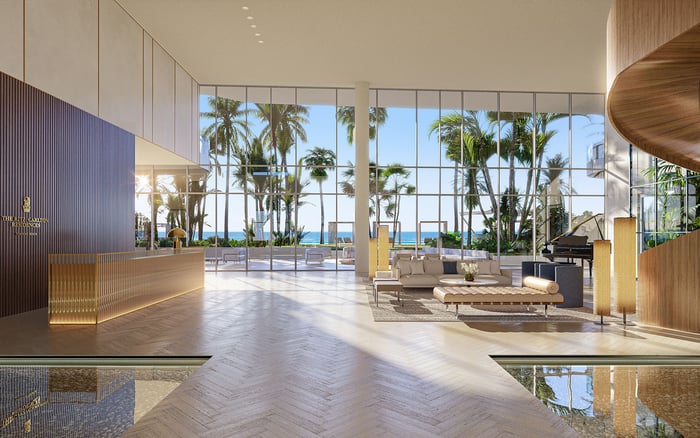
For collectors considering Armani Casa Residences Pompano Beach and Casamar, the essential distinction is between an art-conscious setting and a documented commitment to care for private artwork. Here is what to request on services, lighting, installation approvals, and common-area ownership.
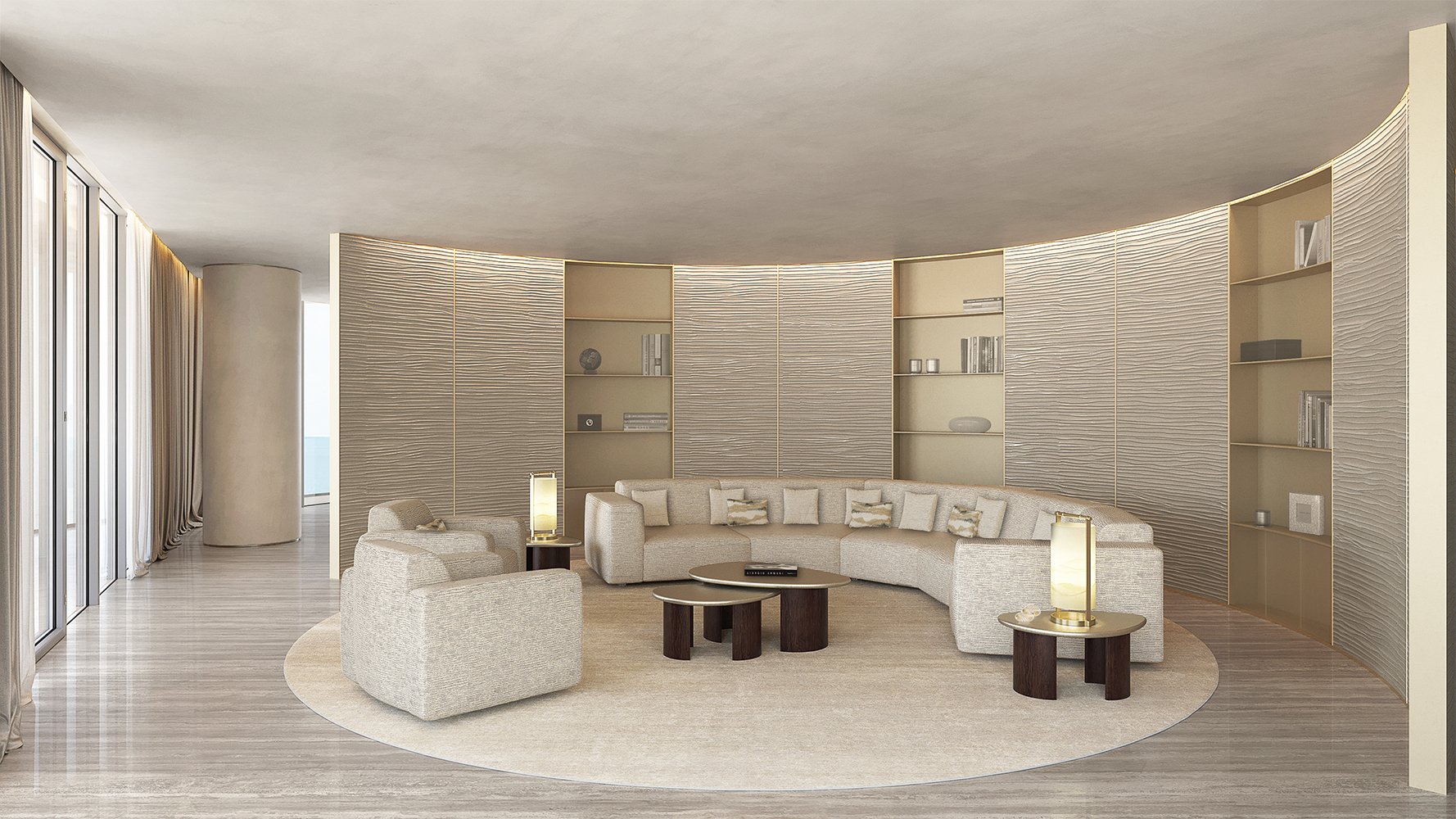
For a collector buying in Pompano Beach, the most consequential design conversation may concern what never appears in a rendering: responsibility for a painting during installation, the specifications behind its lighting, and permission to anchor a substantial sculpture. An elegant interior provides a setting for art, not a substitute for a documented plan to protect it.
At Armani Casa Residences Pompano Beach and Casamar, buyers should separate three questions: what belongs to the residence, which services are expressly included, and what requires additional approval. Neither a design identity nor artwork shown in an amenity presentation should be treated as a promise to manage an owner's private holdings.
The practical approach is to build an art-specific purchase file, connecting each important expectation to a written specification, agreement, or authorization. Unresolved items should remain questions-not become assumptions in an interior designer's brief.
For Armani Casa Residences Pompano Beach, request the applicable lighting and home-control specifications. Establish which components are included, optional, or owner-provided before assessing whether the proposed system suits the collection. The availability of smart controls, if confirmed, should not be treated as a guarantee of museum-grade lighting.
Ask whether the proposed artwork plan requires changes to fixtures, wiring, controls, or wall construction, and obtain written confirmation of any consequences for warranties.
The purchase review should include the current offering materials and operative purchase documents. Have counsel reconcile material art-related expectations with those documents rather than relying on verbal descriptions.
At Casamar, ask whether any artwork shown in sales materials or amenity presentations is included with the residence, intended for shared display, or illustrative only. An attractive shared collection and an owner's acquisition are separate matters; confirm the distinction in writing.
Do not assume that either development provides private collection management. If assistance is offered during a sales conversation, request a written scope identifying the provider, contracting party, fees, and exclusions.
Make that scope specific to the collection. Ask who creates the inventory, which identifying details are recorded, and when condition photographs and reports are prepared. Clarify who can authorize handling, relocation, or outside conservation work, and how those decisions are recorded.
Storage and rotation deserve separate treatment. Request the proposed storage arrangements, access permissions, transportation responsibilities, and any agreed display-rotation schedule. If these services require an outside provider, establish that relationship separately rather than treating it as an implied building benefit.
Finally, document emergency responsibilities: who contacts the owner, who can authorize urgent action, and who coordinates with the insurer and specialist handlers. The objective is not an expansive service description, but a clear allocation of responsibility when a valuable object needs attention.
For private artwork, the phrase museum-grade should begin a technical discussion, not conclude it. Smart controls describe how lighting can be operated; they do not, by themselves, establish conservation suitability.
Request fixture schedules and manufacturer cut sheets covering color temperature, color rendering, dimming, controls, heat, and ultraviolet emissions. Ask an appropriate art-lighting or conservation specialist to evaluate the proposal against the actual works intended for display. A general claim of premium lighting is no substitute for that artwork-specific review.
The documentation should distinguish the included system from proposed modifications. Have the designer identify display locations, intended illumination, and control settings, then ask how the completed installation will be checked. Retain the approved specifications and any agreed testing records with the residence file.
Ask how proposed fixture replacements, control adjustments, or artwork relocations would be reviewed. A carefully documented initial installation is more useful when future changes follow an equally clear process.
Obtain the current governing documents and written installation requirements before commissioning custom mounts or electrical work. Request the approval process directly from the authorized project or association representative rather than assuming a timetable at either development.
Prepare a proposal identifying the artwork's dimensions and weight, proposed location, mounting method, anchoring details, and electrical requirements. Ask what supporting information is needed for wall loads and whether professional drawings or additional review are required. These are due-diligence questions, not confirmed rules at either property.
Then clarify contractor insurance, freight access, delivery coordination, permits, protection of shared areas, restoration obligations, and final sign-off. Identify who has authority to approve each element and request written confirmation before fabrication or delivery commitments become difficult to change.
Ask the relevant professionals to identify any applicable Pompano Beach municipal requirements separately from condominium permissions. Do not assume that a building approval resolves any separate permit requirement, or vice versa.
For any artwork presented as part of Casamar's amenity setting, distinguish display from ownership. Request documentation identifying the owner and explaining whether a work is purchased, gifted, loaned, or subject to another arrangement. Do not treat a displayed piece as a permanent association asset without the corresponding records.
Ask whether the developer, association, lender, or another party retains removal or replacement rights. Confirm whether any commitment governs continued display, and have counsel review the terms rather than inferring permanence from a rendering or sales presentation.
Request any available artwork inventory, relevant loan or transfer agreements, insurance records, and maintenance obligations. Ask who bears handling or restoration costs and who has authority to approve changes. Keep the amenity presentation distinct from the legal interests conveyed with the residence.
Apply the same documentation discipline when comparing branded residences or considering Ocean 580 Pompano Beach. This is a comparison framework, not a claim that another project supplies collection care, conservation lighting, or a particular approval process.
Before committing, assemble four coordinated records: the residence's included specifications, any private collection-service agreement, the approved installation package, and relevant common-area artwork documentation. Ask counsel, the designer, and the collection specialist to identify unresolved dependencies before they become purchase expectations.
For a discreet perspective on matching a South Florida residence to your collection and lifestyle, explore MILLION.
If branded residences are on your mind — as a home or as an allocation — we would be glad to share what we are seeing, privately.
Begin a quiet conversationSmart controls alone do not establish conservation suitability. Request artwork-specific specifications and specialist review.
Request the current lighting and home-control specifications, identifying included, optional, and owner-provided components. Confirm any warranty implications of proposed changes.
No; buyers should verify any proposed service in writing before treating it as included. Request the provider's identity, contractual responsibilities, fees, and exclusions.
Request inventory and condition-report procedures, handling authority, storage arrangements, rotation schedules, and emergency responsibilities.
Request fixture schedules and cut sheets covering color temperature, color rendering, dimming, controls, heat, and ultraviolet emissions. Have a specialist assess suitability for the intended artwork.
Ask for written confirmation identifying anything conveyed with the purchase. Distinguish residence inclusions from shared displays and illustrative imagery.
Request the applicable display terms and identify any removal or replacement rights. Do not infer permanence from sales materials.
Request ownership records and any purchase, gift, or loan agreements. A displayed work should not be treated as an association asset without supporting documentation.
Obtain current governing documents and written requirements for mounting, electrical work, contractor access, permits, restoration, and final sign-off. Confirm the approval process before committing to fabrication or delivery.
Yes; ask the relevant professionals to identify each applicable requirement. Do not assume approval from one authority resolves the other's requirements.