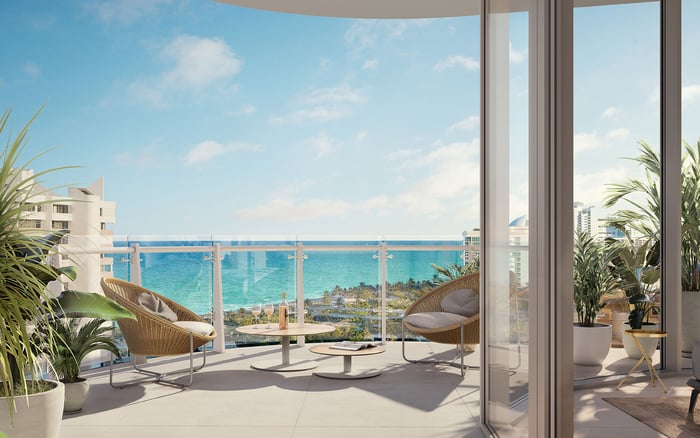
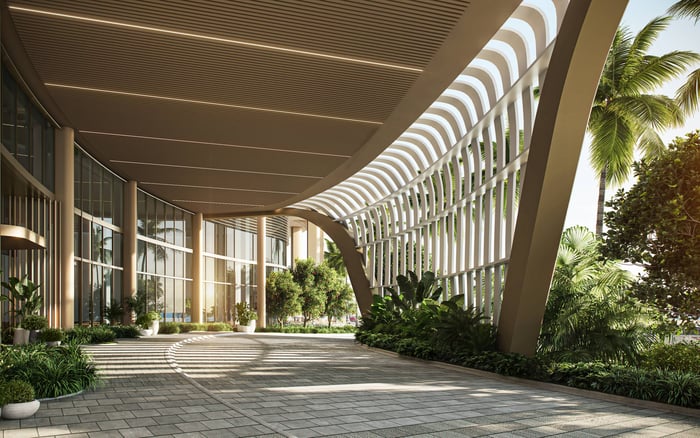
A buyer-focused comparison of Armani Casa Residences Pompano Beach and Four Seasons Residences Coconut Grove, emphasizing coastal exposure, service models, neighborhood character, carrying costs, governance, and the practical realities that shape long-term livability.
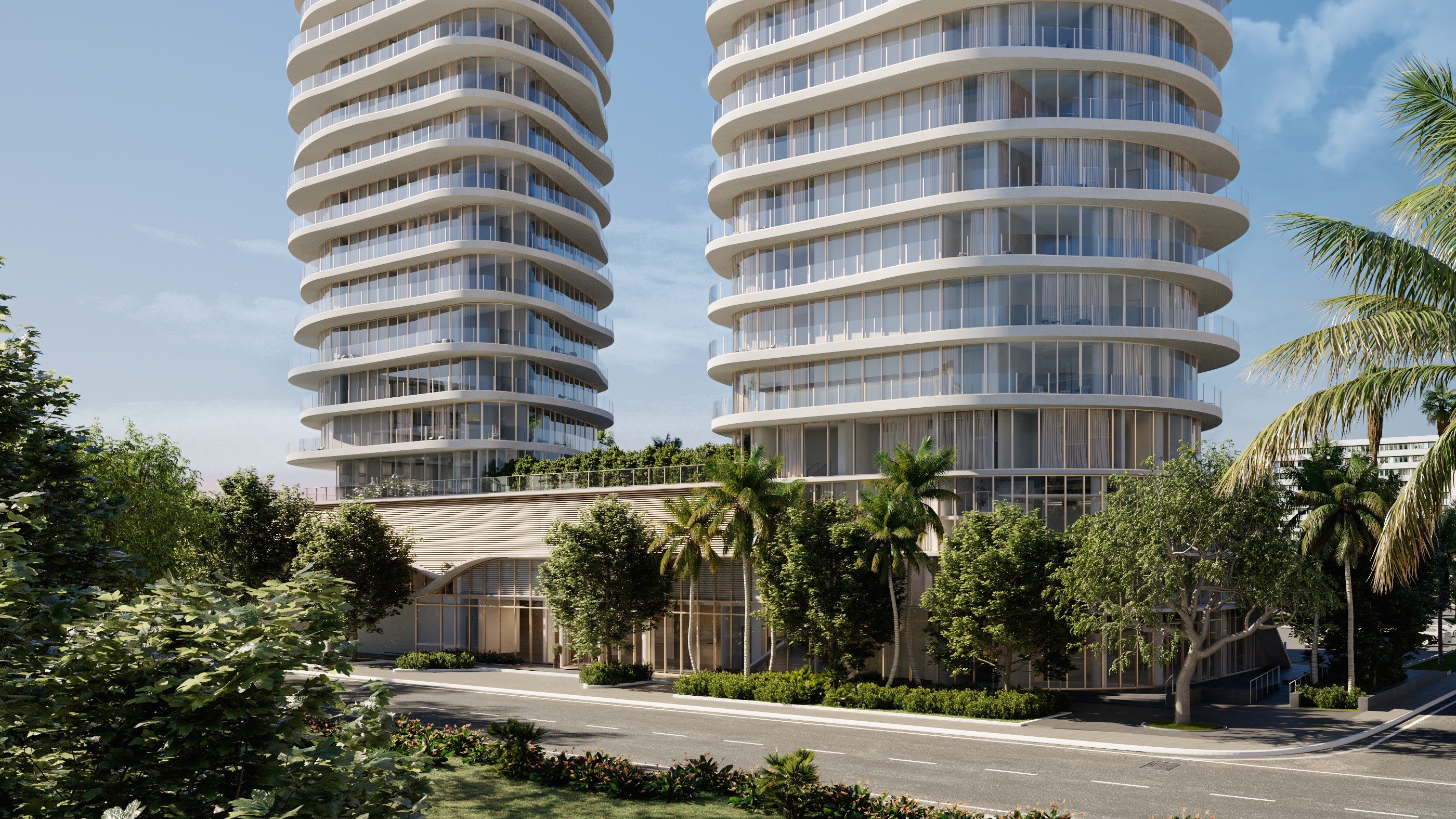
The sharper question is not which name carries more prestige. It is which daily life, cost structure, climate exposure, and neighborhood rhythm will feel better after ten or twenty years of ownership. Armani Casa Residences Pompano Beach and Four Seasons Residences Coconut Grove sit within two distinct luxury conversations in South Florida: one shaped by a northern Broward coastal setting, the other by a mature Miami bayfront neighborhood.
For buyers, that distinction matters more than a rendering, a lobby image, or even a famous brand. Armani Casa Residences Pompano Beach should be evaluated as an oceanfront livability decision. Four Seasons Residences Coconut Grove should be evaluated as an urban-bayfront livability decision. Both can be compelling, but each asks the owner to underwrite a different version of permanence.
The Pompano Beach decision begins with salt air, storm exposure, beachfront traffic patterns, façade upkeep, and the way a building performs during the busiest seasonal windows. A direct coastal lifestyle can be deeply appealing, especially for buyers who want the emotional immediacy of the ocean and the potential upside of a newer luxury corridor. That same environment, however, requires discipline.
Long-term owners should ask how the property is designed to age. Salt, wind, sun, and seasonal occupancy patterns can influence maintenance needs, exterior systems, staffing requirements, and reserve planning. The essential question is not simply whether the view is beautiful. It is how the building will operate on holiday weekends, during peak beach season, through storms, and across repeated maintenance cycles.
Armani Casa’s appeal is tied to a design-led branded-residence proposition associated with the Armani/Casa identity. Buyers should look beyond the name and study how the brand is expressed in finishes, common areas, private arrival, shared spaces, and ongoing operations. The brand promise has to survive daily use, association decisions, vendor contracts, and future boards.
In the broader Pompano context, buyers may also compare the beachfront ownership thesis with projects such as The Ritz-Carlton Residences® Pompano Beach or W Pompano Beach Hotel & Residences, not to rank them here, but to understand how branded coastal living is evolving along the corridor. The key is to underwrite the entire neighborhood trajectory, including future buildout, surrounding density, noise, and access patterns.
Four Seasons Residences Coconut Grove belongs to a different frame. The Coconut Grove buyer is not merely buying into a building; the buyer is choosing an established Miami neighborhood with a bayfront identity, residential character, dining, boating, and a more layered urban routine.
Here, livability depends on balance. Four Seasons’ long-term appeal is tied to the service model, making staffing, service consistency, operating budgets, and brand-management structure central to the purchase decision. A high-service residence can be extraordinary when operations are well funded and well governed. It can also become expensive or uneven if expectations, budgets, and association priorities diverge.
The Coconut Grove advantage is maturity. Buyers who want an established Miami enclave may find the daily context more predictable than a corridor still moving through its next stage of luxury development. Yet maturity does not remove friction. Congestion, access routes, nearby construction, privacy, and daily convenience still have to be tested in real time, at different hours and in different seasons.
For comparison within the Grove, projects such as Park Grove Coconut Grove and The Well Coconut Grove help illustrate the depth of demand for refined residential living in the neighborhood. Four Seasons Coconut Grove, however, should be judged on how its service architecture supports privacy without disconnecting owners from the Grove’s bayfront, residential, and social fabric.
In both projects, the glossy layer is only the beginning. New-construction buyers should review condominium documents with particular attention to rental rules, reserve funding, maintenance obligations, insurance assumptions, staffing obligations, amenity rules, and any brand or operator provisions that affect monthly carrying costs.
For Armani Casa buyers, document review should focus on coastal maintenance, insurance assumptions, reserve planning, rental rules, and how brand-related costs are allocated to the association. A beachfront residence may feel effortless, but the economics of preserving that effortlessness are ongoing.
For Four Seasons Coconut Grove buyers, the review should focus on service fees, staffing obligations, shared amenity rules, rental restrictions, operating budgets, and any provisions tied to the brand or operator. Service has a cost, and the best buyers understand how that cost is structured before they become owners.
Association governance may ultimately matter as much as architecture. A building can launch with beauty and confidence, then change character if reserves are underfunded, insurance costs rise sharply, staffing is reduced, or the branded-residence standard becomes difficult to maintain. The long-term owner should be interested in board quality, transparency, budgeting discipline, and the relationship between brand identity and association control.
Armani Casa Residences Pompano Beach is likely to resonate with buyers who want the beach to be the central fact of ownership. The strongest fit is someone who values oceanfront presence, accepts the realities of coastal maintenance, and is comfortable underwriting an evolving northern Broward luxury corridor.
Four Seasons Residences Coconut Grove is likely to resonate with buyers who prioritize an established Miami enclave, a high-service residential environment, and a bayfront lifestyle that includes privacy, dining, boating, and neighborhood texture. The strongest fit is someone who wants service woven into daily life, while still caring about walkability, access, and the authenticity of the surrounding district.
The correct decision is less about which project is more glamorous and more about which ownership experience is more durable. One is centered on immediate coastal living in Broward, while the other is centered on a settled Miami bayfront neighborhood. The buyer who understands that distinction will ask better questions, negotiate with more clarity, and hold with greater confidence.
Is Armani Casa Residences Pompano Beach better for oceanfront buyers? It is the more direct beach-and-oceanfront lifestyle choice in this comparison, with long-term attention required for coastal exposure and maintenance.
Is Four Seasons Residences Coconut Grove better for a Miami neighborhood lifestyle? Yes. It is the more mature Miami bayfront-neighborhood option, with daily livability tied to access, privacy, service, and the Grove’s established character.
What is the biggest long-term risk for Armani Casa buyers? Buyers should focus on salt air, storm exposure, façade upkeep, insurance assumptions, reserves, and beachfront traffic during peak periods.
What is the biggest long-term risk for Four Seasons Coconut Grove buyers? Buyers should focus on staffing budgets, service consistency, brand-management provisions, access routes, congestion, and monthly carrying costs.
Should buyers rely on the brand name alone? No. The brand is important, but long-term livability depends on governance, operations, reserves, maintenance, and whether the promise is preserved over time.
Are rental rules important in both projects? Yes. Rental restrictions can affect flexibility, resale appeal, financing assumptions, and how the building feels for full-time and seasonal residents.
Why does association governance matter so much? Governance determines how budgets, reserves, insurance, staffing, maintenance, and brand-related expenses are handled after the initial sales period.
How should a buyer compare beach traffic with urban congestion? Visit at different times, including weekends and peak seasons, then evaluate access, noise, privacy, parking flow, and daily convenience.
Which project is better for a 10- to 20-year hold? The better hold depends on whether the buyer prefers coastal upside and oceanfront living or a mature Miami bayfront neighborhood with high-service privacy.
What documents should be reviewed before purchase? Review the condominium declaration, budget, reserve schedule, insurance assumptions, rental rules, amenity rules, and any brand or operator agreement.
To compare the best-fit options with clarity, connect with MILLION.
If branded residences are on your mind — as a home or as an allocation — we would be glad to share what we are seeing, privately.
Begin a quiet conversation