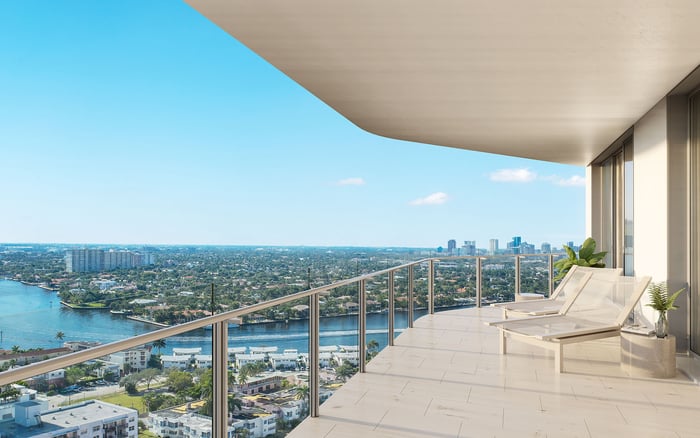
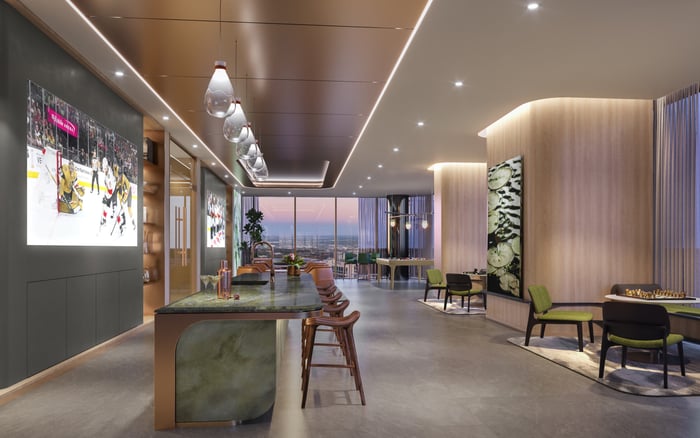
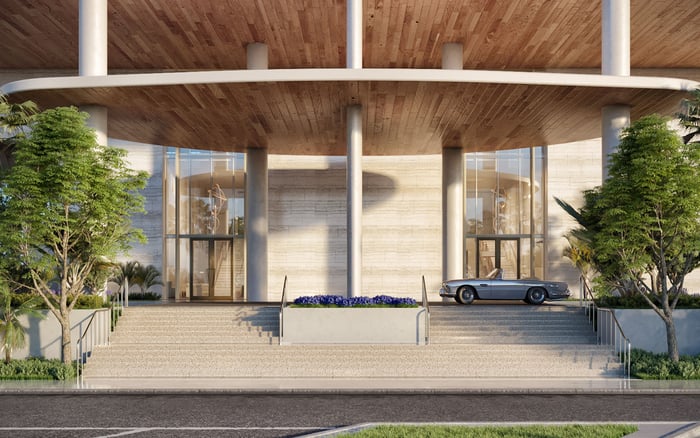
A disciplined 2026 buyer at Andare Residences Fort Lauderdale should treat view premiums as a marginal pricing decision, not a design-center emotion. The right test compares each floor, stack, and exposure against durability, scarcity, light, privacy, resale defensibility, and alternative uses of capital.
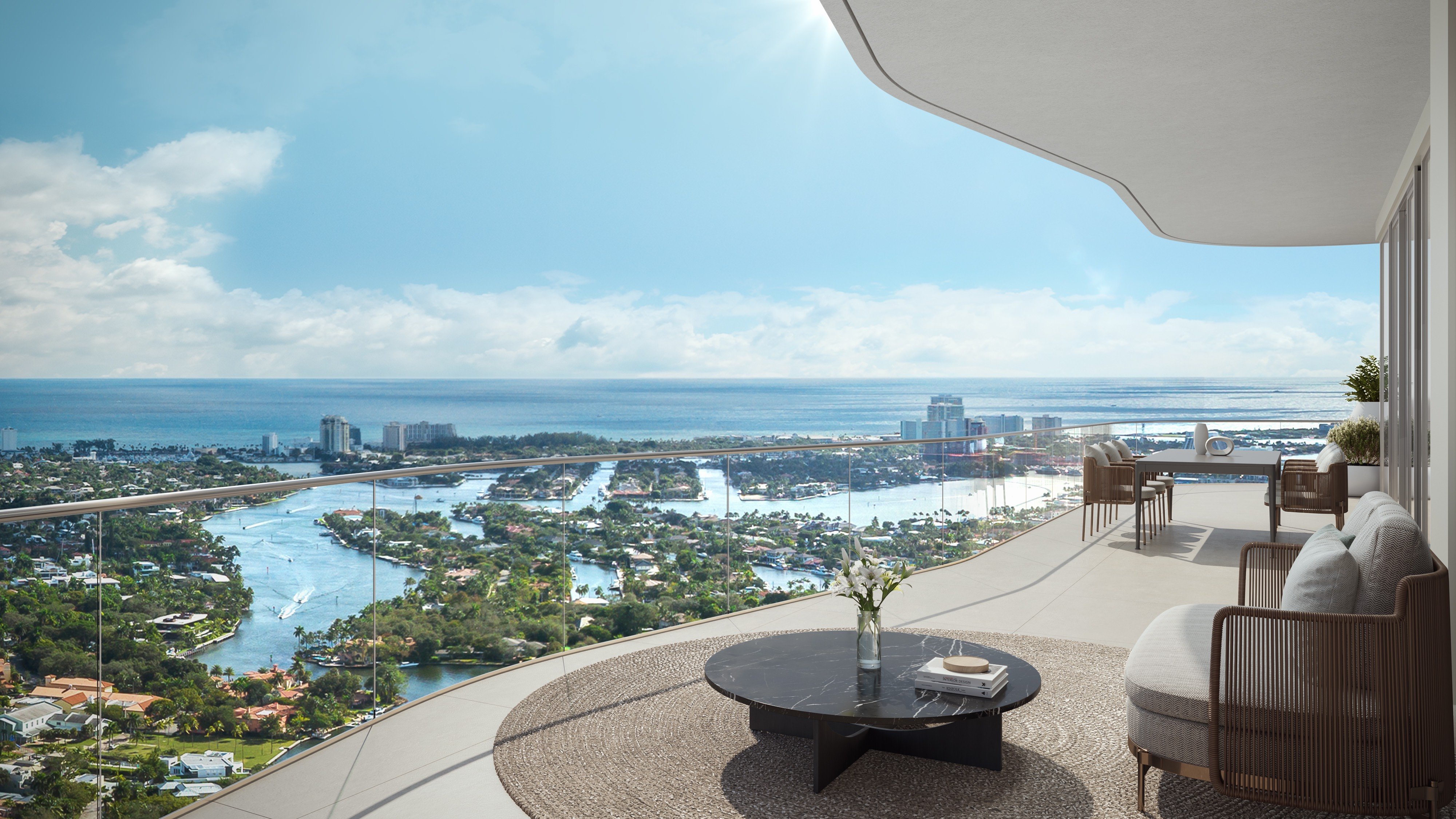
Andare Residences Fort Lauderdale is more than a new-construction address for the luxury buyer studying the city’s waterfront market. It is a case study in how affluent purchasers should think about view premiums in 2026, when the most expensive decision in a residence is not always the floor plan, the finish package, or the amenity promise. Often, it is the premium paid for a better horizon.
That premium can be rational. Fort Lauderdale offers an unusually nuanced view environment: Atlantic Ocean, Intracoastal, marina, skyline, and mixed water-city exposures can all carry emotional power. Yet the disciplined buyer’s question is not simply, “Which view do I love most?” It is, “How much more should I pay for that view, and will the next buyer understand the same value?”
For Andare Residences Fort Lauderdale, that distinction matters. Line-by-line pricing and live inventory can shift, so the intelligent approach is not to rely on a fixed formula. The stronger framework is marginal: compare each better stack, floor, or exposure against the actual incremental view quality received.
In some luxury markets, buyers lean on shorthand. Higher is better. Ocean is best. Corners always win. In Fort Lauderdale, those rules can mislead.
A lower residence with an open, durable water view may be more compelling than a higher residence whose outlook feels distant, partial, or compromised by surrounding context. An Intracoastal-facing exposure may outperform an ocean exposure for a buyer who prizes sunset light, yacht movement, and evening reflection. A skyline view may feel ordinary at noon and theatrical after dark. A marina outlook may deliver intimacy and activity that a broader but less textured view does not.
This is why Andare should be evaluated floor by floor, stack by stack, and exposure by exposure. The vocabulary may sound simple: Waterview, High-floors, Investment, Broward, Fort-lauderdale. In practice, each label conceals a more exacting question about permanence, breadth, privacy, and resale appeal.
The buyer test begins with scarcity. A view that is difficult to replicate deserves more serious consideration than one that depends on a narrow angle, a temporary gap, or a context that may change. Scarcity is not just beauty. It is the combination of open sightline, limited substitution, and a sense that the residence owns something enduring.
Durability comes next. A buyer should separate views that feel structurally protected from those more vulnerable to obstruction or neighborhood change. This does not require prediction with false certainty. It requires humility. If a view’s value depends on a delicate slice between buildings, the premium should be treated differently than a broader, more resilient exposure.
Breadth is the third test. A wide view that includes water, skyline, and light movement can be more persuasive than a singular but narrow outlook. Corner and wraparound exposures may justify stronger premiums when they combine multiple view categories, but only if the added cost is benchmarked against simpler lines.
Light quality is the fourth test. Morning ocean brightness, sunset Intracoastal warmth, marina reflection, and evening skyline illumination are distinct experiences. A residence that feels spectacular during a presentation hour should also be tested at the times the owner will actually live there.
Privacy is fifth. A beautiful view can lose power if it comes with direct visual exposure into neighboring residences or active public-facing areas. In luxury real estate, privacy is not a secondary feature. It is part of the view.
Finally, resale appeal. A buyer may personally adore a specific outlook, but the premium should still be tested under conservative resale assumptions. The next purchaser may value the same view, but not at any price.
The central Andare discipline is to isolate the price step. If one residence costs meaningfully more than the next-best alternative because of a superior view, the buyer should ask what is truly changing.
Is the higher-priced option moving from obstructed to open? That can be a major value jump. Is it moving from open to slightly more open? That may be more subtle. Is the premium buying a broader angle, better sunset light, less visual intrusion, or a more durable water exposure? Each answer carries a different weight.
View premiums are stepwise, not linear. The leap from compromised to compelling may justify more attention than the leap between two already-strong upper-floor views. A buyer can love the better residence and still reject it if the premium over the next-best unit is too steep. Discipline is not the opposite of taste. It is taste with a price ceiling.
Luxury buyers should be honest about what part of a view premium is lifestyle and what part is Investment. The lifestyle portion may be entirely valid. A sunrise ritual, an evening skyline, or the calm of water movement can shape the owner’s daily life in a way no spreadsheet captures.
But lifestyle value should not automatically be converted into resale value. A disciplined buyer can assign a personal enjoyment budget to the superior view, then decide how much of that premium must be defensible later. The two numbers do not need to be identical.
This is especially important in 2026, when buyers are more sensitive to carrying costs, negotiability, and future exit strategy. The premium for a better view should be compared with alternative uses of capital: a larger floor plan, a better layout, a lower ongoing obligation, or a more flexible resale price.
Before selecting the more expensive view at Andare, a buyer should walk through five practical questions.
First, what is the exact difference between the two residences under consideration? Not in marketing language, but in lived experience. Is the view wider, brighter, more private, more water-oriented, or simply higher?
Second, is the superior view rare within the building? If several stacks offer a similar outlook, the premium should be measured accordingly. If the exposure is genuinely difficult to duplicate, the case becomes stronger.
Third, does the view perform at multiple times of day? A strong morning view may not deliver the same evening emotion, and a modest daytime skyline may become powerful after dark.
Fourth, would a conservative resale buyer pay for the same difference? The answer should not rely on a best-case market. It should assume a more selective future buyer comparing multiple options.
Fifth, what would the same capital accomplish elsewhere in the purchase? If the premium compromises layout, size, or financial flexibility, the better view must clear a higher bar.
Andare Residences Fort Lauderdale rewards a buyer who can be both romantic and clinical. The romance is obvious: water, light, city, marina, and horizon. The discipline is less visible and more valuable: never pay for a view without understanding the marginal gain, the durability of the sightline, and the likelihood that a future buyer will recognize the same hierarchy.
In a market where presentation can be powerful, the strongest buyer is not the one who refuses to pay premiums. It is the one who knows which premiums deserve to be paid.
What is view premium discipline at Andare Residences Fort Lauderdale? It is the practice of comparing the added price for a better view against the actual improvement in exposure, durability, privacy, and resale appeal.
Should buyers assume higher floors are always better? No. Higher floors can be valuable, but the better test is whether the incremental height creates a meaningfully better and more defensible view.
Is an ocean view automatically more valuable than an Intracoastal view? Not always. Orientation, light, surrounding context, and buyer preference can make an Intracoastal, marina, skyline, or mixed view more compelling.
Why should Andare buyers compare units stack by stack? Stacks can differ in exposure, privacy, breadth, and vulnerability to changing context, even within the same building.
Can a buyer love a view and still decline the premium? Yes. A superior view may be emotionally attractive while still being overpriced compared with the next-best option.
How should buyers think about corner or wraparound exposures? They may justify stronger premiums when they combine multiple view types, but the premium should still be benchmarked against simpler lines.
Why does time of day matter in view analysis? Ocean, Intracoastal, marina, and skyline views can change significantly in morning light, sunset, and evening illumination.
What makes a view more defensible at resale? Scarcity, durability, breadth, privacy, and broad buyer appeal usually make a view easier to justify to a future purchaser.
Should buyers treat every view premium as an investment? No. Part of the premium may be personal lifestyle value, and buyers should not assume that every dollar will be recovered at resale.
What is the best way to shortlist comparable options for touring? Start with location fit, delivery status, and daily lifestyle priorities, then compare stacks and elevations to validate views and privacy.
For a discreet conversation and a curated building-by-building shortlist, connect with MILLION.
If branded residences are on your mind — as a home or as an allocation — we would be glad to share what we are seeing, privately.
Begin a quiet conversation