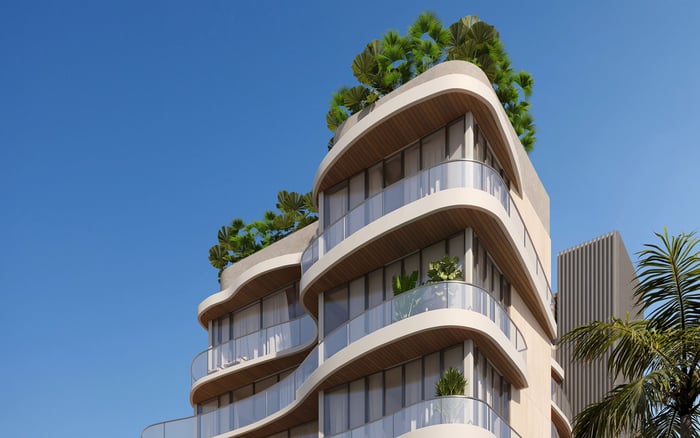
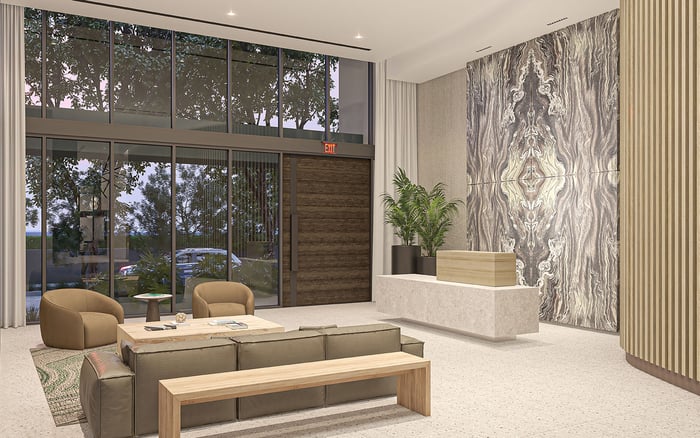
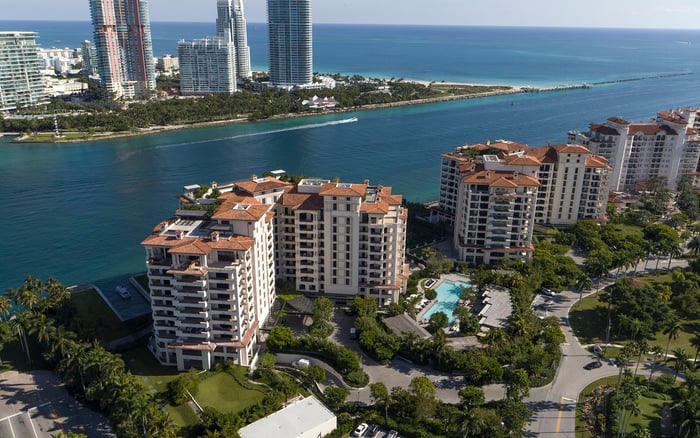
A buyer-focused comparison of Alma Bay Harbor Islands and Mr. C Tigertail Coconut Grove, centered on floor-sharing, circulation, neighbor sightlines, terrace exposure, and glass-wall comfort.
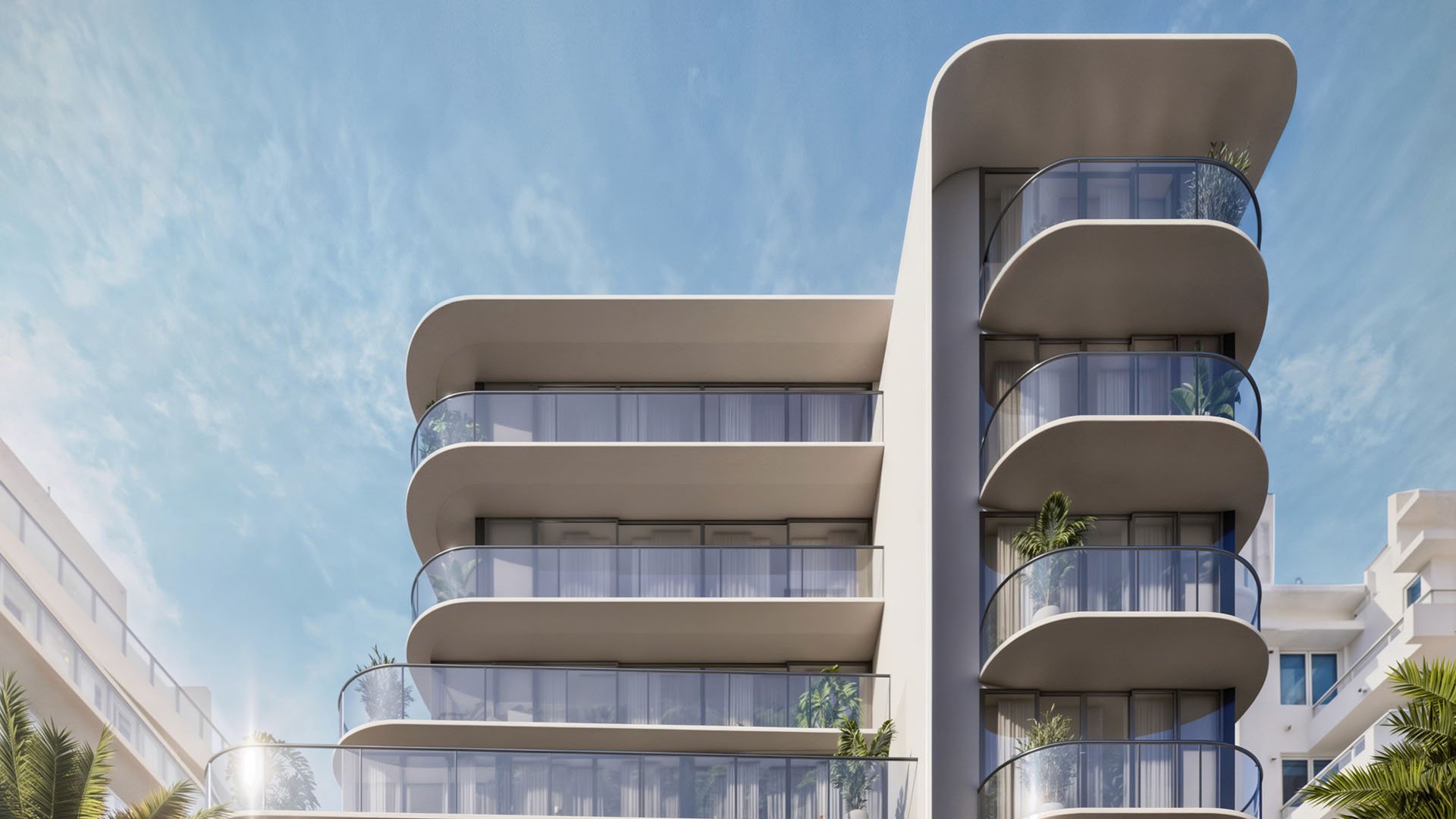
Alma Bay Harbor Islands and Mr. C Tigertail Coconut Grove speak to two distinct versions of South Florida luxury. One is best understood as a boutique, more residential-feeling condominium in Bay Harbor, where quiet, water adjacency, and fewer perceived layers of activity may define the appeal. The other sits within the Mr. C Residences Miami brand context, with Mr. C Tigertail Coconut Grove positioned in a more connected Coconut Grove setting where convenience, service culture, and social energy can be central to the lifestyle.
For a serious buyer, the comparison should not begin with finishes or renderings. It should begin with the smallest repeated moments of daily life: who steps out of the elevator with you, who passes your door, who can see onto your terrace, and how the home performs behind large walls of glass at 4 p.m. in a South Florida summer.
The most disciplined approach is not to assume that boutique means private or that branded means exposed. Both assumptions can be wrong. Privacy has to be underwritten floor by floor, line by line, and exposure by exposure.
At Alma, the key question is whether the residence is whole-floor, half-floor, or part of a multi-unit-per-floor arrangement. Each configuration can create a very different lived experience. A whole-floor plan may reduce direct hallway sharing, but it still requires close review of elevator landings, service access, trash rooms, mechanical adjacencies, and the way guests or staff move through the building.
A half-floor plan can still feel highly private if arrivals are well separated and unit entries are not visually exposed to one another. Conversely, a nominally low-density building can feel less discreet if multiple doors open onto a compact shared corridor or if the elevator arrival places residents in immediate view of neighboring entries.
At Mr. C Tigertail, the privacy analysis shifts from simple floor count to circulation logic. A branded-residence environment can offer polish and service, but buyers should test how private residential arrivals are separated from amenity movement, lobby activity, valet flow, and hospitality-style circulation. The relevant question is not whether activity exists, but whether it intersects with the owner’s daily path.
For both buildings, a buyer should request stack plans, floor plates, elevator-core diagrams, hallway counts, and unit-line adjacencies before assigning any privacy premium. The drawing set often tells the truth before the sales narrative does.
In Bay Harbor Islands, Alma’s water adjacency may create a softer, calmer residential impression. Yet waterview does not automatically equal privacy. Water can open sightlines, but it can also reveal lateral, oblique, and terrace-to-terrace exposure that is easy to overlook in a model residence or rendering.
The diligence should include canal or bay sightlines, setback relationships, balcony orientation, and the distance between terraces across water or neighboring parcels. Buyers should stand where daily life actually happens: at the kitchen island, primary bedroom glass, outdoor seating area, and bathroom window. A view that feels expansive from the living room may feel more exposed from the bedroom at night.
In Coconut Grove, the exposure analysis is more urban. Mr. C Tigertail buyers should evaluate street activity, nearby buildings, urban adjacencies, and possible tower-to-tower sightlines. Coconut Grove offers a desirable sense of place, but a more active location can bring more visible movement around lobbies, valet areas, social spaces, and amenity approaches.
This is not a negative if the buyer wants energy, walkability, and a branded lifestyle rhythm. It is a trade-off that should be priced correctly. The premium should attach to a verified line, not to a neighborhood reputation.
Terraces are often marketed as extensions of the interior, but they must be analyzed as their own rooms. At Alma, the buyer should ask whether terrace separations are deep enough to prevent casual neighbor-to-neighbor viewing, whether outdoor seating zones face directly into another line, and whether railings or glass guards create more transparency than expected.
At Mr. C Tigertail, terrace privacy should be considered alongside building height, nearby elevations, and amenity sightlines. A terrace may have a desirable outlook while still being visible from a neighboring building, pool deck, or social area. In branded environments, the most important exposure may not be another residence, but the path of residents and guests through shared spaces.
The correct test is practical. Where would breakfast be served? Where would guests gather after dinner? Where would someone work on a laptop outdoors? If those exact locations are visible from adjacent units or public-facing movement corridors, the terrace may function more as a scenic perch than as a truly private outdoor room.
Large glass walls are central to the modern South Florida condominium experience, but comfort behind that glass is not automatic. For both Alma and Mr. C Tigertail, buyers should evaluate orientation, solar exposure, shading, balcony depth, HVAC capacity, glazing specifications, and hurricane-impact performance.
Eastern morning light, western afternoon heat, and southern exposure can all create different comfort profiles. Deep balconies can temper solar gain, but only if their depth and placement actually shade the relevant glass. HVAC capacity matters, particularly in open-plan homes where glass line, ceiling height, and volume can make cooling more complex.
Glazing should be discussed with precision. Buyers should understand the performance characteristics of the glass, not just whether it is impact-rated. Acoustic comfort is also part of the glass-wall conversation, especially in more urban settings where street movement, valet activity, and social arrival patterns may be present.
At Alma, glass comfort may intersect with water glare and broad horizontal exposure. At Mr. C Tigertail, it may intersect with city-facing outlooks, adjacent buildings, and a more active ground plane. In both cases, the most beautiful wall of glass should be tested as a living condition, not simply a view frame.
Alma’s likely advantage is a calmer, more residential-feeling privacy profile. That advantage becomes meaningful only if the selected line verifies limited floor sharing, controlled arrivals, comfortable terrace separation, and sightlines that do not compromise daily use.
Mr. C Tigertail’s likely advantage is a more connected, branded, urban-luxury lifestyle. That advantage becomes compelling when the buyer values service, access, and a more animated setting, and when the private residential experience remains meaningfully buffered from daily amenity and lobby traffic.
The best underwriting question is not “Which building is more private?” It is “Which specific residence best supports the way this buyer lives?” A buyer who entertains frequently may value an impressive arrival and social energy. A buyer seeking a quieter second home may pay more for fewer shared thresholds and less neighbor visibility.
Privacy, exposure, and glass comfort should be treated as financial variables. They influence enjoyment, resale positioning, and the confidence with which a buyer can assign a premium to a specific line.
Request the exact floor plate and identify how many residences share the elevator arrival. Confirm whether the unit is whole-floor, half-floor, or multi-unit-per-floor, then study how that affects entry privacy.
Map every direct and oblique sightline from living areas, bedrooms, bathrooms, and the terrace. Review balcony depth, orientation, shading, HVAC assumptions, glazing specifications, and storm performance. Visit or simulate the home at different times of day whenever possible, because afternoon heat and evening visibility often reveal more than midday showings.
Finally, separate the emotional pull of the setting from the underwritten reality of the line. Bay Harbor calm and Coconut Grove energy can both be highly desirable. The winning choice is the one where the exact residence makes the trade-offs explicit.
Is Alma automatically more private because it is boutique? No. Boutique character can support privacy, but the floor plate, elevator sequence, hallway sharing, and terrace sightlines must verify it.
Is Mr. C Tigertail automatically less private because it is branded? No. A branded residence can still feel discreet if private residential arrivals and amenity circulation are well separated.
What is the first document a buyer should request? Start with the exact floor plate, then review stack plans, elevator-core diagrams, hallway counts, and unit-line adjacencies.
Why does floor sharing matter so much? Floor sharing affects how often residents encounter neighbors, staff, guests, and service movement near the front door.
Can water views still create neighbor exposure? Yes. Water can open views while also creating lateral, oblique, or terrace-to-terrace sightlines across nearby buildings.
What should Mr. C Tigertail buyers watch most closely? They should study lobby activity, valet flow, amenity paths, nearby buildings, and whether residential circulation remains private.
How should buyers evaluate terrace privacy? Test the actual seating and dining zones for visibility from neighboring units, amenity areas, streets, and adjacent buildings.
What matters most for glass-wall comfort? Orientation, solar exposure, balcony depth, shading, HVAC capacity, glazing performance, and impact specifications all matter.
Which buyer may prefer Alma? A buyer prioritizing quieter residential rhythm, fewer perceived daily encounters, and water-adjacent calm may lean toward Alma.
Which buyer may prefer Mr. C Tigertail? A buyer prioritizing branded service, Coconut Grove access, and a more connected urban-luxury setting may prefer Mr. C Tigertail.
When you're ready to tour or underwrite the options, connect with MILLION.
If branded residences are on your mind — as a home or as an allocation — we would be glad to share what we are seeing, privately.
Begin a quiet conversation