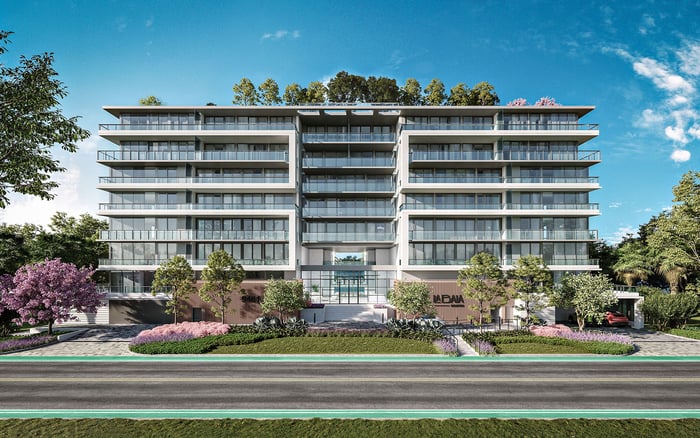
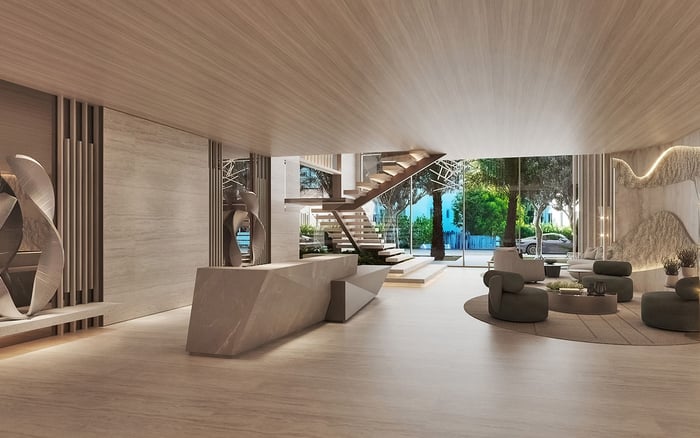
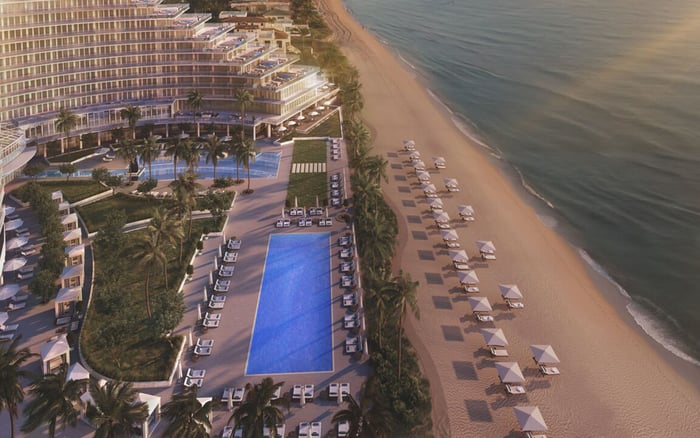
A buyer-focused comparison of Alma Bay Harbor Islands and La Baia North Bay Harbor Islands, with attention to protected water views, boutique scale, marina orientation, amenities, and long-term ownership priorities.
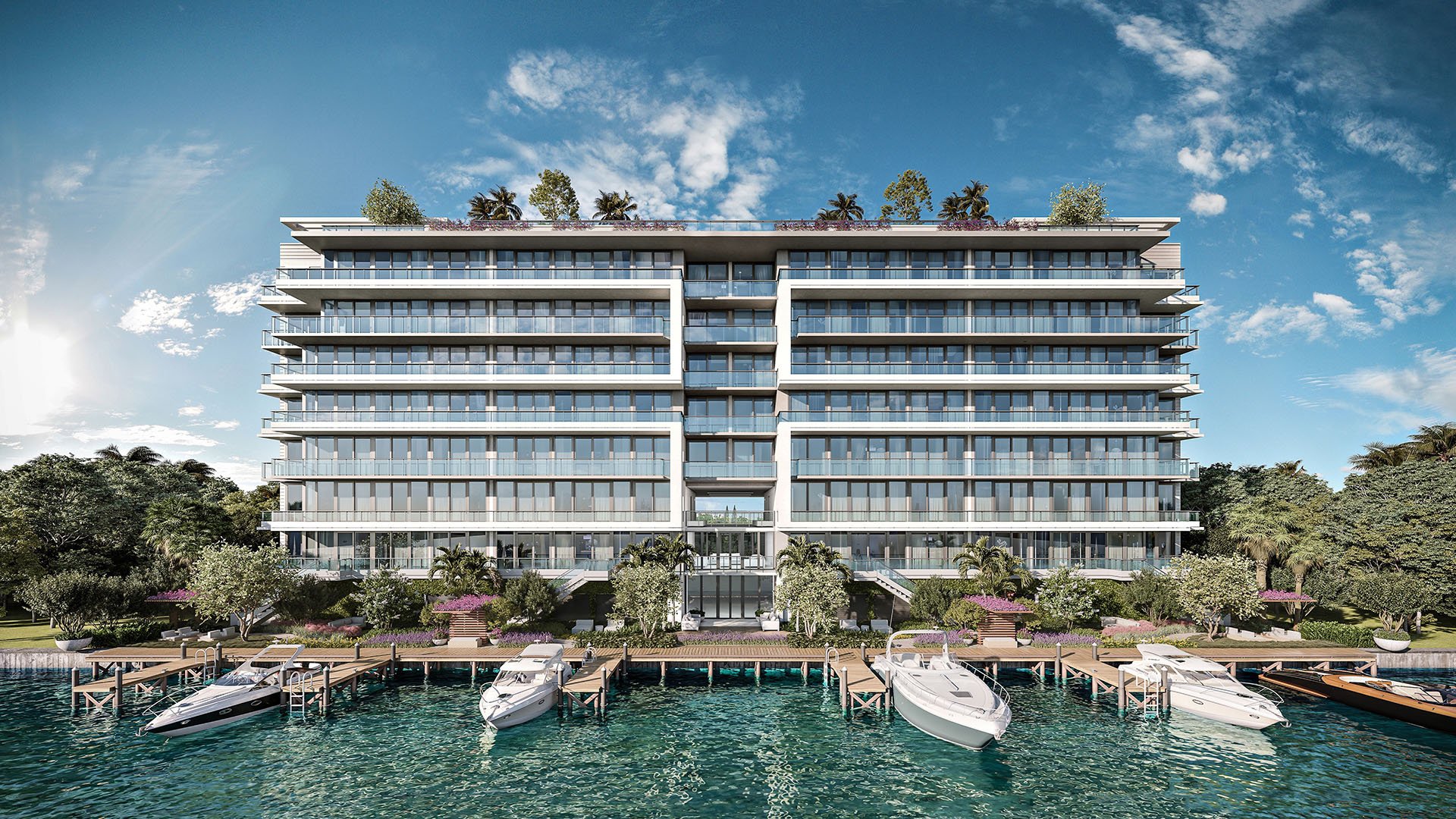
Alma Bay Harbor Islands and La Baia North Bay Harbor Islands occupy a precise lane in South Florida luxury: boutique waterfront condominium living in Bay Harbor Islands, with Biscayne Bay access, protected water outlooks, and a more residential rhythm than larger coastal towers. For buyers who already understand the appeal of proximity to Bal Harbour, Surfside, and Miami Beach, the question is not whether Bay Harbor Islands is convenient. It is how each building interprets waterfront life.
Alma is best understood as a quieter vertical-home concept for buyers who want lock-and-leave convenience without giving up the feeling of expansive waterfront exposure. Its appeal leans toward privacy, neighborhood calm, and a lower-density alternative to the resort-style condominium environments nearby.
La Baia North, by contrast, is framed around boutique bayfront ownership in a finite waterfront setting. It attracts buyers comparing Bay Harbor Islands with larger luxury products in Bal Harbour, Sunny Isles, and Miami Beach, while still seeking a more residential address and a focused bayfront lifestyle.
Buyer shorthand often places this search within boutique, waterview, marina, second-home, and Surfside priorities, but Alma and La Baia North should not be treated as interchangeable. The meaningful distinctions sit in waterfront orientation, marina design, amenity programming, unit mix, and the ownership profile each building is likely to serve.
In Bay Harbor Islands, protected water views carry a different emotional register than direct oceanfront drama. They are calmer, more residential, and more closely tied to the daily rituals of boating, terraces, sunset light, and the quiet movement of Biscayne Bay.
Alma speaks to buyers who prioritize Biscayne Bay access and protected water views while avoiding the scale and atmosphere of larger coastal towers. The draw is not simply the view itself, but the sense that the home remains connected to a waterfront neighborhood rather than a hospitality-driven skyline.
La Baia North also centers the bayfront lifestyle, but its ownership thesis is slightly different. It reads as a boutique waterfront scarcity play: a way to secure a bayfront residence in a market where well-positioned shoreline development is inherently limited. For investment-minded buyers, seasonal residents, and primary users, that scarcity can matter as much as the view.
The tradeoff is subtle. Alma may resonate more with buyers who want quiet daily livability and a vertical-home feeling. La Baia North may appeal to those who want boutique waterfront exclusivity with an eye toward long-term scarcity in the Bay Harbor Islands pipeline.
Marina considerations require nuance because not every waterfront buyer uses the water the same way. Some want immediate visual access to boats and the bay. Others care about the practical feel of a waterfront arrival, the relationship between residence and waterline, or the ability to live near boating culture without choosing a single-family home.
For Alma buyers, the key appeal is the combination of condominium convenience with the impression of broad waterfront exposure. It serves the buyer who wants the ease of a managed building, secure departures, and a calm neighborhood setting, while still feeling materially connected to Biscayne Bay.
For La Baia North buyers, marina configuration is part of a broader bayfront lifestyle equation. The building’s value proposition is not only that it is waterfront, but that it belongs to a more intimate residential waterfront environment than the high-density corridors of Collins Avenue or Sunny Isles.
This is where buyer due diligence matters. Before choosing between the two, purchasers should review the latest marina-related details, water access expectations, residence orientation, and any building-specific rules that may affect daily use. The correct choice depends less on the idea of waterfront living and more on how the water will actually be used.
A key Alma tradeoff is boutique privacy and neighborhood calm versus the broader resort-level service menus found in branded oceanfront properties. That is not a weakness if the buyer values discretion over spectacle. Families, empty nesters, and second-home owners who prefer tranquility over nightlife may find that a quieter amenity environment better supports how they actually live.
La Baia North presents a related but distinct tradeoff: boutique waterfront exclusivity versus the scale and amenity depth of larger luxury towers in nearby submarkets. Buyers coming from Sunny Isles, Miami Beach, or Bal Harbour may be accustomed to extensive service programming. In Bay Harbor Islands, the luxury proposition is more concentrated, more residential, and often less performative.
The right question is not which project has the longest amenity menu. It is whether the amenity program matches the resident’s rhythm. A primary user may prioritize wellness spaces, privacy, storage, parking ease, and a calm arrival sequence. A seasonal owner may value simplicity, reliability, and low-friction lock-and-leave ownership. An investment-minded buyer may focus on the enduring appeal of boutique bayfront inventory.
Alma should be viewed through the lens of the vertical home. That phrase matters because it separates the building from a hotel-like tower mentality. The likely buyer pool includes families, empty nesters, and second-home owners who want the spatial and emotional qualities of a home, with the convenience of condominium ownership.
La Baia North is likely to attract a somewhat broader blend of primary users, seasonal residents, and investment-minded buyers focused on waterfront scarcity. Its appeal is tied to bayfront positioning, boutique scale, and the ability to own in a quieter residential setting while remaining near major lifestyle anchors.
Because the current comparison is strongest at the level of positioning rather than exact quantitative specifications, buyers should avoid making assumptions based on name recognition alone. Floor plan proportions, terrace orientation, privacy between residences, storage, parking, and the relationship of each home to the water can all change the ownership experience.
Bay Harbor Islands works because it offers proximity without the constant intensity of better-known luxury corridors. Bal Harbour, Surfside, and Miami Beach access are all part of the lifestyle logic, but the island setting remains more residential in feel.
For Alma, that location supports a buyer who values calm, protected views, and a short path to dining, shopping, beaches, and broader Miami connectivity. For La Baia North, the same geography becomes part of a comparative argument: boutique bayfront living can stand against larger luxury products nearby because the address offers waterfront scarcity with everyday convenience.
This is the heart of the buyer tradeoff. If the priority is a branded, high-service, resort-style environment, a larger oceanfront tower may be the more obvious fit. If the priority is privacy, protected water, boutique scale, and access to Bal Harbour, Surfside, and Miami Beach without living inside their busiest corridors, Alma and La Baia North become highly relevant.
Alma is the more natural lens for buyers who want a tranquil vertical home with condominium ease, protected bay views, and a setting that feels residential rather than theatrical. It favors those who place high value on privacy, neighborhood calm, and a quieter waterfront experience.
La Baia North is better framed as a boutique bayfront ownership play for buyers who are sensitive to waterfront scarcity and comparing Bay Harbor Islands against larger luxury towers in nearby submarkets. It may speak strongly to primary users, seasonal residents, and investment-minded buyers who want bayfront positioning without high-density tower life.
Neither option should be reduced to a simple amenities contest. The smarter comparison is more personal: how the residence faces the water, how the building handles arrival and services, how marina expectations align with actual use, and how the ownership profile fits the next decade of the buyer’s life.
Are Alma and La Baia North direct substitutes? No. They both offer boutique waterfront living in Bay Harbor Islands, but they differ in views, marina orientation, amenities, unit mix, and ownership profile.
Who is Alma best suited for? Alma is well suited to buyers seeking a quieter vertical-home feel, protected water views, and lock-and-leave condominium convenience.
Who is La Baia North best suited for? La Baia North fits buyers focused on boutique bayfront ownership, waterfront scarcity, and a more residential alternative to larger luxury towers.
Is Bay Harbor Islands more residential than nearby coastal markets? Yes. Its appeal is tied to a calmer neighborhood setting while remaining close to Bal Harbour, Surfside, and Miami Beach.
Should buyers compare amenity lists first? Not first. Amenity depth matters, but privacy, water orientation, service style, and daily livability may matter more in boutique buildings.
Is Alma more about tranquility than resort-style service? Yes. Alma’s tradeoff is boutique privacy and neighborhood calm rather than the broader service menus of larger branded oceanfront properties.
Is La Baia North an investment-oriented choice? It can be relevant for investment-minded buyers because its appeal includes boutique bayfront positioning and finite waterfront availability.
Do protected bay views feel different from oceanfront views? Yes. Protected bay views tend to feel calmer, more residential, and more closely connected to boating and sunset-oriented living.
What should boaters verify before choosing? Buyers should review current marina configuration, access expectations, building rules, and how each residence relates to the waterline.
What is the most important buyer tradeoff? The core tradeoff is boutique waterfront privacy versus the broader scale, service depth, and spectacle of larger luxury towers.
For a tailored shortlist and next-step guidance, connect with MILLION.
If branded residences are on your mind — as a home or as an allocation — we would be glad to share what we are seeing, privately.
Begin a quiet conversation