A discreet buyer analysis of how private school access, commute friction, admissions timing, and household routines influence the choice between Palazzo Della Luna and The Grand at Trump International Beach Resort.
For ultra-prime South Florida buyers, the residence decision is no longer defined solely by architecture, water views, service, and privacy. For families with school-aged children, private school access has become a decisive variable in the acquisition conversation. The question is not only whether a home is extraordinary. It is whether the home supports the weekday rhythm of a family managing admissions appointments, early arrivals, extracurricular commitments, tutoring, travel, and multiple household bases.
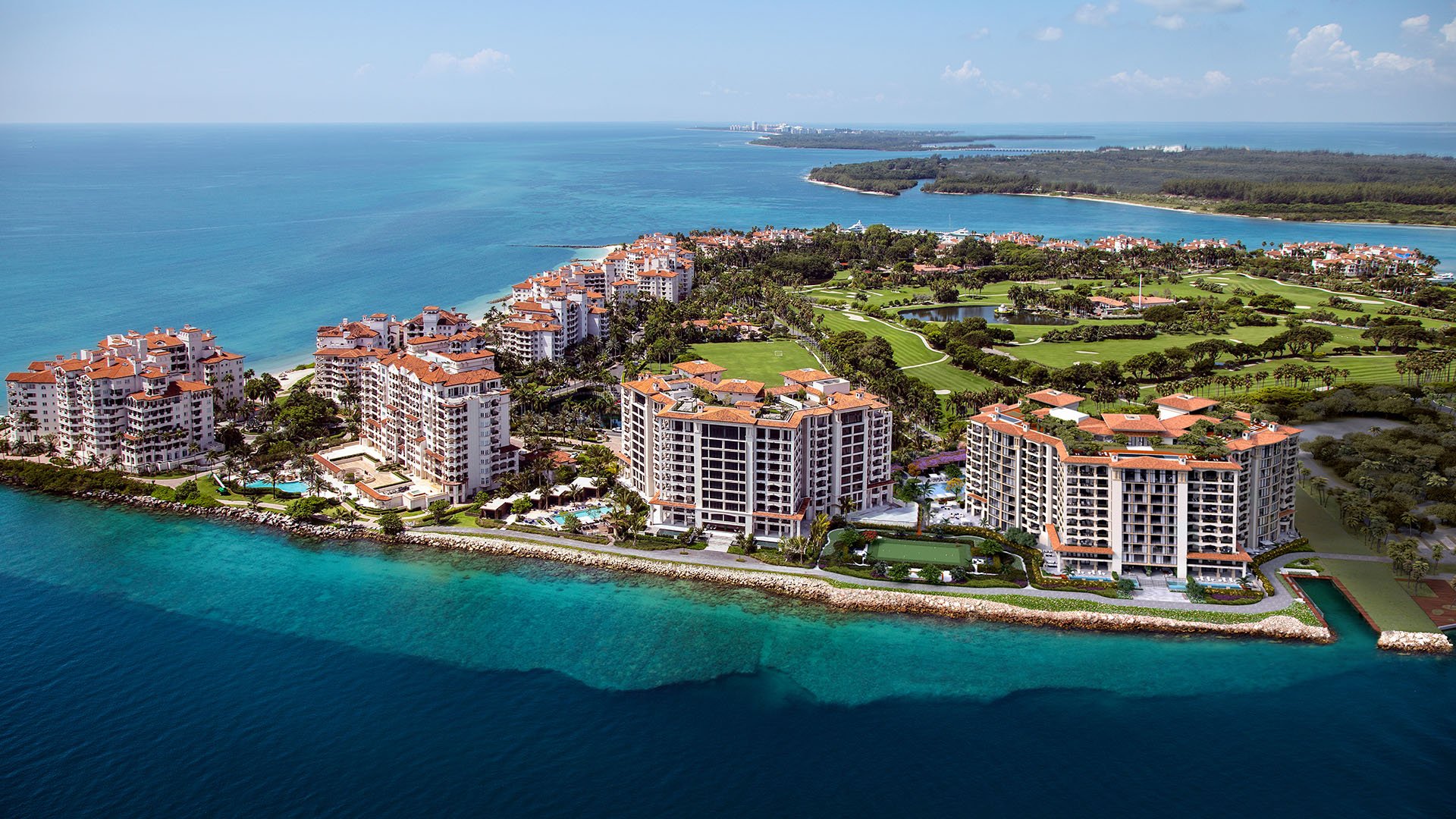
That is the lens for comparing Palazzo Della Luna and The Grand at Trump International Beach Resort. One reflects the appeal of a secluded residential setting where privacy and resort-style living are central to the experience. The other, as framed in this buyer conversation, invites a mainland beachfront comparison focused on routine, access, and daily operational ease. The distinction matters because even the most beautiful residence can become less practical if the school run introduces friction at the wrong moments of the day.
Search behavior often groups this decision around private-school access, Fisher Island privacy, Palm Beach expectations, Sunny Isles convenience, and Miami Beach lifestyle. In practice, the buyer’s task is more personal: align the residence with the child’s academic fit, the household’s staffing model, and the family’s tolerance for daily movement.
Palazzo Della Luna is central to this comparison because it represents a more private residential choice, and that privacy changes the logistics conversation. The appeal is clear: seclusion, resort-style residential life, and a level of discretion that resonates with affluent families seeking distance from the mainland pace. For certain buyers, that separation is the point. It creates a protected environment, a slower residential rhythm, and a sense of arrival that feels removed from the everyday city.
For school-aged children, however, that same separation requires planning. The school commute is not a secondary detail. It becomes part of the household operating system. A family considering Palazzo Della Luna should think beyond a single morning drive and examine the full week: early drop-offs, late pickups, sports, rehearsals, playdates, parent meetings, tutoring, and last-minute schedule changes. The more layered the child’s calendar, the more important it becomes to understand how private residential living interacts with daily school access.
This does not weaken the case for Palazzo Della Luna. It clarifies it. The property may be highly compelling for families who value discretion, service, and an insulated lifestyle, particularly if they have the household support to manage school movement with precision. Drivers, nannies, executive assistants, and coordinated family calendars can turn logistical complexity into a managed routine. Without that support, the same commute pattern may feel more demanding.
For The Grand at Trump International Beach Resort, the useful comparison is not a claim of superiority, but a different operating premise. A mainland beachfront residence can often feel more direct for families who want the emotional benefit of coastal living while keeping weekday routines closer to conventional road access. The family question becomes: does the residence reduce the number of transitions between home, school, activities, and evening obligations?
That question matters for parents with demanding professional lives, children in multiple grades, or households managing several drop-off and pickup points. If the chosen private school, tutoring network, or activity schedule is better supported by mainland movement, a beachfront residence outside a highly secluded environment may offer a practical advantage. It may also be easier for visiting relatives, household staff, tutors, and service providers to coordinate access without added planning.
Still, convenience should not be assumed. Every family should test the daily calendar against the actual schools under consideration, the age of each child, and the family’s tolerance for traffic, waiting time, and scheduling variability. For some, the school fit will outweigh all commute concerns. For others, a manageable weekday rhythm will be the deciding factor.
The strongest private school access analysis begins with academic fit. Curriculum type, grade-level entry points, language needs, learning support, arts, athletics, and school culture should come before geography. A shorter commute to the wrong school is not a luxury. It is merely efficient misalignment.
Next comes admissions timing. International and bicoastal families often enter the South Florida market while managing school applications, relocation windows, and travel calendars simultaneously. A residence may be perfect architecturally, but if the family is arriving mid-cycle or evaluating several curricula, the home should support flexibility during the transition. Temporary scheduling, interviews, campus visits, and trial routines can affect how suitable a location feels.
The third layer is commute friction. This is broader than distance. It includes the number of steps required to leave home, the predictability of the route, the child’s tolerance for travel, and the ease of adding a stop on short notice. Palazzo Della Luna’s privacy can be a privilege, but families should treat access as a daily design problem, not an afterthought.
Finally, consider extracurricular life. Many private school families do not return home immediately after dismissal. The week may include athletics, music, enrichment, therapy, tutoring, dinner reservations, and family events. A residence that works at 8 a.m. must also work at 5:30 p.m., when patience is lower and the day has become less predictable.
At this level of the market, the answer is rarely just location. It is infrastructure. Families with dedicated drivers, layered childcare, staff communication systems, and flexible parent schedules can make a more private residence work beautifully. Families who prefer direct parental drop-off or frequent spontaneous movement may lean toward a simpler mainland routine.
For Palazzo Della Luna, the ideal buyer is likely to appreciate that privacy has an operational cost and to see that cost as acceptable or even preferable. The residence offers the promise of separation from the city’s daily tempo, which can be especially appealing after school and on weekends. The trade-off is that weekday logistics should be actively choreographed.
For The Grand at Trump International Beach Resort, the buyer may be prioritizing a different form of luxury: fewer transitions, easier coordination, and a more familiar coastal rhythm. That can be particularly useful for families new to South Florida, families evaluating multiple schools, or parents who want to preserve flexibility while admissions decisions unfold.
The right choice is not island versus mainland in the abstract. It is privacy versus routine, seclusion versus directness, and atmosphere versus operational ease. Palazzo Della Luna may be the more emotionally compelling choice for families who value discretion and resort-style living enough to plan around the school run. The Grand at Trump International Beach Resort may appeal to families who want beachfront living while keeping weekday access as simple as possible.
The most sophisticated buyers will model the week before they choose the residence. They will consider academic fit, admissions timing, extracurricular movement, staff capacity, and the child’s lived experience. In South Florida’s uppermost tier, the best home is not only the one that photographs beautifully. It is the one that allows the family to live well from Monday morning through Sunday evening.
Is Palazzo Della Luna relevant for families with school-aged children? Yes. Its privacy and residential setting can be highly appealing, but daily school logistics should be evaluated carefully.
Can a private residential setting add complexity to the school run? It can. The privacy and separation that define the lifestyle may require more planning for school days, activities, and last-minute changes.
Is The Grand at Trump International Beach Resort automatically easier for school access? Not automatically. A mainland beachfront routine may be simpler for some families, but the right answer depends on the specific school and schedule.
Should families choose a residence before selecting a private school? Ideally, the two decisions should be evaluated together. Academic fit and daily routine are deeply connected for school-aged children.
What matters more, commute time or school fit? School fit should come first. A convenient commute is valuable only if the school truly supports the child’s academic and personal needs.
How should international families approach this decision? They should consider curriculum type, admissions timing, travel patterns, and whether household support can manage daily logistics.
Can staff make a more private residence practical for school access? Yes. Drivers, childcare, and coordinated scheduling can make a more complex commute feel seamless for many ultra-prime households.
Are extracurricular activities part of the location decision? Absolutely. Afternoon and evening commitments often reveal whether a residence truly supports the family’s weekly rhythm.
Is privacy worth added school-run complexity? For some families, yes. The answer depends on how much they value seclusion and how well they can manage the daily routine.
What is the best way to compare these two residences? Map a full school week, including mornings, pickups, activities, and staffing, then weigh that routine against lifestyle priorities.
When you're ready to tour or underwrite the options, connect with MILLION.
If branded residences are on your mind — as a home or as an allocation — we would be glad to share what we are seeing, privately.
Begin a quiet conversation