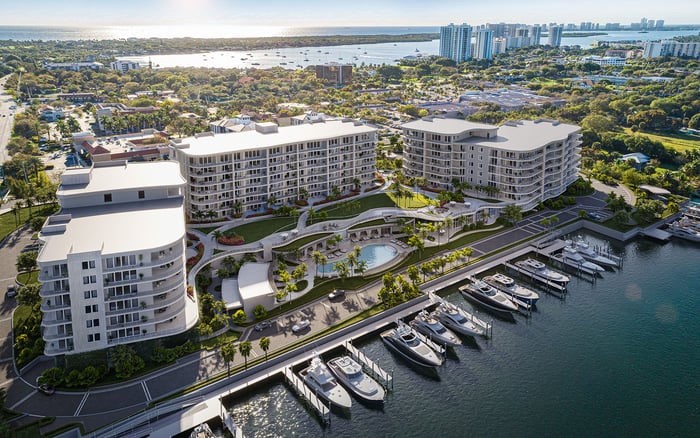
A discreet buyer guide to bridge-clearance planning at Alina Residences Boca Raton, focused on vessel air draft, safety margins, route verification, and household boating decisions.

Alina Residences Boca Raton sits within a Boca Raton luxury condominium conversation where lifestyle, convenience, privacy, and access all matter. For households that boat regularly, the real estate decision should include more than interiors, views, parking, and building fit. It should also include how the household expects to move between home, marina, slip, and open-water plans.
That is where bridge-clearance planning belongs. It is not a narrow technical issue reserved only for captains. It is a practical household question for buyers who own a boat, plan to buy one, lease a slip nearby, or organize weekends around South Florida cruising. The central issue is simple to ask and important to verify: does the boat’s true air draft align with the bridges and water conditions on the intended route?
For Alina Residences Boca Raton buyers, the answer should be checked before assumptions become commitments. A desirable condominium, a preferred boat, and an available slip do not automatically create a seamless boating life. The details have to work together.
Air draft is the height of a vessel above the waterline. Buyers sometimes treat it as a fixed number from a specification sheet, but real-world clearance can be more nuanced. Towers, antennas, outriggers, hardtops, radar domes, tender cranes, light bars, fishing equipment, and other additions can change the vessel’s effective height.
That distinction matters because bridge planning is not only about the hull, length, or model name. A boat with a tower can have very different clearance needs from a similar vessel without one. A yacht with equipment added after delivery may not match the height figure a household remembers from an earlier discussion. Even removable or foldable components require a realistic operating plan.
The prudent approach is to treat air draft as a measured, current condition. If the vessel already exists, the owner should confirm its actual height in its present setup. If the vessel is being considered, the buyer should ask how every option and accessory affects vertical clearance.
Bridge-clearance planning is easy to oversimplify. A household may hear a bridge-clearance figure, compare it with a vessel height, and assume the route works. That is not enough for careful planning.
Water levels change. Tides, wind, storm surge, vessel loading, and unusual conditions can all affect whether a boat clears a bridge on a given day. A vessel loaded for a weekend, carrying extra guests, provisions, fuel, water, or equipment, may sit differently than it does in a lighter condition. Weather can also make a route that feels routine more restrictive.
This is why households should avoid planning around a boat that only fits under ideal conditions. A thoughtful boating plan includes a safety margin. That margin protects schedules, equipment, guests, and peace of mind. It also reduces the likelihood of making a pressured decision while already underway.
At the luxury end of the market, convenience is part of value. A vessel that technically works only in narrow circumstances may not deliver the effortless lifestyle the household expected.
For Alina Residences Boca Raton, bridge-clearance diligence should be folded into the same purchase process a buyer would apply to residence layout, storage, parking, building operations, and long-term fit. The goal is not to memorize a single clearance number. The goal is to understand the household’s actual boating pattern.
Start with the vessel. Confirm the true air draft in its current or intended configuration, including electronics, towers, outriggers, antennas, hardtops, and other vertical elements. If the boat has components that fold, retract, or lower, confirm how often that process is realistic and who will manage it.
Then define the route. The bridge constraints that matter are the ones between the chosen slip or boarding location and the household’s intended destinations. A casual afternoon route, a route to open water, and a longer seasonal itinerary may each create different practical considerations.
Next, verify with current navigation materials and qualified local guidance. Bridge data, tide information, and local-navigation conditions can require interpretation. Buyers should verify the relevant route before purchasing a boat, leasing a slip, or assuming a particular path will work. A captain, marina professional, surveyor, or experienced local operator can help translate route information into day-to-day practicality.
Finally, document the household’s tolerance for inconvenience. Some owners accept waiting for conditions, adjusting departure times, or lowering equipment. Others want a vessel plan that operates with minimal complication. The correct answer is personal, but it should be intentional.
Bridge-clearance planning is not a criticism of a residence. It is a refinement of fit. Alina Residences Boca Raton may appeal to buyers seeking a polished Boca Raton setting with a waterfront-oriented lifestyle, but each boating household still needs to align the residence, marina plan, vessel, and route.
This is especially important for second-home buyers who want simplicity when they arrive in season. It also matters for resale thinking, because future buyers with boating ambitions may ask similar access questions. In luxury real estate, waterview appeal, marina proximity, boat-slip assumptions, and operational access can influence how a household evaluates daily use.
Two households can look at the same condominium and reach different conclusions because one owns a lower-profile runabout and another wants a towered sportfishing vessel. The residence may be the same. The boating experience may not be.
The most refined approach is to reverse the usual sequence. Instead of buying the residence, choosing a boat, and then solving access, households should map the boating plan early. What type of vessel is truly desired? Where will it be kept or boarded? Which route is preferred? What bridge constraints need to be checked? What safety margin feels comfortable?
This planning can influence boat selection as much as real estate selection. A household may choose a different tower configuration, avoid certain fixed equipment, or prioritize a vessel profile that better suits local routes. In some cases, the answer may be to keep a larger vessel elsewhere and use a more practical boat near Boca Raton. In others, the preferred vessel may work comfortably with proper verification.
Luxury is not only the ability to choose. It is the ability to choose with clarity. Bridge-clearance planning gives boating households that clarity before money, time, and expectations are locked in.
What is bridge-clearance planning? It is the process of matching a boat’s actual air draft to the bridges and water conditions along the household’s intended route.
Why does it matter for Alina Residences Boca Raton buyers? Buyers who expect to boat nearby should confirm that their vessel, slip plan, and preferred routes work together before making commitments.
What is air draft? Air draft is the height of a vessel above the waterline, including equipment that may extend above the main structure.
Should I rely on a boat brochure’s height figure? No. Confirm the vessel’s actual current configuration, including towers, antennas, outriggers, radar domes, hardtops, and other equipment.
Can tides affect bridge clearance? Yes. Tides, wind, storm surge, vessel loading, and unusual water levels can change practical clearance on a specific day.
Is it wise to choose a boat that barely clears a bridge? A safety margin is preferable because borderline clearance can reduce flexibility and increase operational stress.
When should a buyer verify bridge constraints? Verification should happen before buying a boat, leasing a slip, or assuming a specific route will work.
Who can help with verification? A qualified captain, marina professional, marine surveyor, or experienced local operator can help interpret route conditions.
Does bridge planning affect resale thinking? It can, because future boating buyers may evaluate the same access questions when considering the residence.
Does every Alina household need this analysis? No. It is most relevant for households that own, plan to buy, or regularly use a boat near the residence.
For a discreet conversation and a curated building-by-building shortlist, connect with MILLION.
If branded residences are on your mind — as a home or as an allocation — we would be glad to share what we are seeing, privately.
Begin a quiet conversation