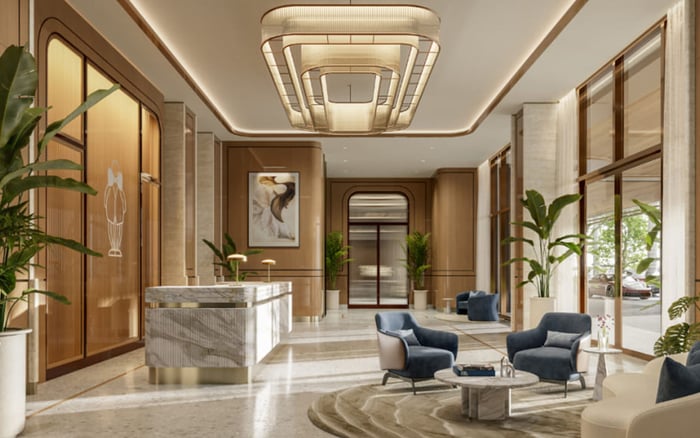
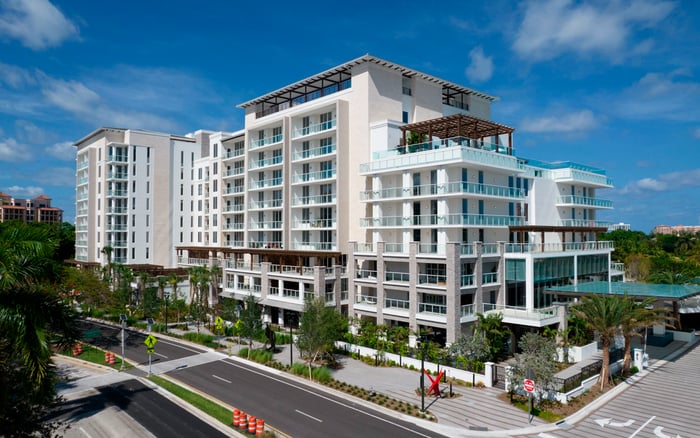
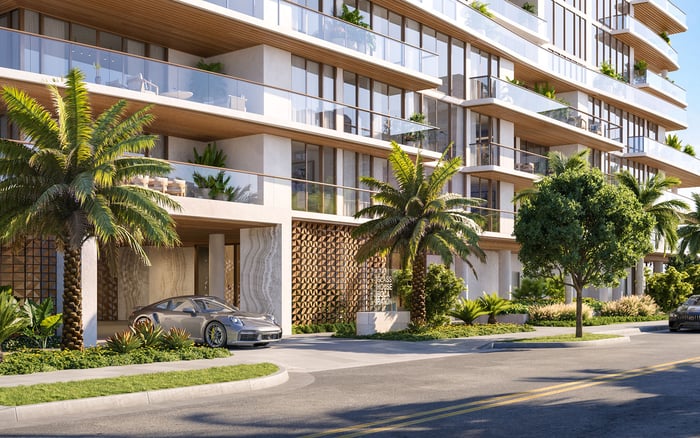
A discreet comparison of Alina Residences Boca Raton and Glass House Boca Raton through the lens of chef-ready kitchens, catering flow, private dining, and the building culture that shapes how owners entertain.
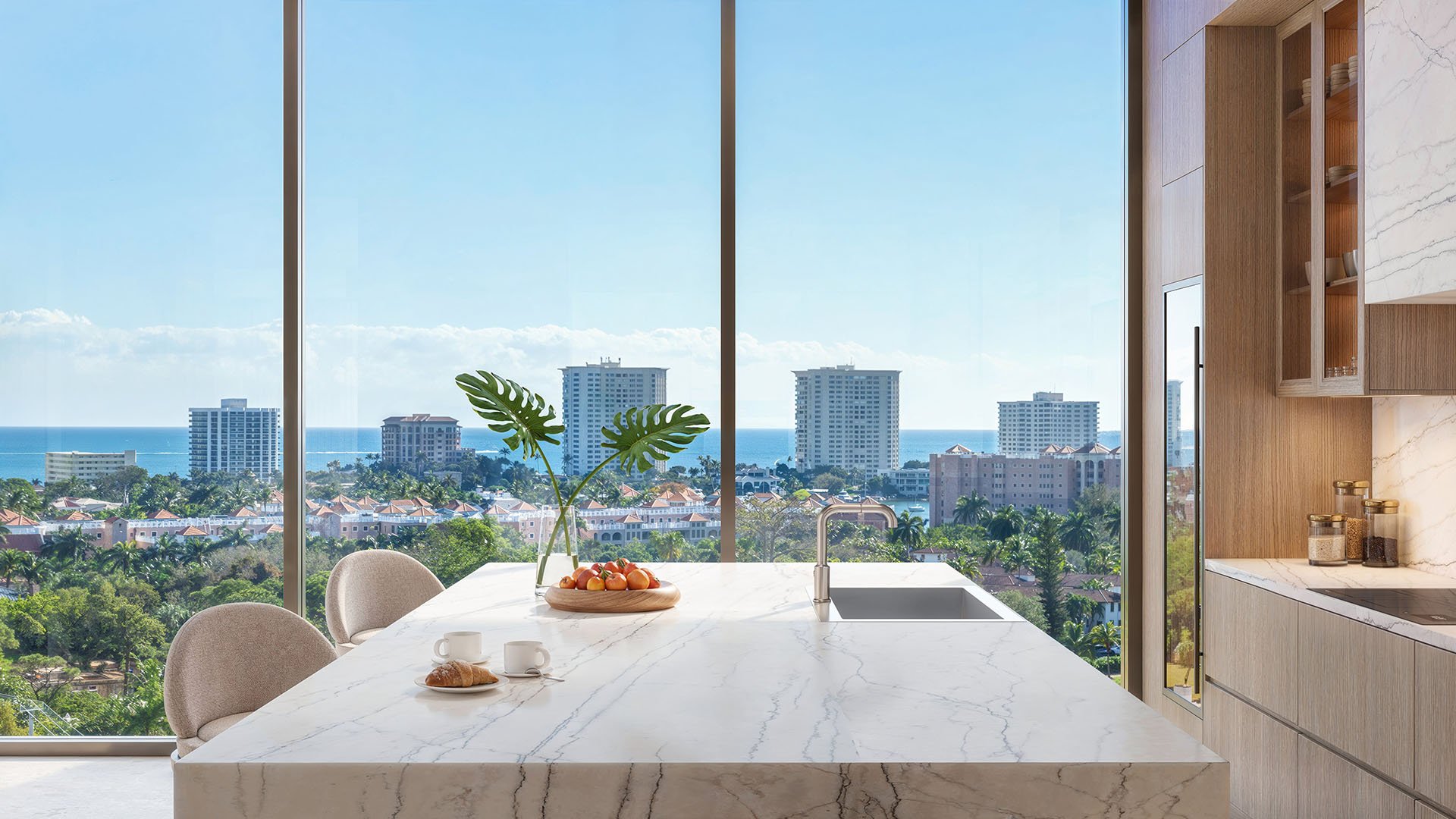
In Boca Raton’s upper tier of condominium living, the kitchen is no longer just a room with beautiful stone, integrated appliances, and a generous island. It is a social instrument. It reveals whether a building is designed for owners to host quietly behind closed doors, gather visibly around shared amenities, or move between private residence and common spaces with the ease of a small hotel.
That is the useful distinction between Alina Residences Boca Raton and Glass House Boca Raton. Both sit within a market increasingly shaped by hospitality-style residential expectations, where food, beverage, and private entertaining are central to the purchase decision. Yet the two buildings project different cultures. Alina Residences Boca Raton reads as the larger, wellness-forward, resort-caliber enclave, with a privacy-oriented rhythm suited to extended stays and low-key entertaining. Glass House Boca Raton is positioned as ultra-boutique, design-driven, intimate, and more socially oriented, with rooftop lifestyle and indoor-outdoor entertaining as part of its identity.
For serious buyers, the question is not simply which kitchen looks better. It is which building makes a preferred style of entertaining feel natural.
Alina’s appeal begins with scale and calm. Its culture favors resort-level living without turning daily life into a public performance. That matters for owners who entertain regularly but do not want every dinner, catered lunch, or family holiday to feel like an event on display.
In this context, a chef-ready kitchen should be evaluated less as a trophy backdrop and more as part of a private domestic system. Buyers should ask whether the residence offers the right kitchen scale for extended stays, private cooking, and catered entertaining. Is there enough prep area for a chef to work without overtaking the social space? Can service remain discreet? Does the plan allow guests to gather comfortably while food preparation stays organized?
The broader Alina culture also connects culinary life to wellness. A buyer who imagines breakfast after a workout, quiet dinners after travel, or multi-day family stays will likely value a kitchen that supports routine as elegantly as it supports a party. The best Alina fit is not necessarily the buyer chasing the most visible social calendar. It is the owner who wants resort amenities, residential calm, and the ability to host beautifully without making hospitality conspicuous.
Within the Boca Raton luxury conversation, that distinction is important. A larger amenity-rich environment can be highly social, but Alina’s strongest culinary reading is controlled privacy rather than constant exposure.
Glass House Boca Raton occupies a different lane. Its ultra-boutique and design-forward positioning suggests a more intimate building culture, closer in spirit to a boutique hotel than a broad resort enclave. That does not make it louder. It makes it more visible, more curated, and potentially more socially fluid.
For Glass House, the chef-ready kitchen question is tied to design identity and movement. How does the kitchen present when guests arrive? Does it act as a sculptural entertaining space as much as a working one? How naturally does a gathering move from private residence to shared amenity space, especially in a building associated with rooftop lifestyle and indoor-outdoor entertaining?
A buyer drawn to Glass House may be imagining cocktails that begin in the residence, continue toward a terrace setting, and maintain a sense of design continuity throughout the evening. The kitchen, in that case, is not hidden infrastructure. It is part of the arrival sequence, part of the conversation, and part of the building’s social energy.
This is where the boutique nature of Glass House becomes a culinary asset. In a smaller, more intimate environment, the line between private hosting and building culture can feel more immediate. Owners who enjoy seeing and being seen, but within a refined residential framework, may find that more compelling than a larger resort-style setting.
The most revealing due diligence often happens after the visual tour. Stone, millwork, and appliance quality matter, but catering flow determines how a residence actually performs under pressure.
For either building, buyers should think through the full sequence of an evening. Where does food arrive? How does staff enter and circulate? Are elevators and freight logistics appropriate for catered events? Can trays, florals, wine, and rentals be staged without disrupting the guest experience? Is there potential for a scullery or secondary-kitchen function, if the residence layout allows, or at least a practical zone for prep and cleanup?
These questions should be asked carefully because every building handles logistics differently, and policies can be as important as floor plans. A beautiful residence can feel strained if service circulation requires too much guest interaction. Conversely, a seemingly simple plan can host exceptionally well if access, staging, and staff movement are intuitive.
Alina’s larger resort-style context may appeal to buyers who want these matters absorbed quietly into a broader residential environment. Glass House’s boutique structure may appeal to buyers who prioritize immediacy, intimacy, and a more curated social rhythm. Neither is universally better. Each asks a different kind of host to identify themselves.
Private dining is often misunderstood as a checklist amenity. The more important question is how a building’s culture frames shared dining space. Is it an extension of the owner’s home, a place for controlled private events, or part of a more public social program?
At Alina, the strongest private-dining interpretation aligns with discretion. A buyer should consider whether common dining amenities, where available, support private events in a way that feels residential, calm, and properly separated from the energy of the larger property. The objective is not spectacle. It is the ability to host a birthday dinner, philanthropic board meal, or family gathering with resort-level support and a sense of privacy.
At Glass House, the same question takes on a different tone. Shared dining or entertaining areas, where available, are best understood through the building’s boutique social identity. A private dinner may feel more connected to the overall design narrative and to the rooftop or indoor-outdoor lifestyle. For owners who enjoy a visible but polished social setting, that can be exactly the point.
This is especially relevant in new-construction decision-making, where amenity renderings can be seductive. Buyers should look beyond imagery and ask how often spaces may be reserved, what kinds of events are encouraged, how food service is handled, and whether the atmosphere matches the way they actually live.
The Alina versus Glass House comparison is ultimately a lifestyle choice expressed through kitchens, catering routes, and dining rooms. Alina supports quieter resort-style hosting, where the owner can entertain frequently while preserving a sense of private retreat. Glass House supports more visible boutique social entertaining, where design, intimacy, and shared lifestyle programming play a larger role.
A buyer who hosts long family weekends, prefers discretion, values wellness adjacency, and wants a residence that can function as a calm home base may lean toward Alina. A buyer who loves design-forward gatherings, rooftop energy, and the feeling of a curated social address may lean toward Glass House.
The most sophisticated approach is to tour both through the lens of one imagined evening. Picture the chef arriving, flowers being delivered, guests stepping off the elevator, wine being opened, dinner moving from prep to table, and cleanup happening after guests leave. The right building will make that sequence feel effortless, not improvised.
Why compare Alina Residences Boca Raton and Glass House Boca Raton through kitchens? Kitchens reveal how each building expects owners to live and entertain. They connect private residence design with service flow, amenities, and social culture.
Is Alina better for private entertaining? Alina is best understood as the more expansive, wellness-forward, resort-style environment with a privacy-oriented culture. Buyers seeking quieter hosting may find that alignment appealing.
Is Glass House better for social entertaining? Glass House is framed as more boutique, design-driven, and socially oriented. Its rooftop and indoor-outdoor lifestyle positioning may suit owners who enjoy visible, curated gatherings.
What makes a condo kitchen chef-ready? Buyers should examine appliance quality, prep space, storage, ventilation, and how the kitchen works when staff or a private chef is present. Beauty alone is not enough.
Should buyers ask about sculleries or secondary kitchens? Yes, but they should verify what is actually included or feasible in a specific residence. A scullery concept is valuable only if the plan and building rules support it.
Why does catering flow matter in a luxury condominium? Catering flow affects whether an event feels seamless or awkward. Service access, elevator logistics, staging areas, and staff circulation all influence the guest experience.
Are private dining rooms always important? They matter most when they match the owner’s hosting style. A private dining amenity should feel like an extension of the residence, not an unrelated feature.
How should an Alina buyer evaluate common dining spaces? The buyer should focus on privacy, reservation flexibility, service logistics, and whether the space supports calm private events. The goal is refined discretion.
How should a Glass House buyer evaluate entertaining spaces? The buyer should study how private residences connect to shared amenities and outdoor social areas. Design continuity and atmosphere are central to the experience.
What is the best way to shortlist comparable options for touring? Start with location fit, delivery status, and daily lifestyle priorities, then compare stacks and elevations to validate views and privacy.
For a confidential assessment and a building-by-building shortlist, connect with MILLION.
If branded residences are on your mind — as a home or as an allocation — we would be glad to share what we are seeing, privately.
Begin a quiet conversation