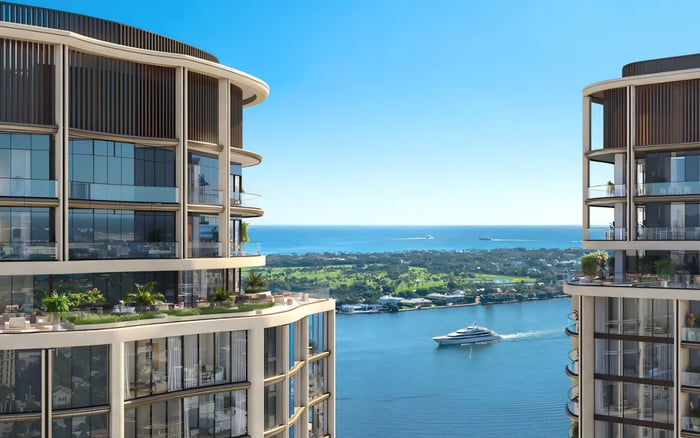
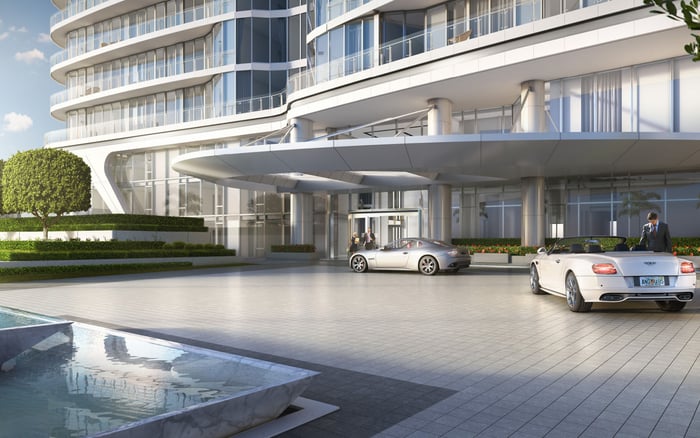
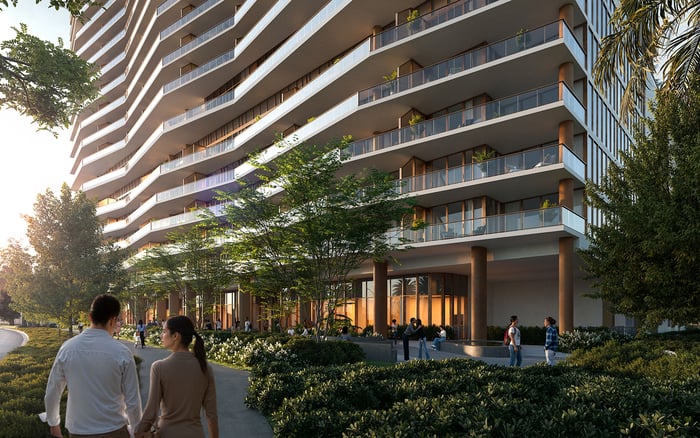
A buyer-focused framework for evaluating Alba West Palm Beach through privacy, service expectations, reserve planning, governance, and long-term resale discipline.
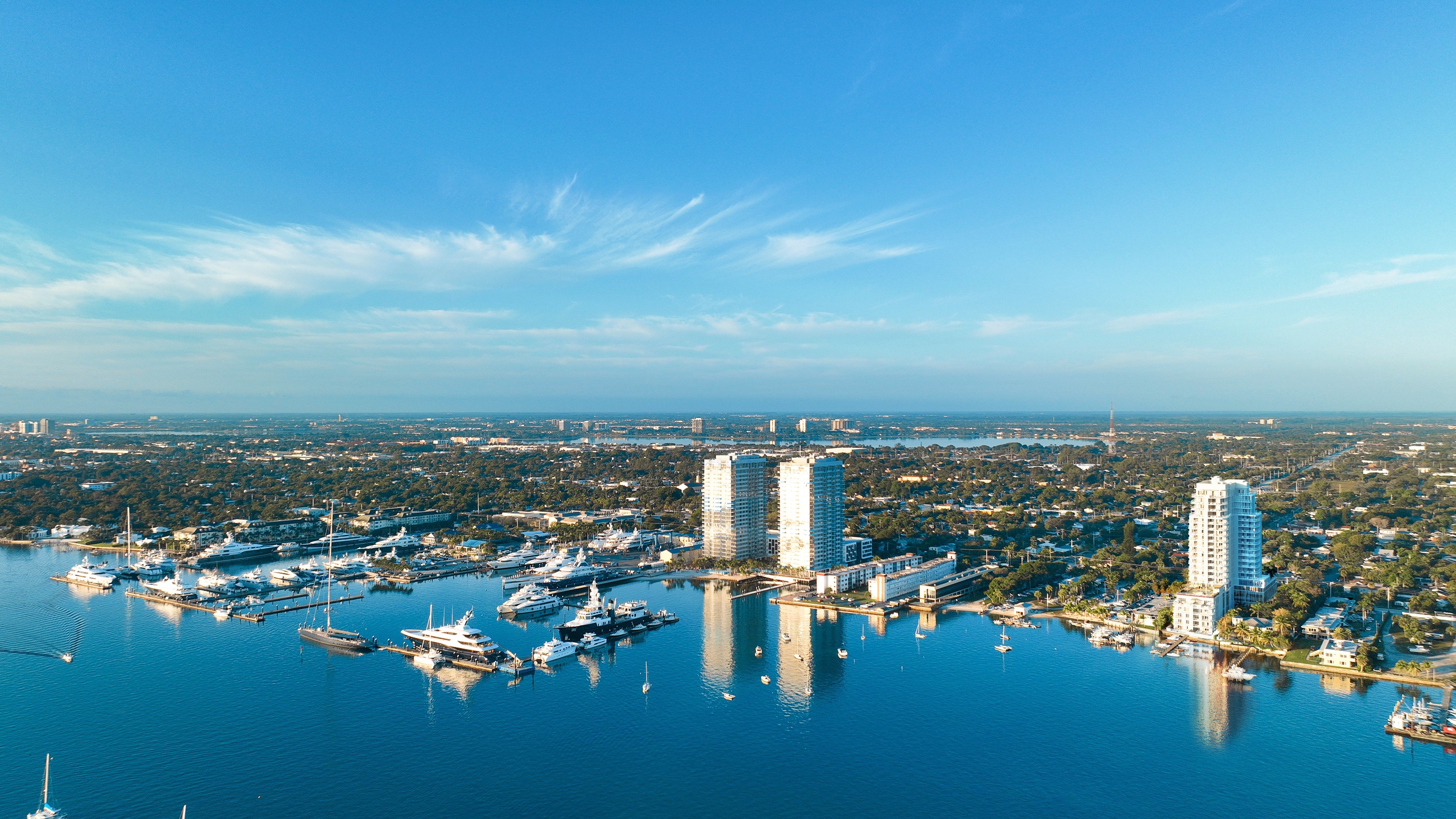
Alba West Palm Beach occupies a precise place in the South Florida luxury conversation: boutique waterfront condominium living along the Flagler waterfront, oriented toward the Intracoastal Waterway, with proximity to Palm Beach Island and downtown West Palm Beach. Its appeal is not rooted in scale. It is rooted in privacy, exclusivity, water-facing presence, and a curated amenity environment for buyers who prefer to share less rather than access more simply for volume’s sake.
That is precisely why the special-assessment conversation matters. In a boutique condominium, fewer residences share the fixed costs of land, building systems, amenities, staffing, insurance, maintenance, and future capital work. The same quality that creates discretion can also concentrate financial responsibility. For affluent buyers, the question is not whether privacy is worth paying for. The sharper question is whether the building’s operating model, reserve strategy, and governance structure make that privacy durable.
For Alba West Palm Beach, the most sophisticated evaluation begins beyond the headline purchase price. A buyer should study how service is funded, how common elements are expected to age, how reserves are planned, and how decisions would be made if future capital needs arise. Special-assessment risk is not a reason to avoid boutique waterfront ownership. It is a reason to understand the ownership architecture before entering it.
Privacy is often discussed emotionally: fewer neighbors, quieter amenity spaces, a more controlled arrival sequence, and a sense of residential calm. In practice, privacy also has a balance sheet. Low density means a smaller ownership base contributing to ongoing operations and future capital needs.
That does not make the model flawed. Many ultra-luxury buyers intentionally prefer a smaller, more composed building over larger condominium density. But the financial logic must be acknowledged. A larger tower may spread certain fixed costs across more owners. A boutique waterfront property may deliver a more rarefied experience, yet ask each owner to absorb a larger share of the building’s long-term obligations.
At Alba, the buyer should connect the privacy premium to the association’s future responsibilities. Waterfront exposure, high-touch amenities, and elevated service expectations all require disciplined planning. The correct lens is not simply monthly carrying cost. It is the relationship between service level, reserve adequacy, and future flexibility.
Special assessments usually become most relevant when normal operating income or reserves are not sufficient for a specific need. A buyer evaluating Alba should think in terms of four pathways.
The first is the operating pathway. Boutique service may involve staffing, amenity programming, maintenance standards, and administrative overhead that must be funded consistently. If operating costs rise faster than anticipated, the association may need to adjust budgets or pursue supplemental funding.
The second is the reserve pathway. Reserve planning is the mechanism that translates future building needs into present financial discipline. A well-planned reserve strategy can reduce the shock of major work. Underfunded reserves can shift future costs into less predictable owner contributions.
The third is the capital pathway. Waterfront buildings have systems, exterior elements, amenity areas, and shared infrastructure that require renewal over time. Luxury finishes do not eliminate capital cycles. They can make those cycles more consequential, because buyers expect the property to remain visually and operationally excellent.
The fourth is the governance pathway. Even a strong physical asset can become complicated if decision-making is reactive. Buyers should understand how the condominium board, ownership base, and management framework are expected to approach budgets, reserves, service standards, and capital planning.
High service is part of the luxury promise, but it should be examined with precision. A curated amenity experience can strengthen daily life and enhance buyer demand at resale, provided the cost structure is transparent and sustainable. Service that feels seamless to residents must still be deliberately funded behind the scenes.
For Alba West Palm Beach, the central ownership test is whether the service model supports long-term value without creating repeated cash-call pressure. Buyers should ask how staffing expectations align with operating budgets, how amenity standards are maintained, and how management plans for the inevitable aging of shared spaces.
This is especially relevant in a new-construction or newer boutique context, where the first years of ownership can establish the financial culture of the building. Early budget assumptions, reserve habits, and owner expectations can shape the way the property behaves over a longer holding period.
Resale in the ultra-premium market is not driven by scenery alone. Waterfront orientation, proximity to Palm Beach Island, and access to downtown West Palm Beach can create compelling demand, but sophisticated buyers also evaluate the association. They want to know whether the building is beautifully run, financially coherent, and governed with foresight.
A future buyer comparing Alba against other design-forward South Florida waterfront condominiums will likely consider privacy, amenity quality, service, and carrying-cost predictability together. If those elements align, the boutique format can become a strength: scarce, composed, and difficult to replicate. If they do not, the same low-density model can raise questions about future obligations.
This is why the special-assessment conversation should be reframed. It is not merely a downside risk. It is a diagnostic tool. A buyer who understands how costs may be shared, how reserves may be built, and how capital decisions may be handled is better positioned to judge whether the property’s privacy premium is supported by its financial foundation.
The most valuable review begins with the condominium documents and financial materials available to a serious purchaser. The buyer should examine the operating budget, reserve approach, governance documents, insurance assumptions, management structure, and any disclosed capital planning materials. The goal is not to find a perfect building. It is to understand whether the building is being managed for durability.
Questions should be practical. How are recurring expenses distinguished from long-term capital needs? How are amenity standards funded? What process exists for major building decisions? How are owners informed about future obligations? How does the building balance discretion with transparency?
For buyers using Alba West Palm Beach as a benchmark, category language can help organize the review: Alba West Palm Beach, boutique, new-construction, resale, Palm Beach, and West Palm Beach each signals a different part of the decision. The name anchors the asset, boutique defines the ownership structure, new construction frames early-life planning, resale tests market confidence, and the Palm Beach area context explains why disciplined ownership matters at the highest tier.
Alba’s appeal is clear: a boutique luxury waterfront condominium along West Palm Beach’s Flagler waterfront, facing the Intracoastal Waterway, with access to the lifestyle gravity of Palm Beach Island and downtown West Palm Beach. For the right buyer, that combination can be deeply compelling.
The underwriting question is equally clear. Does the property’s privacy, service level, amenity package, staffing concept, reserve planning, and governance approach support stable long-term value? If the answer is yes, the boutique model can reinforce scarcity and resale confidence. If the answer is uncertain, the buyer should pause until the financial and governance picture is better understood.
Luxury condominium ownership is not only about what a residence offers today. It is about whether the building can protect that experience tomorrow.
Why is special-assessment risk important at Alba West Palm Beach? Alba is positioned as a boutique waterfront condominium, so fewer owners may share certain fixed and future capital costs.
Does boutique living automatically mean higher assessment risk? Not automatically. The risk depends on operating discipline, reserve planning, governance, and the scale of future capital needs.
What should buyers review before purchasing? Buyers should review operating budgets, reserve strategy, governance documents, management structure, and any disclosed capital planning materials.
How does privacy affect ownership costs? Privacy often comes from lower density, which can mean fewer residences contribute to shared building, amenity, staffing, and maintenance costs.
Why does service matter for resale? A well-funded service model can make a boutique building feel effortless and can strengthen confidence among future luxury buyers.
What makes Alba’s location compelling? Alba is positioned along the Flagler waterfront in West Palm Beach, oriented toward the Intracoastal Waterway and close to Palm Beach Island.
Should buyers focus only on monthly fees? No. Monthly carrying cost should be evaluated alongside reserves, capital planning, service expectations, and governance quality.
Can a special assessment ever be a rational decision? Yes. A well-communicated assessment for necessary capital work can protect building quality and long-term asset value.
What is the biggest resale risk for a boutique condominium? The largest risk is a mismatch between luxury expectations and the financial planning needed to sustain them over time.
What is the best buyer mindset for Alba? Treat the residence as both a private waterfront home and a shared luxury asset requiring disciplined collective stewardship.
To compare the best-fit options with clarity, connect with MILLION.
If branded residences are on your mind — as a home or as an allocation — we would be glad to share what we are seeing, privately.
Begin a quiet conversation