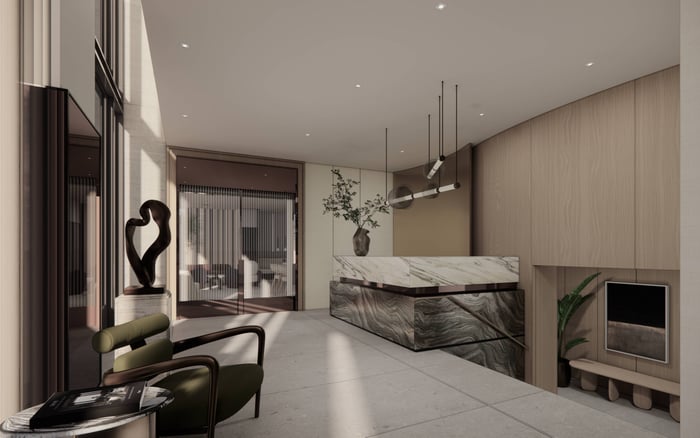
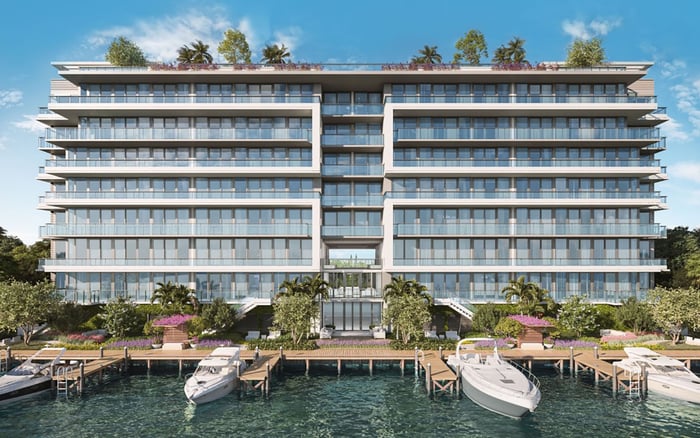
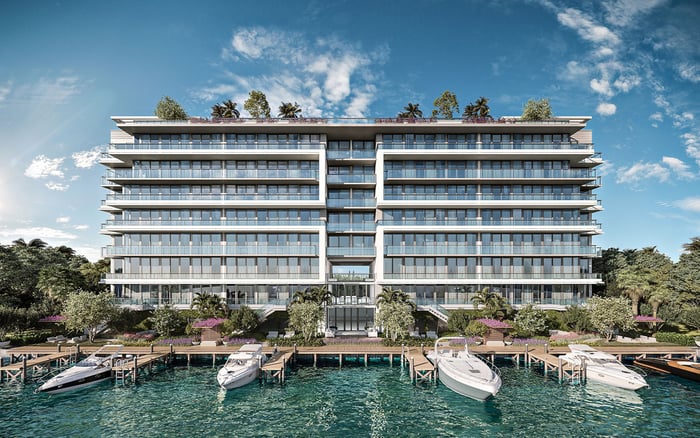
A buyer-focused comparison of three South Florida condominium ownership models: Alina for operational depth, Alana for boutique intimacy, and La Baia North for waterfront lifestyle balance.
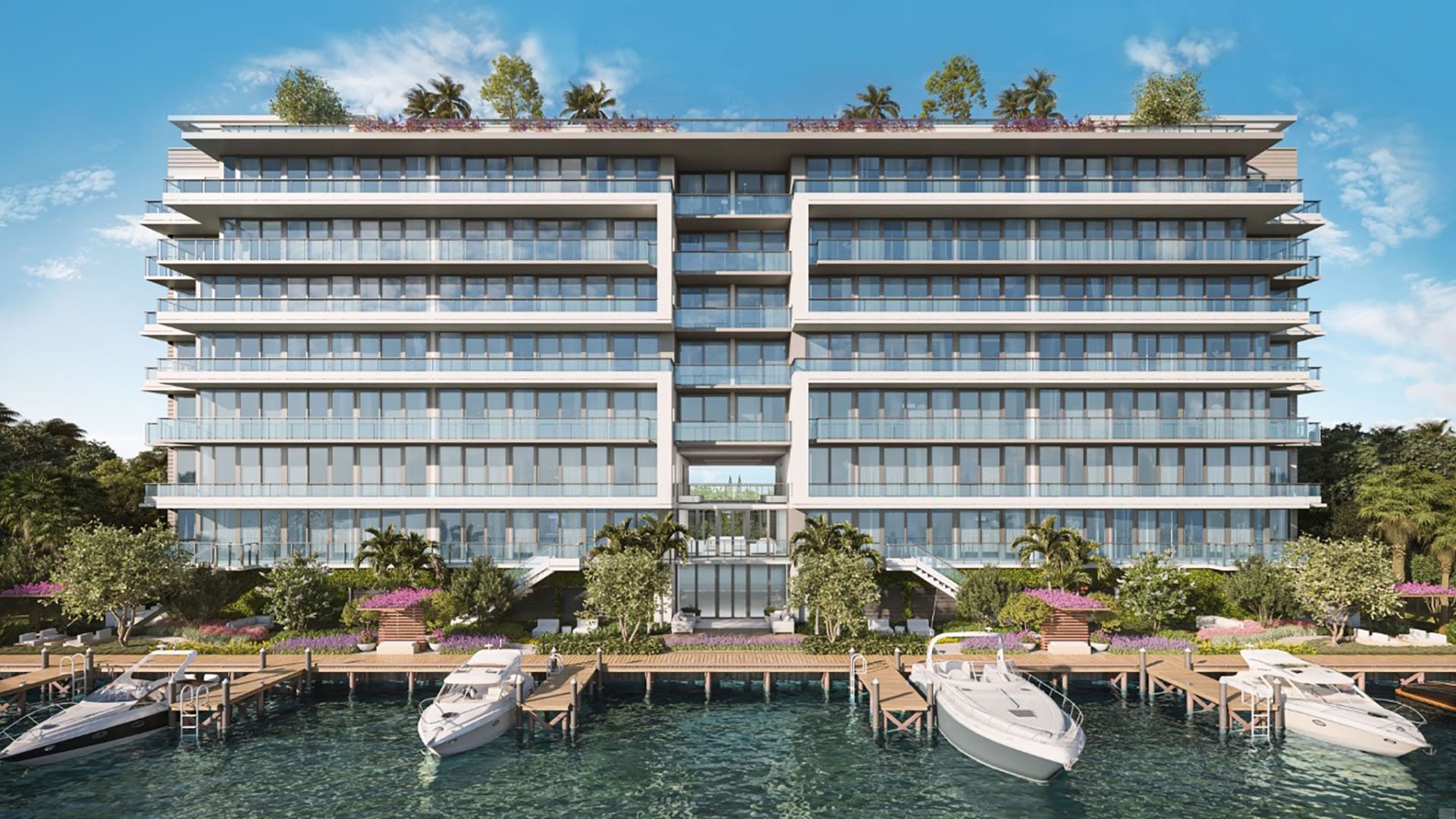
For South Florida buyers operating at the upper end of the condominium market, design pedigree is no longer the rare differentiator it once was. Many new and recent residences can speak the language of refined materials, considered arrival sequences, private outdoor space, and hospitality-caliber presentation. The more revealing question is what happens after closing: how the building is staffed, how the association functions, how budgets are managed, and whether the service promise can hold its shape over time.
That is where the comparison between Alana Bay Harbor Islands, Alina Residences Boca Raton, and La Baia North Bay Harbor Islands becomes useful. Each can appeal to a design-conscious buyer, but each places that buyer inside a different ownership model. Alina Residences Boca Raton is the clearest answer for those who want design pedigree supported by operational discipline. Alana Bay Harbor Islands is the more intimate, boutique choice. La Baia North Bay Harbor Islands occupies the middle ground, pairing Bay Harbor Islands waterfront living with a more lifestyle-driven residential program.
This is not a Bay Harbor versus Boca Raton popularity contest. It is a question of temperament. Some buyers want privacy, fewer neighbors, and a quieter residential rhythm. Others want staffing depth, association structure, and the lower-friction confidence that can come with a larger, more mature platform.
Among the three, Alina Residences Boca Raton is best understood as the operational-discipline choice. Its larger-scale, phased, and more mature profile gives it a different ownership character from a small boutique condominium. The core advantage is not size alone, but the way scale can support association governance, staffing, budgeting, and day-to-day building consistency.
For buyers who have already lived in luxury condominiums, this distinction is not abstract. A residence can be beautifully designed and still become frustrating if the operating model is thin, the budget is unpredictable, or service quality depends too heavily on a narrow base of owners. Alina’s appeal is that it fits buyers who want the polish of a high-end environment without concentrating too much operational exposure in a small building community.
This makes Alina especially relevant for primary residents, frequent users, and buyers who are sensitive to the invisible mechanics of ownership. If the questions at the top of the due diligence list include staffing structure, governance, reserve philosophy, budget predictability, and long-term service consistency, Alina is the most direct fit. It prioritizes institutional depth over the intimacy and exclusivity of a smaller setting.
Alana Bay Harbor Islands sits at the other end of the ownership-model spectrum. Its appeal is rooted in intimacy, design identity, and the quieter residential experience that can come from a smaller building environment. For some buyers, that is precisely the point. They do not want the feeling of a broad residential campus. They want a more private building, a smaller neighbor set, and the discretion boutique scale can create.
The tradeoff is operational concentration. In a smaller association format, responsibilities and cost exposure are shared across fewer owners. That can make the building feel more personal, but it also means each owner has a closer relationship to the building’s operating decisions. This is not a flaw. It is a structural reality that should be understood before purchase.
Alana therefore suits a buyer who values design intimacy and is comfortable with the operational implications of boutique condominium ownership. The emotionally compelling qualities are clear: quieter circulation, a more residential mood, and a setting that feels less institutional. But buyers should not confuse intimacy with simplicity. A smaller building can be elegant and highly desirable while still requiring a more engaged owner mindset.
La Baia North Bay Harbor Islands is the bridge between the two extremes. It does not read as the smallest, quietest boutique answer, nor does it carry the same large-scale institutional profile associated with Alina. Instead, it is best framed as a waterfront, family-forward Bay Harbor Islands residence with a broader lifestyle-driven design program.
That positioning may attract buyers who want more daily amenity texture than a very quiet boutique building, but who do not necessarily need the larger operating platform that defines Alina’s appeal. La Baia North offers a balance: waterfront living, a family-oriented sensibility, and a lifestyle program that gives the ownership experience more breadth than pure boutique minimalism.
The buyer profile is distinct. This is for someone who wants Bay Harbor Islands to feel active enough for family life and residential ease, yet still more intimate than a large institutional condominium environment. It is the midpoint for those who want lifestyle without overcommitting to either extreme of the ownership-model spectrum.
The cleanest framework is simple. Choose Alina if operational discipline is the priority. Choose Alana if boutique privacy and design identity are the emotional drivers. Choose La Baia North if waterfront lifestyle balance is the preferred compromise.
A buyer who travels frequently and wants the building to perform predictably in their absence may lean toward Alina. So might a buyer who has prior experience with association complexity and now wants a more established operating model. In this case, design remains important, but the ownership decision is ultimately about reduced friction.
A buyer who is deeply sensitive to privacy, residential quiet, and the feeling of a smaller owner community may find Alana more compelling. The decision is less about maximum operational depth and more about personal atmosphere. The right buyer will accept that boutique scale can involve a different form of cost and governance exposure.
A buyer who wants Bay Harbor Islands waterfront living with a more family-forward lifestyle lens should take La Baia North seriously. It offers more programmatic breadth than a very quiet boutique environment, while stopping short of the more institutional operating profile associated with Alina.
For all three, the sophisticated buyer should move beyond finishes and views into operating structure. The most revealing questions concern association governance, staffing, operating budgets, service expectations, rules, and how responsibilities are allocated over time. These topics are not as visually seductive as architecture, but they often determine whether ownership feels effortless or demanding.
With Alina, the key is to understand how its larger, phased profile translates into service consistency and association oversight. With Alana, the focus should be on how a smaller association handles budgeting, decision-making, and shared responsibility. With La Baia North, buyers should examine whether the lifestyle program aligns with their actual daily use, especially for families and frequent residents.
None of these ownership models is universally superior. The best choice depends on whether the buyer values operational predictability, private intimacy, or waterfront lifestyle balance most. In this comparison, Alina provides the strongest answer for design pedigree with operational discipline, while Alana and La Baia North answer different luxury instincts with their own clarity.
Which building is the best fit for operational discipline? Alina Residences Boca Raton is the clearest fit because its larger, phased, and more mature profile supports a stronger operating platform.
Which building is best for boutique privacy? Alana Bay Harbor Islands is the stronger match for buyers who want a quieter, more intimate residential experience with a smaller neighbor set.
Where does La Baia North Bay Harbor Islands fit? La Baia North sits between Alana and Alina, offering waterfront lifestyle appeal with a broader family-forward residential program.
Is a boutique building always riskier to own? Not necessarily, but a smaller association can concentrate operating responsibilities and cost exposure across fewer owners.
Why might a buyer choose Alina over Alana? A buyer may choose Alina for staffing depth, governance structure, budget predictability, and long-term service consistency.
Why might a buyer choose Alana over Alina? A buyer may prefer Alana for its intimate scale, quieter atmosphere, and more private Bay Harbor Islands setting.
Is La Baia North more lifestyle-oriented than Alana? Yes, La Baia North is better framed for buyers who want more waterfront lifestyle programming than a very quiet boutique building.
Should design be the main deciding factor? Design matters, but the ownership model often determines how well the building performs after closing.
Which buyer should be most cautious with a smaller association? Buyers highly sensitive to budgets, governance, and shared cost exposure should study the operating structure carefully.
What is the simplest way to compare the three? Alina is the operational-discipline choice, Alana is the boutique-design choice, and La Baia North is the waterfront lifestyle midpoint.
If you'd like a private walkthrough and a curated shortlist, connect with MILLION.
If branded residences are on your mind — as a home or as an allocation — we would be glad to share what we are seeing, privately.
Begin a quiet conversation