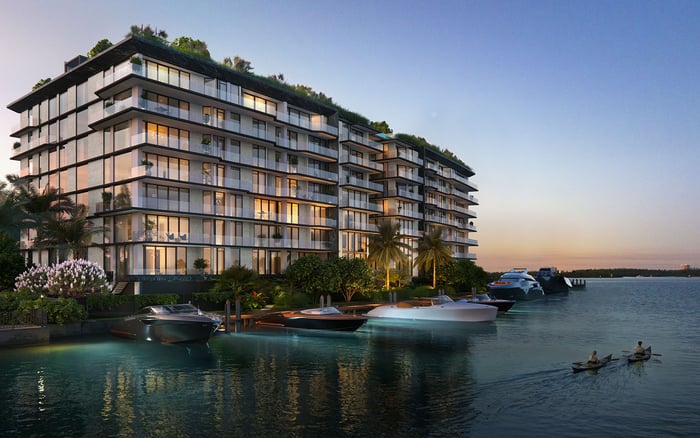
For a Zurich-based household, a Bay Harbor Islands second home deserves an operating plan as considered as its interiors. Separate community programming from club privileges, verify guest arrangements, and build each arrival around current road conditions rather than assumed travel times.

For a Zurich-based household establishing a second home in Bay Harbor Islands, the most consequential luxury may be an arrival that requires no improvisation. The residence matters, but so do the arrangements around it: whether guests can enter before the owner arrives, where a driver may wait, and which commitments genuinely belong on the season’s calendar.
Treat those questions as part of property selection, not as housekeeping after closing. In practical terms, a beautiful apartment and a workable household routine are separate considerations. The strongest decision brings them together before travel dates, visiting friends and evening engagements begin to overlap.
When considering Alana Bay Harbor Islands, for example, make an arrival-and-hosting brief part of the evaluation. The brief should request verified operating details, not assume the project provides particular services. Apply it to every residence under consideration.
For a Bay Harbor Islands stay, check municipal event information and recurring community activities separately. Distinguish one-off occasions from regular programming, then confirm dates, venues and admission terms for the intended visit. A past event announcement should not determine a future itinerary.
Private-club planning belongs on a separate track. Municipal programming does not establish membership eligibility, reciprocal privileges or permission to bring guests. Before making a club central to the household’s social life, request its applicable calendar and written confirmation of the access arrangements that matter to you.
For a household retaining a Zurich base, the essential distinction is between confirmed commitments and attractive possibilities. Ask about reservation windows, seasonal interruptions, guest limits and whether the member must accompany visitors. Keep unconfirmed engagements provisional rather than allowing them to dictate flights or accommodation for friends.
An event date is a reason to review transport arrangements, not evidence of a particular delay. Do not assign a standard seasonal traffic penalty or assume an easy journey outside a particular hour without journey-specific information.
Build the evening plan around the actual destination, applicable road restrictions and an agreed collection point. If dinner or an appointment involves Bal Harbour or Surfside, have the driver review the full route, not just the final approach to the residence.
Make the return journey explicit. Agree who will contact the driver, where the vehicle may legally collect passengers and what happens if the preferred meeting point is unavailable. This preserves flexibility without mistaking map distance for reliable journey time.
When reviewing a roadwork notice, distinguish its publication date, scheduled work period and any subsequent updates. An anticipated completion date is not confirmation that restrictions have ended, just as an old closure announcement does not establish present road conditions.
Before each transfer, check which restrictions actually apply to the planned route. Ask the driver to review access to the building as well as the wider journey, and agree on an alternative collection point if needed.
Do not assume an alternate route is faster simply because it avoids a named work site. Likewise, the end of stated work hours does not guarantee that all lanes have reopened or that the trip will be quicker.
Parking language deserves close reading. Ask which spaces belong to the residence, which are available to visitors and what conditions govern their use. Treat marketing descriptions as questions for due diligence rather than confirmation of current operating rules.
Verify the current unit-specific association assessment, included services and any separate parking or visitor charges. Do not treat a quoted fee for one residence as a building-wide schedule or a neighborhood cost benchmark.
For buyers evaluating Bay Harbor Towers, the same distinction should guide the conversation: parking provision, visitor admission and household authorization are separate questions. Arrangements at another development should not be assumed to apply.
Ask the association to confirm visitor registration, overnight parking rights, any valet hours and charges, and whether a chauffeur may remain on site. Address unaccompanied guests separately. A place for a visitor’s car does not establish permission for that visitor to enter the residence before the owner arrives.
A practical driver brief should identify the residence entrance, the authorized drop-off arrangement and the person to contact if arrival plans change. Ask management where luggage may be unloaded and where a vehicle may wait. Do not assume the entrance can accommodate an extended stop.
For an airport transfer, agree how flight changes will be communicated and when the route will be reassessed. Do not build the day around an unsupported transfer estimate. If an evening reservation follows arrival, leave flexibility rather than making the driver responsible for an unrealistic timetable.
During a viewing at Onda Bay Harbor, use a hypothetical arrival to test these questions with the appropriate representatives. Follow the sequence from vehicle arrival through luggage delivery and guest entry, without assuming any particular staffing or service model.
Before committing, rehearse three scenarios: the owner arriving, friends arriving first, and everyone returning from an evening engagement. For each, identify the required permission, parking arrangement and responsible contact. Any unresolved point belongs in the due-diligence file, not in an informal promise.
For a household dividing its time between Zurich and Bay Harbor Islands, this preparation protects the pleasure of the second home. The objective is not a crowded calendar or an elaborate transport system. It is a residence whose verified arrangements allow daily life to feel composed.
Explore a considered Bay Harbor Islands second-home search with MILLION.
If branded residences are on your mind — as a home or as an allocation — we would be glad to share what we are seeing, privately.
Begin a quiet conversationCheck municipal event information and recurring community activities for the intended stay. Confirm dates, venues and admission terms before making firm arrangements.
No. Club calendars, membership eligibility, reciprocal privileges and guest permissions require separate confirmation directly with the club.
Ask about reservation windows, guest limits, seasonal interruptions and whether the member must accompany visitors. Obtain written confirmation of the arrangements relevant to the visit.
No. Confirm the applicable dates, location and admission terms rather than carrying forward details from a previous edition.
No quantified seasonal delay or airport-transfer range is established here. Plan around current restrictions and the specific journey rather than a fixed assumption.
Distinguish the publication date from the scheduled work period and check for updates. An anticipated completion date does not confirm that restrictions have ended.
Confirm the residence’s assigned spaces, visitor parking conditions and any overnight restrictions. Ask separately about valet availability, hours and charges rather than assuming the service exists.
No. Verify the current assessment, included services and separate charges for the specific unit under consideration.
No. Confirm visitor registration and unaccompanied access separately from parking, including any required owner authorization.
Confirm the entrance, authorized drop-off and waiting arrangements, building contact and luggage procedures. Review applicable road restrictions before each transfer and agree how travel changes will be communicated.