For Hillsboro Beach buyers using trusts or entities, a wellness amenity program deserves two distinct reviews: whether it can accommodate the household’s routine and whether every intended user has documented access.

For a Hillsboro Beach buyer purchasing through a trust or entity, wellness due diligence begins with a distinction: the name on title does not settle who may use the amenities. A beneficiary, trustee, LLC principal, visiting relative and caregiver should not be treated as interchangeable categories without written confirmation.
At Rosewood Residences Hillsboro Beach, the advertised program invites a lifestyle organized around fitness, treatments and waterfront leisure. Whether it supports a particular household depends on eligibility, usable capacity and service availability. The practical luxury is not simply a treatment room downstairs; it is knowing who may book it, with whom and on what terms.
Start with a household roster. Identify regular occupants, occasional family users, caregivers, family-office staff who may coordinate bookings and personal practitioners. Request a written response addressing each role. Access for these categories is not established here and should remain an open purchase question, not an assumption.
Ask the sales team for the documents defining resident, occupant and guest status, then have counsel assess how those definitions apply to the proposed ownership structure. Specifically, request the procedure for identifying authorized users when a trust or LLC holds title.
Keep the questions concrete. Can more than one beneficiary receive resident credentials? Does a trustee who does not live in the residence have access? Can an LLC principal designate family members, and what documentation would be requested? Who may make bookings or authorize charges? These are verification questions, not statements of Rosewood policy.
Second-home buyers should also test the arrangement for periods when the primary occupant is absent. A relative staying alone or a caregiver accompanying an eligible resident presents a different access question from a dinner guest. Obtain clarification for both ordinary visits and extended stays.
For a broader Broward search that includes Four Seasons Hotel & Private Residences Fort Lauderdale, carry the same household roster into the review. Compare written eligibility provisions, not assumptions prompted by a hospitality name.
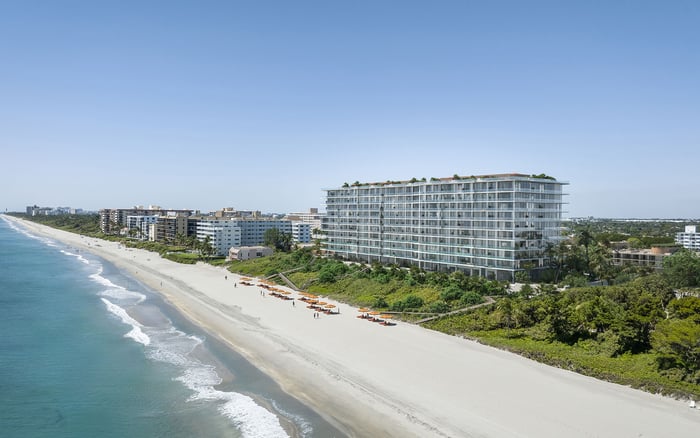
Rosewood is marketed as a 92-residence development with approximately 37,000 square feet of amenities. That total encompasses leisure facilities, not exclusively wellness space. It should not be treated as a measure of gym availability or treatment capacity.
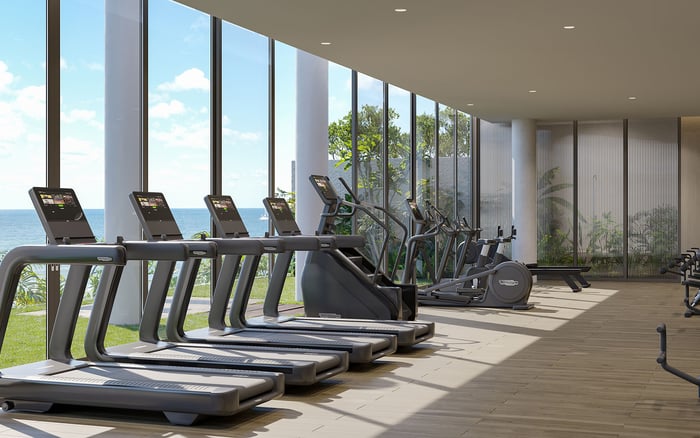
The described fitness offering includes two fitness centers, a yoga room and a sauna. The advertised indoor-outdoor wellness center also includes hammam, hydro pools and cold-plunge pools. These descriptions do not establish simultaneous-user limits, class sizes or peak-season availability.
Request a facility-by-facility operating outline covering:
Equipment inventories, room capacities and proposed opening hours.
Class sizes, schedules and whether instruction requires separate reservations.
Booking windows, session lengths, cancellation terms and waitlist procedures.
Any distinction between resident, guest and practitioner use.
Then test an actual routine: two household members training before breakfast, followed by a thermal session and a treatment. Ask whether that sequence would require several bookings and whether reservations are allocated by person or residence. The aim is to understand the proposed experience, not to infer congestion from residence count alone.
A private spa, treatment rooms and private salon are advertised. Access to those spaces is distinct from a staffed appointment at a preferred time. Request the proposed staffing model, treatment menu, appointment schedule and service charges, distinguishing confirmed arrangements from plans.
For buyers with established therapists, trainers or beauty practitioners, outside-provider access warrants its own written answer. Ask whether personal professionals may work in shared facilities, inside the residence, both or neither. If approval is available, establish whether licensing, insurance, vendor registration or advance notice is requested.
The financial review should cover treatment fees, booking and cancellation terms, and whether a separate membership or minimum spend would apply. Investigating a possible requirement does not establish that it exists.
Advertised concierge, butler and in-residence dining services do not establish that personal training, yoga or spa treatments can be arranged inside a residence. Likewise, valet and a resident house car should not be assumed available to visiting practitioners. Confirm arrival procedures and supporting services separately from permission to perform a treatment.
Guest suites are advertised, but accommodation and amenity eligibility require separate confirmation. Obtain booking eligibility, rates, stay limits and a precise description of the wellness privileges attached to a suite reservation.
Ask whether visiting relatives may enter fitness or spa areas unaccompanied, whether the resident must be on the property and whether guest allowances are counted by residence, person or visit. Clarify who may book and pay for treatments. A guest’s ability to dine at the advertised residents-only restaurant or cocktail lounge is not evidence of spa eligibility.
The advertised children’s playroom and game room do not resolve age or supervision requirements elsewhere. Families should ask specifically about pools, fitness rooms and thermal areas. For multigenerational use, document the distinction between a relative receiving a treatment and a caregiver accompanying someone else.
The described outdoor offering includes an oceanfront pool, sunset pool, cabanas and attended beach service. Assess these separately from indoor wellness capacity, including reservation arrangements and guest eligibility. Tennis, padel and pickleball courts are also described; ask about booking priority, guest reservations and whether clinics affect ordinary resident use.
If The Ritz-Carlton Residences® Pompano Beach is also under consideration, use the same questions to organize its review. This is a comparison framework, not a claim that either property has equivalent facilities or more generous access.
Before relying on the wellness program in a purchase decision, assemble a written file covering authorized users, facility capacities, proposed schedules, practitioner approval, guest privileges and charges. Ask counsel which provisions are documented, which remain proposed and how changes could affect the intended household arrangement.
The most useful final test is personal: can the people who will actually occupy the home pursue their routines under the stated terms? Where an answer remains unsettled, treat it as an unresolved purchase consideration rather than filling the gap with a marketing impression. An extensive amenity program becomes meaningful when its access rules support the life a buyer intends to lead.
For a discreet perspective on South Florida residential choices, connect with MILLION.
If branded residences are on your mind — as a home or as an allocation — we would be glad to share what we are seeing, privately.
Begin a quiet conversationAccess for trustees, beneficiaries, LLC principals and other household roles is not established. Request written eligibility provisions and have counsel review how they apply to the intended users.
The development is marketed with 92 residences and approximately 37,000 square feet of amenities. That area includes leisure facilities, not just wellness space.
No. Equipment inventories, room limits, operating hours and reservation procedures are needed to assess whether the proposed facilities suit a household’s routine.
The advertised wellness offering includes sauna, hammam, hydro pools and cold-plunge pools. Individual capacities and booking rules should be confirmed separately.
Outside-practitioner permissions are not established. Ask whether shared-space or in-residence services are permitted and whether licensing, insurance or vendor approval is required.
No. Treatment rooms and salon space do not establish staffing levels, appointment availability or service charges.
The advertised guest suites do not by themselves establish wellness eligibility. Obtain the privileges attached to a reservation, alongside booking rules, rates and stay limits.
Unaccompanied guest access is not established. Ask about resident-presence requirements, per-residence allowances and visit limits.
No. The advertised children’s playroom and game room do not determine minimum ages or supervision requirements for fitness rooms, pools or thermal areas.
Request written eligibility definitions, facility capacities, proposed schedules, practitioner permissions, guest terms and charges. Counsel should distinguish documented provisions from proposed operating arrangements.