For collectors considering The Cove in Edgewater, ownership structure and art conservation deserve parallel due diligence. Confirm trust or LLC provisions, evaluate daylight at the selected residence, and treat museum-grade performance as a proposed fit-out objective rather than a building feature.
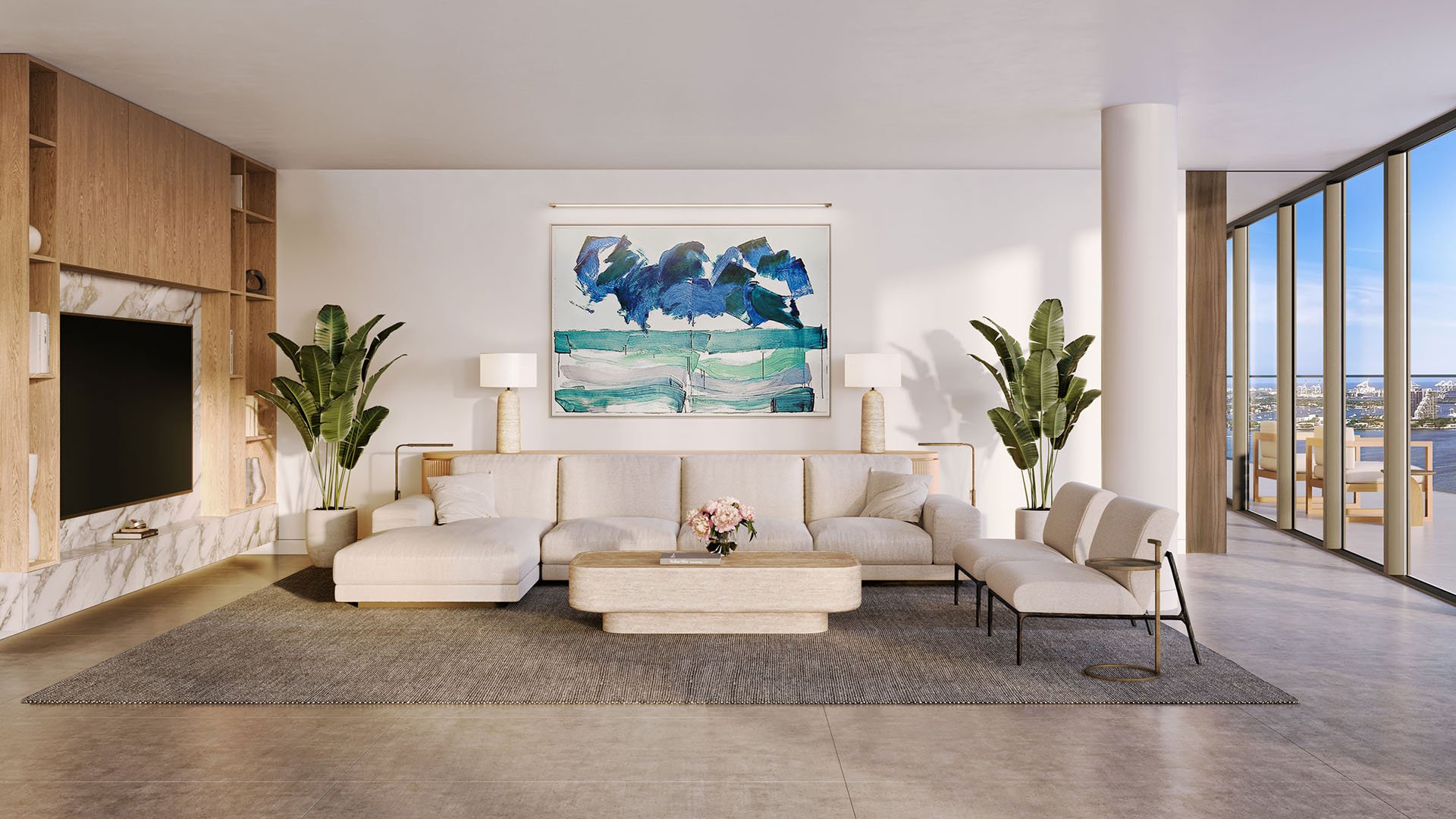
At The Cove Residences Edgewater, the attraction begins with Biscayne Bay. The planned 40-story condominium in Miami’s Edgewater neighborhood pairs a directly waterfront setting with advertised floor-to-ceiling glass and wraparound terraces. For a collector, that invitation to daylight calls for a second, more technical conversation: where the art will live, how exposure will be managed, and who will authorize the work.
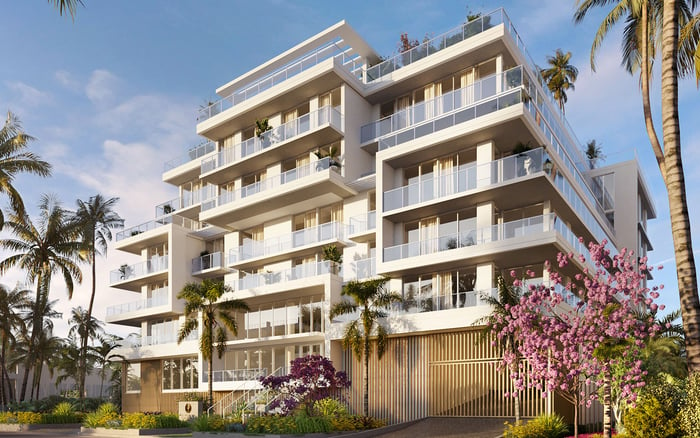
The announced program comprises 134 residences with one- to four-bedroom layouts. SB Development Group and Hazelton Capital Group are the developers, with architecture by Kobi Karp Architecture and interiors by Dieguez Fridman Design. Natural stone, wood and tactile finishes define the residential palette. None of those attributes, however, establishes conservation performance.
A trust or LLC purchase and an art-focused interior should be evaluated together, but not conflated. The ownership structure addresses the acquisition; the conservation brief addresses the collection’s proposed environment. Neither substitutes for the other.
The Cove’s trust and LLC acceptance rules are not established here. Buyers should not assume that an entity may sign the contract, take title or replace an individual purchaser without further review. Before selecting the purchasing name, ask counsel to examine the actual contract and condominium documents.
Request written clarification of permitted purchasers, approval procedures, signing authority, required entity or trust documentation, beneficial-owner disclosures and assignment restrictions. Ask separately whether a later change in ownership or control would require consent. These are transaction questions, not assurances about what the building allows.
If financing is contemplated, coordinate the proposed vesting with the lender before committing to it. Have legal and tax advisers assess the structure against the buyer’s circumstances, rather than treating an LLC or trust as a universal answer to privacy, liability or estate planning.
Ask counsel and the title team to confirm the residence’s address, unit designation and legal description against the purchase documents before closing.
Begin the design review with the selected residence’s plan, orientation and proposed collection placement. A compelling bay-facing room does not, by itself, establish that every wall suits every artwork. Ask a conservator and lighting designer to assess direct sun, reflections and the relationship between glazing, seating and display surfaces.
Give that team a collection-specific brief, not simply a request for a gallery aesthetic. Identify which works are intended for permanent display, which may rotate and where flexibility matters. Ask the conservator to establish appropriate exposure limits for individual objects before the designer fixes their locations.
For buyers also considering Aria Reserve Miami, apply the same discipline: evaluate the proposed art wall and its surrounding conditions, not just the room’s visual appeal. This is a due-diligence framework, not a claim that either development provides collection-grade systems.
The useful deliverable is an annotated plan distinguishing preferred display locations, locations requiring further assessment and areas better reserved for other uses.
Study The Cove’s advertised glass and wraparound terraces together. Ask the design team to assess how the selected unit’s orientation, terrace geometry and surrounding reflections affect proposed display locations. Do not infer a conservation advantage from floor height alone.
Request glazing data sheets identifying UV transmission, visible-light transmittance and solar heat gain coefficient. These specifications have not been established for the residence under consideration. Floor-to-ceiling glass describes an architectural feature, not a verified level of UV protection or art conservation.
Then request the window-treatment specifications, distinguishing what is included at delivery from what an owner might propose. Ask about shade zoning, controls, mounting provisions and any constraints on appearance. Have the lighting designer assess glare at both seating positions and art walls.
Avoid prescribing universal shading hours or treating a darker-looking room as proof of suitable exposure. The question is whether the proposed combination of glass, shading and placement meets the conservator’s brief while preserving the experience of living beside the bay.
“Museum-grade” should describe the buyer’s intended standard, not an existing Cove feature or certification. Gallery lighting, installed conservation shades and collection-grade environmental controls have not been established as project features. A residential finish palette is not a conservation specification.
Ask the conservator to define the collection’s requirements and the engineering team to evaluate the residence’s HVAC capabilities against them. Request clarity on available controls, monitoring options, operating limitations and the feasibility of proposed supplemental equipment. Avoid selecting universal temperature or humidity targets before that assessment.
Apply the same discipline when reviewing EDITION Edgewater as an alternative: ask what is documented, what remains an owner proposal and what requires permission. Architectural identity alone should not determine collection suitability.
Before approving cabinetry, lighting or shades, review condominium alteration rules. Ask whether proposed glazing treatments, wiring, shade pockets, wall attachments and mechanical changes are permissible. Separate design feasibility from building approval, and obtain the relevant written responses before commissioning a fit-out based on unconfirmed assumptions.
Keep the purchasing structure in view throughout the interiors process. Ask counsel who is authorized to approve alterations, execute design contracts and communicate with the condominium on behalf of the proposed owner. Clarify these responsibilities before work begins.
Separately, have the insurance adviser review the intended ownership and occupancy arrangements alongside the collection plan. Ask how the residence, artworks, installation work and any periods of absence should be addressed. The Cove’s specific insurance requirements are not established here, and residential ownership does not confirm collection coverage.
Bring the legal, design and conservation decisions into one written schedule: purchaser approval, document review, technical assessment, alteration consent, installation and final evaluation. This makes dependencies clear without assuming that every proposed intervention will be accepted.
For a residence used intermittently, ask the conservation team to define an operating plan for occupied and unoccupied periods. Clarify who will manage shades, review environmental information and respond when attention is required. Align that plan with the systems actually approved and installed.
The purchase decision should rest on three documented conclusions: the proposed purchaser can proceed on acceptable terms, the chosen residence can accommodate a credible collection plan, and the necessary interventions are feasible and permitted. A beautiful view remains central to the appeal, but a collector’s confidence comes from resolving what the view alone cannot answer.
For a discreet conversation about an art-conscious Edgewater purchase, connect with MILLION.
If branded residences are on your mind — as a home or as an allocation — we would be glad to share what we are seeing, privately.
Begin a quiet conversationThe Cove’s trust and LLC purchase rules are not established here. Have counsel confirm permitted purchasers, approval requirements and signing documentation in the transaction documents.
Do not assume that a later assignment is permitted. Ask counsel to review assignment provisions and obtain written clarification of any consent requirements.
The announced program is a planned 40-story tower with 134 condominiums offering one- to four-bedroom layouts in Miami’s Edgewater neighborhood.
Ask counsel and the title team to confirm the residence’s address, unit designation and legal description against the purchase documents.
The advertised glass does not establish quantified UV protection. Request the glazing data sheets and have a conservator assess them for the intended collection.
No museum-grade feature or certification is established here. Treat it as a proposed owner fit-out objective requiring technical assessment and relevant approvals.
Ask a conservator and lighting designer to assess the selected unit’s orientation, direct sun, reflections and proposed artwork placement. Set collection-specific exposure limits before finalizing the layout.
Do not assume a glare advantage from floor height. Assess the selected residence’s orientation, glazing, terrace geometry and surrounding reflections.
Review condominium alteration rules and seek clarification for proposed shades, glazing treatments, wiring, wall attachments and mechanical changes. Technical feasibility does not establish permission.
Ask the conservation team to define shade operation, environmental review and response responsibilities during absences. Align the plan with the systems actually approved and installed.