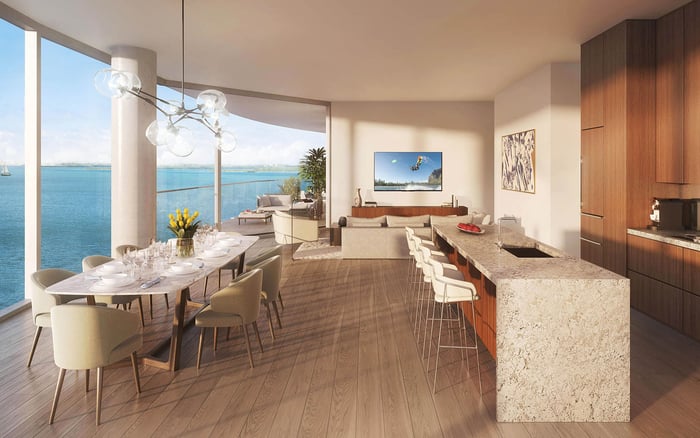
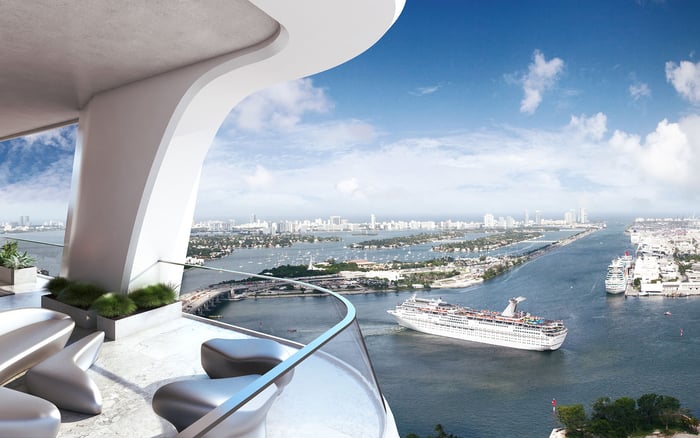
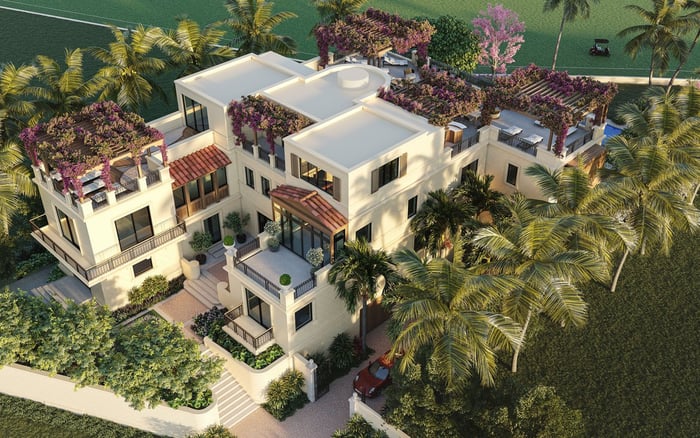
At St. Regis® Residences Sunny Isles, assessing future buyer-pool depth requires looking beyond bedroom count. Buyers should consider how interior scale, functional planning, den utility, floor height, terrace orientation, view line, and total purchase basis work together.

At St. Regis® Residences Sunny Isles, bedroom count is only the beginning of a useful comparison. A buyer should also examine how interior scale, circulation, exposure, terrace design, and total purchase basis combine to shape the residence’s everyday appeal.
Future buyer-pool depth refers to the range of credible purchasers who might consider a home if it returns to market. It is not a promise of appreciation, liquidity, or selling time. Instead, it is a practical framework for judging whether a residence is likely to remain relevant to several buyer profiles or only a highly specific one.
A scarce view is most compelling when it is paired with a broadly usable plan.
Two residences with the same bedroom label can offer very different experiences. One may devote more space to entertaining and terraces, while another may emphasize bedroom separation, storage, or flexible rooms. Total interior area matters, but the distribution of that area is equally important.
Begin by tracing the path from the entry to the principal living areas. Look for intuitive circulation, privacy between sleeping and entertaining zones, and a comfortable relationship among the kitchen, dining area, living room, and terrace. Long corridors, awkward transitions, or rooms that depend on borrowed light may reduce the practical benefit of otherwise generous square footage.
Bedroom dimensions also deserve close review. Confirm that each room can accommodate appropriate furniture without obstructing doors, glazing, or circulation. Consider closet placement, bathroom access, privacy, and the separation between primary and secondary suites. A residence should be evaluated as a complete plan rather than as a collection of labeled rooms.
A den can expand a residence’s potential audience when it performs a clear function. Buyers may value a private office, media room, library, fitness area, or occasional guest space, but the room must have proportions and access that support its intended use.
Assess whether the den offers privacy, natural light, practical wall space, and convenient access to a bathroom. A den located directly within a busy entertaining area may work well as a media room but less effectively as a quiet office. Conversely, a more secluded room may support work or guests while feeling disconnected from daily living.
The label itself should not determine value. Buyers should decide whether the room contributes meaningful flexibility and whether that flexibility would be apparent to a future purchaser. A convincingly useful den may broaden the residence’s appeal; an ambiguous leftover space may not.
Buyer-pool depth depends on how many lifestyles a residence can accommodate without substantial compromise. A well-planned home may suit a couple seeking a second home, a buyer who works remotely, a household requiring guest space, or an owner moving between South Florida and another market.
Larger residences can deliver privacy, entertaining capacity, and distinction, but they may also appeal to a more specialized audience. Their future positioning depends on whether the additional area creates recognizable benefits such as stronger bedroom separation, more versatile entertaining space, or a meaningful relationship with the view.
This distinction matters across the Sunny Isles Beach branded-residence market. Buyers may also compare Bentley Residences Sunny Isles and The Ritz-Carlton Residences® Sunny Isles when considering location, layout, design, services, and overall ownership experience. The most useful comparison is not automatically the residence with the same bedroom count; it is the home that competes for the same buyer at a similar total basis.
A view is not separate from interior planning. Direction, floor height, glazing, room placement, terrace orientation, privacy, and surrounding development all influence how the outlook is experienced. Buyers should study the view from the principal living area, primary bedroom, secondary rooms, and terrace rather than relying on a single presentation angle.
Direct water exposure may create an immediate emotional response, while city or Intracoastal outlooks may offer a different atmosphere. No direction should be assessed in isolation from the residence’s purchase basis and layout. A compelling secondary exposure can remain competitive when the overall proposition is coherent.
Floor height should also be evaluated carefully. A higher position may change the horizon, privacy, light, and relationship with nearby buildings, but height alone does not resolve an inefficient floor plan or an exposure that does not suit the buyer. Terrace depth, shade, wind, glare, and furniture placement can affect how frequently the outdoor area is used.
View permanence requires particular diligence. Buyers should review the surrounding context and obtain appropriate professional guidance regarding matters that could affect an outlook. A current view should not automatically be treated as permanently protected.
A disciplined comparison set should account for interior area, practical bedroom utility, den function, floor height, terrace orientation, exposure, condition, and total purchase basis. Price per square foot can be a reference point, but it does not explain why one residence may be more desirable or usable than another.
Total price is often the more revealing filter because future buyers generally compare complete purchase opportunities. A smaller home with a particularly effective layout and compelling outlook may compete differently from a larger residence with less efficient planning. The correct comparison depends on who is likely to consider each property and what alternatives are available to that buyer.
Avoid treating decorative upgrades as substitutes for enduring attributes. Finishes can be changed, while structural planning, exposure, core placement, and terrace orientation are generally harder to alter. Buyers evaluating long-term relevance should separate permanent qualities from personal design choices.
A simple scoring framework can make comparisons more consistent. Rate each candidate on usable interior scale, bedroom privacy, den utility, circulation, storage, view direction, floor height, terrace usability, and the clarity of its overall value proposition. Notes should explain each score so that an emotional first impression does not overwhelm practical differences.
Next, identify the residence’s likely audience. Ask whether the plan could work for several buyer profiles or whether it depends on a very specific use. Consider which attributes would be immediately legible during a future showing and which would require explanation. Features that are easy to understand can help a home communicate its value clearly, although they cannot guarantee a resale result.
Finally, compare the trade-offs. A buyer may accept less interior area for a preferred exposure, choose a more flexible plan over an additional labeled bedroom, or prioritize terrace utility over floor height. The objective is not to eliminate compromise, but to ensure that each compromise is deliberate and reflected in the complete purchase decision.
Start with the plan, then evaluate exposure and floor height, and only then compare the total purchase basis with relevant alternatives. This order helps prevent a bedroom label, headline feature, or isolated pricing metric from controlling the decision.
Current offering materials and transaction-specific documents should guide the final analysis. Buyers should also use qualified legal, financial, tax, inspection, and real estate professionals as appropriate to their circumstances. Buyer-pool depth is a decision framework, not a substitute for due diligence.
For a discreet discussion of St. Regis® Residences Sunny Isles and other South Florida opportunities, connect with MILLION.
If branded residences are on your mind — as a home or as an allocation — we would be glad to share what we are seeing, privately.
Begin a quiet conversationIt describes the range of credible purchasers who might consider a residence if it returns to market. It does not guarantee appreciation, liquidity, or selling time.
Residences with the same bedroom label can differ materially in usable area, privacy, circulation, storage, exposure, and terrace design.
Review its proportions, privacy, natural light, wall space, bathroom access, and ability to serve a clear everyday purpose.
Yes. An efficient plan with useful rooms and a coherent relationship to its view may suit several buyer profiles.
No. Additional space can add distinction and utility, but it may also serve a more specialized audience.
Consider the outlook from principal rooms and terraces together with privacy, surrounding buildings, light, and the residence’s purchase basis.
No. Floor height should be weighed alongside layout, exposure, glare, terrace usability, privacy, and the surrounding context.
Future purchasers commonly compare complete opportunities at similar total commitments, not price per square foot alone.
Structural planning, exposure, core placement, and terrace orientation are generally less adaptable than finishes or furnishings.
Review current offering materials and transaction-specific documents, and obtain appropriate professional advice for the purchase.