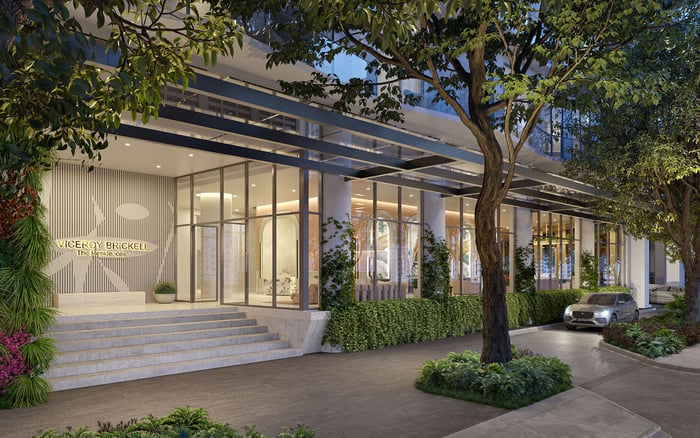
A collector-focused Brickell buying framework that separates financial progress from assessment exposure, with practical guidance on reserves, master insurance and the records to review before closing.
For an art collector, a Brickell residence is both a private setting for a collection and a long-term ownership commitment. The purchase price is only the beginning. Reserve funding, capital projects and insurance terms deserve the same scrutiny as the rooms where the works will hang.
The essential distinction is between an attractive apartment and an association whose finances can be clearly understood. A substantial reserve balance is encouraging only when measured against future obligations. A lower insurance premium can improve operations without establishing adequate coverage. And the absence of disclosed special assessments is no promise that none will follow.
Treat the ranking below as a buyer-priority shortlist, not a certification of low assessment risk. It identifies four named candidates and leaves the fifth slot open for document-led selection; it does not establish five financially vetted buildings or confirm current availability for every candidate. The financial figures are dated; current association documents should govern any purchase decision. Suitability for an art collection requires a separate review.
1. Brickell Place Phase II: 1915 Brickell Avenue
Brickell Place Phase II offers a documented financial starting point, subject to current verification. Its reserves reportedly stood at approximately $2.35 million at mid-2025, roughly $1 million above the prior year. In the first half of 2025, the association reportedly eliminated a $240,000 operating line of credit and recorded a $334,000 operating surplus. Approximately $420,000 in insurance savings provided another favorable operating signal.
Those improvements accompanied a significant reset in ownership costs: maintenance rose 45% in 2024, with 33 percentage points attributed to reserve requirements and 12 to inherited operating deficits. A structural reserve study identified higher-than-expected funding needs, prompting the engagement of another consultant to redo the study in 2025. Request the resulting study and current funding schedule. The absence of a reported special assessment is not confirmation from the association that none exists or is planned.
2. 1060 Brickell: 1060 Brickell Avenue
This is an assessment-risk comparison, not a low-risk recommendation. An approximately $21 million building-wide assessment reportedly related to façade, roof and pool-deck work puts capital projects at the center of any negotiation. That figure is not the amount owed by an individual apartment.
Before proceeding, establish the unit’s allocated obligation, payments already made, remaining installments and the division of responsibility between buyer and seller. Review outstanding work and the association’s financing arrangements. A disclosed assessment may be easier to evaluate than an unresolved project, but disclosure alone does not establish that costs are final.
3. 1010 Brickell: 1010 Brickell Avenue
1010 Brickell appears in Brickell’s listing inventory, making it a candidate for an active search. Confirm current availability. Availability, however, says nothing about reserve sufficiency, master-policy deductibles or future assessment exposure.
Review the apartment and association on separate tracks. The residence may meet the collector’s spatial brief, while the association must still demonstrate its funding position through current financial statements, reserve studies, insurance documents and meeting minutes. Its place on this shortlist reflects inventory, not a financial endorsement.
4. Brickell Place Phase I: provisional document review
Brickell Place Phase I requires its own association-level evaluation. Do not transfer Phase II’s reserve balance, operating performance or insurance savings to Phase I simply because the names are related.
Request Phase I’s budget, financial statements, reserve study, inspection records and assessment resolutions. Until those documents establish its position, treat it as a research candidate-not an example of reserve strength or limited assessment exposure.
5. Other marketed Brickell residences: selection by current records
Keep the broader marketed inventory open, but require documentary clarity before advancing another residence. A seller’s description of stable fees or an attractive asking price is no substitute for association records.
The next candidate should earn its place through an understandable reserve plan, disclosed insurance terms and a clear account of approved and proposed capital work. This is a selection category, not a named-building recommendation.
A Structural Integrity Reserve Study is an engineering-backed funding plan for major structural components, not a statement of cash already in the bank. Reserve studies identify significant common-area components, estimate their remaining useful lives and project repair or replacement costs.
The question is not simply how much the association holds, but whether accumulated reserves and scheduled contributions align with the work ahead. Structural-reserve funding can raise regular monthly assessments without a separate special assessment. Special assessments can address shortfalls or urgent projects through lump sums or installments.
For a resale purchase or an investment decision, compare recurring carrying costs with the capital-work schedule. Apply the same discipline when considering The Residences at 1428 Brickell: a project’s appeal should never substitute for evidence of adequate funding.
Brickell Place Phase II’s reported insurance savings are relevant to operating performance, but they establish neither coverage adequacy nor deductible transparency. Request the actual policy declarations, deductibles, exclusions and claims information. Have an insurance adviser explain the implications for the apartment and collection rather than judging protection by the premium alone.
No building-specific fine-art coverage is established here. Independently confirm the protection appropriate to the collection, including questions about storage, transit and installation. The same distinction applies when considering Cipriani Residences Brickell: residential positioning and insurance protection are separate judgments.
A collector’s lifestyle brief should extend beyond display walls. Ask about humidity control, artwork delivery access and installation permissions. Obtain building-specific answers before committing; none of these capabilities should be assumed for the shortlist.
For a waterfront search that also includes Una Residences Brickell, carry the same collection-focused questions into the purchase review. These linked projects are additional comparison points, not substitutes for the association-level evidence discussed above.
Review declarations, bylaws, budgets, financial statements, reserve information, meeting minutes, assessment records, insurance, litigation and engineering documents together. Board and owner minutes can reveal proposed assessments before they appear elsewhere in transaction materials.
The association controls capital-work funding and master insurance, and its financial condition can influence mortgage availability. Resolve payment responsibility and outstanding obligations with the appropriate advisers before closing. For a collector, the best purchase is not necessarily the one with the lowest monthly fee. It is the residence whose obligations and collection-related requirements can be understood before ownership begins.
For a discreet, document-led Brickell search, explore MILLION.
If branded residences are on your mind — as a home or as an allocation — we would be glad to share what we are seeing, privately.
Begin a quiet conversationNo. It identifies four named candidates and an open fifth selection category, with differing levels of financial information and further review required.
Its reported mid-2025 position included approximately $2.35 million in reserves, a $334,000 first-half operating surplus and elimination of a $240,000 operating line of credit. Current records remain essential.
Maintenance rose 45% in 2024, attributed to 33 percentage points for reserve requirements and 12 for inherited operating deficits.
The article does not establish a current special-assessment status. Buyers should confirm whether any assessment exists or is planned directly through current association records.
An approximately $21 million building-wide assessment reportedly concerned façade, roof and pool-deck work. Buyers should confirm their unit’s obligation, remaining work and payment responsibility.
No. Listing availability does not establish reserve adequacy, transparent insurance deductibles or limited assessment exposure.
It provides an engineering-backed funding plan for major structural components. It is not simply a statement of reserve cash already held.
Yes. Structural-reserve funding can increase regular monthly assessments even when no separate special assessment is imposed.
No. Lower insurance costs do not establish coverage adequacy, and building-specific fine-art coverage is not established here.
Review reserve studies, engineering records, budgets, financial statements and assessment resolutions together. Board and owner meeting minutes can also identify proposed assessments.