A buyer-focused comparison of hospitality service, staffing transparency, gratuity expectations and estimated association costs at two branded Miami residences.
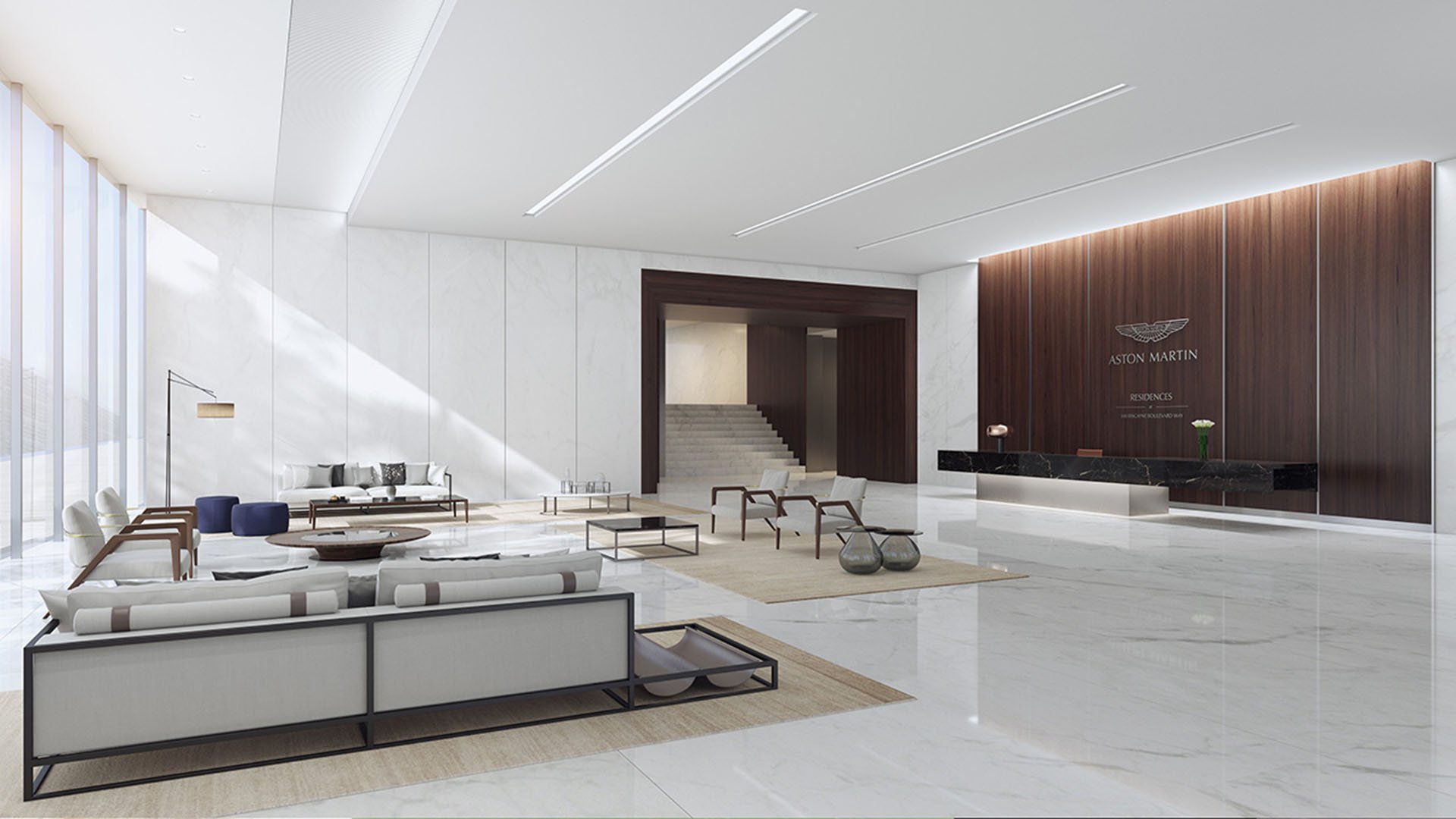
In Miami's uppermost condominium tier, service is not an ornamental promise. It is an operating system that shapes privacy, convenience and the quality of daily life. For buyers considering Aston Martin Residences Downtown Miami and ORA by Casa Tua Brickell, the decisive questions begin after the amenity tour: Who is available, at what hours, for which tasks and at what recurring cost?
The properties occupy distinct positions. Aston Martin Residences is a completed branded condominium at 300 Biscayne Boulevard Way in Downtown Miami, officially opened and completed on April 30, 2024. ORA is a branded residential development at 1210 Brickell Avenue. Both belong in the broader conversation around branded residences, yet the specificity of their disclosed service details differs.
The true luxury is not the amenity itself, but how reliably it is delivered.
Aston Martin presents the clearer hospitality proposition. Its service program includes a private butler available around the clock for lifestyle management and in-residence support. The building also offers 24-hour concierge and valet parking, along with a private salon and barbershop, storage facilities and service elevators.
That service layer supports 42,275 square feet of Sky Amenities across floors 52 through 55. The program includes a spa, fitness center, spinning and boxing rooms, a business center, conference room, art gallery, and spaces for children and teenagers. This scale matters: an extensive amenity collection creates a substantial operational brief. Pools, wellness areas, business facilities and family spaces must be staffed, maintained and coordinated to feel effortless.
The butler commitment is meaningful, but it does not resolve every diligence question. No exact staff-to-resident ratio is stated, nor are the number of butlers on duty, expected response times, overnight coverage by department or potential charges for certain requests. A purchaser should distinguish between an available service and a guaranteed service level.
ORA's Casa Tua association places it naturally within Brickell's hospitality-led residential market. Yet its building information does not state a formal staff-to-resident ratio or precise gratuity policy. Buyers should therefore avoid translating branding alone into assumptions about staffing depth, service scope or tipping expectations.
This is especially relevant when comparing ORA with other Brickell offerings such as Baccarat Residences Brickell or The Residences at 1428 Brickell. The useful comparison is not which name feels most familiar, but which governing and operating documents offer the clearest account of included services, reserved services, hours, staffing and resident charges.
For ORA, buyers should request the latest operating assumptions from the developer and, when available, the future association. Ask who will employ the staff, which positions will be present overnight, how private events or in-residence requests will be handled, and whether food, beverage or lifestyle services carry administrative or delivery fees.
Neither property states an exact staff-to-resident ratio. That absence should prompt sharper questions rather than an instant conclusion. A single headline ratio can mislead if it includes engineering, security and administrative personnel who are not continuously resident-facing.
Request staffing by department and shift. Concierge, valet, security, common-area housekeeping, engineering, wellness personnel and butler service should be evaluated separately. Buyers should also ask how coverage changes overnight, on weekends and during peak occupancy. Seasonal residents can leave a building lightly occupied for part of the year and intensely active during holidays.
The strongest diligence extends beyond headcount. Ask about service-request channels, escalation procedures, staff training, third-party contractors and response targets. In a large amenity environment, the coordination model can matter as much as the number of employees.
Neither Aston Martin nor ORA specifies a mandatory gratuity schedule or formal tipping policy for butlers, valets, concierges or other employees. Buyers should not assume that hotel conventions automatically apply to either residence.
Before closing, ask whether gratuities are permitted, discouraged, pooled or addressed through an annual holiday fund. Clarify whether a service charge is already embedded in a request, reservation or delivery. The objective is discretion and consistency, particularly for owners who travel frequently, entertain at home or rely on recurring assistance.
A written policy protects residents and staff alike. It also distinguishes appreciation from obligation. Where no formal rule exists, management can explain the building's prevailing culture without promising a fixed custom.
Available figures for Aston Martin vary materially. Estimates place maintenance between approximately $1.25 and $1.76 per square foot each month. That indicates an annual range of roughly $15.00 to $21.12 per square foot, with actual charges dependent on the residence. A snapshot of units offered for sale showed average HOA or maintenance charges of about $3,014 monthly, but differences in unit size and line make that figure unsuitable as a universal budget.
For illustration, applying the indicated Aston Martin range to a 2,000-square-foot residence yields approximately $30,000 to $42,240 in annual association maintenance. This is arithmetic, not a quote for a particular home. Current budgets, unit disclosures and an estoppel should govern any purchase decision.
ORA's maintenance estimate is approximately $1.75 per square foot monthly, or about $21.00 per square foot annually. Applied to the same 2,000-square-foot illustration, that equals approximately $42,000 a year before other ownership expenses. Because ORA is a development, buyers should verify the figure against the latest project documents and understand how it may evolve into an adopted association budget.
Association maintenance is only one component of annual carry. A complete ownership model should also account for property taxes, insurance, utilities, financing costs where applicable, interior upkeep and potential special assessments. Privately used services may also sit outside the regular assessment.
Buyers surveying Downtown Miami may also consider Waldorf Astoria Residences Downtown Miami, but comparisons should be normalized residence by residence. Calculate the association cost per square foot, identify what it includes, then add the owner's personal cost profile. A lower headline rate may exclude services incorporated by another building, while a higher rate may support more expansive amenities and staffing.
Treat the service promise and financial obligation as connected. Request the current or proposed budget, fee schedule, included-service matrix, reserve information, insurance details and recent assessment history where applicable. For a completed building, review the estoppel and governing documents. For a development, examine the latest disclosures and ask which assumptions remain subject to change.
Then test the resident experience directly. Who answers at 2 a.m.? Can the butler enter a residence when the owner is away? Are valet, salon, wellness or event services separately charged? Is there a gratuity fund? How many resident-facing employees work each shift? Precise answers reveal more than branding alone.
For private guidance comparing service models, association obligations and residence-specific annual carry, consult MILLION.
If branded residences are on your mind — as a home or as an allocation — we would be glad to share what we are seeing, privately.
Begin a quiet conversationYes. The Downtown Miami tower officially opened and was completed on April 30, 2024.
It markets private butler service available around the clock for lifestyle management and in-residence support.
They include 24-hour concierge and valet, a private salon and barbershop, storage facilities and service elevators.
It spans 42,275 square feet across floors 52 through 55.
No exact ratio appears in the reviewed public amenity materials. Buyers should request staffing by department and shift.
No formal ratio appears in the reviewed public building information. It remains a diligence question for the developer or future association.
The reviewed public materials do not provide a formal Aston Martin tipping schedule or a precise ORA gratuity policy.
Available estimates indicate roughly $1.25 to $1.76 per square foot monthly, or about $15.00 to $21.12 annually.
The estimate is approximately $1.75 per square foot monthly, equal to about $21.00 per square foot annually.
It can include property taxes, insurance, utilities, financing, interior upkeep, private service charges and possible special assessments.