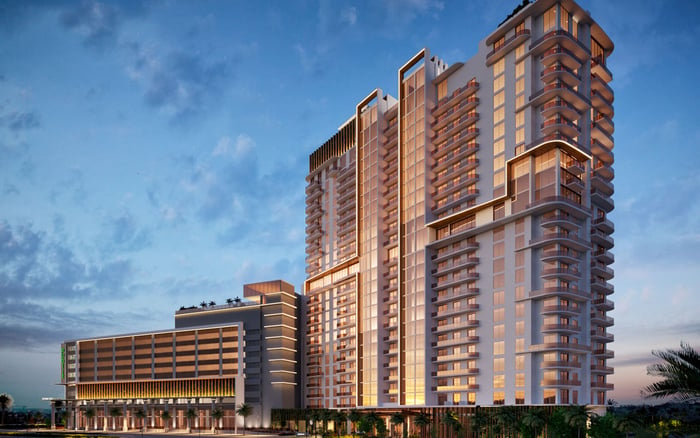
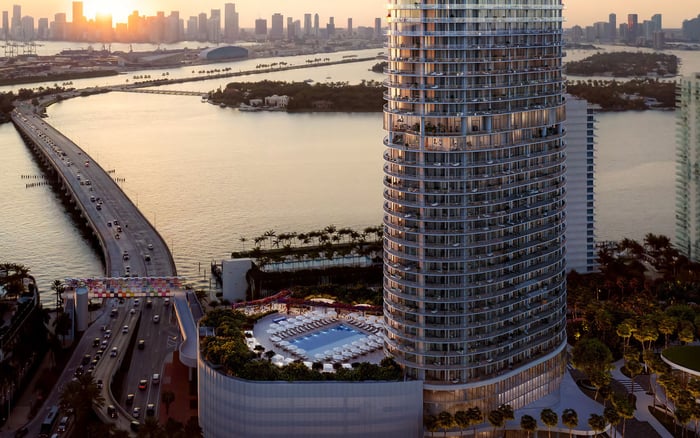
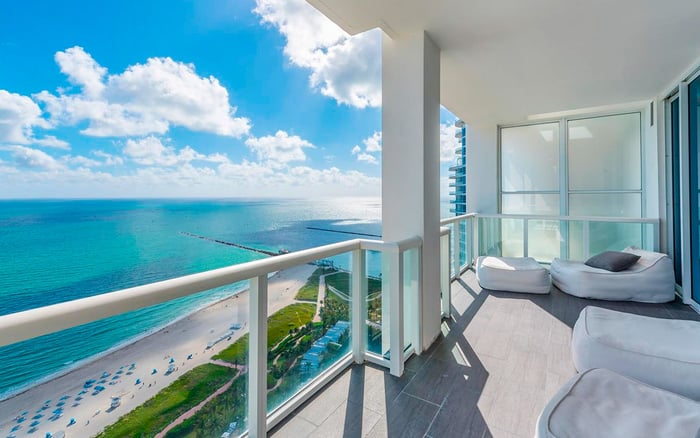
Continuum’s condominium structure, extensive amenity program and planned waterfront district make budget diligence essential. Buyers should distinguish projected assessments from demonstrated operating costs and examine the documents governing services, reserves and shared expenses.
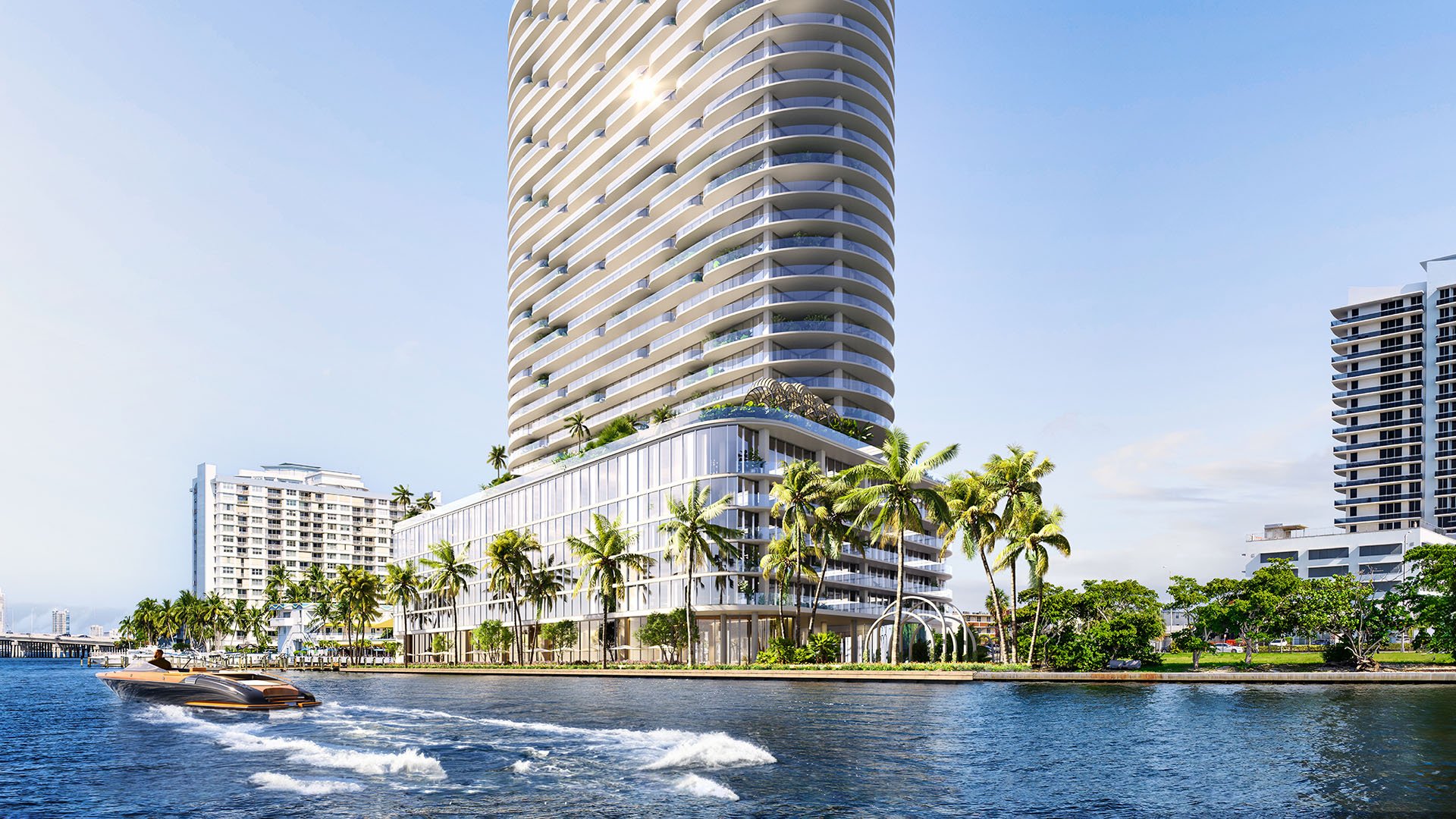
At Continuum Club & Residences North Bay Village, the ownership question begins with a distinction that polished branding can obscure. The project’s legal condominium name is “1755 JFK CAUSEWAY CONDOMINIUM.” Its residential identity is condominium ownership; the words “Club & Residences” do not, by themselves, establish a timeshare, separate club entity or mandatory club dues.
The address is 1755 79th Street Causeway, North Bay Village. The legal developer is 1755 JFK Owner LLC, a Delaware limited liability company; Continuum Company and Aksoy Holdings are the development partners. These identities matter when matching the sales presentation to the entities and obligations in the purchase documents.
For a buyer, the essential financial distinction is equally clear: a developer’s pro forma is a forecast, not an established operating record. That does not make it unreliable. It means the assumptions require scrutiny before a projected assessment becomes an expectation for long-term ownership costs.
A pro forma describes expected income and expenses under a particular set of assumptions. An adopted association budget authorizes a planned period of operations. Actual financial statements show what was collected and spent. These are distinct financial records, not interchangeable measures.
For buyer underwriting, stabilized operating costs should mean costs supported by experience under representative occupancy, staffing and service conditions. An opening period may not capture every amenity operating on its intended schedule, every service contract at its recurring rate or a full insurance renewal cycle. These are questions to test, not conditions to assume at Continuum.
The right request is more precise than “What is the monthly maintenance?” Ask which period the estimate covers, what level of operations it assumes and which obligations fall outside the quoted assessment. Then ask how the association’s total budget translates into the allocation for the residence being purchased.
A projected assessment is neither a demonstrated ceiling nor evidence that an increase is inevitable. There is no established basis here for assigning a Continuum-specific percentage uplift or alleging deliberate understatement.
At its April 2025 groundbreaking, the first tower was planned at 32 stories and 340 feet, with 198 condominium residences and penthouses. The residential offering spans one through four bedrooms. At launch, the indoor and outdoor amenity program encompassed approximately 50,000-60,000 square feet, including pools, wellness facilities, sports facilities and waterfront dining.
That scale makes service assumptions central to the purchase. The useful question is not whether the amenities are excessive, but whether the budget clearly accounts for their intended delivery. A generous wellness program can be a compelling ownership benefit; its operating hours, staffing and maintenance responsibilities still need definition.
Request a staffing schedule showing positions, coverage and employment-related costs. For utilities and service contracts, ask which figures reflect quotations or agreements and which remain estimates. For insurance, examine the coverage assumptions, deductibles and period represented by the premium estimate. For reserves, request the schedule, underlying component assumptions and an explanation of applicable requirements from qualified advisers.
Waterfront dining warrants a separate inquiry: identify the operator, ownership arrangement and any financial obligation assigned to residents. The amenity’s presence alone does not establish an association subsidy or a separate resident charge.
Continuum’s first tower, later identified as Continuum West, belongs to a planned waterfront district. The planned East phase includes approximately 300 additional condominiums, a hotel and other waterfront commercial and public-realm components.
This broader setting may enrich the residential experience, but the district plan does not establish who pays for what. Buyers should request the documents defining ownership, access rights, maintenance duties and expense allocations for amenities, waterfront infrastructure and any shared services.
The review should distinguish facilities owned by the condominium from those it may use under another arrangement. It should also identify who can amend allocations, what happens as later phases open and whether temporary arrangements differ from the intended long-term structure. These are questions for document review, not conclusions about Continuum’s actual agreements.
A purchaser also considering Shoma Bay North Bay Village should apply the same discipline independently. A shared neighborhood is not evidence of equivalent ownership obligations, service packages or assessment structures.
The April 30, 2026 financing package totaled $344 million from S3 Capital, with approximately $261 million allocated to first-phase construction and $83 million to second-phase predevelopment. Continuum West was approximately 50% presold at that point.
These are development milestones, not proof of the condominium’s eventual recurring expenses. Construction financing addresses project delivery; an association budget addresses operations. Presales likewise do not demonstrate future insurance premiums, staffing costs or reserve contributions.
The projected timetable placed first-phase completion around July 2028 and second-phase completion around 2030. Those dates remain development projections, not completed milestones. For the ownership model, the practical question is how anticipated operations and any shared obligations are treated between phases-not whether a financing announcement validates a maintenance estimate.
Launch pricing began just below $1 million, with a developer target averaging approximately $1,500 per square foot. Those are historical benchmarks, not current quotations, and neither establishes the cost of carrying a residence.
A useful comparison separates the acquisition price from recurring association assessments, reserve funding, separately billed services and residence-specific expenses. Ask for an inclusion-and-exclusion schedule rather than treating a single monthly figure as comprehensive. Compare the same service scope and budget period across alternatives.
For a buyer weighing Miami Beach and Continuum on South Beach, the shared Continuum name is no substitute for a separate document review. Each purchase requires its own analysis of legal obligations and financial evidence. Operating economics should not be presumed to transfer from one property to another.
Before relying on a projected assessment, coordinate a review of the offering documents, purchase agreement, budget assumptions, reserve materials and any shared-cost instruments. Look to the offering documents and purchase agreement rather than treating marketing materials as definitive contractual representations.
Ask whether any developer subsidy or assessment guarantee exists. If one does, identify its duration, scope, exclusions and the obligations that remain when it ends. Do not infer either support or its absence from the quoted assessment alone.
The objective is not to discount Continuum’s lifestyle proposition. It is to understand what sustains it. A well-supported forecast can inform a purchase decision, but it becomes evidence of operating performance only when measured against actual results.
For a discreet perspective on South Florida ownership decisions, explore MILLION.
If branded residences are on your mind — as a home or as an allocation — we would be glad to share what we are seeing, privately.
Begin a quiet conversationProject disclosures identify it as 1755 JFK CAUSEWAY CONDOMINIUM. The legal developer is 1755 JFK Owner LLC.
No. The project is identified as a condominium, and the branding alone does not establish a timeshare arrangement, separate club entity or mandatory club dues.
The project is at 1755 79th Street Causeway, North Bay Village, Florida 33141.
A pro forma forecasts expenses under stated assumptions rather than demonstrating actual operating performance. Its figures should be tested against service commitments, contracts and eventual operating results.
No guaranteed increase or Continuum-specific percentage uplift is established. A forecast also does not demonstrate a ceiling on future assessments.
Review occupancy, staffing, insurance, utilities, service contracts and reserves. Ask whether a developer subsidy or assessment guarantee exists and examine its terms if applicable.
Launch descriptions placed indoor and outdoor amenities at approximately 50,000–60,000 square feet, including pools, wellness facilities, sports facilities and waterfront dining.
The planned district does not establish that obligation. Buyers should examine the documents governing ownership, access and expense allocations rather than infer responsibility from proximity.
The projected timetable placed first-phase completion around July 2028 and second-phase completion around 2030. These are development projections, not completed milestones.
The offering documents and purchase agreement should guide the purchase review, alongside budget assumptions, reserve materials and any shared-cost instruments. Marketing descriptions should not replace that analysis.