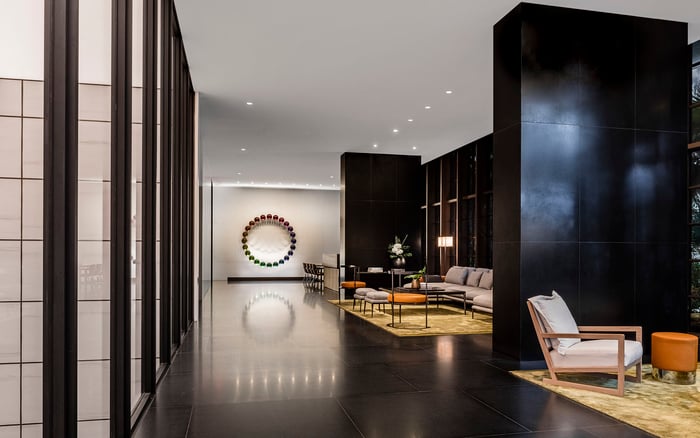
A family-office framework for reviewing Eighty Seven Park’s reserve liquidity, investment controls, unit-specific assessment exposure, and capital-payment timing before acquisition.
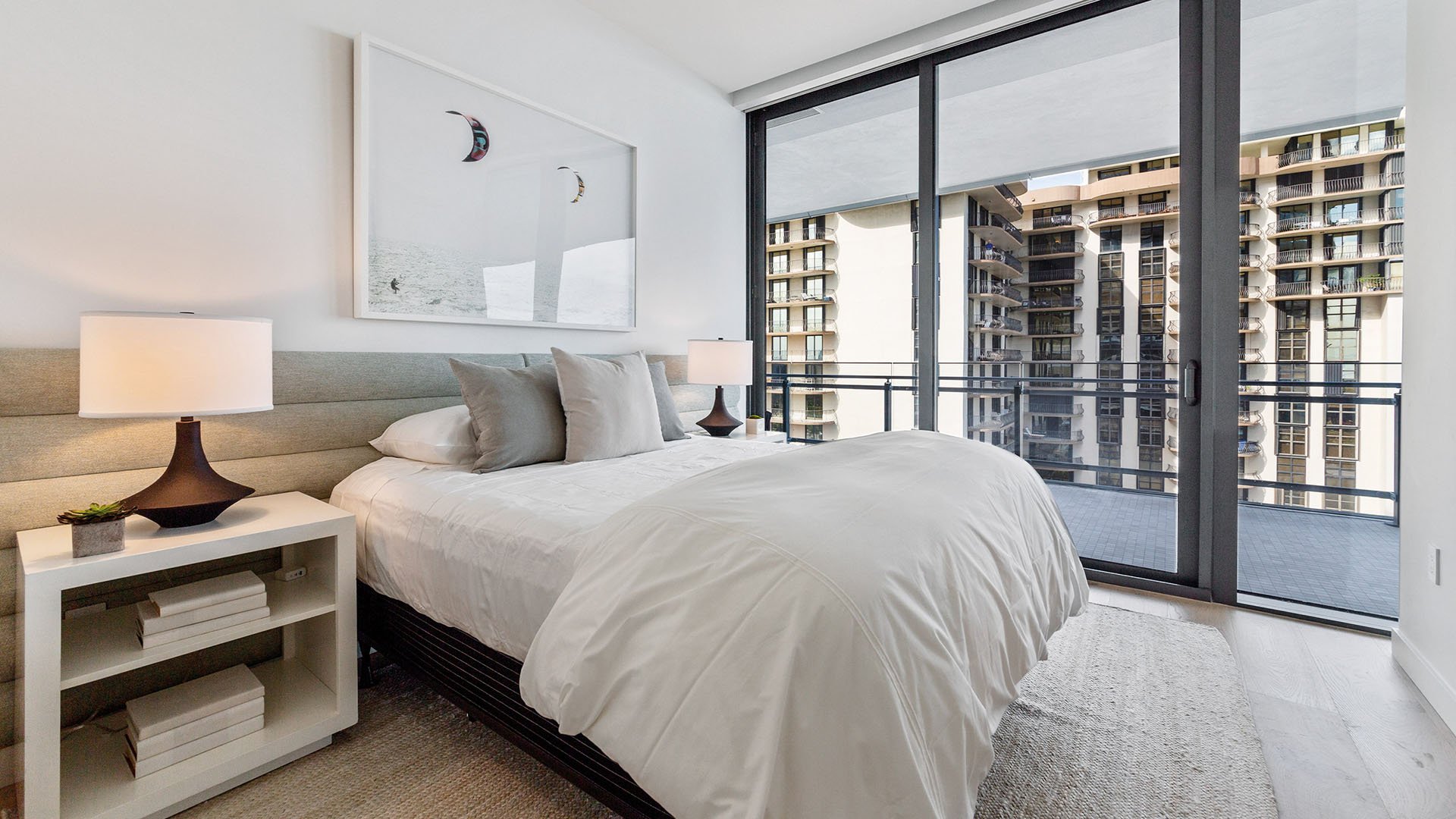
For a family office considering Eighty Seven Park Surfside, acquisition diligence should extend beyond the residence to the association’s balance sheet. The central question is not simply whether reserves exist, but whether available funds, investment maturities, and owner contributions align with the building’s prospective capital obligations.
The condominium is identified as an 18-story property at 8701 Collins Avenue, Surfside. Residence counts differ between 67 and 70, so the association documents should establish the denominator. A residence is identified as built in 2019, but the certificate of occupancy should establish the date used for regulatory diligence.
Current reserve balances, investment holdings, a formal investment policy, and an approved timetable for major capital calls remain unverified. That uncertainty is neither evidence of financial weakness nor assurance of adequate funding. It defines the questions an investment committee should resolve before committing capital.
Boutique ownership concentrates shared capital-project exposure across relatively few residences. The relevant underwriting measure is not an equal division of a building-wide bill, but the residence’s obligation under the governing documents.
Assessment allocation is described as based on ownership percentage. An 851-square-foot residence is identified with a 0.5746% common-element ownership share. Both the percentage and its application to a particular assessment require confirmation against the recorded unit schedule and declaration.
Using that percentage solely as an illustration, a hypothetical $5 million assessment produces a $28,730 obligation. At $15 million, the obligation becomes $86,190; at $30 million, it becomes $172,380. None of these scenarios establishes an actual assessment, and the percentage should not be applied to another residence without verification.
For a family office also evaluating Arte Surfside, the transferable discipline is the calculation method-not an assumed similarity in ownership shares or funding needs. Each association requires its own diligence file.
Request the current budget, two years of financial statements, reserve studies, bank and investment balances, and a 12-month cash-flow forecast. Review them together; the budget’s reserve line alone is not sufficient evidence of cash on hand.
Separate current balances from future budgeted contributions. Then distinguish funds available for contemplated work from amounts already committed to contracts or otherwise unavailable for that purpose. A scheduled contribution is not cash received, and a reserve balance does not by itself establish coverage of replacement costs.
Ask management to reconcile the forecast with expected collections, operating outflows, capital payments, and investment maturities. Where timing assumptions remain uncertain, model both a slower-collection case and an earlier-payment case.
For oceanfront ownership, liquidity analysis should sit alongside the engineering and insurance review. This is an underwriting recommendation, not a statement that Eighty Seven Park has a particular defect, shortfall, or pending project.
An association’s investment policy deserves scrutiny for capital preservation and access, not merely yield. Obtain the adopted policy and a current holdings schedule before drawing conclusions about safety or availability.
The requested file should identify permitted instruments, credit-quality standards, maturity limits, custodians, concentration limits, deposit-insurance coverage, and near-term liquidity requirements. Ask who authorizes transactions and how holdings are monitored against the policy.
Match each maturity to the capital-payment forecast. If an investment matures after a contractor’s payment date, identify how that payment would be funded. Do not assume an instrument can be converted to cash without cost or delay.
The same questions belong in a comparison with Fendi Château Residences Surfside. Compare documented governance and liquidity rather than making an unsupported judgment that one building’s reserves are stronger than another’s.
A useful capital plan connects component replacement costs and remaining useful lives to funding schedules. Request engineering documentation, warranties, construction claims, insurance renewals, and assessment notices, then reconcile their financial implications with the cash forecast.
For each contemplated expenditure, distinguish discussion from authorization, and authorization from a signed commitment. Record expected payment dates, the funding source, remaining approvals, and any potential owner contribution. An estimated project cost alone does not reveal when a buyer might need liquidity.
Developer-warranty status also belongs in this review. Do not treat a possible warranty recovery, construction claim, or insurance payment as available cash until its status and expected timing have been established.
Keep milestone inspections separate from Structural Integrity Reserve Studies. Do not treat unconfirmed future inspection estimates as statutory deadlines. Counsel and the appropriate technical advisers should establish the applicable requirements from the building’s records and current law.
Unit 904 is listed with monthly HOA dues of $5,368. That unit-specific listing figure is neither a verified current charge nor an association-wide average. Obtain the current unit ledger and budget before using it in an acquisition model.
The same residence’s listed association coverage includes amenities, hot water, internet, grounds and structural maintenance, parking, security, water, sewer, and trash. Confirm those inclusions against the current budget rather than assuming every household expense is covered.
Stress-test recurring dues and insurance costs alongside potential special assessments. The relevant family-office question is the combined cash requirement, including any overlap between increased monthly charges and capital installments.
A broader search that includes The Surf Club Four Seasons Surfside should apply the same expense categories to each candidate. Service expectations do not replace unit-specific financial verification.
Request 24 months of board minutes to understand the history of capital discussions, funding decisions, and proposed work. Pair that review with an association estoppel and separate written disclosure of approved, proposed, or discussed assessments and material deferred-maintenance obligations.
Ask transaction counsel to distinguish amounts already due from future installments and obligations still under discussion. The purchase contract should address responsibility for capital charges rather than leaving the buyer to infer it from a closing statement.
Keep developer-purchase deposits separate from association capital calls. The sequence of 20% at contract, successive 10% deposits after 90 days, after 180 days, and at top-off, followed by the balance at closing, describes developer-purchase terms. It does not establish an association assessment calendar.
The final investment memorandum should present verified available funds, committed spending, prospective projects, unit allocation, and unresolved timing questions together. Approval is better informed when the household’s liquidity plan reflects those distinctions rather than a single reassuring reserve total.
For a discreet approach to South Florida residential acquisitions, explore MILLION.
If branded residences are on your mind — as a home or as an allocation — we would be glad to share what we are seeing, privately.
Begin a quiet conversationThe condominium is identified as an 18-story property at 8701 Collins Avenue, Surfside, Florida.
Published counts differ between 67 and 70 residences. Confirm the count in the association documents.
Current reserve balances and adequacy are not established here. Review actual balances, reserve studies, committed spending, and the capital-payment forecast before reaching a conclusion.
Request the current budget, two years of financial statements, reserve studies, bank and investment balances, and a 12-month cash-flow forecast.
It should be reviewed for permitted instruments, credit standards, maturity limits, custodians, concentration limits, deposit-insurance coverage, and near-term liquidity requirements.
Public unit information describes allocation by ownership percentage rather than an equal split. Verify the applicable formula in the declaration and recorded unit schedule.
It would produce a $28,730 unit obligation. This is an illustration, not evidence of an actual assessment.
No. It is unit-specific listing information for Unit 904, not an association-wide average or a verified current charge.
No. Developer-purchase deposits describe acquisition terms and do not establish an association assessment schedule.
Obtain an association estoppel and separate written disclosure of approved, proposed, or discussed assessments and material deferred-maintenance obligations. Have counsel address responsibility for capital charges in the transaction documents.