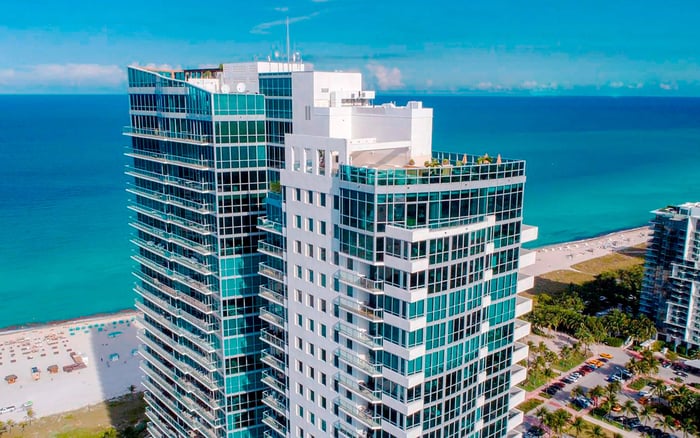
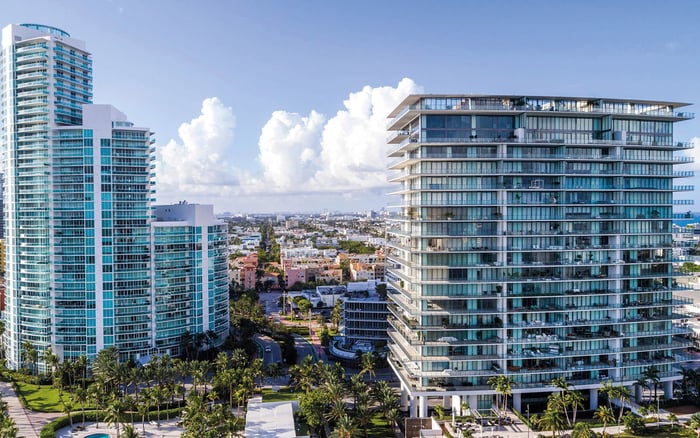
A discreet buyer's framework for distinguishing hotel privacy disclosures from residential protections at Setai Residences Miami Beach, with evidence requests covering guest profiles, operator security, vendors, and closing documents.
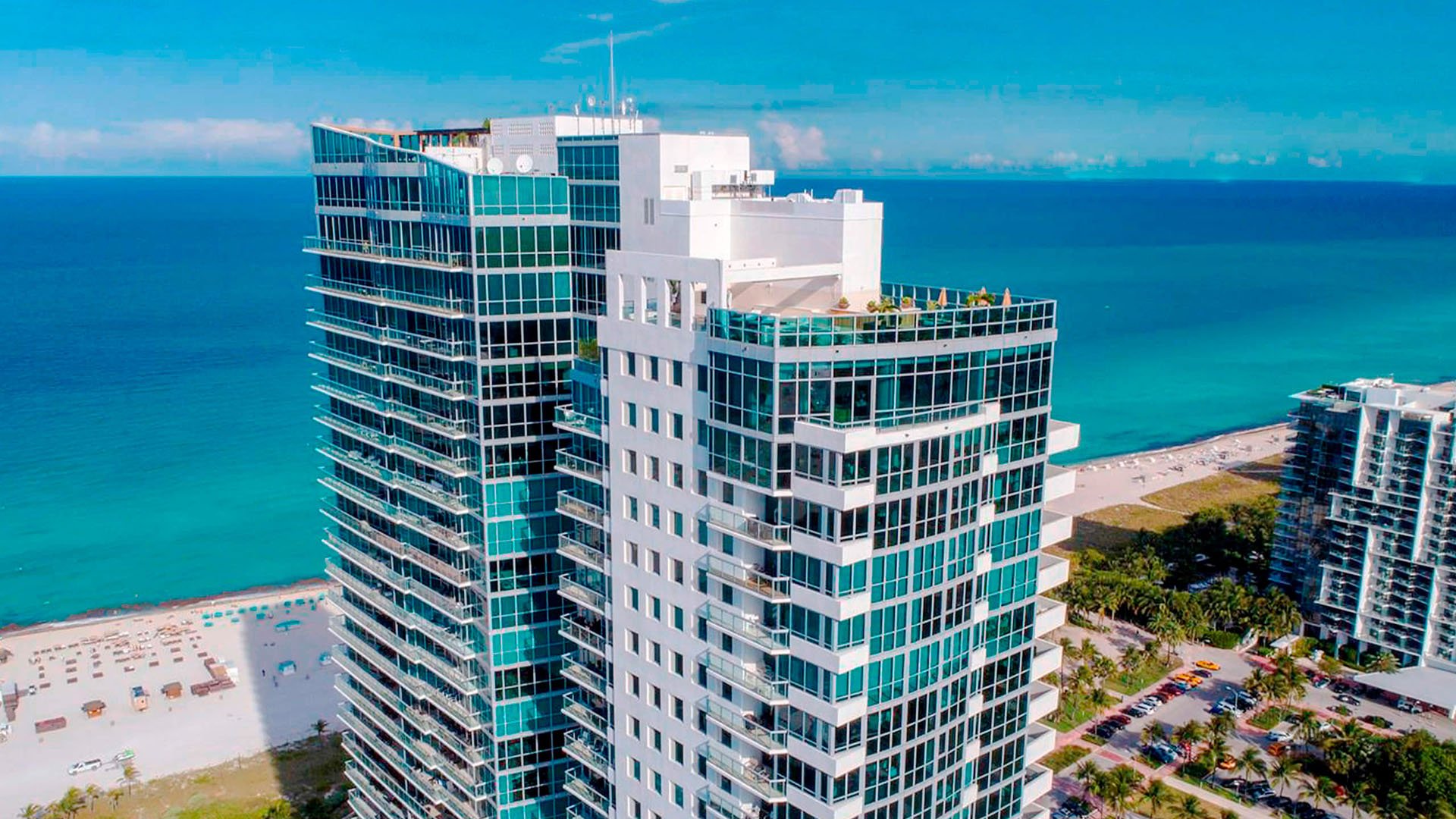
For a buyer considering Setai Residences Miami Beach, discretion deserves the same attention as the residence itself. The essential question is not simply whether a privacy policy exists, but whether the documents governing ownership explain who holds household information, who can see it, and when access must end.
The hotel's published address is 2001 Collins Avenue, Miami Beach, Florida 33139. It is not a substitute for a residence's legal property description. That distinction establishes a useful starting principle: hotel disclosures and residential obligations must be evaluated separately.
The checklist below sets out recommended evidence requests, not confirmed residential practices. Silence in a public policy is neither proof of a weakness nor assurance that a safeguard exists.
The hotel privacy policy covers personal information voluntarily supplied by users, including information used to plan and purchase accommodations. Its baseline commitment is that identifiable information generally will not be disclosed to third parties without consent, subject to the stated uses and disclosures.
The disclosed safeguards include encryption for information transmitted through an SSL session, data-encryption technologies, industry-standard firewalls, and a security program intended to protect stored information against unauthorized access. These are baseline statements, not independent evidence of how residential systems operate.
The policy provides no independent penetration-test results, security-certification reports, cyber-insurance limits, or documented breach history. Nor does it establish whether owner information is separated from hotel guest profiles. Buyers should distinguish each published assurance from the evidence needed to evaluate it.
Request a written responsibility map identifying the association, management company, hotel operator, residential-services operator, and material technology vendors. Ask which entity decides how each category of residential information is used and which contact handles privacy requests.
Then obtain the recorded declaration, bylaws, association rules, management agreement, and applicable service agreements. Request current notices for owners, guests, visitors, rentals, surveillance, and Wi-Fi, where relevant. Permitted uses under the hotel policy include those consistent with stated purposes or disclosures made when information is submitted, making activity-specific notices particularly important.
For buyers comparing Faena House Miami Beach with Setai, the same accountability questions provide a consistent diligence framework. Compare the evidence supplied for each property without assuming that either follows the other's operating model or privacy practices.
The published hotel policy does not clearly explain how residential guest lists, household records, access credentials, valet records, package records, or security-camera data are handled. Request a residential data inventory rather than relying on the broad phrase “personal information.”
Ask whether guest registration retains identification details, photographs, vehicle plates, contact information, preferences, or sensitive notes. For each category, establish its purpose, retention period, authorized users, and deletion procedure. Clarify whether profiles persist across visits and whether previous hotel stays can be connected to residential visits.
A useful test is to trace one invited guest's information from registration through departure. Ask what enters the system, which departments receive it, and when temporary access expires. The objective is a documented boundary between necessary service and information retained beyond its intended purpose.
Ask whether hotel staff can view residential guest histories or household records. Request evidence of role-based permissions, access logging, credential expiration, and prompt access revocation when staff, vendors, or household arrangements change.
Seek recent independent security-testing summaries and relevant vendor assurance documentation. Cover multi-factor authentication, encryption standards, incident response, recovery testing, and cyber-insurance terms and limits. An appropriately scoped summary may be more practical than unrestricted access to sensitive technical detail.
Evaluate scope as carefully as the assurance itself. Evidence covering one system should not be treated as evidence covering all residential services. Ask which entities, systems, and periods a document covers, whether material findings remain unresolved, and who is responsible for remediation. These are recommended diligence questions, not statements about Setai's current controls.
The hotel's stated 72-hour reporting commitment concerns notification of relevant persons and authorities following an apparent unlawful database breach involving identifiable personal data. Do not read that commitment as a universal legal deadline or assume it extends to every residential system.
Obtain written confirmation of whether the commitment covers association systems, residential operations, and vendors. Ask how an incident is escalated, who contacts owners, and how responsibilities are allocated when several entities are involved.
Online hotel reservations use a third-party booking engine, making the provider's privacy practices a separate consideration. For residential vendors, request contract provisions addressing permitted data use, subcontractors, confidentiality, security requirements, incident notification, audit rights, deletion, and post-termination access. Map vendor involvement rather than treating it as a single operator relationship.
A residence's privacy review should include the spaces through which owners and guests move. Request camera locations, video and access-log retention schedules, and rules governing who may view or export footage. Verify elevator privacy, entry logging, and whether owner names or unit numbers are exposed through directories or service workflows.
For a second-home purchase, ask how these arrangements work during extended absences and changes in authorized visitors. Convenience should not obscure how long a credential remains active or how visible an occupancy pattern becomes.
If Shore Club Private Collections Miami Beach is also under consideration, apply the same inspection questions without presuming equivalent systems. A consistent checklist supports comparison while leaving each property's actual protections to its documents and demonstrations.
For a resale purchase, have counsel review owner-directory provisions, record-disclosure obligations, and the residential notices that will govern the buyer's information. Consider written representations addressing known incidents, relevant disputes, applicable policies, and any safeguards specifically promised during diligence.
This discipline belongs in buyer's guides for branded residences: distinguish established disclosures, unanswered questions, and documented commitments. Maintain an evidence schedule identifying the responsible party, document received, scope covered, and open issue. Resolve material uncertainty before relying on a service promise as a privacy protection.
The right conclusion is not a blanket judgment about security. It is a clear understanding of what is documented, what applies to the residence, and what obligations remain with the buyer after closing.
Explore South Florida residences with a more deliberate approach to ownership at MILLION.
If branded residences are on your mind — as a home or as an allocation — we would be glad to share what we are seeing, privately.
Begin a quiet conversationNo. It is framed around hotel website users and reservations, rather than a detailed condominium-owner data policy.
It describes SSL-session encryption, data-encryption technologies, industry-standard firewalls, and a program intended to protect stored information. These statements do not establish independently tested residential security.
No. Buyers should request written confirmation of data separation and evidence of the permissions governing departmental access.
Request the declaration, bylaws, association rules, management and service agreements, and applicable owner, visitor, rental, surveillance, and Wi-Fi notices.
Ask what information is collected, why it is retained, who can view it, and when it is deleted. Clarify whether profiles persist across visits or connect to hotel stays.
The published policy does not establish that scope. Obtain written confirmation covering association systems, residential operations, and vendors, rather than treating it as a universal legal deadline.
No. The published policy does not provide independent penetration-test results, security-certification reports, cyber-insurance limits, or a documented breach history.
Online hotel reservations use a third-party booking engine, and vendor privacy practices warrant separate diligence. Ask residential vendors about permitted use, security obligations, notification, and deletion.
Review camera placement, footage permissions, retention schedules, elevator privacy, entry logging, and potential exposure of owner names or unit numbers.
Have counsel review applicable notices and owner-record disclosure provisions. Consider written representations concerning known incidents, disputes, and specifically promised safeguards.