888 Brickell’s proposed Grand Residence concept could suit an owner returning to Miami each month, pairing furnished interiors with flexible hotel participation. The deciding factors are contractual access, privacy and net ownership costs, not the conversion feature alone.

For an owner returning to Miami every month, a second residence must do more than remain attractive between visits. It should accommodate changing travel dates, feel personal on arrival and require little preparation. At 888 Brickell by Dolce & Gabbana, the proposed convertible Grand Residence introduces another possibility: occupying part of the home while unused portions participate in hotel operations, subject to the applicable terms.
The concept is potentially compelling, but not automatically suitable. A frequent visitor needs dependable access more than theoretical flexibility. The central question is whether the residence can adapt to the owner’s calendar without making ownership feel like a reservation exercise.
The strongest case rests on convenience first. Any financial benefit from hotel participation warrants a separate assessment, with the same care as the purchase itself.
Planned for 888 Brickell Avenue in Miami’s financial district, the development pairs JDS Development with Dolce&Gabbana. Plans call for a 90-story tower of approximately 1,049 feet, containing 259 private residences. The collection includes one- through four-bedroom homes and multilevel penthouses.
The conversion feature is more specific than that broad selection. The Grand Residence concept describes a three-bedroom residence that can divide into hotel rooms and a hotel suite when the owner is away. Separate entrances for owners and hotel guests support the possibility of using different portions simultaneously.
This is not a feature to assume across every residence. Before comparing prices or selecting a floor, establish which layouts qualify, how each configuration functions and what the governing documents permit. A floor plan can demonstrate physical separation; it cannot, by itself, establish an owner’s operating rights.
Monthly ownership differs from a single extended winter stay. Repeated arrivals mean repeated decisions about availability, housekeeping and which rooms remain private. Test the program against an ordinary month, a family visit and a last-minute change of plans.
For a solo visit, occupying one portion while releasing unused rooms could be useful. For a visit with children or guests, the entire residence may be essential. Both are plausible uses of the proposed concept, but neither should be treated as an unconditional entitlement without written confirmation.
Ask about reservation notice periods, minimum stays, blackout dates and owner-use limits. Establish whether hotel participation is optional and whether the owner can withdraw individual portions or the entire home from availability. Above all, clarify what happens when personal plans change after a hotel booking has been accepted.
A monthly visitor with predictable dates may find these arrangements manageable. An owner expecting unrestricted, spontaneous access should make that requirement central to negotiations.
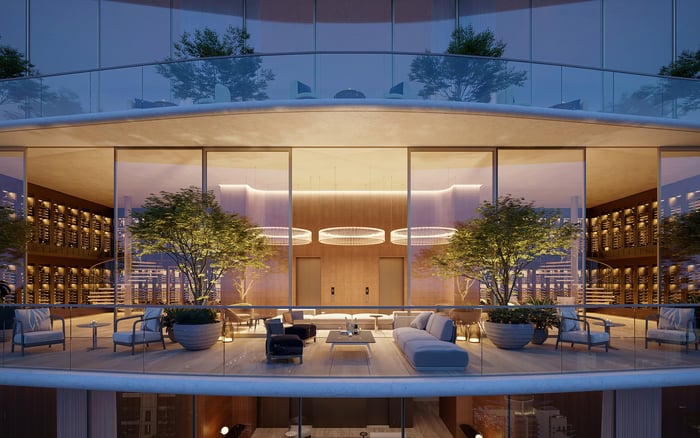
The residences are planned as fully finished and furnished in the Dolce&Gabbana Casa design language. For an owner dividing time among several homes, that proposition can reduce the furnishing and interior-design workload before regular use begins.
It also presents a personal choice. A coherent branded interior may appeal to someone seeking a complete environment rather than another design project. An owner with an extensive art collection or strong furniture preferences should establish what can be changed, particularly if the home participates in hotel operations.
Second-home ownership also depends on what remains behind between visits. Ask where personal belongings can be secured, how housekeeping access is controlled and how spaces are prepared after guest occupancy. These are practical questions, not confirmed features of the program. The answers will help determine whether each return feels like coming home.
The hospitality model includes plans for hotel services, curated events, dining and leisure amenities. Six food-and-beverage outlets are planned, encompassing a signature restaurant, bars, pool-club dining, private dining and a demonstration kitchen.
The planned wellness offering includes a recovery spa, thermal circuit, massage and facial treatments, alongside a gym, yoga and Pilates studios and an indoor padel court. Additional proposed amenities include pools, cabanas, a golf simulator, theater, event space and wine cellar.
For a monthly owner, the relevant measure is not the length of this list. It is how naturally the services fit a short stay. Confirm access arrangements, booking requirements and additional charges for the facilities you would actually use.
The proposed offering distinguishes resident-only facilities and private residential services from the broader hotel offering. Buyers should still review circulation, guest access and the boundaries between residential and hospitality spaces. Separate apartment entrances are useful, but they do not resolve every privacy question.
The available terms do not establish the economics of hotel participation. Potential revenue is not the same as money available to offset ownership expenses, and no guaranteed income should be assumed.
Request the revenue split, management charges, housekeeping costs and furnishing-replacement obligations. Add association expenses and all other recurring ownership costs. Ask how costs and receipts are allocated when only part of the residence enters hotel use.
Assess affordability without rental receipts, then evaluate any participation income separately. This keeps the lifestyle decision from depending on unverified occupancy or rate assumptions.
Pricing also requires a current, unit-specific schedule. Historical advertised starting prices have differed, and a smaller residence’s entry price is not a reliable guide to a convertible three-bedroom purchase. Final association budgets and executed rental-management terms require their own review.
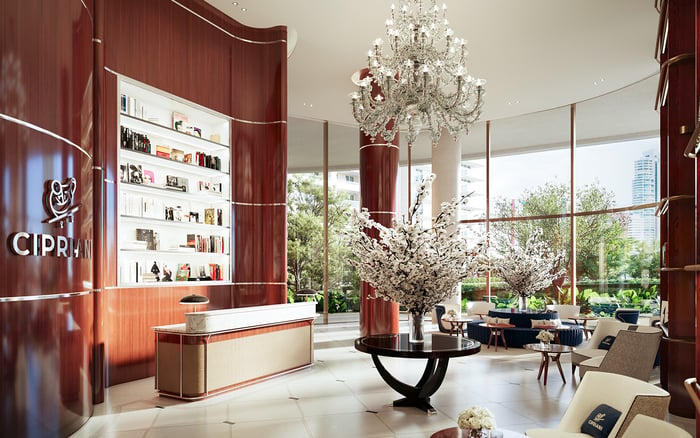
A buyer also considering Cipriani Residences Brickell should apply the same personal brief: expected nights each month, rooms required, furnishing preferences and tolerance for operational rules. The comparison should establish each property’s actual terms, rather than assume similar rights from a branded address.
Likewise, placing The Residences at 1428 Brickell on a shortlist can sharpen priorities. Does the buyer principally want a private home, or specifically value a residence that can change configuration around hotel use? That distinction matters more than an amenity count.
Furnished delivery is a proposed ownership benefit, not evidence of current occupancy. A dependable current completion commitment has not been established, so a buyer needing a Miami base immediately should not make this purchase the sole solution.
The verdict is conditional but clear. The Grand Residence could suit monthly visits when the owner values furnished interiors, hospitality services and flexible room use. It is less persuasive if the purchase depends on unrestricted spontaneous access or unverified rental returns. The right fit depends on an operating agreement that supports the owner’s calendar, privacy expectations and budget.
For a discreet assessment of how this ownership model fits your Miami plans, connect with MILLION.
If branded residences are on your mind — as a home or as an allocation — we would be glad to share what we are seeing, privately.
Begin a quiet conversationPotentially, if furnished interiors, hospitality services and flexible room use match the owner’s priorities. Suitability depends on written access rights, participation terms and ownership costs.
The described conversion concept applies specifically to a three-bedroom Grand Residence. It should not be assumed to apply to every layout.
The advertised concept provides separate entrances and supports simultaneous use of different portions. The applicable agreements must confirm the owner’s specific rights.
They are marketed as fully finished and furnished in the Dolce&Gabbana Casa design language. That describes proposed delivery, not current availability for occupancy.
Optional participation has not been established by the available terms. Buyers should obtain written confirmation before relying on the ability to opt in or out.
Confirm reservation notice periods, minimum stays, blackout dates and owner-use limits. Also establish what happens when travel plans change after hotel bookings are accepted.
No such outcome is established. Evaluate revenue splits, management charges, housekeeping, furnishing replacement and recurring ownership expenses before estimating any net benefit.
Plans include dining outlets, a recovery spa, fitness facilities, pools and other recreation. Buyers should confirm access rules, booking requirements and additional charges.
Marketing distinguishes resident-only facilities and private residential services from the broader hotel offering. Buyers should review the actual access and circulation arrangements.
A dependable current completion commitment is not established. Buyers requiring immediate accommodation should maintain a separate plan for their Miami visits.