For yacht owners considering Origin Bay Harbor Islands, the decisive questions extend beyond the residence. Route constraints, dock rights, storm protocols, insurance obligations, and the privacy of every arrival should be tested before a contract becomes binding.
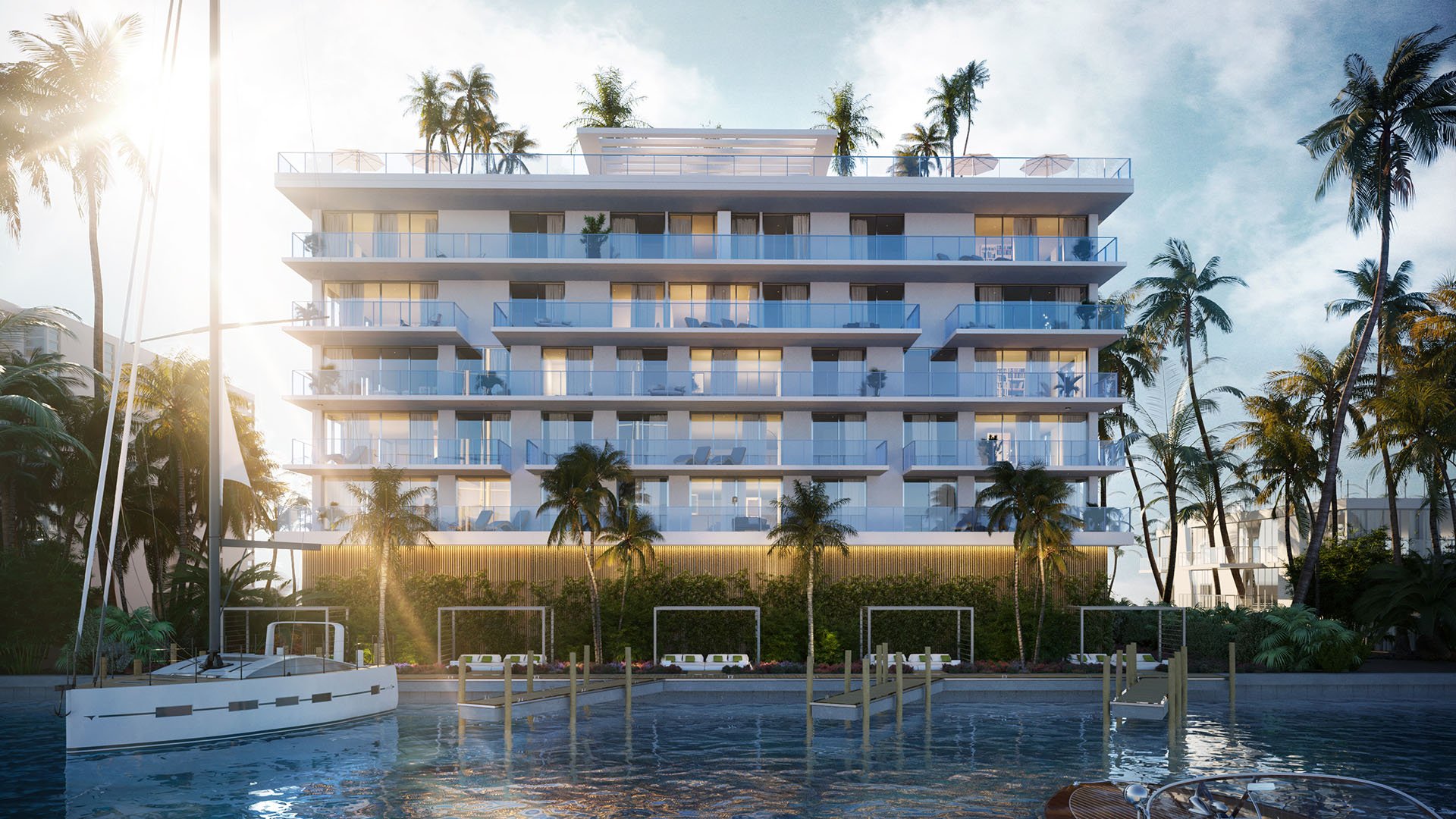
For a yacht owner, evaluating Origin Bay Harbor Islands requires two parallel reviews. The first concerns the residence: its design, governance, and long-term suitability. The second concerns the marine journey: whether the vessel can reach its intended berth, how that berth may be used, what happens before severe weather, and whether each arrival preserves the discretion expected of a private home.
That second review should be operational, not impressionistic. A favorable water view does not establish navigability, and proximity to a marina does not create docking rights. The objective is to turn the ownership vision into a verified sequence-from open water to berth, dock to lobby, and storm preparation to eventual return.
Begin with the yacht’s actual operating profile. Record its maximum air draft, water draft, beam, length overall, tender configuration, antenna positions, stabilizer considerations, and any dimensions that change when equipment is raised or lowered. The captain or marine surveyor should then assess the complete intended route, including alternatives.
Bridge clearance demands vessel-specific analysis. Buyers should request current information from the appropriate authorities and independently confirm how clearance may vary with water level, tide, weather, maintenance, and bridge operations. Fixed and movable structures present different planning challenges; a route that works under ideal conditions may prove impractical for routine use.
Do not stop at a chart review. Conduct a trial approach under representative conditions, with the captain assessing channel width, turning room, current, wake exposure, traffic, visibility, and safe margins. Include the return journey and a contingency for any bridge or channel that becomes temporarily unavailable.
“Dockage available” is not a complete legal description. Determine whether a boat slip is deeded, assigned, licensed, leased, shared, or subject to a waitlist. Confirm which document controls, whether the right transfers with the residence, and whether the association or another party can relocate, suspend, or revoke it.
The vessel must satisfy the governing limits, not merely fit the physical opening. Counsel should review restrictions involving length, beam, draft, height, liveaboard use, commercial activity, crew access, fueling, maintenance, tenders, personal watercraft, guest vessels, and overnight occupancy. Clarify who pays for utilities, dock repairs, seawall work, dredging, electrical upgrades, and damage caused by a vessel or contractor.
A waterfront address can still leave material questions about water depth, berth configuration, utility capacity, and boarding geometry. Obtain measurements and written confirmation rather than relying on photographs, sales language, or an informal understanding with the current owner.
A storm plan should define responsibility, authority, timing, and cost. Ask whether vessels must leave, when removal may be ordered, who can issue the instruction, and what happens if the owner or captain is unavailable. The plan should address lines, fenders, power disconnection, loose equipment, vehicle access, contractor admission, and communications before and after an event.
Review the residence and vessel insurance programs separately, then identify where they intersect. Counsel and insurance advisers should examine deductibles, exclusions, named-storm requirements, liability allocation, dock damage, debris removal, loss of use, and obligations imposed by the governing documents.
Post-event access matters as much as preparation. Establish how owners, captains, crew, surveyors, and repair teams would be admitted if elevators, gates, utilities, or roads were disrupted. For a second-home owner, written authorization and a local decision chain can be more valuable than an improvised response from afar.
Marine arrival privacy is a sequence, not a single amenity. Walk the route from berth to residence, noting exposure to neighboring balconies, public paths, service areas, cameras, staff stations, vehicle traffic, and shared elevators. Repeat the exercise after dark and during a busier period.
Ask how captains, crew, family offices, security personnel, guests, and vendors are credentialed. Review package handling, luggage movement, provisioning, waste removal, tender pickup, and the separation between resident and service circulation. A boutique setting may feel discreet, but privacy ultimately depends on operating procedures and physical sightlines.
Apply the same test to landside arrival. Compare garage entry, passenger transfer, elevator access, visitor registration, and the route used when weather makes the dock impractical.
A disciplined buyer should apply the same worksheet to every candidate. Nearby options such as Onda Bay Harbor, La Maré Bay Harbor Islands, and Bay Harbor Towers can be evaluated across identical categories: route feasibility, legal dock rights, vessel limits, storm governance, insurance allocation, crew protocols, and private circulation.
This approach avoids comparing architecture at one property with boating convenience at another. It also reveals which uncertainties can be resolved through documents, which require professional inspection, and which remain matters of daily tolerance.
Before signing, assemble a concise marine-use memorandum with input from the captain, maritime counsel, condominium counsel, insurer, surveyor, and security adviser. It should identify verified dimensions, controlling documents, open questions, responsible parties, estimated recurring obligations, and conditions that must be satisfied before closing.
The final question is not whether boating appears convenient. It is whether the complete ownership system is legally durable, physically workable, insurable, resilient, and suitably private.
Does a water view confirm yacht access? No. Navigability and berth rights require separate physical, operational, and legal verification.
Who should confirm bridge clearance? The captain or marine surveyor should assess the vessel and route using current official information.
Is a dock assignment equivalent to ownership? Not necessarily. Determine whether the right is deeded, leased, licensed, revocable, or transferable.
Should the route be tested before contracting? Yes. A practical trial can reveal concerns involving turns, current, traffic, visibility, and clearance.
What dock rules deserve special attention? Review vessel limits, crew access, utilities, maintenance, fueling, guest use, and liability.
Can the association require vessel removal before a storm? Governing documents and emergency procedures should establish that authority, its timing, and the owner’s obligations.
Why review both vessel and residence insurance? The policies may allocate dock damage, liability, deductibles, and named-storm duties differently.
How can an absentee owner prepare for storms? Establish written authority, local contacts, contractor access, and a clear decision chain in advance.
What defines a private marine arrival? Sightlines, credentialing, staff procedures, service circulation, cameras, and elevator access all matter.
What should be resolved before closing? Resolve route feasibility, dock rights, vessel fit, storm duties, insurance, costs, and access protocols.
For a discreet conversation and a curated building-by-building shortlist, connect with MILLION.
If branded residences are on your mind — as a home or as an allocation — we would be glad to share what we are seeing, privately.
Begin a quiet conversation