A discreet buyer’s framework for testing whether a Coconut Grove residence truly supports yacht ownership, from navigational constraints and dock arrangements to storm readiness, crew access, and private arrivals.
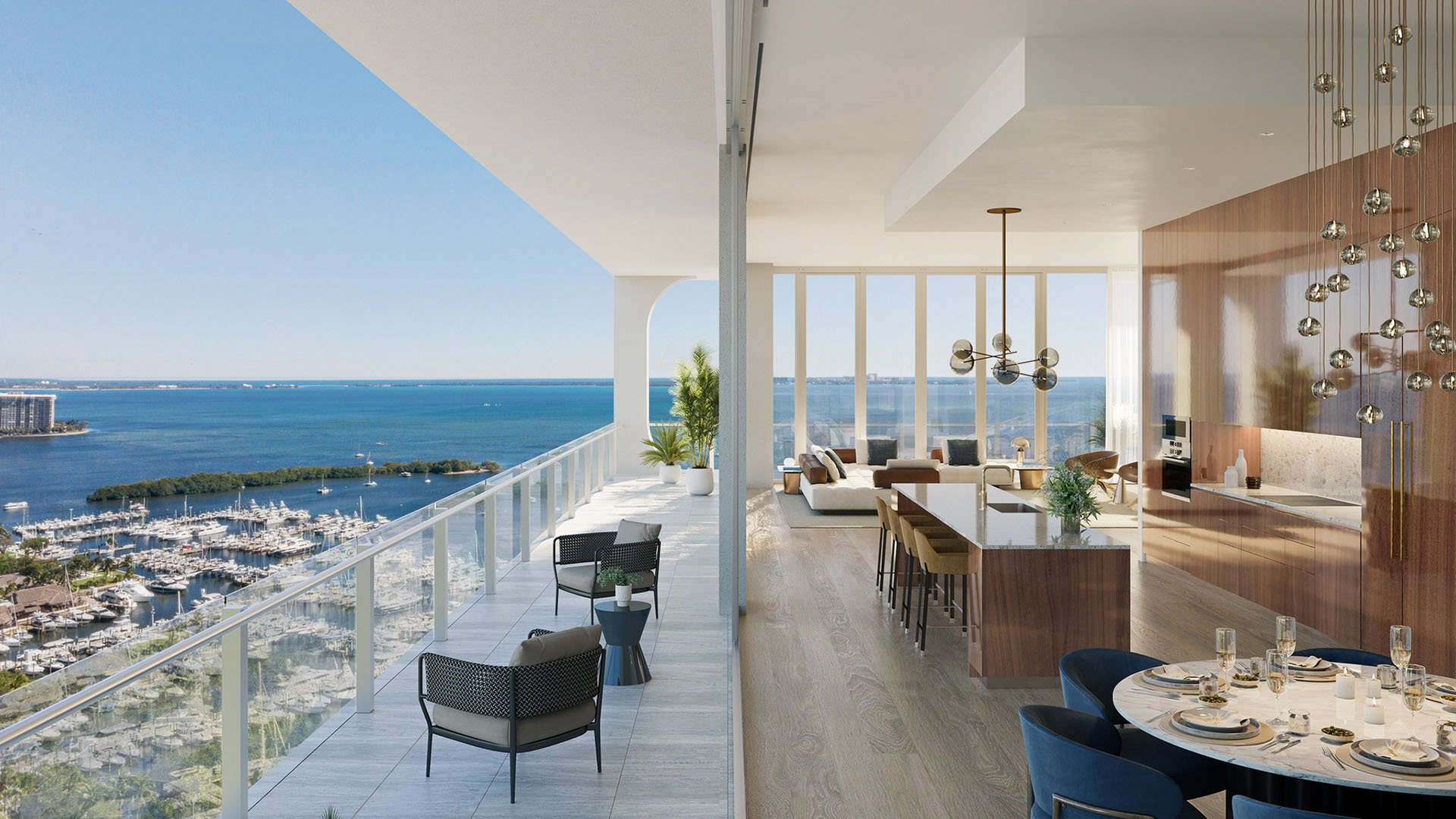
For a yacht owner, a purchase near Mr. C Tigertail Coconut Grove should be evaluated as both a residential decision and an operating plan. The terrace view may be compelling, but the practical questions begin at the waterline: Can the vessel reach the preferred dockage without an air-draft conflict? Is the berth protected, contractually secure, and workable for the captain? What happens when a named storm approaches? How exposed is the owner’s arrival routine?
This is the distinction between living near the bay and maintaining a genuinely yacht-compatible South Florida base. A polished lobby cannot compensate for an unsuitable route, uncertain berth rights, or an evacuation plan built on assumptions. Boat-slip access, marina logistics, and waterfront proximity should therefore be examined independently, not treated as interchangeable benefits.
Bridge clearance is vessel-specific. Begin with the yacht’s verified air draft in its relevant configuration, including antennas, radar equipment, towers, and other elevated components. The captain or a qualified marine professional should then map every viable route between the dockage and open water, noting fixed bridges, movable bridges, channel constraints, and potential tide sensitivity.
A stated bridge clearance is not a universal guarantee. Water level, loading, equipment position, and the precise route can change the operational answer. Buyers should request a route analysis for the primary berth and at least one realistic alternative. The review should also address controlling depth, beam restrictions, turning room, wake exposure, and any added complexity associated with nighttime navigation.
The most useful test is practical: define the vessel as operated, identify the berth under consideration, and verify the complete journey rather than relying on a neighborhood-level impression.
Proximity to Biscayne Bay does not establish berth availability. Determine whether dockage is deeded, licensed, leased, assigned, reserved through a third party, or offered only on a best-efforts basis. Counsel should review transferability, renewal provisions, vessel-size limits, insurance obligations, guest policies, liveaboard restrictions, and the circumstances under which access may be suspended.
Operational fit matters as much as legal form. A captain may need details on shore power, fueling procedures, pump-out arrangements, potable water, security, parking, provisioning access, service-vendor rules, and tender handling. The berth should also be assessed for exposure, fendering, line arrangement, tidal movement, and maneuvering space.
For buyers comparing Coconut Grove addresses, Park Grove Coconut Grove and Four Seasons Residences Coconut Grove can be considered within the same disciplined framework. The point is not to presume identical marine access, but to test each residential option against the owner’s vessel and operating habits.
A hurricane plan must address the residence and yacht separately, then reconcile their timelines. Ask where the vessel is expected to go, who has authority to move it, how early relocation decisions will be made, and what happens if the preferred refuge is unavailable. The plan should identify backup captains, towing or haul-out contingencies where applicable, insurance notice requirements, and the documents the crew will need before conditions deteriorate.
On land, review building procedures for shutters or glazing protocols, balcony and terrace preparation, elevator interruptions, garage access, emergency-power limitations, and post-storm reentry. Owners should also determine where vehicles, keys, yacht papers, passports, medications, and communications equipment will be kept.
A credible plan is written, assigned, and rehearsed. It should not depend on the owner being in Miami or a single captain remaining available. Seasonal residents considering Vita at Grove Isle should apply the same test: Can the household and marine plans function remotely, with clear authority and redundant contacts?
Arrival privacy is not a single amenity. It is a chain extending from the marina gate or tender landing through vehicle transfer, service access, lobby circulation, elevator use, and the residence door. Buyers should walk each sequence at different times, considering what is visible from neighboring buildings, public sidewalks, restaurants, parking areas, and common spaces.
Ask how guests are announced, where drivers wait, whether crew can deliver luggage or provisions without using the principal entrance, and how vendors are screened. Examine camera placement, access logs, elevator permissions, package handling, and the separation of resident, staff, and service circulation. Privacy should remain workable when the owner arrives with family, guests, crew, pets, or substantial luggage.
Residences such as Opus Coconut Grove and The Lincoln Coconut Grove may form part of a broader Grove comparison, but each candidate requires an on-site arrival audit. Renderings and floor plans cannot fully reveal sightlines, waiting patterns, or the rhythm of a busy evening.
The strongest offer strategy makes marine feasibility a pre-contract priority. Consolidate the yacht specifications, route review, proposed dock agreement, insurance requirements, storm responsibilities, crew-access plan, and privacy audit in a single file. Coordinate the captain, maritime counsel, residential counsel, insurance advisers, and property representative so that no one evaluates an isolated piece.
This is the practical standard behind MILLION Buyer's Guides: Elegance should be supported by operational certainty. For a yacht-owning household, the best residence is not merely close to the water. It is the one whose routes, dockage, storm protocols, and arrival choreography withstand detailed scrutiny.
Does buying near the bay guarantee convenient yacht access? No. Route constraints, berth availability, vessel dimensions, and operating rules must be verified separately.
What vessel measurement matters most for bridge review? Verified air draft is essential, but draft, beam, configuration, and loading also belong in the route analysis.
Should bridge clearance be checked at a particular tide? The captain or marine professional should evaluate relevant water-level conditions rather than rely on a single static figure.
Is a nearby marina equivalent to a secured berth? No. Availability, legal rights, renewal terms, vessel limits, and services require independent confirmation.
Who should review a dockage agreement? Appropriate legal counsel should review its rights, restrictions, transferability, insurance duties, and termination provisions.
What belongs in the yacht’s storm plan? Include decision authority, relocation options, backup personnel, insurance steps, documents, and contingency communications.
Can the condominium’s hurricane plan cover the vessel? Not necessarily. Residential procedures and vessel protection are distinct plans that must be coordinated.
How can a buyer test arrival privacy? Walk the complete route from dock or vehicle to residence, examining sightlines, access controls, and staff circulation.
Should crew access be addressed before closing? Yes. Confirm identification, parking, deliveries, elevator use, vendor access, and after-hours procedures.
What is the best first step for a yacht-owning buyer? Provide complete vessel specifications and intended operating patterns before narrowing the residential shortlist.
When you're ready to tour or underwrite the options, connect with MILLION.
If branded residences are on your mind — as a home or as an allocation — we would be glad to share what we are seeing, privately.
Begin a quiet conversation