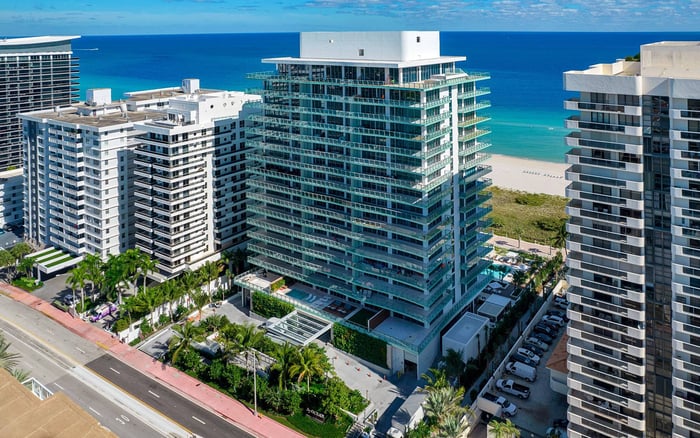
Winter ownership at 57 Ocean Miami Beach should be evaluated through direct due diligence on service, dining arrangements, guest registration, amenity access, valet operations, and rental policies.

A buyer considering 57 Ocean Miami Beach for winter use should look beyond the residence itself and examine how the building operates when multiple owners, guests, tenants, vendors, and vehicles may require attention. The goal is not to assume that demand creates a problem, but to understand the procedures designed to manage it.
Request current information directly from the association, manager, and appropriate real estate professionals. Verbal descriptions can help frame the discussion, but governing documents, written rules, budgets, notices, and applicable agreements should guide the final evaluation.
An in-person visit can reveal how the ownership experience unfolds from arrival to residence entry. If access permits, visit at more than one time and observe valet coordination, lobby activity, elevator access, package handling, and the route used by guests or service providers.
Ask who handles resident requests, how urgent matters are escalated, and whether procedures vary by time, date, or type of visitor. Buyers who expect household staff, drivers, private chefs, maintenance providers, or frequent deliveries should confirm registration requirements and permitted access in advance.
Valet procedures deserve specific review. Ask about resident and guest vehicles, retrieval requests, additional vehicles, rental cars, waiting areas, and any temporary procedures that may affect arrivals. Written answers are especially useful when transportation logistics are central to the household’s routine.
For comparison, buyers may review Setai Residences Miami Beach and The Ritz-Carlton Residences® Miami Beach. Each building must be assessed under its own current documents and operating arrangements.
Dining should be treated as a due-diligence topic. Ask what food-and-beverage options are currently available, who operates them, when they operate, and which residents, tenants, or guests may use them.
Buyers should also clarify reservations, charging procedures, guest limits, private events, closures, cancellations, and any priority system. If an arrangement is seasonal, optional, or managed by a third party, request the current written terms and determine how changes are communicated.
Owners who expect to entertain should review the complete sequence for an evening at home: guest registration, vehicle arrival, vendor access, deliveries, dining coordination, amenity use, and departure. This practical exercise can identify questions that may not emerge from a standard property tour.
Access rights should not be inferred from marketing language or another household’s past experience. Ask how the building distinguishes among owners, household members, accompanied guests, unaccompanied guests, overnight visitors, tenants, vendors, and other service providers.
Confirm identification requirements, advance-notice procedures, access credentials, parking rules, and permissions for shared amenities. Buyers should also ask whether limits or procedures can change and how residents receive notice of those changes.
Rental plans require a separate document review. Confirm lease requirements, application procedures, approvals, fees, move-in arrangements, access rights, and any restrictions affecting tenants or their guests. An attorney or other qualified adviser can help interpret the applicable documents.
The Perigon Miami Beach offers another Miami Beach project for a broader residential comparison. The purpose of comparison is to refine the buyer’s questions, not to assume that separate properties share policies or services.
Begin with the household’s intended use. A buyer planning private stays may prioritize controlled access and predictable arrivals, while a household expecting frequent visitors may focus on guest credentials, parking, vendors, and shared-space permissions.
Request the current declaration, rules, budget, rental materials, relevant notices, and written descriptions of available services. Ask who has authority to revise procedures and whether any pending decisions could affect the expected ownership experience.
Before closing, convert general assurances into specific questions. Which services are included? Which require separate payment or reservation? Who may use each shared space? What steps apply to guests, tenants, deliveries, and vendors? The answers should be evaluated against the buyer’s actual winter routine rather than an abstract idea of luxury service.
Why should a buyer evaluate winter operations separately? Winter may be the buyer’s primary period of use, making service procedures and access rules especially relevant to the purchase decision.
What should be observed during an in-person visit? Review the arrival sequence, valet coordination, lobby access, elevators, shared spaces, and the handling of guests or deliveries where observation is permitted.
Which service questions should be asked in writing? Ask about staffing contacts, request escalation, valet procedures, vendor access, package handling, and any procedures that can vary by date or visitor type.
Should dining access be assumed from promotional materials? No. Confirm the current operator, hours, eligibility, reservations, charges, guest limits, and closure policies directly.
How should a buyer review guest access? Request the current rules for registration, identification, credentials, parking, overnight visits, and shared-amenity use.
Do tenants necessarily receive the same privileges as owners? Not necessarily. Tenant and guest rights should be verified in the current governing and rental documents.
What rental topics require confirmation? Review lease requirements, applications, approvals, fees, move-in procedures, access rights, and restrictions affecting tenants or their guests.
Why compare other Miami Beach residences? Comparisons can help buyers develop better diligence questions, but each property must be assessed under its own current documents and operations.
Which documents should a buyer request? Request the declaration, rules, budget, rental materials, relevant notices, and written information about services and access procedures.
What is the final step before making a decision? Match the verified procedures and privileges to the household’s expected use, hosting plans, transportation needs, and desired level of privacy.
To compare the best-fit options with clarity, connect with MILLION.
If branded residences are on your mind — as a home or as an allocation — we would be glad to share what we are seeing, privately.
Begin a quiet conversation