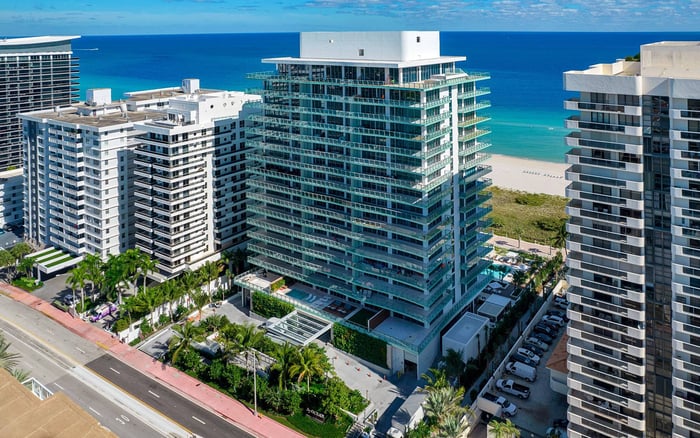
Guest management can shape the ownership experience as much as amenities or design. Buyers comparing 57 Ocean Miami Beach and Setai Residences Miami Beach should verify how each building handles visitors, access, staffing, rentals and arrivals before making assumptions about service.

For 2026 buyers, a Miami Beach residence is not defined solely by architecture, views and amenities. The ownership experience also depends on how a building handles family members, personal guests, service providers and, where permitted, tenants.
A comparison of 57 Ocean Miami Beach and Setai Residences Miami Beach provides a useful framework for evaluating guest management. Rather than assuming that either property follows a particular operating model, buyers should confirm the current procedures at each building and for the specific residence under consideration.
The right approach depends on the owner's priorities. Some buyers may favor a controlled residential atmosphere, while others may place greater value on hospitality-style arrival support. Neither preference eliminates the need to review the governing documents and written operating rules.
A luxury condominium can offer attentive service without treating every arrival like a hotel check-in. Guest access may instead depend on advance authorization, security procedures, association rules and available staffing. This structure may appeal to owners who prioritize privacy and predictability.
A hospitality-led environment may provide a more familiar reception experience, but buyers should not infer specific services from branding alone. They should establish who receives guests, how credentials are issued, whether luggage assistance is available and how after-hours requests are handled.
Service-focused buyers can broaden the comparison by considering Shore Club Private Collections Miami Beach. The objective is not to rank properties by branding, but to identify which documented operating structure best matches the intended use of the residence.
Before contracting, request the current condominium declaration, association rules, guest-registration procedures, rental restrictions, staffing information and applicable fee schedules. Confirm whether personal visitors, service providers and paying occupants follow different processes.
Access control deserves particular attention. Ask who may authorize a visitor, whether advance registration is required, what identification must be presented and whether an owner must be present. Buyers expecting late arrivals should also determine what assistance, if any, is available outside regular service hours.
Written answers are especially important when rental use is part of the ownership plan. A staffed lobby or concierge desk does not by itself establish rental eligibility, minimum-stay rules or the rights of an unaccompanied occupant.
A well-defined arrival process can support privacy, security and consistent service. Buyers should understand the full sequence, including authorization, identity confirmation, credential issuance, luggage handling, parking instructions and departure.
The most useful questions focus on exceptions. What happens if a guest arrives before expected, the owner remains abroad or a service appointment extends beyond normal hours? A clear response can indicate whether the building relies on a documented process or informal staff discretion.
Technology may simplify registration or communication, but it should not obscure accountability. Buyers should know which team handles each step and how an issue is escalated when the usual contact is unavailable.
Rental assumptions should be tested against all applicable documents and requirements. Buyers should obtain written confirmation of permitted lease terms, registration procedures, building charges and any approval process before including rental income in a purchase analysis.
The comparison between 57 Ocean Miami Beach and Setai Residences Miami Beach is therefore most useful as a due-diligence exercise. Their names or market positioning cannot replace a review of the current rules governing a particular unit.
A buyer should also distinguish between a personal guest and a paying occupant. Buildings may apply different documentation, access or administrative requirements, and those distinctions should be understood before anyone is promised access.
Luxury buyers increasingly evaluate a residence through everyday operating details. Responsive communication, clear authorization procedures and a composed arrival experience may be more consequential than an extensive amenity list.
Those reviewing The Ritz-Carlton Residences® South Beach or other branded options should separate the broader brand impression from the precise services documented for owners and guests. The relevant questions concern what is included, when it is available and which rules govern access.
The strongest indicators are practical: current access procedures, defined staff responsibilities, written rental rules and a formal process for guest arrivals. Amenities show what a property contains; guest management helps explain how ownership may function.
A useful review begins with realistic scenarios. Ask the building to explain how it would handle a late family arrival, an absent owner, a weekend service appointment and, if applicable, a permitted tenant.
Compare each explanation with the governing documents and fee schedules. This can clarify where advance notice, additional charges or association approval may apply while reducing reliance on informal assurances.
For a 2026 buyer, sophisticated guest management is not about encouraging traffic through a residence. It is about enabling authorized arrivals while protecting the privacy, security and calm expected of luxury ownership.
Why should buyers examine guest management? It can affect privacy, access, convenience and the day-to-day ownership experience.
Does branding establish the services available to residents? No. Buyers should verify the services, hours and conditions documented for owners and their guests.
Can an owner assume that personal guests may arrive unaccompanied? No. Current access rules should confirm whether advance authorization or the owner's presence is required.
Do concierge services establish that rentals are permitted? No. Service availability and rental eligibility are separate matters that require independent verification.
Which documents should a buyer request? Request the current declaration, association rules, guest procedures, rental restrictions and applicable fee schedules.
What should buyers ask about late arrivals? Confirm whether assistance is available after regular hours and who can authorize access.
Why are arrival procedures important? They show how the building coordinates authorization, credentials, luggage and exceptions.
Should personal guests and paying occupants be treated as equivalent? Buyers should not assume so; the building may apply different documentation, fees or access procedures.
How can buyers compare service models effectively? Test each property against realistic ownership scenarios and verify the responses in writing.
What is the most reliable basis for a decision? Current governing documents, written procedures and confirmed fee schedules provide the strongest foundation.
For a discreet conversation and a curated building-by-building shortlist, connect with MILLION.
If branded residences are on your mind — as a home or as an allocation — we would be glad to share what we are seeing, privately.
Begin a quiet conversation