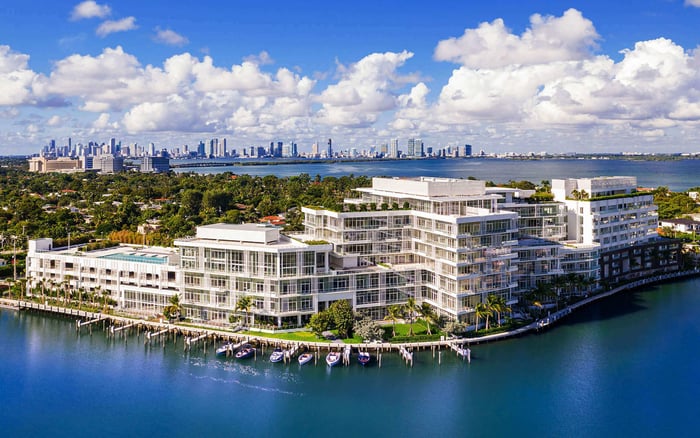
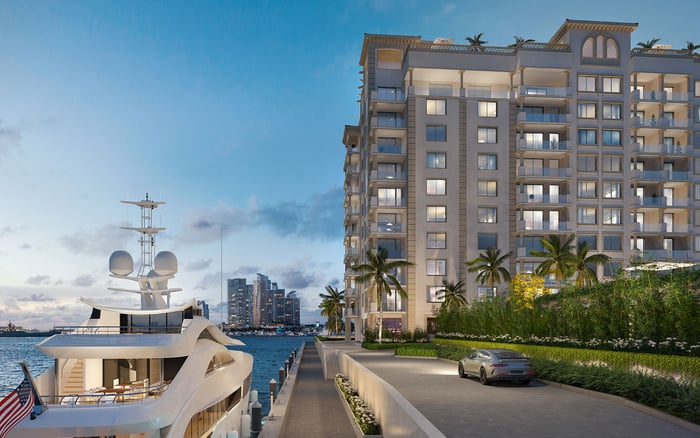
For seasonal Miami Beach owners, boating utility depends on enforceable slip rights, vessel dimensions, route constraints and verified dock conditions, not waterfront language alone.
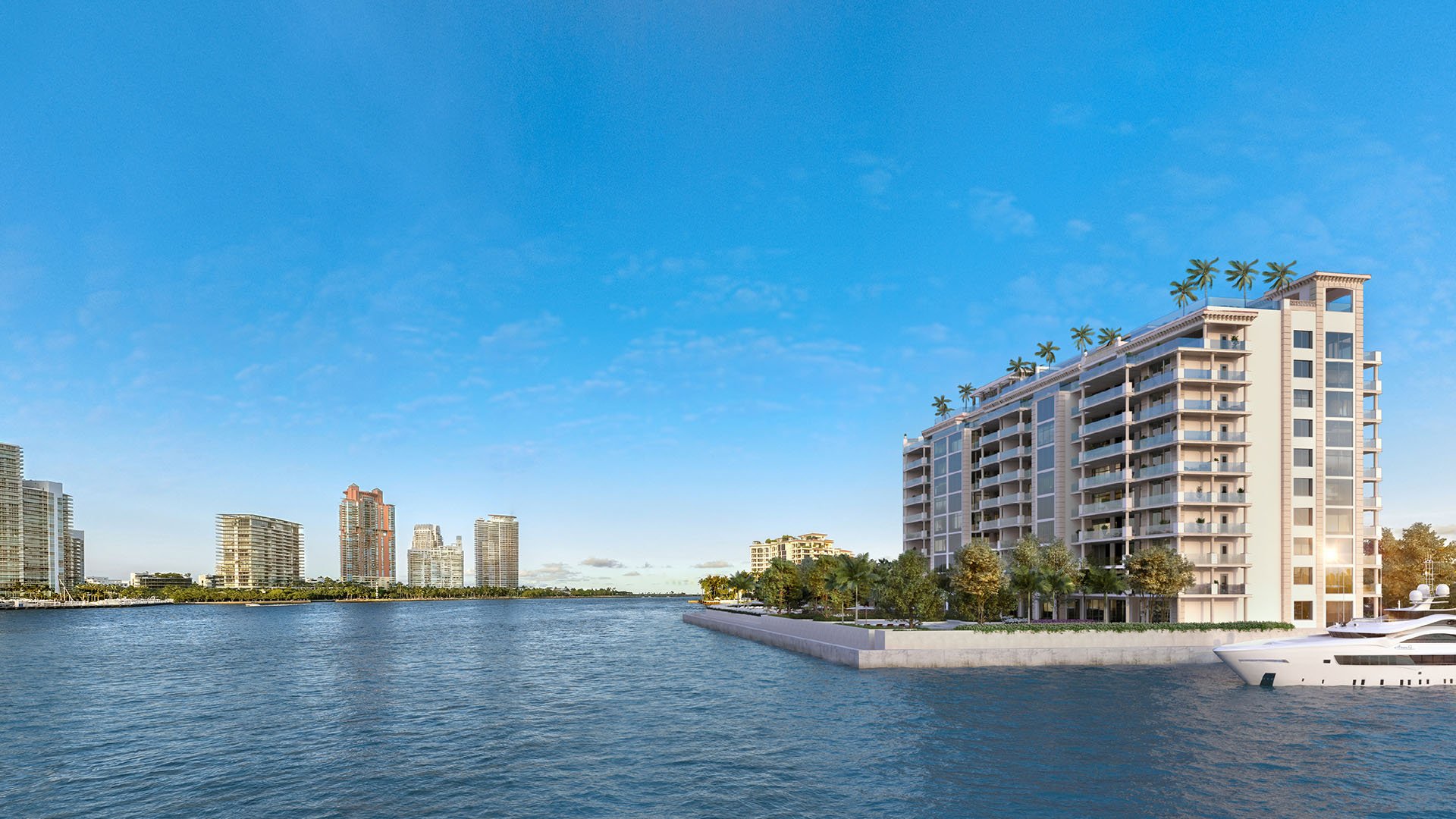
For a seasonal owner, the most consequential luxury may be the ability to step aboard and reach open water without logistical friction. A private dining room or elaborate spa can enrich a stay, but neither remedies an unsuitable berth, an unavailable slip, insufficient depth or a fixed bridge lower than the vessel’s air draft.
That distinction is particularly important in Miami Beach, where waterfront positioning and practical boating access are not interchangeable. Residences such as Apogee South Beach may enter a buyer’s geographic comparison, but every purchase still demands a vessel-specific review independent of the residential amenity program. For a second-home buyer, that review should precede the point at which emotional preference narrows the search.
Marina access is an elastic phrase. It may describe a deeded slip, leased slip, membership, assigned space, rental arrangement, wait-list position or simple proximity to a third-party marina. Each structure affords a different degree of control.
The first legal question is whether the berth right conveys with the residence. Buyers should also establish whether it may be transferred separately, whether a new lease is required and whether association approval applies. A boat-slip opportunity dependent on a revocable arrangement is materially different from a right attached to the property.
This distinction should shape comparisons involving The Ritz-Carlton Residences® Miami Beach or any other residence considered for its relationship to the water. Proximity can be valuable, but it should never be represented as guaranteed dockage.
A berth is useful only if the vessel can occupy it and complete the journey beyond it. A first-pass screen compares the boat’s draft with berth and channel depth, then measures its air draft against the lowest bridge along the entire route.
Air draft must account for antennas, radar, outriggers, towers and other installed equipment that determines maximum height. Bridge-clearance figures also refer to a specified water-level datum, so usable clearance changes with tides and conditions.
The route analysis should extend beyond a single bridge. Fixed and movable bridges, narrow passages, channel depth, idle zones and turning constraints can all affect the experience. The Julia Tuttle Causeway has a fixed vertical clearance of approximately 56 feet, below the 65-foot standard commonly associated with much of the Atlantic Intracoastal Waterway. A vessel requiring more than 56 feet may need an outside-ocean route instead. Haulover Inlet has a fixed bridge clearance of roughly 30 to 32 feet, with nearby bascule bridges introducing further closed-clearance considerations.
Location should be evaluated from dock to ocean, not merely from lobby to restaurant. Miami Beach Marina, at 300 Alton Road on the southern tip of South Beach, offers a route to the Atlantic without fixed bridges between the marina and ocean. That can be highly relevant, yet berth availability and terms remain separate questions.
A buyer considering Continuum on South Beach can therefore examine the surrounding marine geography while independently confirming how the vessel would actually be accommodated. Farther north, a comparison involving Onda Bay Harbor should likewise be based on the boat’s dimensions and full intended route, not a generalized assumption about bayfront convenience.
Seasonal use introduces timing risk. At Miami Beach Marina, transient dockage is listed at $2.20 per foot, while seasonal dockage carries a 120-day minimum; current pricing and availability should be confirmed directly. Public marina rates and terms vary by facility.
Alternative facilities also distinguish short-term access from ownership. Dinner Key Marina directs transient customers to call rather than use its long-term wait-list process. Miamarina at Bayside similarly accepts transient inquiries by phone. Neither proximity nor the ability to inquire creates a guaranteed berth.
For seasonal owners, the practical file should address arrival dates, minimum terms, vessel limits, approval procedures and a contingency plan if preferred dockage is unavailable.
The physical review should include dock, seawall and boatlift permit histories, a current survey, and recent depth soundings referenced to mean lower low water. Buyers should also confirm berth dimensions, turning room and the route under realistic tidal conditions.
Private rights do not eliminate regulatory obligations. Miami Beach has municipal marina rules, while condominium documents and association procedures may impose additional restrictions. Legal counsel, marine professionals, the association, seller, marina and relevant permitting authorities should confirm the details applicable to the specific residence and vessel.
The essential principle is simple: the amenity brochure describes the lifestyle, while marine diligence determines whether that lifestyle can be used as intended.
Does marina access always include a private slip? No. It can mean anything from a deeded berth to proximity, membership, rental access or a wait-list position.
What is the first document question a buyer should ask? Confirm whether slip rights convey with the residence and whether transfer, leasing or association approval conditions apply.
What is vessel air draft? It is the boat’s maximum height, including antennas, radar, outriggers, towers and other installed equipment.
Why can published bridge clearance differ from usable clearance? Clearance is tied to a water-level datum, while actual space beneath the bridge varies with tides and conditions.
Why is the Julia Tuttle Causeway important? Its fixed clearance of approximately 56 feet can exclude taller vessels from that section of the ICW.
Does a waterfront residence guarantee easy ocean access? No. The complete route may include bridges, shallow channels, narrow passages, idle zones and turning constraints.
What depth information should a buyer request? Request recent depth soundings referenced to mean lower low water, along with berth and channel information.
Which permit records matter for private dockage? Review dock, seawall and boatlift permit histories, together with a current property survey.
Can a seasonal owner rely on transient marina availability? No. Availability, rates, minimum stays and vessel requirements should be confirmed directly for the intended dates.
Do private slip rights override local marina rules? No. Municipal requirements, association documents, permits and other applicable restrictions still require review.
For a confidential assessment and a building-by-building shortlist, connect with MILLION.
If branded residences are on your mind — as a home or as an allocation — we would be glad to share what we are seeing, privately.
Begin a quiet conversation