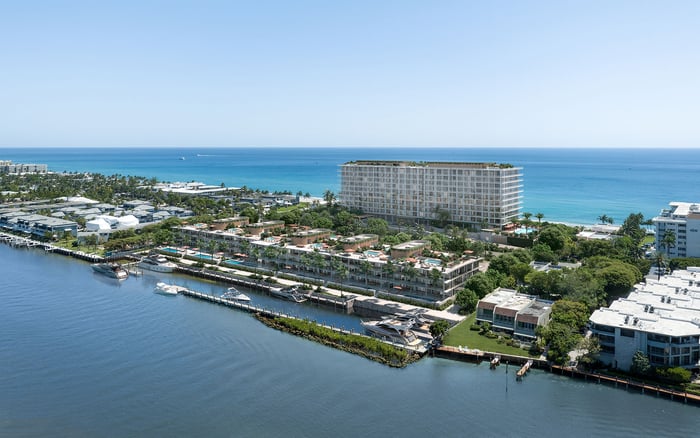
For serious Hillsboro Beach buyers, insurance structure belongs beside design, view, and condition in the first round of diligence. The decisive questions concern coverage, flood classification, deductibles, exclusions, and the documents needed to compare ownership scenarios with clarity.

A polished kitchen, finely detailed millwork, and a serene material palette can define the emotional appeal of a Hillsboro Beach residence. Yet serious buyers should give equal attention to a less visible layer of the acquisition: how the property may be insured, how flood classification shapes the analysis, and what a deductible could require after a covered event.
This is not an argument against exceptional design. It is a matter of sequencing. Finishes can often be evaluated, priced, and changed. Insurance terms and property-specific risk considerations can influence annual carrying costs, financing conversations, liquidity planning, and a buyer’s comfort with ownership. For an oceanfront or waterfront acquisition, those questions should surface before aesthetic preference becomes commitment.
Wind coverage, flood classification, and deductibles should not be treated as a single generic line item. Buyers can ask their advisers to separate them into distinct workstreams, then identify where the answers intersect.
First, what coverage is available for the specific residence and ownership structure? Second, how is the property classified for flood-related purposes, and which documents help interpret that classification? Third, how would each applicable deductible be calculated, and how much capital would the owner need to absorb?
The answers may differ between a condominium residence and an estate. They may also depend on the building’s documents, the unit’s improvements, the buyer’s financing, and the terms offered for the individual policy. The objective is not to make assumptions based on a street, view, or price point, but to evaluate the asset under consideration.
A disciplined review begins with a document request. For a condominium, buyers can ask for the association’s current insurance materials, coverage summaries, deductibles, and any information their insurance adviser considers relevant. The buyer should also clarify which portions of the residence are expected to fall under an association policy and which require individual coverage.
For a single-family home, the file may call for a different set of property records and inspections. In either case, the buyer should determine what is current, what is pending, and what requires independent verification. Verbal assurance is no substitute for policy language, a written indication, or professional interpretation.
This approach applies whether the conversation begins at Rosewood Residences Hillsboro Beach or extends south to Auberge Beach Residences & Spa Fort Lauderdale. Project names can frame a search, but diligence must remain residence-specific.
Premiums command attention because they appear as annual figures. A deductible can prove more consequential at the moment it applies. The buyer should ask whether a quoted deductible is a fixed amount, a percentage, or subject to another calculation-and precisely which value forms the basis of that calculation.
The same scrutiny belongs at the association level. If a shared policy carries a deductible, buyers should understand how responsibility could reach owners and which governing documents control that process. This calls for coordinated review by insurance, legal, and financial advisers, not inference.
For an investment or second-home buyer, the liquidity question is especially practical. The relevant measure is not simply whether the owner can pay the premium. It is whether the ownership plan preserves enough readily available capital to manage an applicable deductible and any uncovered expense without disrupting a broader portfolio strategy.
A thoughtful property comparison should place design and risk on the same page. One column can address condition, finishes, renovation priorities, and furnishing. Another can cover preliminary insurance indications, deductibles, flood-related questions, association responsibilities, and unresolved documentation.
That framework makes coastal alternatives easier to assess without suggesting they are interchangeable. A buyer considering Armani Casa Residences Pompano Beach or The Ritz-Carlton Residences® Pompano Beach can apply the same disciplined questions while expecting property-specific answers.
A resale residence may require close attention to existing improvements and available records. A new residence may change the document set, but it does not eliminate the need to understand coverage boundaries, deductibles, and the buyer’s individual obligations. In either case, the strongest comparison is the one that remains compelling after realistic ownership assumptions are included.
Insurance diligence should begin early enough to shape decision-making. Before an offer, a buyer can identify the documents and access an adviser will require. During negotiations, counsel can consider whether the contract provides an appropriate opportunity to review relevant materials and pursue any necessary evaluations. Before closing, the buyer can confirm that the selected coverage aligns with lender requirements, ownership structure, and personal risk tolerance.
The objective is control. Early review creates room to compare options, ask follow-up questions, and distinguish a manageable issue from an unacceptable uncertainty. Late review compresses those choices into a deadline.
Luxury is not only what can be seen. It is also the quality of the decisions behind ownership. In Hillsboro Beach and across coastal Broward, the strongest acquisition process treats insurance architecture with the same care given to architecture itself.
Finishes still matter. They shape daily life and the character of a home. But a sophisticated buyer first asks what the residence may cost to protect, what exposure remains with the owner, and how those answers fit a long-term plan.
Should insurance be reviewed before making an offer? Begin the conversation early enough for the findings to inform the offer, while allowing legal and insurance advisers to guide the timing.
Is a premium indication enough to compare two homes? No. Ask advisers to compare coverage scope, exclusions, deductibles, assumptions, and the property information used.
Why does the deductible deserve separate attention? It identifies potential owner-funded exposure under the applicable terms and belongs in liquidity planning.
Does a flood zone answer every flood-related question? Treat the classification as one input, then ask qualified advisers which additional property documents or evaluations are appropriate.
What should condominium buyers request? Request current association insurance materials, deductible information, governing documents, and any additional items recommended by counsel and an insurance adviser.
Does an association policy replace individual coverage? Buyers should not assume so. Clarify the boundary between association responsibilities and the coverage required for the residence and personal property.
Can two residences in the same area have different insurance outcomes? Buyers should seek property-specific guidance rather than rely on a neighborhood-level assumption.
How should cash buyers approach the issue? Without treating lender requirements as the standard, cash buyers can define coverage and retained risk according to their own financial plan.
What belongs in the total ownership comparison? Include preliminary premiums, applicable deductibles, potential owner responsibilities, unresolved questions, and planned capital improvements.
Who should interpret policy and association documents? Use appropriately qualified insurance, legal, lending, inspection, and financial professionals for advice within their respective disciplines.
When you're ready to tour or underwrite the options, connect with MILLION.
If branded residences are on your mind — as a home or as an allocation — we would be glad to share what we are seeing, privately.
Begin a quiet conversation