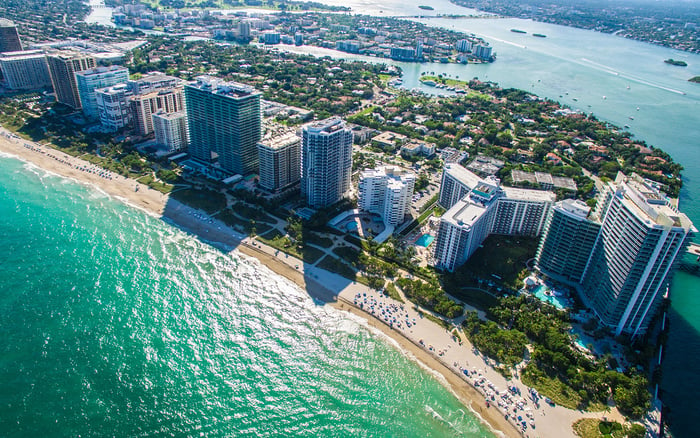
For committed Surfside buyers, the most consequential luxuries may sit beyond the residence itself. Walkability, social access, private dining, and the ease of daily routines can shape ownership more deeply than decorative finishes that can later be changed.
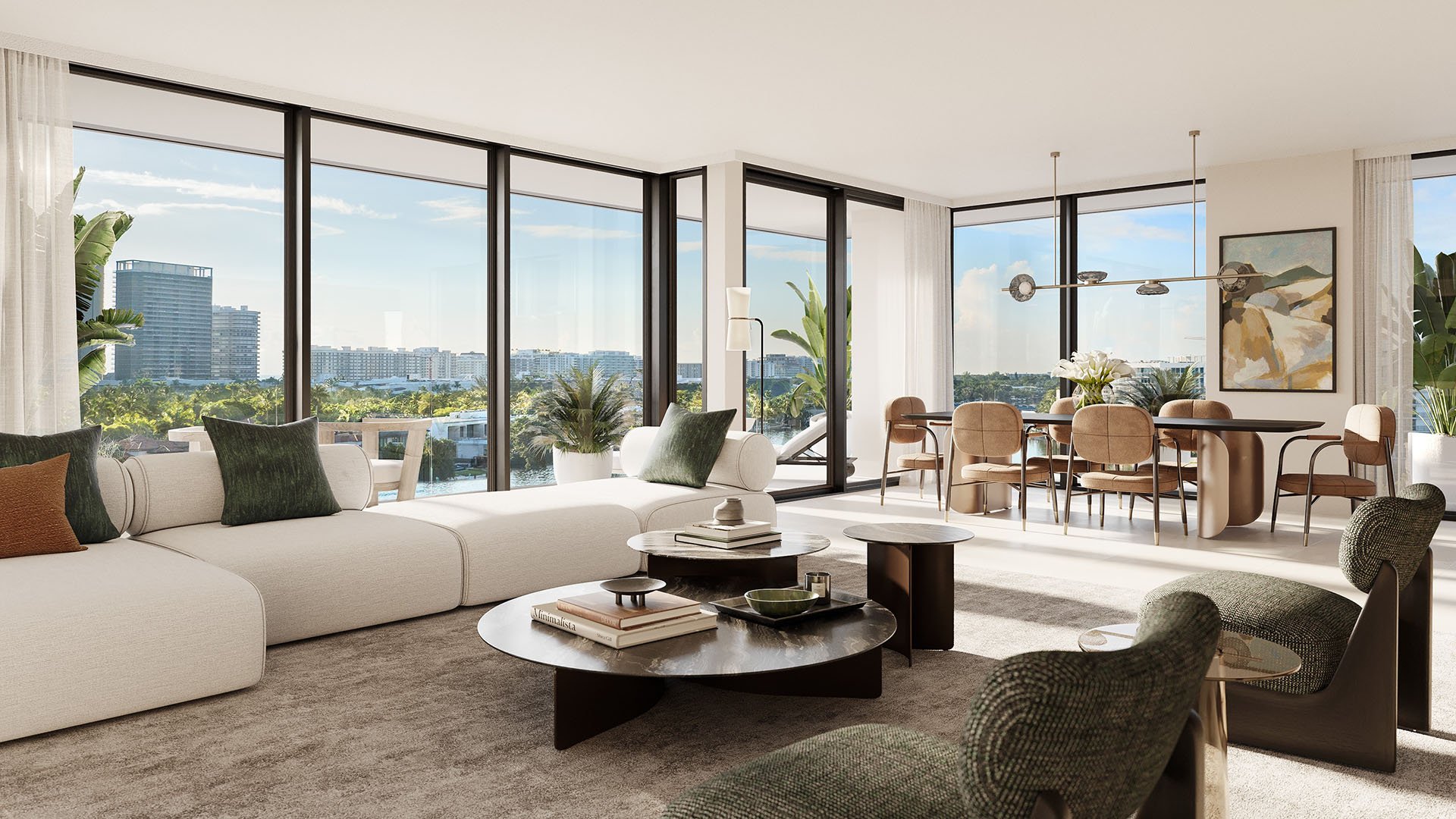
A beautifully finished residence can make an immediate impression. Stone, millwork, lighting, and hardware are tactile, photogenic, and easy to compare during a showing. Yet serious Surfside buyers often find that the more enduring distinctions are less visible: the ability to walk comfortably, access a club aligned with their habits, reserve a discreet dining room, and move through the day with minimal friction.
Finishes matter, but many can be altered. A home’s location within the neighborhood, the quality of arrival, access protocols, and its relationship to preferred destinations are far more difficult to change. The central question is therefore not simply, “How does this residence look?” but “How well will this address support the way I intend to live?”
That shift is particularly relevant in an Oceanfront market where buyers may be comparing polished residences with broadly similar visual ambitions. The decisive advantage may be the ecosystem surrounding the home.
Walkability is not an abstract score. For a Surfside buyer, it should be tested through a sequence of real journeys: morning coffee, a quiet lunch, an evening reservation, a beach visit, or an unplanned meeting. A route that appears short on a map may feel very different in heat, rain, or formal clothing-or with children and guests.
Buyers should visit at several times of day and walk the routes that matter. Note the crossings, shade, noise, lighting, entrances, and how naturally the residence connects with the buyer’s preferred rhythm. Beach access deserves the same scrutiny. The issue is not merely whether access exists, but whether the path feels convenient, private, and compatible with daily use.
For some, the comparison may begin with a distinctly Boutique property such as Arte Surfside. Others may include Ocean House Surfside while assessing how different addresses fit their routines. The point is not to infer amenities from a name or image, but to experience each residence in context.
The word “club” may suggest instant belonging, but access requires careful definition. Buyers should determine whether privileges are attached to ownership, subject to separate agreements, limited by availability, transferable to family members, or governed by guest policies. Any material promise should be confirmed in current governing and membership documents.
The more revealing questions are behavioral. Will the buyer use the setting weekly or only on holidays? Is the atmosphere appropriate for business breakfasts, family lunches, or quiet evenings? Does the service culture feel intuitive? Are reservations practical during the periods when the owner expects to be in residence?
A serious comparison may include The Surf Club Four Seasons Surfside, but the evaluation should remain precise: distinguish the residence, any hospitality component, and any membership or access arrangement. Prestige alone does not establish fit. A club earns its place in the purchase decision when it removes effort and becomes part of everyday life.
Private dining access is sometimes treated as a ceremonial amenity. In practice, it can function as an extension of the home, allowing an owner to entertain without opening the private residence, host several generations comfortably, or preserve discretion around a business conversation.
The buyer should examine the entire operating experience. How is the room reserved? What notice is required? Which costs apply? Can menus accommodate household preferences? How are guests received, and where do they wait? Is the environment acoustically private? The answers determine whether private dining is a genuine convenience or merely an attractive room that is rarely used.
This is where Lifestyle becomes a rigorous purchasing criterion rather than a marketing label. A buyer who entertains frequently may rationally favor dependable service and a graceful guest journey over a more elaborate kitchen finish. A buyer who rarely hosts should assign the feature less weight.
A disciplined evaluation uses two scorecards. The first covers the residence: plan, light, privacy, storage, views, circulation, and condition. The second covers the ecosystem: walkable routines, beach experience, club access, dining, guest management, service, and the ease of arrival and departure.
This separation prevents a dramatic interior from masking a poor daily fit. It also provides context for projects at different stages or with distinct design propositions. The Delmore Surfside can be considered through the same lifestyle framework as an existing residence, while every claim about future access, operations, or services should be verified in the applicable documents.
The comparison may also extend north toward Bal Harbour when a buyer’s preferred routines cross neighborhood lines. What matters is not an artificial boundary, but the time, comfort, and predictability involved in reaching the places that define the owner’s week.
Before assigning value to finishes, buyers can rank five harder-to-replicate qualities: the address within their personal map, the privacy of arrival and departure, the usability of social and dining access, the competence of service, and the residence’s fundamental architecture.
Condition and decoration follow. Bespoke interiors may justify a premium when they closely align with the buyer’s taste and avoid disruption. But a spectacular finish package cannot shorten an inconvenient routine, rewrite access rules, or create a service culture. Conversely, a residence with strong fundamentals and a superior ecosystem can often be personalized over time.
The most discerning purchase is not necessarily the home that dazzles most during a single tour. It is the one that still feels effortless on an ordinary Tuesday.
Why can walkability matter more than finishes in Surfside? Walkability shapes recurring daily routines, while many decorative finishes can be changed after purchase.
How should a buyer test walkability? Walk preferred routes at different times and assess crossings, shade, noise, lighting, and comfort.
What should be verified about club access? Confirm eligibility, fees, guest rules, reservations, transferability, and any separate agreements in current documents.
Is private dining access automatically valuable? No. Its value depends on how often the owner entertains and how reliably the service supports that use.
What makes private dining genuinely discreet? Consider arrival, waiting areas, acoustics, staffing, guest handling, and separation from residential circulation.
Should buyers ignore high-end finishes? No. They should distinguish costly, durable architectural work from decorative choices that are easier to replace.
How can buyers compare very different Surfside residences? Use separate scorecards for the home itself and the surrounding service and Lifestyle ecosystem.
Why evaluate Bal Harbour when buying in Surfside? A buyer’s real routine may cross neighborhood lines, making comfort and travel time relevant to the decision.
What should second-home buyers prioritize? They may place extra weight on effortless arrival, dependable service, guest management, and easy access to preferred venues.
What is the most useful final test before buying? Imagine an ordinary week in residence and identify which address makes each recurring activity simplest.
For a tailored shortlist and next-step guidance, connect with MILLION.
If branded residences are on your mind — as a home or as an allocation — we would be glad to share what we are seeing, privately.
Begin a quiet conversation