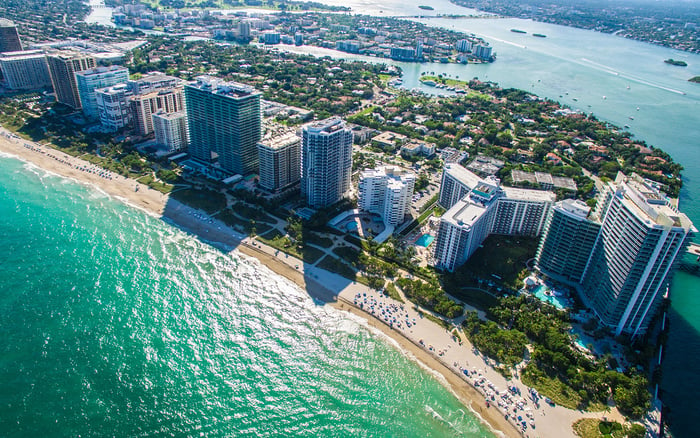
For seasonal owners in Bal Harbour, summer residence care is an operating discipline. Humidity control, documented access, storm preparation, re-entry planning, and insurance review should be assessed before a home is left vacant.

A Bal Harbour residence may be designed for effortless arrival, but preserving that ease through a long summer absence requires meticulous preparation. The local off-season brings persistent humidity, frequent wet weather, warm nights, and exposure to Atlantic hurricanes. For owners who spend winters in South Florida and summers elsewhere, property care is not simply a matter of arranging occasional housekeeping.
The essential questions begin before acquisition. Who monitors indoor conditions? Who holds the keys? What happens when a leak alert arrives at night? Who prepares the residence before a storm, and how will the owner receive a condition report afterward? In a luxury condominium, the quality of these answers can be as consequential as the finishes, views, or floor plan.
This is particularly important for second-home buyers comparing Oceana Bal Harbour and Rivage Bal Harbour. Each prospective owner should examine the building’s written procedures rather than infer operating standards from the Bal Harbour address alone.
A seasonal residence remains effortless only when its care is precisely organized.
Bal Harbour summers are hot, wet, mostly cloudy, and often oppressive. Average summer temperatures are approximately 88°F during the day and 77°F at night, while August’s average high is about 89.9°F. The coastal setting may temper daytime heat relative to some inland Florida locations, but it does not lessen the moisture burden.
Humidity measurements vary by method. Average humidity is measured at 71%, with a 67°F average dew point, while September can bring relative humidity approaching 80%. Neither figure should be treated as a universal operating threshold. The practical conclusion is that Bal Harbour has a prolonged humid season, particularly from May through October, when the residence may be least frequently occupied.
An absent owner should not shut down air conditioning entirely during summer. HVAC and humidity settings should instead reflect the residence, building guidance, equipment, finishes, and insurer requirements. Remote monitoring can provide visibility, but every alert needs a named local responder authorized to investigate. Technology without response capacity merely documents a developing problem.
A written plan should address temperature and humidity monitoring, regular interior inspections, condensate and leak checks, and escalation procedures. It should also specify the response to a power interruption or mechanical fault. For waterfront and oceanfront homes, owners should ask management how building systems and individual-unit responsibilities interact during extended absences.
A polished service promise is not an operational protocol. Owners should request a written schedule specifying inspection frequency, areas inspected, reporting format, and the person accountable for follow-up. Photographic condition records can establish a useful baseline before departure and document what was observed during subsequent visits.
Key custody demands equal precision. The plan should identify everyone permitted to enter, where physical keys or credentials are held, how access is logged, and who can authorize emergency mitigation. If an owner employs a private estate manager in addition to building staff, their responsibilities should be complementary-not overlapping or unclear.
Buyers reviewing nearby alternatives such as The Delmore Surfside and The Surf Club Four Seasons Surfside can apply the same discipline. The purpose is not to assume identical conditions across coastal buildings, but to compare the actual documents governing HVAC guidance, emergency entry, balcony preparation, vehicle relocation, generator coverage, and post-event communication.
Before leaving, owners should also confirm how vendors are admitted, whether entry requires advance authorization, and who will act if the owner cannot be reached. The strongest arrangement establishes a clear chain of command while preserving privacy and maintaining an auditable access record.
Atlantic hurricane season runs from June 1 through November 30, substantially overlapping with the period when many winter residents are away. A storm-season plan should therefore be active before travel begins-not assembled after a forecast changes.
The plan should identify the party responsible for pre-storm lock-up and define the scope of that work. Owners should obtain building-specific instructions for balcony preparation, exterior items, windows or protective systems, vehicles, and residence-level equipment. They should also clarify association deadlines and determine when personnel may no longer be available.
Most of Bal Harbour lies within a Special Flood Hazard Area, and the village is designated Storm Surge Zone B. These classifications make lower building areas especially important during due diligence. Buyers should investigate the exposure and operating plans for garages, parked vehicles, mechanical rooms, storage areas, and other low-lying spaces.
Evacuation orders can apply by zone or partial zone. Owners and caretakers should follow current official instructions and the building’s emergency communications rather than assume a single procedure applies throughout the village. Contact details for the owner, representative, estate manager, and insurer should be current before the season begins.
Post-storm inspection cannot always begin immediately. Re-entry may depend on county and municipal emergency-management decisions, while building access may remain limited even after broader restrictions change. A credible absence-care plan accounts for this uncertainty and distinguishes between a requested response time and legally permitted access.
Once entry is authorized, the inspection scope should be predetermined. It can include visible water intrusion, interior climate conditions, windows and doors, ceilings and walls, utility status, leak indicators, and relevant storage or parking areas. Photographs should accompany a concise written record, with urgent findings separated from items that can wait.
Emergency authority also requires clear boundaries. The owner should specify who may approve immediate mitigation, how spending decisions are escalated, and which professionals may be contacted. This is not a substitute for legal, engineering, insurance, or property-management advice. It is a framework designed to avoid delay when distance and disrupted communications complicate ordinary approvals.
Before purchase, request the association’s current flood and wind insurance information, applicable deductibles, storm-surge protections, and the division of responsibility between common elements and the individual residence. An owner’s adviser should then identify any gaps that may require unit-level coverage. Policy language, exclusions, limits, and compliance obligations should be reviewed for the specific property and ownership structure.
The same scrutiny should extend to management capacity. Ask how emergency communications are delivered, whether management maintains an access log, how backup power supports relevant building systems, and what reporting owners receive after a storm. Verify all flood, evacuation, and re-entry information at the time of purchase, as classifications, official instructions, and insurance terms can change.
In Bal Harbour, dependable oversight is not an incidental amenity. The convergence of humidity, storm exposure, and seasonal absence makes it part of the ownership proposition itself. A residence that is carefully monitored, securely accessed, and governed by clear emergency authority is better positioned to welcome its owner back with the discretion and calm expected of a premier coastal home.
For confidential guidance on evaluating seasonal ownership and residence-care protocols, connect with MILLION.
If branded residences are on your mind — as a home or as an allocation — we would be glad to share what we are seeing, privately.
Begin a quiet conversationNo. Warm nights and high dew points make continuous HVAC and humidity management important during summer absences.
Average summer temperatures are approximately 88°F during the day and 77°F at night.
Atlantic hurricane season runs from June 1 through November 30, overlapping with the customary off-season for many winter residents.
It should include regular inspections, HVAC and humidity monitoring, leak checks, documented access, and a defined escalation process.
The owner should designate authorized key holders in writing and document where credentials are kept, how entry is logged, and who can approve emergency access.
No. Re-entry may depend on county and municipal emergency-management decisions, as well as building-level access restrictions.
It should assign responsibility for lock-up, balcony preparation, vehicles, communications, and post-storm inspections, preferably with photographs.
Bal Harbour's reported flood and storm-surge designations make garages, vehicles, mechanical rooms, storage, and other low-lying spaces relevant to due diligence.
Buyers should review association flood and wind policies, deductibles, storm-surge protections, and potential gaps requiring individual-unit coverage.
No. Evacuation and access instructions may vary by zone, partial zone, and building, so owners should verify current property-specific procedures.