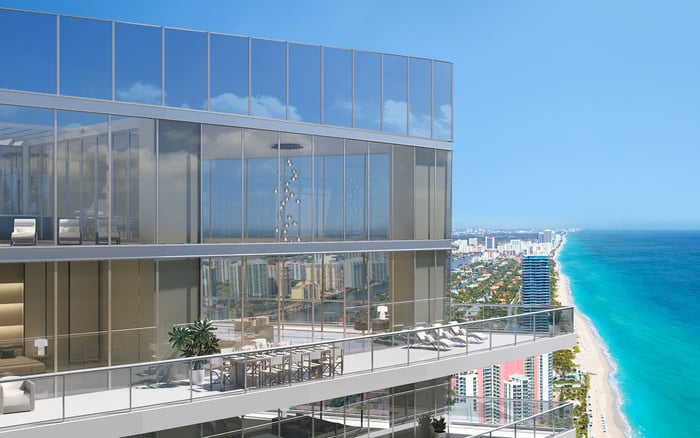
In South Florida’s luxury condo market, a view is not simply an amenity. It is a zoning-dependent asset shaped by neighboring parcels, public planning decisions, and future development applications. Buyers should scrutinize sightlines with the same discipline they apply to materials, layouts, and building services.
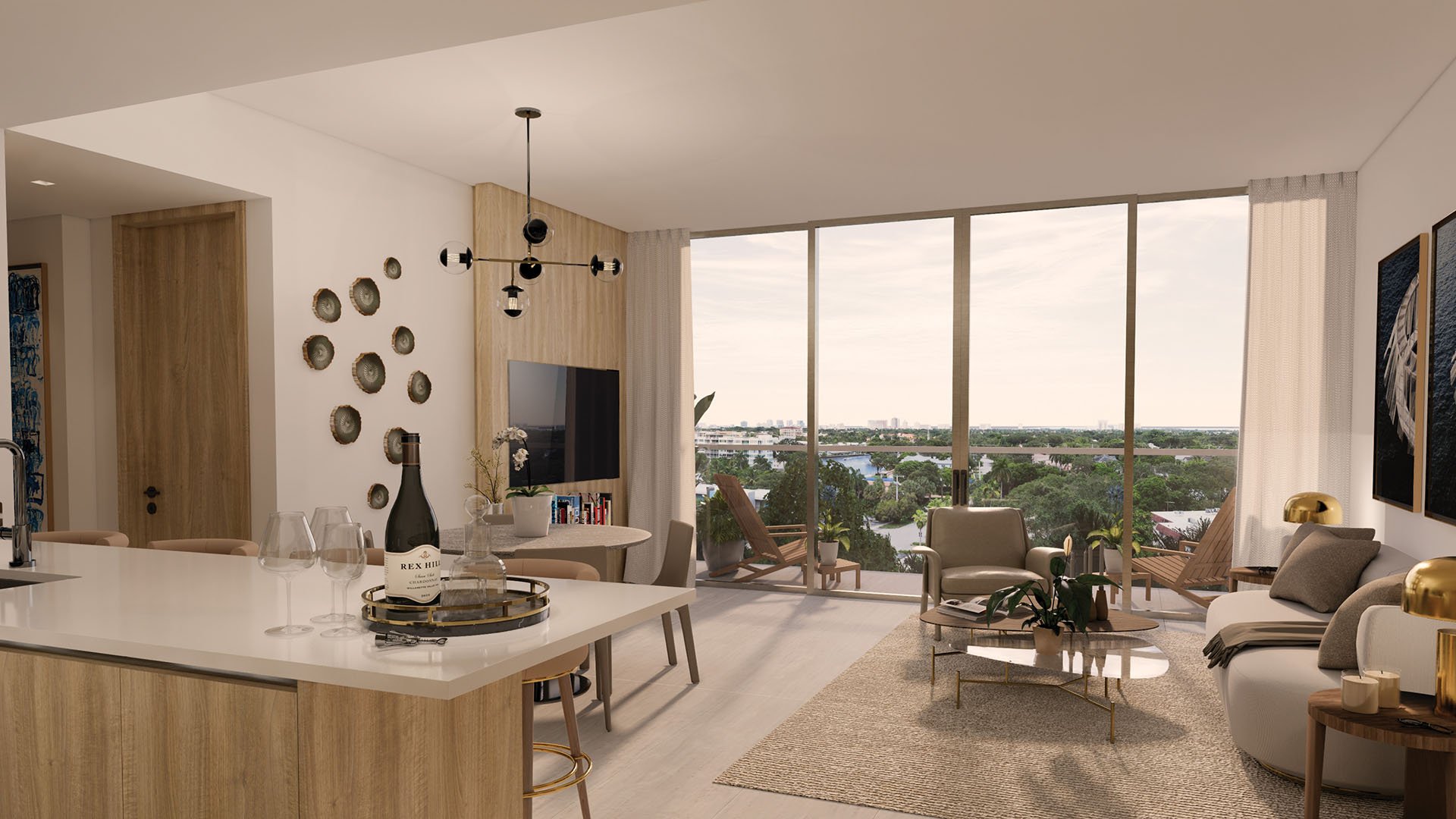
In South Florida’s luxury market, buyers are trained to read marble, millwork, appliance packages, ceiling heights, spa baths, private elevators, and amenity programs with practiced sophistication. Yet the most consequential feature in a residence may be the one that cannot be chosen from a finish palette: the view corridor.
A kitchen can be renovated. Flooring can be replaced. Lighting can be reimagined by a designer. A blocked Biscayne Bay, Atlantic Ocean, Intracoastal, river, or skyline view is different. Once a neighboring tower rises within the legal development envelope, the owner typically cannot restore the lost horizon through taste, capital, or patience.
That permanence is why view diligence deserves the same scrutiny as interiors, especially in rapidly changing districts. A residence marketed around water, skyline, or sunset exposure is only as durable as the planning context around it. In premium buildings such as The Residences at 1428 Brickell, buyers may rightly admire architecture and service. They should also ask what every adjacent and nearby parcel is entitled to become.
A view corridor is not merely a romantic line from terrace to horizon. It is the product of height limits, setbacks, density, overlays, land use, lot assemblage, street width, waterfront controls, and development review. Those rules are created through local planning frameworks, not by the condominium owner.
This distinction matters. A buyer may own an exquisite residence, but not the air rights or development potential of the site next door unless a specific legal instrument says otherwise. Marketing language can describe a view as panoramic, cinematic, direct, or protected in feeling. It does not, by itself, prove that the view is protected in law.
The practical question is not simply, “What do I see today?” It is, “What can be built in the cone of vision tomorrow?” In Brickell, Edgewater, Wynwood, downtown Miami, Miami Beach, Fort Lauderdale, and other high-demand corridors, that question can determine whether a premium exposure remains a long-term asset or becomes a temporary sales-center impression.
The view visible during a private tour is a moment in time. It reflects existing buildings, vacant lots, low-rise holdouts, parking fields, aging commercial structures, and parcels that may already be candidates for redevelopment. In a fast-rising neighborhood, the empty space between a balcony and the water may be less empty than it appears.
Diligence should include both existing structures and proposed projects. Buyers and advisers should review the development pipeline before closing, including applications, approvals, and public planning materials that could reveal what is contemplated nearby. The goal is not to predict every future entitlement with certainty. It is to understand whether today’s open view depends on an underbuilt parcel with meaningful development capacity.
For a buyer considering a waterview residence, the most elegant question may also be the most clinical: which exact parcel forms the view corridor, and what are its governing rules? That question can be as important as whether the primary suite has stone slab walls or custom closets.
In dense urban districts, the vertical premium is often intertwined with exposure. Higher floors may offer stronger light, broader views, and better separation from neighboring massing, but height alone is not a substitute for diligence. A high-floor residence can still face a future tower if the opposing site can support comparable or greater scale.
Brickell illustrates the point. It is a mature luxury market, but it remains active, layered, and highly vertical. A buyer evaluating Cipriani Residences Brickell or Baccarat Residences Brickell should look beyond the elegance of the brand and the immediate outlook from the sales materials. The relevant exercise is stack by stack, floor by floor, and angle by angle.
Micro-comps are essential. Broad pricing context can frame the market, but view value must be isolated through comparable selection and adjustments. A bay-facing line, a river-facing line, and a city-facing line within the same tower may behave differently. Even within one exposure, the difference between an open corridor and a partially compromised one can affect resale perception.
Miami Beach adds another layer because waterfront, oceanfront, historic, and scenic considerations often converge. The city’s planning, zoning, land-development review, municipal code, and scenic-preservation resources all reinforce a central idea: views are planning issues, not simply lifestyle copy.
That does not mean every view is frozen. It means a serious buyer should understand the adopted rules, applicable overlays, setbacks, and building-form controls that shape neighboring development. For residences such as The Perigon Miami Beach, the conversation should include both the immediate beauty of the setting and the regulatory environment around it.
A buyer should also separate view quality from view security. A residence may have a spectacular present-tense panorama and still rely on conditions that could change through redevelopment. Conversely, another residence may have a less theatrical view but a more understandable long-term corridor because of surrounding land-use constraints.
Fort Lauderdale’s riverfront, Intracoastal, and beach corridors have their own view calculus. Buyers moving between Miami and Broward should not assume the same planning logic applies parcel by parcel. County and city planning resources are relevant checkpoints, particularly where waterfront redevelopment, marina adjacency, and high-rise living intersect.
At Andare Residences Fort Lauderdale, for example, a buyer’s appreciation of design should be paired with a disciplined reading of nearby land use and development review. The New River, beach, and Intracoastal corridors can create exceptional daily drama, but the long-term value of that drama depends on what can happen within the sightline.
The most refined diligence is not alarmist. It is measured. It distinguishes between a remote possibility, a filed application, an approved project, and an existing right embedded in code. Each carries a different level of risk.
The first question is whether any adjacent or nearby parcel is underbuilt relative to its allowed potential. Low-rise structures, surface parking, or older commercial buildings can be important signals, especially in areas experiencing new-construction momentum.
The second question is whether pending applications or approvals exist within the view corridor. A proposed project does not guarantee obstruction, but it is too material to discover after diligence has expired.
The third question is whether the contract, disclosures, condominium documents, or marketing materials make any enforceable representation about views. If the answer is unclear, a Florida real-estate attorney should review the issue before the buyer waives contingencies.
The fourth question is how an appraiser or valuation adviser is treating the view. There is no universal formula that can be responsibly applied to every building and exposure. The stronger approach is to isolate view attributes through comparable sales by building, stack, floor, exposure, and obstruction risk.
Luxury diligence should be as visual as it is legal. Stand on the terrace. Study the horizon. Identify the parcels in the frame. Then move from emotion to documentation.
The buyer who scrutinizes view corridors is not being difficult. They are protecting the very element that often makes South Florida high-rise living irreplaceable: the daily privilege of light, water, distance, and sky. Finishes can express taste. Views express scarcity.
That is why the most discerning buyers in Brickell, Miami Beach, Fort Lauderdale, and beyond are learning to treat sightlines as assets with legal, planning, and resale implications. The best residence is not only beautifully finished. It is intelligently positioned.
Why should view corridors matter as much as finishes? Finishes can usually be renovated, while a blocked view is rarely something an individual owner can reverse.
Is a marketed “panoramic view” the same as a protected view? No. Marketing language describes the current experience, while protection depends on legal rights, zoning, and land-development rules.
What should buyers check around a luxury condo before closing? They should review nearby parcels, zoning, setbacks, height potential, land use, and pending development applications.
Can a high-floor residence still have view risk? Yes. Higher floors may improve separation, but a neighboring site with significant height potential can still affect sightlines.
Are waterfront views automatically safer than city views? Not automatically. Waterfront settings can be exceptional, but surrounding rules and adjacent development rights still matter.
How should view value be evaluated in pricing? It should be assessed through micro-comps by building, stack, floor, exposure, and obstruction risk rather than broad averages.
Should buyers rely on renderings for view diligence? Renderings are useful visual materials, but they should not replace parcel-level review of what can be built nearby.
When should an attorney become involved? A Florida real-estate attorney should be consulted before waiving diligence when future obstruction is a material concern.
Does local planning matter more than state law for views? Often, yes. State law is relevant, but view outcomes are frequently shaped by local zoning and land-development controls.
What is the simplest view-diligence question to ask? Ask what can be built in the exact sightline you are paying for, not only what you can see during the showing.
To compare the best-fit options with clarity, connect with MILLION.
If branded residences are on your mind — as a home or as an allocation — we would be glad to share what we are seeing, privately.
Begin a quiet conversation